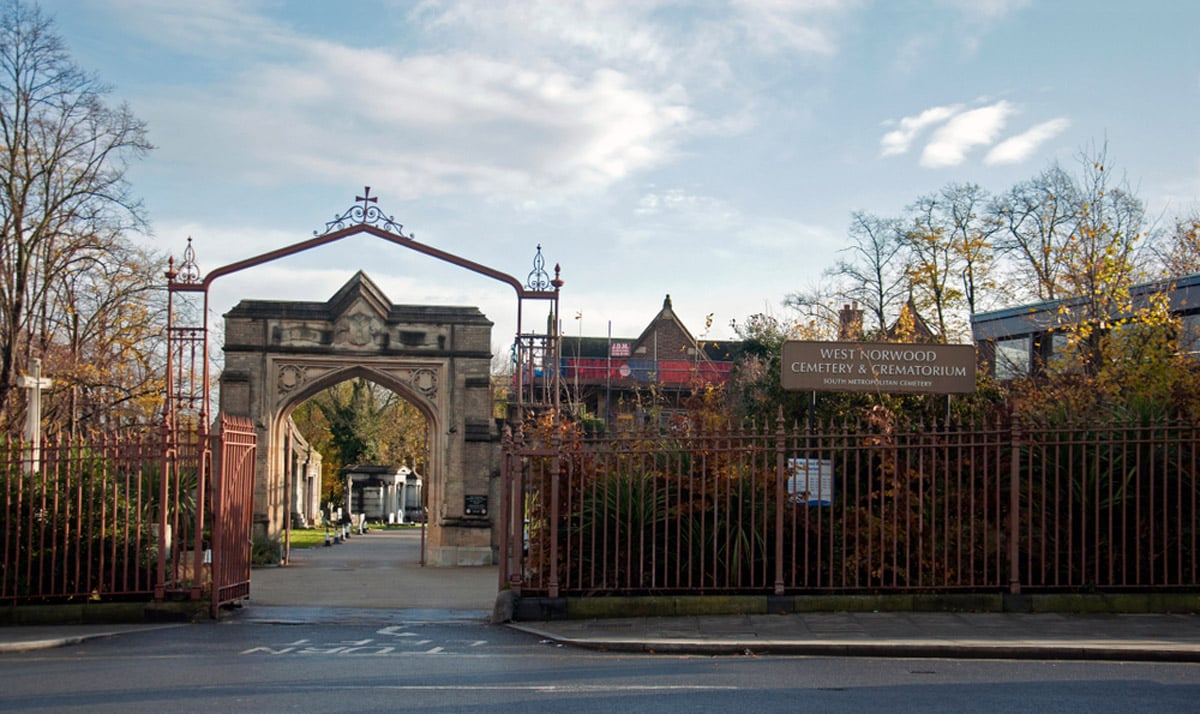
Walk through the main gate of West Norwood Cemetery on a grey morning and you could, without much effort, convince yourself you’ve stepped into a Wilkie Collins novel. Mausoleums the size of houses line the paths. Stone angels stand on plinths above you. Somewhere beneath your feet, a river runs in the dark.That last part is literally true.
A small plaque set into the main path reads: “The hidden River Effra is underneath your feet.” The Effra, one of London’s lost rivers, flows under the cemetery on its way to join the Thames at Vauxhall, unseen and largely unknown, running below 165,000 people who have no idea it’s there. West Norwood has always been a place where things are hidden in plain sight.
The millionaires’ cemetery
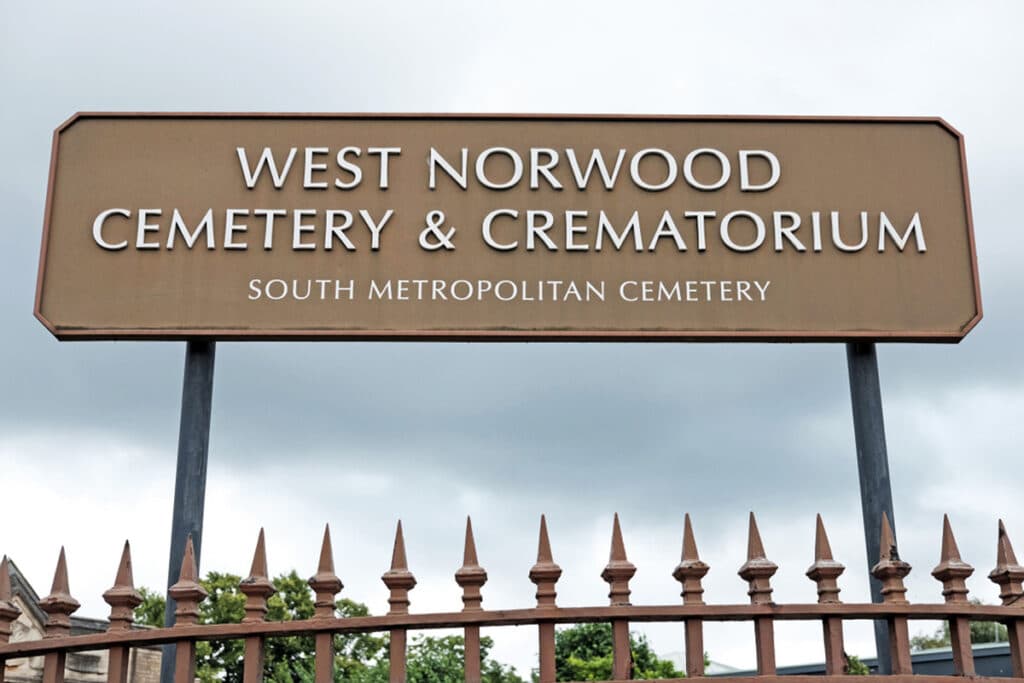
The history of West Norwood Cemetery begins in 1960 with a tale of seven gunfighters in the old west. Oh no wait, scratch that. We’re talking about the Magnificent Seven Cemeteries of London. They are seven major cemeteries built in the Victorian era in response to the growing number of people in London, and the growing number of dead that population boom brought with it.
When it opened in 1837, West Norwood Cemetery was a sensation. The land had been part of the ancient Great North Wood, the medieval forest that once stretched from Croydon to Camberwell and gave Norwood its name. Architect William Tite turned it into Britain’s first cemetery designed in the Gothic Revival style, landscaping the hillside with views across South London and planting mature trees that survive to this day. One oak identified in a 2005 survey dates from somewhere between 1540 and 1640, meaning it was already old when the cemetery was built around it.
The wealthy wanted in immediately. By 1860 a plot cost the equivalent of £3,500 today, and West Norwood became known as the Millionaires’ Cemetery. People came not just to be buried here but to visit and admire: the cemetery was a tourist attraction, its mausoleums a spectacle. The railings were kept deliberately high, partly for aesthetic reasons and partly to deter body snatchers, who were still a real enough concern in the 1830s that the designers took structural precautions against them.
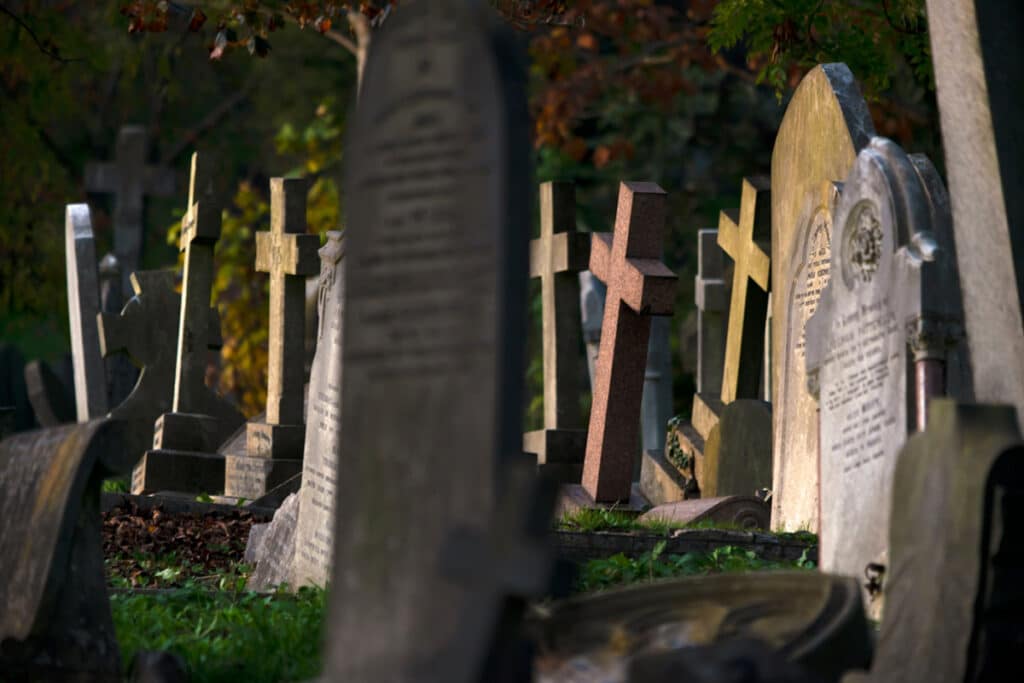
The names that ended up here are a particular kind of Victorian roll call. Henry Tate, the sugar merchant whose collection became the Tate Gallery, is buried in an elaborate terracotta mausoleum alongside Henry Doulton of Royal Doulton, appropriately enough, in pottery. Isabella Beeton, who died at 28 in 1865 shortly after giving birth to her fourth child, is here, her Book of Household Management having already made her the most famous domestic writer in Britain. Hiram Maxim, inventor of the Maxim gun, is buried nearby. He made himself profoundly deaf by test-firing his weapons at his home near Norwood Road. His son Hiram Jr went on to invent the silencer, which may have been the most inevitable invention in history.
We mentioned that the cemetery was one of the Magnificent Seven. The other six cemeteries are:
- Abney Park Cemetery
- Highgate Cemetery
- Kensal Green Cemetery
- Nunhead Cemetery
- Brompton Cemetery
- Tower Hamlets Cemetery
The Greek city of the dead
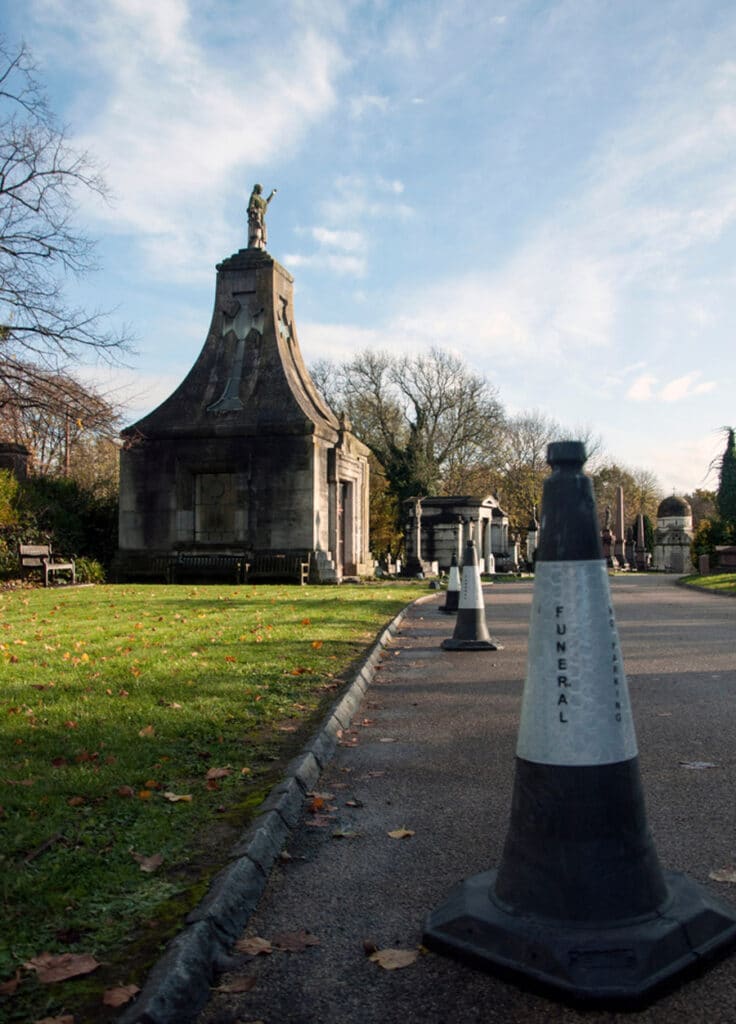
The most extraordinary section of West Norwood is the Greek Necropolis, a gated enclosure in the northeast corner that contains the highest concentration of listed funerary monuments anywhere in Britain. It was established in 1842 when London’s Greek Orthodox community purchased a plot for £300, and it fills with the stories of an extraordinary diaspora.
Many of the families buried here had fled the Greek War of Independence in the 1820s, escaping Ottoman reprisals to build new lives in London as merchants and shipping magnates. They arrived with wealth, ambition and a determination to be buried with appropriate grandeur. The result is a tightly packed city of neoclassical monuments: mini Parthenons, Egyptian Revival mausoleums, monuments carved from Carrara marble, Norwegian larvikite and red granite from the Isle of Mull, all of it reflecting the global reach of the Victorian trade networks these families had built.
The Vagliano mausoleum commemorates Panayis Vagliano, one of the most powerful Greek shipping merchants in Victorian London. The Argenti family’s mausoleum, unusually, is Egyptian Revival rather than Greek classical, a style fashionable in the early Victorian period. The Greek chapel of St Stephen, attributed to architect John Oldrid Scott, looks from a certain angle like a small Parthenon dropped into South London. The necropolis is overseen by the trustees of the Cathedral of Saint Sophia, and despite decades of underfunding and neglect, restoration work is gradually bringing it back.
What’s here now
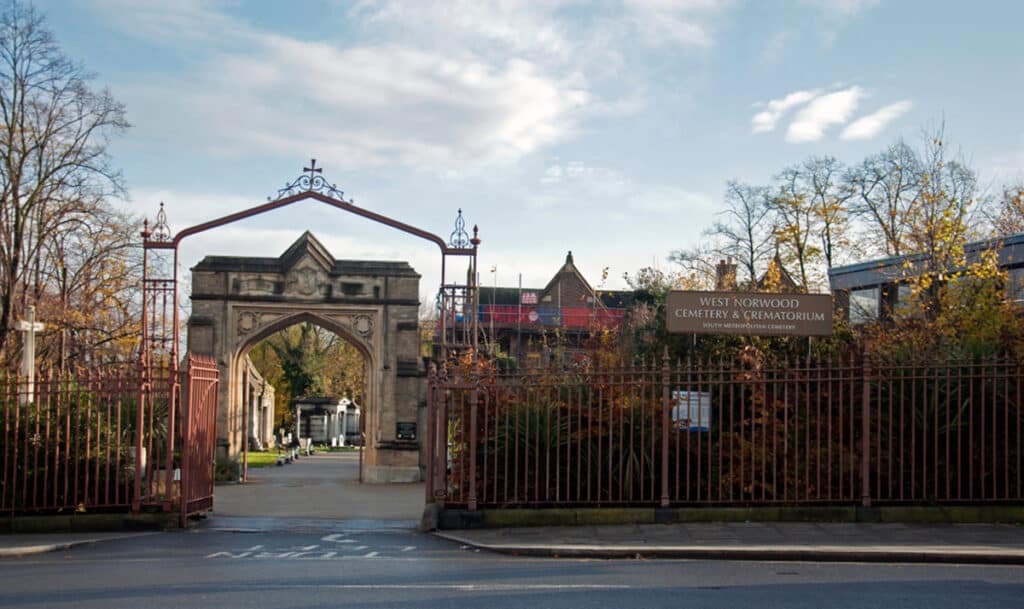
West Norwood is technically closed to new burials, though cremations continue and existing family plots can still be used. It is 40 acres of South London hillside with views you don’t expect, an oak tree that may have known Shakespeare’s London, and 69 Grade II and II* listed structures that constitute, by most architectural assessments, the finest collection of Victorian funerary monuments in the city.
It is also, in spite of everything, genuinely peaceful. The Friends of West Norwood Cemetery run guided walks that open up the stories behind the stones. The rest of the time you can wander it alone, in the particular quiet that cemeteries of this scale tend to produce, with an Effra running beneath your feet that has no idea any of this is happening above it.
The London x London Take: Highgate gets the tourists, Kensal Green gets the literary pilgrims, but West Norwood is the one that rewards going without a plan. The Greek Necropolis alone is worth the trip. Go on a foggy morning if you can manage it.
West Norwood Cemetery: Practical Information
- Where: West Norwood Cemetery, Norwood Road, London SE27 9JU
- Opening times: Monday to Friday 8am to 6pm, weekends 10am to 6pm; November to March closes at 4pm daily
- Price: Free entry
- Nearest rail: West Norwood (Southern) or Gipsy Hill (Southern)
- Website