The capital’s favourite celebration is back. Here’s what you need to know about Notting Hill Carnival 2026.
Second in size only to Rio’s famous annual carnival, Notting Hill Carnival is a huge celebration, and it’s returning to West London this month for more pumping party vibes and genuinely good times.
Here’s what to expect this year.
Notting Hill Carnival 2026 line-up
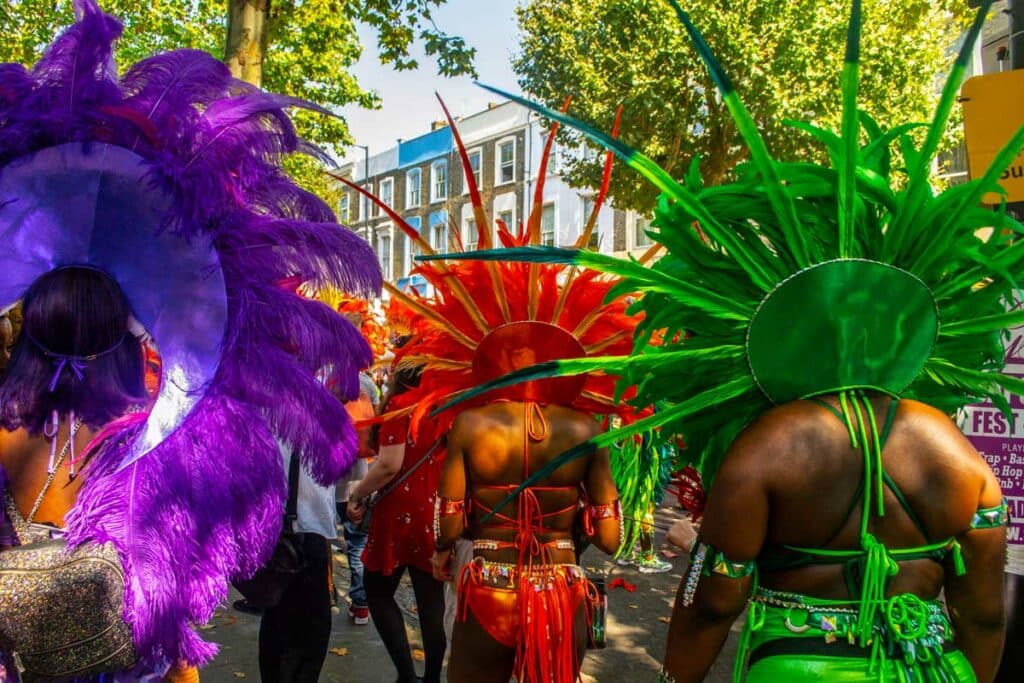
Notting Hill Carnival is a time to let loose and celebrate Mas, Soca, Calypso and more in a Caribbean carnival like no other. The main event centres on a huge parade that winds through the streets of Notting Hill in full costume, covering around 3.5 miles through W10 and W11, Notting Hill, Ladbroke Grove, Westbourne Grove, Westbourne Park and Kensal Road.
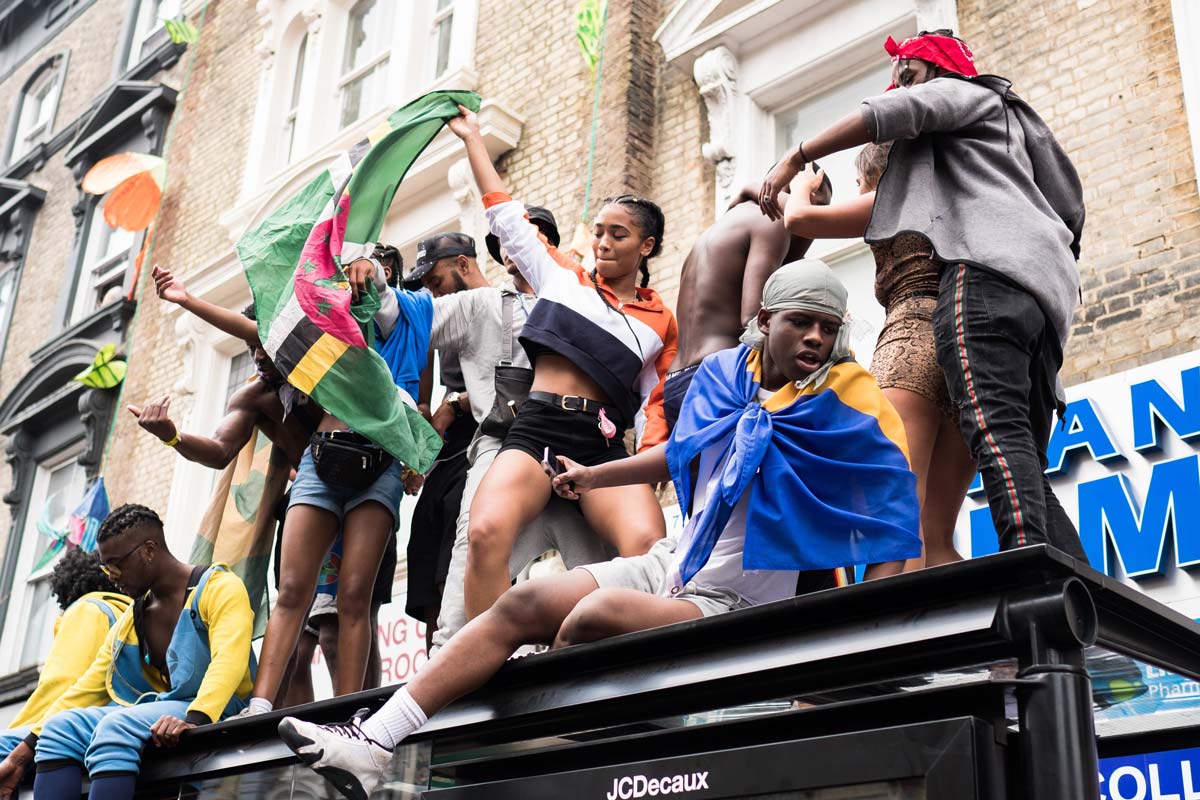
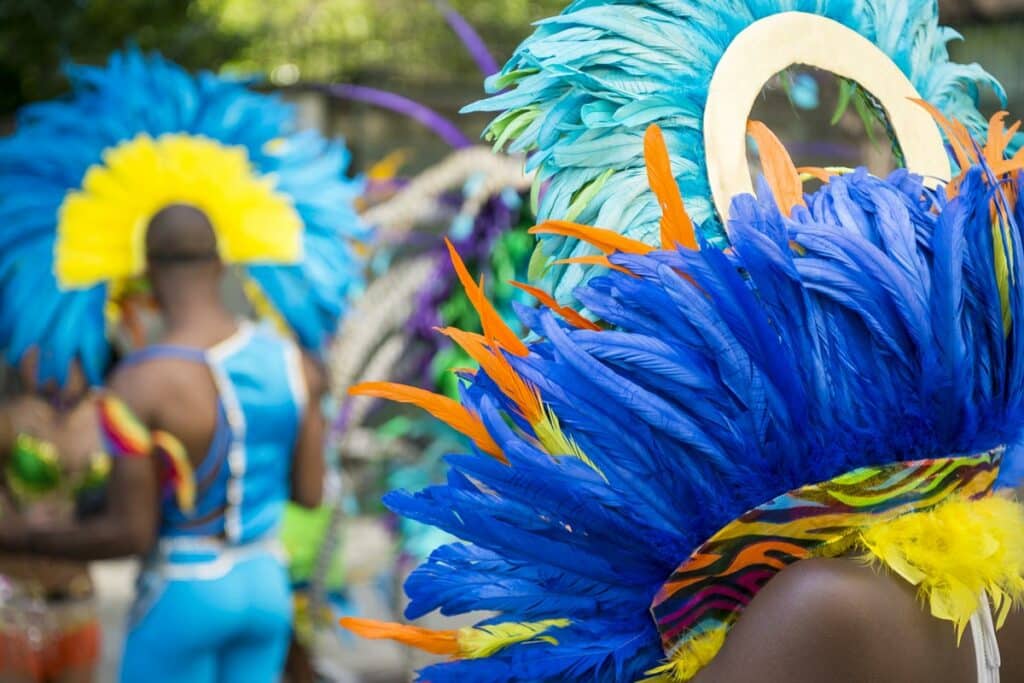
Want to get involved? The general public is welcome to join in with Mas on Bank Holiday Monday. You’ll be getting in amongst it with some genuinely wild outfits, bedazzled bikinis, feather-laden headdresses and more jewels than you can count, so you might want to dress up yourself.
More than 50 mas bands take to the route on Monday, each with their own costume theme, music truck and dancers. As well as this, the street food is genuinely excellent, a plate of Jamaican jerk chicken is a Notting Hill Carnival rite of passage. Vegan and plant-based options have grown significantly in recent years too, so plant-based partiers won’t miss out. With over 300 food stalls to choose between, you’re not short on choice.
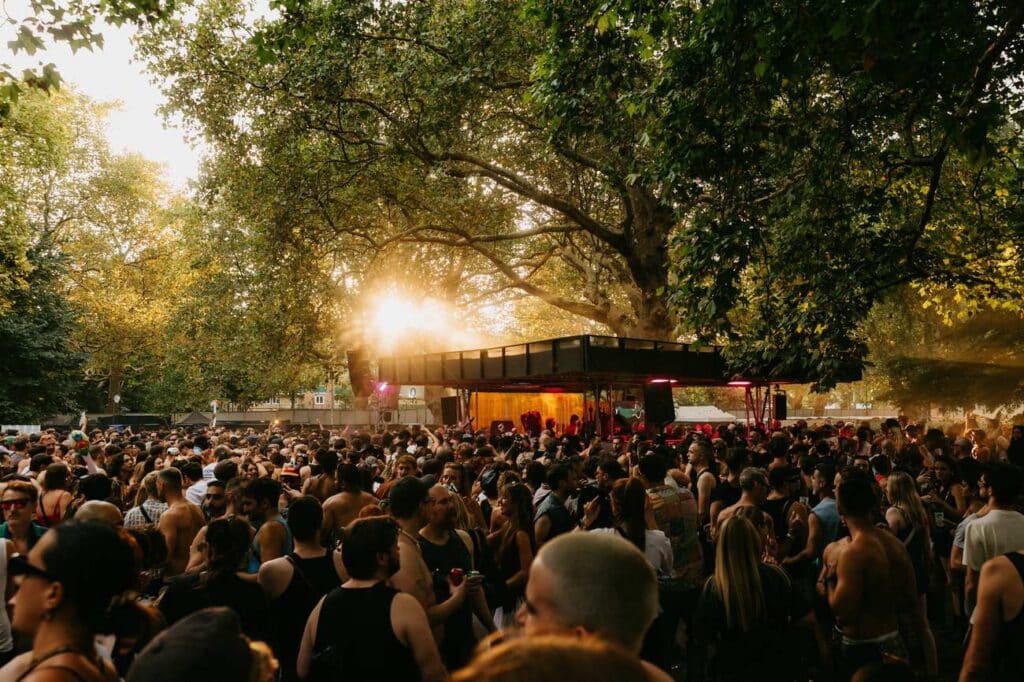
The sound systems and live music play a huge role too. Over 35 static sound systems line the route, spend the weekend hopping between them, taking in soca, calypso, reggae, dancehall, house, jungle and drum and bass, with a bowl of rice and peas in hand.
Worth knowing: every year at 3pm on Bank Holiday Monday, Carnival pauses for 72 seconds of silence in tribute to the 72 people who died in the Grenfell Tower fire in 2017, the tower stands close to the Carnival route in North Kensington. Music and stalls stop across the whole route for the full 72 seconds. It’s a genuinely moving moment and worth knowing about if you’re there.
The UK National Panorama steel band competition
Notting Hill Carnival being the Caribbean celebration that it is also makes it the natural home for a major steel band competition, and that’s exactly what happens the day before the main event.
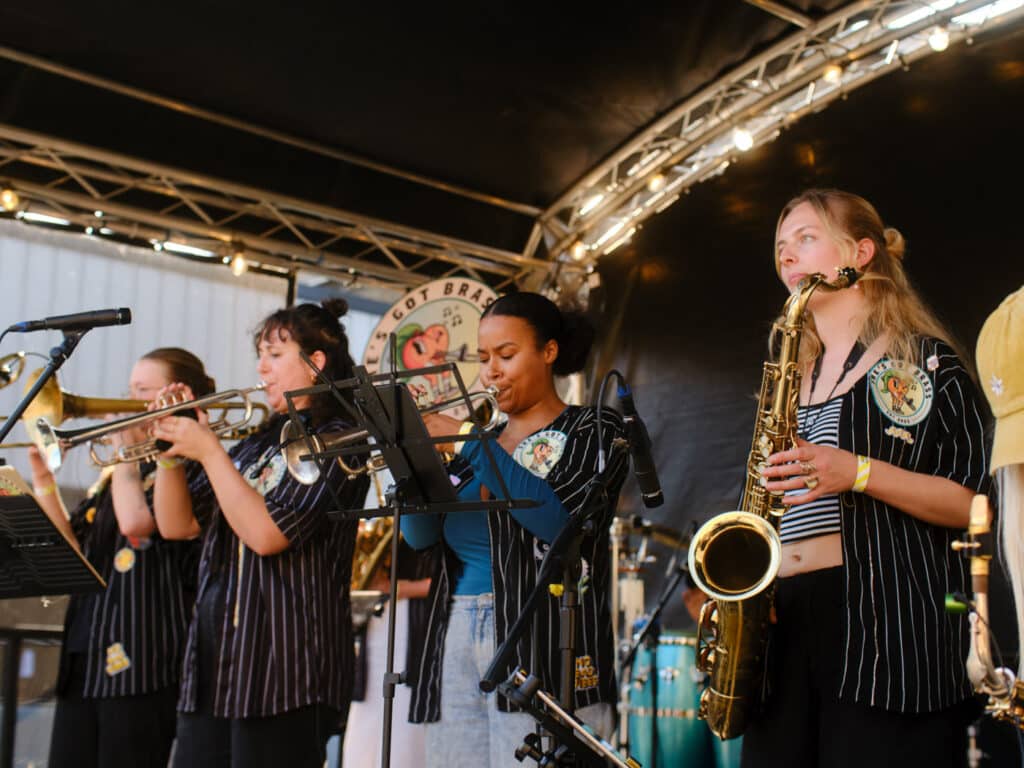
On Saturday 29 August, the finest steel bands in the country compete in a marathon showdown to find the best in the UK. It’s one of the largest steel band gatherings outside the Caribbean, and it’s a genuine treat for the ears.
This is also the only part of Carnival weekend you’ll need a ticket for. You can book here, where you’ll also find the full schedule.
A brief history of Notting Hill Carnival
Notting Hill Carnival might be a joyous occasion today, but its roots lie in injustice, racial discrimination and violence against London’s Caribbean community in the 1950s.
Following race riots targeting Black residents in Notting Hill in 1958, Trinidadian journalist and activist Claudia Jones, founder of Britain’s first major Black newspaper, the West Indian Gazette, organised an indoor “Caribbean Carnival” at St Pancras Town Hall on 30 January 1959. It was broadcast by the BBC and conceived as a way to lift spirits and show strength and solidarity within London’s growing Caribbean community. Jones continued to organise similar indoor events annually until her death in 1964, and she’s widely credited with planting the seeds that would eventually grow into today’s Carnival.
A few months after Jones’s first event, on 17 May 1959, Antiguan-born Kelso Cochrane was murdered in Notting Hill in a separate, racially motivated attack. The killing remains unsolved, with long-standing allegations of a police cover-up, and it caused huge outrage in the community, more than 1,200 people attended his funeral.
It was against this backdrop of ongoing tension that, in 1966, local social worker Rhaune Laslett organised a street festival aimed at bringing Notting Hill’s many different communities together, with a particular focus on entertaining local children. She invited Trinidadian steel pan player Russell Henderson and his band to perform, and it’s this outdoor event, rather than Jones’s earlier indoor carnivals, that’s generally recognised as the direct starting point of the Notting Hill Carnival we know today. Leslie “Teacher” Palmer, director from 1973 to 1975, is credited with much of the growth that shaped the Carnival into the scale of event it is now.
Two distinct but connected threads, then, both worth knowing: Jones gave Britain the idea that Caribbean carnival deserved a public stage, and Laslett’s street festival is where Notting Hill Carnival as we know it actually began.
Notting Hill Carnival 2026: practical information and map
When?
Notting Hill Carnival runs across the August Bank Holiday weekend: the UK National Panorama steel band competition takes place on Saturday 29 August (ticketed), Family and Children’s Day, including J’ouvert and the Children’s Parade, is on Sunday 30 August, and the main Adults’ Parade and Carnival takes over on Bank Holiday Monday, 31 August.
Where?
The clue is in the name, Notting Hill. The areas of W10 and W11 are where the heart of the Carnival is held.
Notting Hill Gate is the nearest tube station, though expect it to be extremely busy, along with Ladbroke Grove and Westbourne Park, both of which often run exit-only on the busiest day. Royal Oak, Bayswater, Queensway, Queen’s Park and Shepherd’s Bush are all worth considering as quieter alternatives, with a short walk in. Bus routes through the area are suspended for the whole weekend, so the Tube (or your own two feet) is your best bet.
Tickets?
Sunday and Monday are completely free and unticketed, just show up and get ready to party. Saturday’s steel band competition is the only ticketed part of the weekend.
Tips
- Take sun cream if it’s hot. Sometimes London actually delivers, and you’ll be out under it for a full day.
- Be mindful with your belongings. Carnival is all about good vibes, but with crowds this size there are always a few opportunistic pickpockets about, a cross-body bag worn to the front is a sensible shout.
- Water is available in shops around Notting Hill, but bring a refillable bottle if you can, most local businesses are happy to top you up, and it saves on plastic.
- Beers, drinks and snacks of all kinds are available from pop-up stands and corner shops throughout the neighbourhood, so there’s no need to pack a picnic.
- Arrive earlier in the day if you can, mid-morning is far more manageable than the crush that builds from early afternoon onwards, particularly on Monday.
- Look out for the purple-marked Safer Spaces tents along the route, a 2026 addition where anyone, particularly women and solo attendees, can go for help, medical support or just a quieter moment.
More London festival guides
- Notting Hill: Insider’s Area Guide
- The Ultimate London Festival Guide
- Best Hotels in Notting Hill, London