Tower Bridge is the most photographed and most misunderstood structure in London – starting with the fact that it isn’t London Bridge, and ending with the fact that it isn’t Victorian stone.
Here is the fact that ought to lead every article about it and never does: on the night of 30 December 1952, driver Albert Gunter was taking the number 78 bus across when the north bascule began to rise underneath him. He accelerated. The bus cleared a three-foot gap at about 12mph and landed on the far side. He was given a day off and £10.
Below, 24 things about Tower Bridge that hold up when you check them – plus what it costs to go inside in 2026, and the £1 ticket that three London boroughs can use and almost nobody does.
It is also stop five on our Harry Potter walking tour of London, as the backdrop to the Order’s flight across the city.
The essentials, checked for 2026
- Adult: £18. Concession (60+, student, disabled adult) and 16–17s: £13.50. Child 5–15: £9. Under-fives free but still need a ticket. Companions for disabled visitors go free.
- The £1 Local Ticket is open to permanent residents of Tower Hamlets, Southwark and the City of London – not just Tower Hamlets, as most write-ups say. Adults need photo ID and proof of address; children need neither, but do need their own £1 ticket.
- There is no family ticket. What exists is a Family Activities Pass: do a facilitated family activity and you get free repeat visits for six months.
- Open daily 9.30am–6pm, last entry 5pm. Closed 24–26 December, opens 10am on 1 January.
- National Rail 2FOR1 applies to general entry with a valid same-day train ticket.
Facts about what Tower Bridge actually is
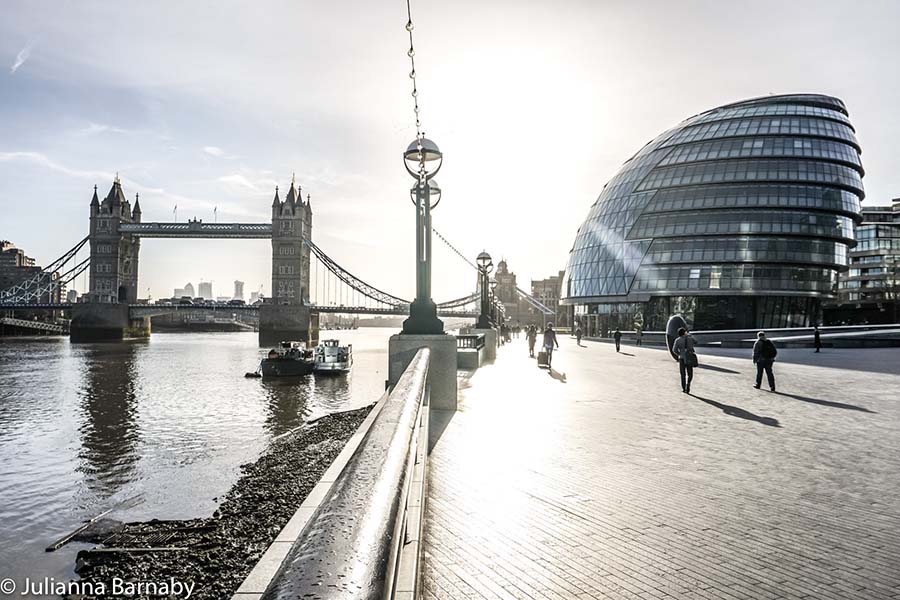
1. It is not London Bridge, and the confusion is old
London Bridge is the plain concrete one half a mile upstream. The persistent story that an American buying London Bridge in 1968 thought he was getting this one has been denied by everyone involved, repeatedly, for over fifty years – and it refuses to die.
2. It isn’t really a stone bridge
Underneath the Cornish granite and Portland stone is a steel frame – over 11,000 tonnes of it. The masonry is cladding, chosen to make a piece of high-Victorian engineering look like it belonged next to the Tower of London. It is, in the most literal sense, a facade.
3. Over 50 designs were submitted before this one won
The City of London ran a public competition in 1876 for a crossing east of London Bridge that wouldn’t block the Pool of London to shipping. More than fifty schemes came in, including a rolling bridge and a subway. The bascule design won in 1884.
4. The architect also designed three of London’s great market halls
Horace Jones, the City Architect, was responsible for Smithfield, Billingsgate and Leadenhall Market. If Tower Bridge looks like it was designed by someone who was very good at iron roofs, that is because it was.
5. He died before it was finished
Jones died in 1887, a year into construction and seven years before the bridge opened. The engineer John Wolfe Barry took over and brought in George D. Stevenson, who replaced Jones’s brick-and-medieval exterior with the Gothic stonework we have now. The bridge everyone photographs is substantially Stevenson’s, not Jones’s.
6. It took eight years and 432 construction workers
Building ran from 1886 to 1894 and cost £1,184,000 – somewhere north of £160 million today. Two piers were sunk into the riverbed to carry it.
7. Until 1977 it was chocolate brown
The red, white and blue is not Victorian. It was painted for the Silver Jubilee in 1977 and simply stayed. For its first eighty-odd years Tower Bridge was a sober dark brown, which is worth picturing next time you see it on a biscuit tin.
Facts about how it works
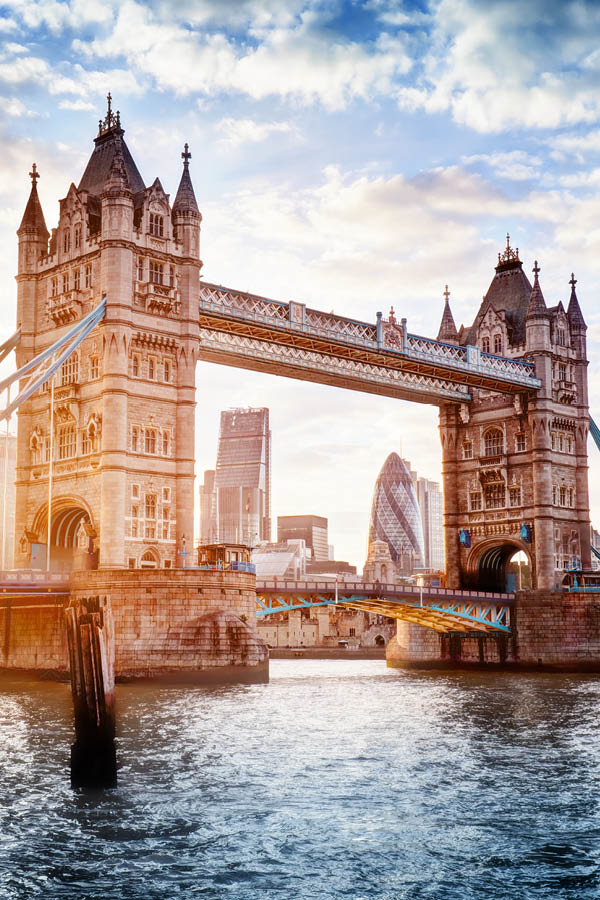
8. The moving sections are called bascules
From the French for see-saw, which is exactly what they are. Each one weighs over 1,100 tonnes.
9. There are enormous counterweights buried under the road
Each bascule is balanced by a 420-tonne counterweight housed in a chamber below river level. It is why something that heavy can be lifted at all, and why the Behind-the-Scenes tour is the good one – the chambers are on it.
10. It ran on coal-fired steam until 1976
Steam engines pumped water into accumulators, and the stored pressure drove the bascules. The system was replaced by oil and electricity in 1976, and the original engines are still in place and still polished, down in the engine rooms.
11. A lift takes about five minutes
Roughly a minute to raise, a pause for the vessel, and a minute to lower. The bascules open to 86 degrees.
12. It lifts around 800 times a year
The times are published on Tower Bridge’s own site with a date filter and the name of the vessel, and it costs nothing to watch.
13. Ships have right of way, and lifts are free to request
Any vessel with a mast over nine metres can require a lift with 24 hours’ notice, at no charge. River traffic outranks road traffic here and always has – which is the whole reason the bridge opens in the first place.
Facts about the walkways and the glass floor
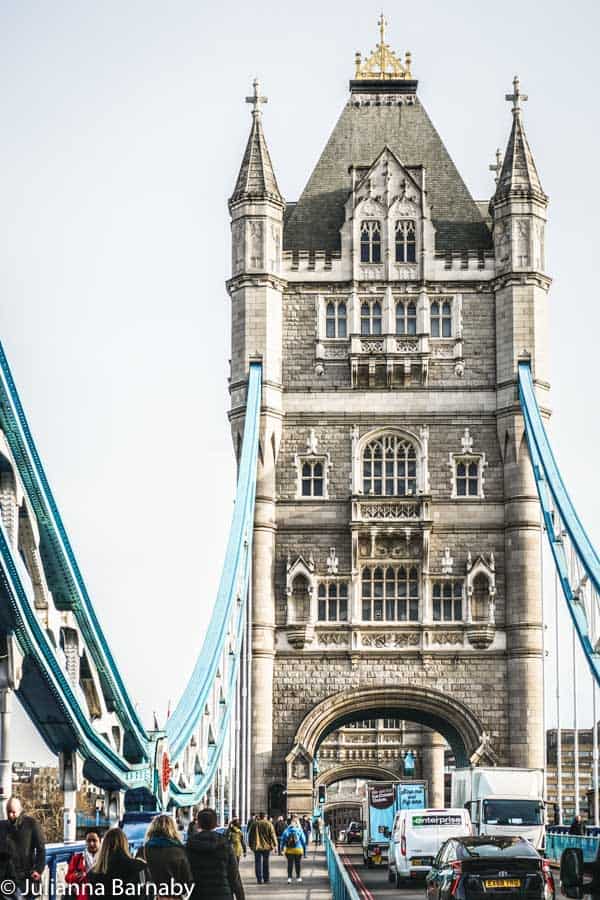
14. The high-level walkways were built so pedestrians wouldn’t have to wait
The idea was that people could climb the towers and cross 42 metres up while the road was open. In practice almost nobody bothered – most preferred to wait – and the walkways fell into disuse.
15. They were closed in 1910 and stayed shut for 72 years
Empty, unpoliced and a long way from the street, they acquired a reputation as a haunt of pickpockets and prostitutes. They were shut in 1910 and only reopened to the public, as part of the Tower Bridge Exhibition, in 1982.
16. The glass floor is rated for an elephant
Installed in 2014, the west walkway floor is five layers of reinforced glass, 70mm thick, 11.5 metres long and 1.8 metres wide, sitting 42 metres above the Thames. Each panel is rated to hold the weight of one elephant or two London black cabs.
17. The top layer is replaced every 18 months
It’s a sacrificial layer, there to take the scuffing from thousands of pairs of shoes, and it gets swapped out on a cycle. The bridge also bans glass bottles near it, for reasons you can work out.
Facts about the stunts and the near-misses
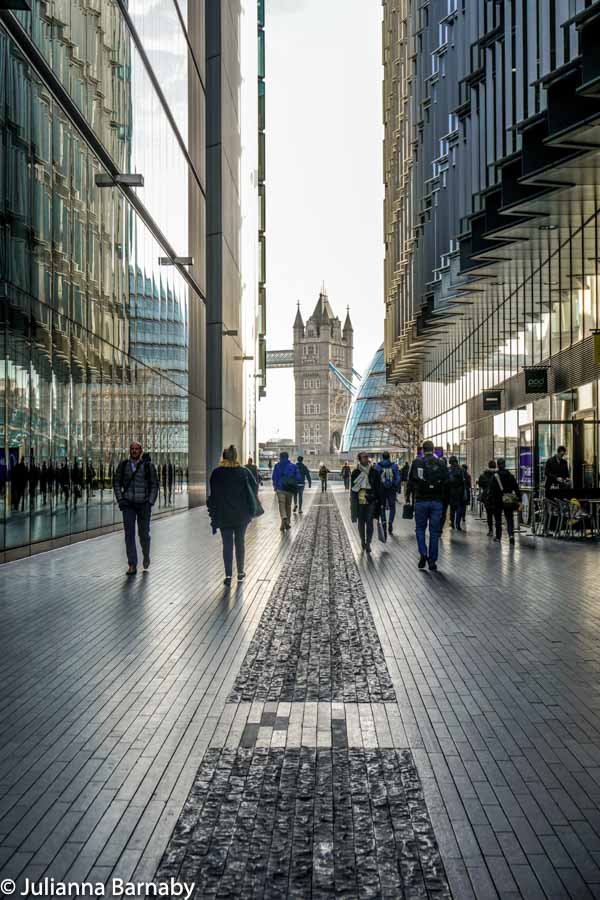
18. The bus jump is real, and better than the legend
Albert Gunter, 46, of Theberton Street, Islington, was driving the number 78 from Shoreditch to Dulwich at about 9.30pm on 30 December 1952 when the north bascule started to rise – a watchman had forgotten to ring the bell and close the gates. Gunter put his foot down rather than braking and cleared roughly three feet.
Ten people went to hospital with mostly minor injuries. The conductor, Alfred Barton, broke a leg; so did Gunter. He was given a day off and £10 in cash – about £290 today – and reportedly said: “Five for me, and five for the missus.” His own account of the decision was flatter still: he had to keep going, or they’d have gone into the water.
19. A pilot flew between the bascules and the walkway in 1912
Frank McClean took a Short biplane through the gap between the road and the high-level walkway – a space he had no business fitting through – and then ran into trouble further upriver. The authorities were not amused.
20. Two wingsuit flyers went through it in 2024
On 12 May 2024, Austrian skydivers Marco Fürst and Marco Waltenspiel became the first people to fly a wingsuit through the bridge, hitting 246km/h. It remains the most recent addition to a long list of things people have done to Tower Bridge that nobody asked them to.
Facts about Tower Bridge in popular culture
21. It was used for the 2012 Olympic torch, and wore the rings
A set of Olympic rings hung from the walkways for the London 2012 Games, and the torch passed over the bridge. It’s one of the most-reproduced images of the whole Games.
22. The largest Lego structure ever built was a model of it
A full Tower Bridge made from 5,805,846 bricks, built in 2016. Inevitably.
23. Over 40,000 people cross it every day
It is a working road bridge carrying the A100, not a monument – something that is easy to forget when you’re standing in the middle of it taking a photograph. Drivers would like you to remember it.
24. It turned 130 in 2024
Opened on 30 June 1894 by the Prince and Princess of Wales, and still doing the job it was built for, 800 times a year.
How to visit Tower Bridge
- Standard entry (£18) gets you the towers, the high-level walkways with the glass floors, and the Victorian engine rooms. Allow an hour.
- Guided tours run on selected dates: 1.5 hours, maximum 12 people, £35 for adults. Tickets are released eight weeks ahead.
- Behind-the-Scenes tours (£80) are the ones to book. Two hours, minimum age 14, and they take you into the bascule chambers and the machinery room. It’s 115 steep steps down, 35 of them spiral, and it is damp and cold. They sell out months ahead and there’s a waitlist.
- Relaxed Opening runs on the second Saturday of the month, 9.30–11.30am, at low capacity, included in normal entry.
- Nearest tube: Tower Hill (District and Circle) on the north side, London Bridge (Jubilee and Northern) on the south. Bermondsey and Shad Thames are the nicer approach on foot.
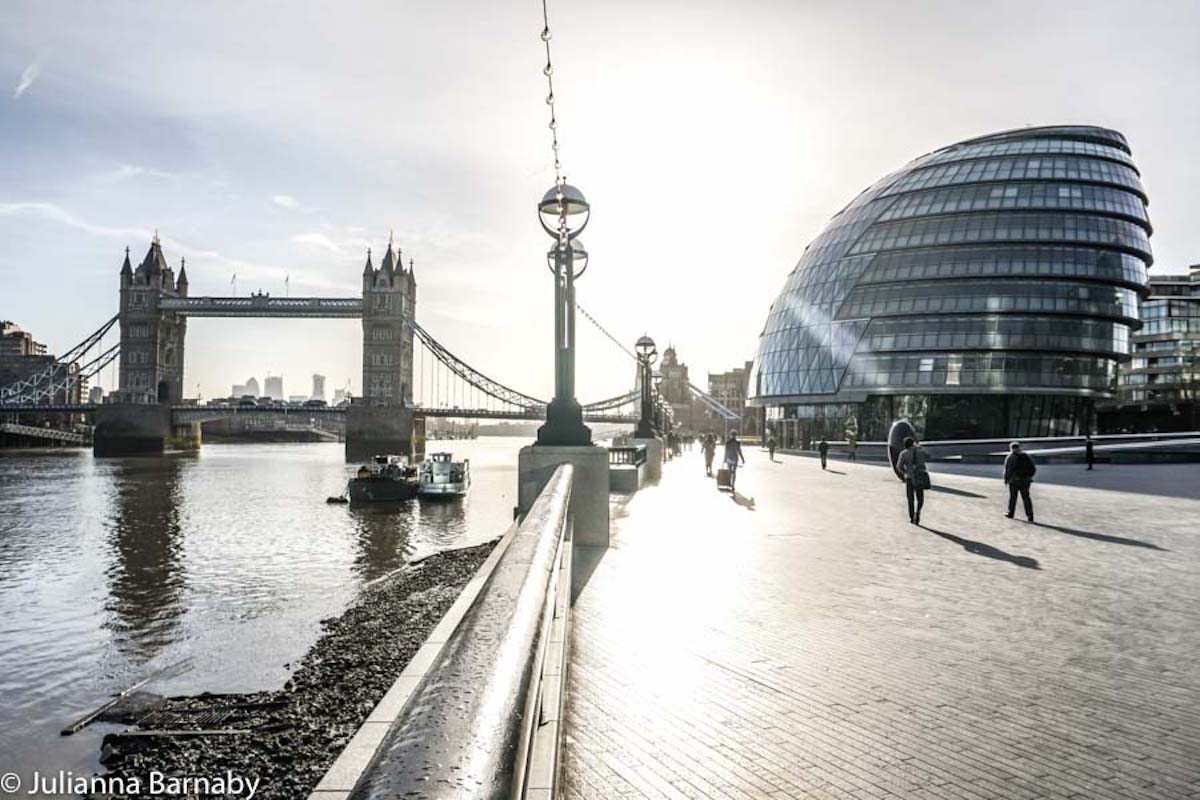
- Best free view: from the Scoop by City Hall on the south bank, or from Tower Wharf on the north. Both beat anything you can see from on top of it.
The London x London Take: Skip the ticket and go at a lift instead. Tower Bridge raises around 800 times a year, the times are published free online, and standing on the north bank watching 1,100 tonnes of bascule swing up is a better experience than the walkways. Then, if you’re still keen, book the Behind-the-Scenes tour rather than standard entry – the Victorian engine rooms and the bascule chambers are the real thing.
Read next
- 21 Tower of London facts, including the ten executions on Tower Green
- Facts about London you probably didn’t know
- Victorian London: what’s left of it
- The best restaurants near Tower Bridge
- London’s best sightseeing attractions
- The best quotes about London
- River Thames facts
- Where to find the best views in London