
A church the Blitz left standing open to the sky and now full of vines. A warehouse in Walthamstow packed floor to ceiling with salvaged neon. A working windmill hidden between terraced houses in Brixton. The most Instagrammable places in London are not the ones on the postcards, and all forty-three of ours are below.
Some of these you will know. Some of them we have been quietly going back to for years, and a few we would not send you to at all if you only had one morning, which we have said where it applies.
We have grouped them by what you are actually after, whether that is a view, a wall of colour or a ceiling worth craning your neck for.
Quick answers
- Best free view: Sky Garden, still free, though tickets now release on Mondays three weeks ahead and there are paid walk-in slots when they run out
- Best ceiling: the Painted Hall in Greenwich, £19, and the ticket converts to a twelve-month pass if you ask
- Best colour: Chalcot Road in Primrose Hill early on a weekday, before the crowds and the parked cars
- Most overlooked: Penge, which has street art the equal of Shoreditch and none of the queues
- Book ahead: Sky Garden, the Barbican Conservatory and Brixton Windmill tours all need it now
The views
Rooftops, high windows and one hill. Most of them cost nothing more than a drink.
Sky Garden
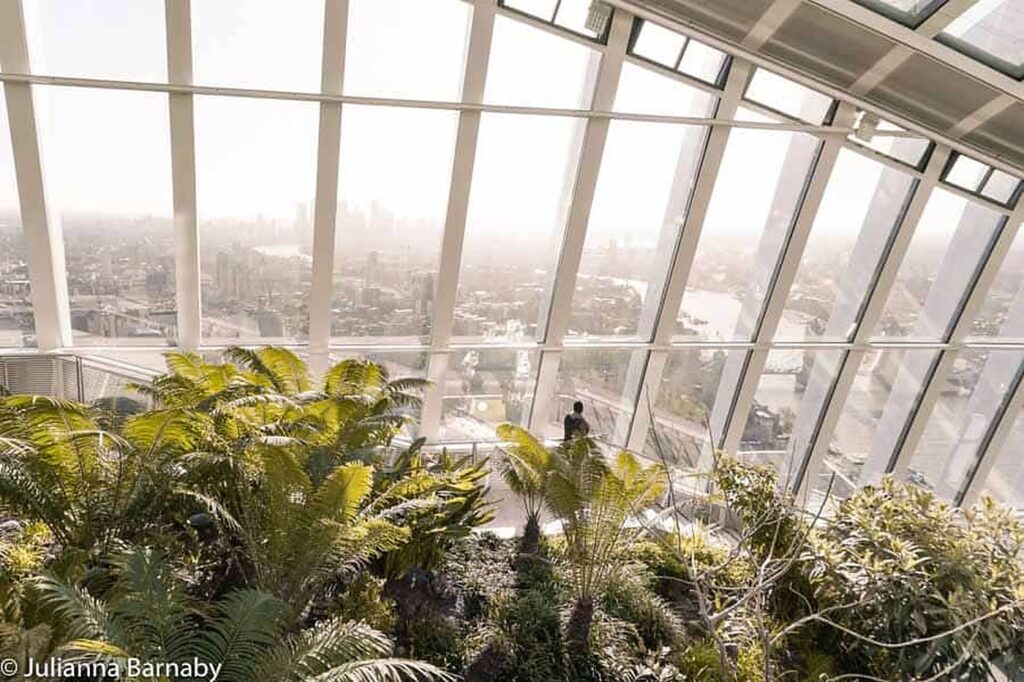
The garden on top of the Walkie Talkie is not exactly a secret, as anyone who has tried to book one of the free tickets will tell you. They release on Mondays, three weeks ahead, for the following week, and the slots last an hour.
It heads our list of London’s best rooftop bars. We have turned up on spec and found the walk-in queue already full, so learn from that. Our long-standing trick still works: go up for breakfast instead. Buy a coffee and a croissant and you skip the ticket lottery entirely. We did it on a whim once and had the place practically to ourselves, five or six other people wandering about, nothing like the crush later in the day. Worth knowing that Sky Garden has also added paid walk-in slots, around £11.50 in the early morning and £15.50 in the evening with a drink included, for when the free tickets are gone.
20 Fenchurch Street, EC3M 8AF
Aqua Shard
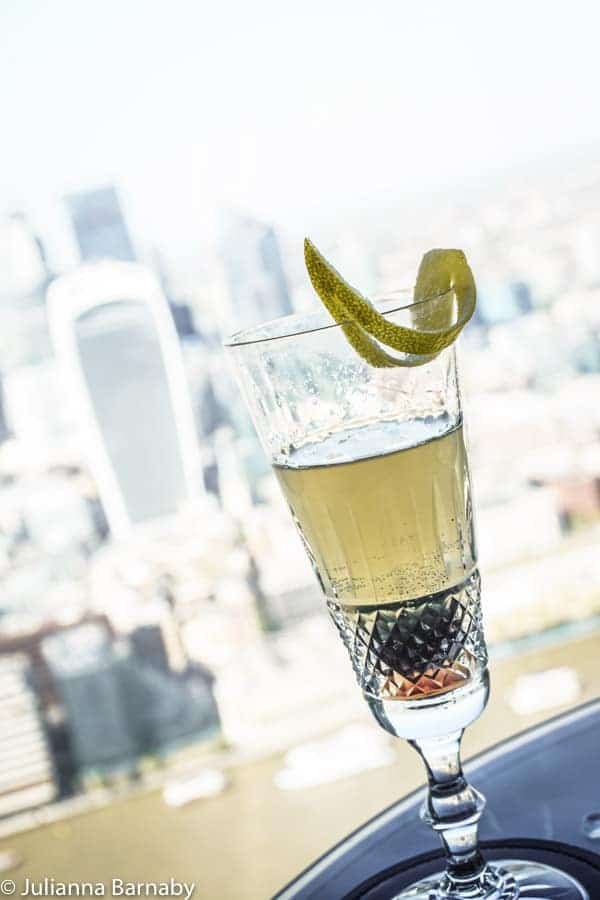
You do not need to pay for The View from The Shard. Head instead to Aqua Shard on level 31, where the bar takes walk-ins as well as reservations and the price of entry is a cocktail.
The three-storey atrium window is the shot. Go early evening for the light and be prepared to wait for a window table if you have not booked.
Level 31, The Shard, 31 St Thomas Street, SE1 9RY
Radio Rooftop
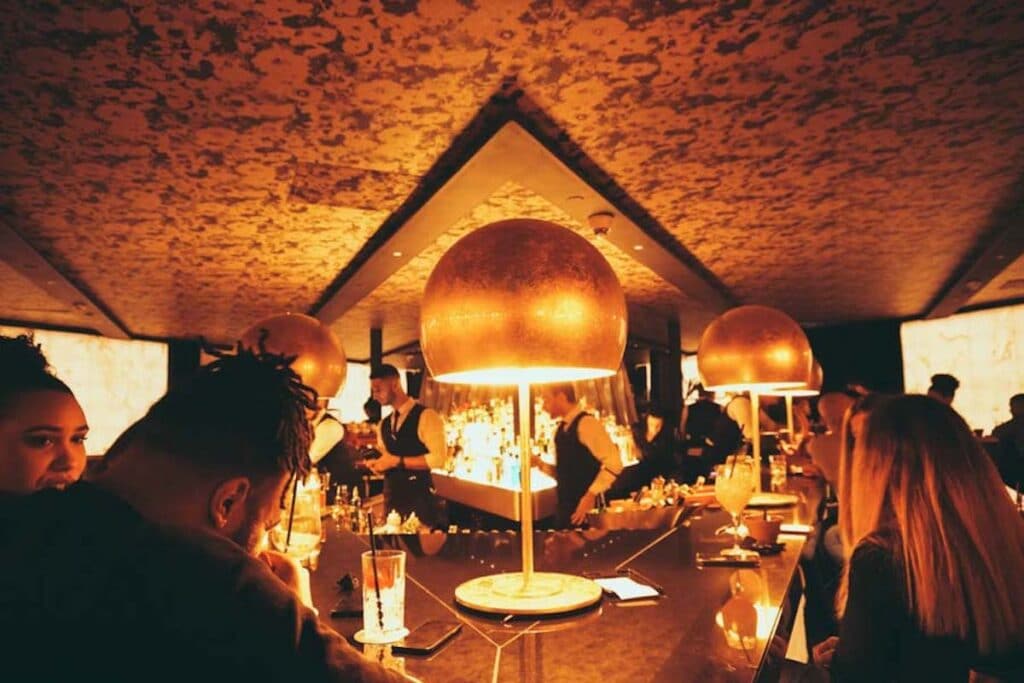
We will be honest: the Friday queues here are ridiculous and the service has never impressed us. One member of staff was out and out rude on our last visit, though the mixologists at the bar were unfailingly courteous all night, so pick your seat accordingly. But the position is superb, looking straight down the Thames from the top of the ME hotel, and Radio relaunched in 2024 with a modern Asian menu that is a considerable improvement on what came before.
Come during the day when it is quiet, which is when the photographs are better anyway.
336-337 Strand, WC2R 1HA
Sabine Rooftop
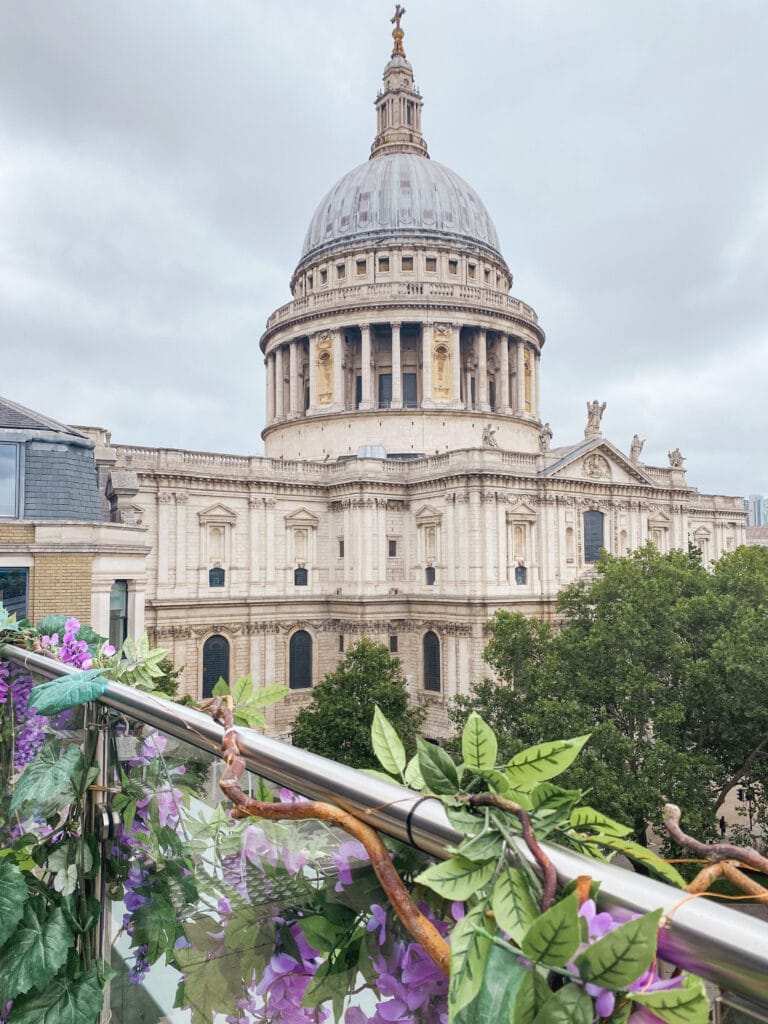
A floral rooftop looking directly across at the dome of St Paul’s, which is about as good a backdrop as the City offers. Book the St Paul’s site rather than the Holborn one, and ask for a table on the dome side when you reserve — the other half of the roof looks at offices. Sabine sits on top of the Leonardo Royal at St Paul’s, not the Ned, which is the mix-up we hear most often.
Winter hours drop to Tuesday to Saturday from October, and it is over-21s after 4pm.
10 Godliman Street, EC4V 5AJ
The London Eye
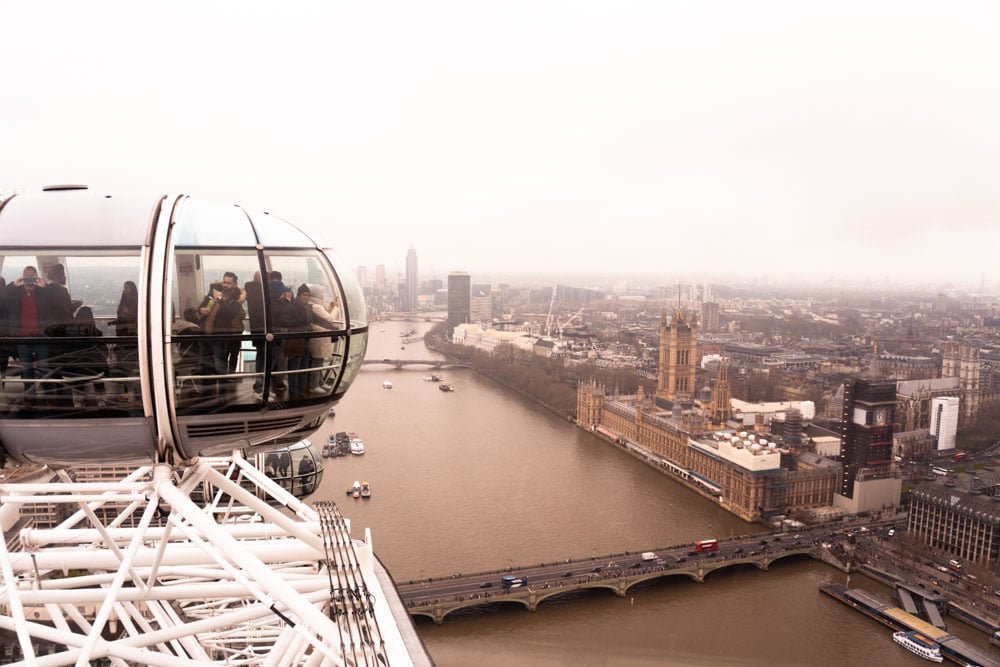
The shot is not the wheel itself, which everybody has, though our London Eye facts will give you something to say while you queue. It is from inside your capsule just after the apex, with the capsule ahead of you framing the Thames and the Palace of Westminster behind it.
Book the first slot of the day if you can. The glass is cleanest and the light is best.
The Queen’s Walk, SE1 7PB
Greenwich Park
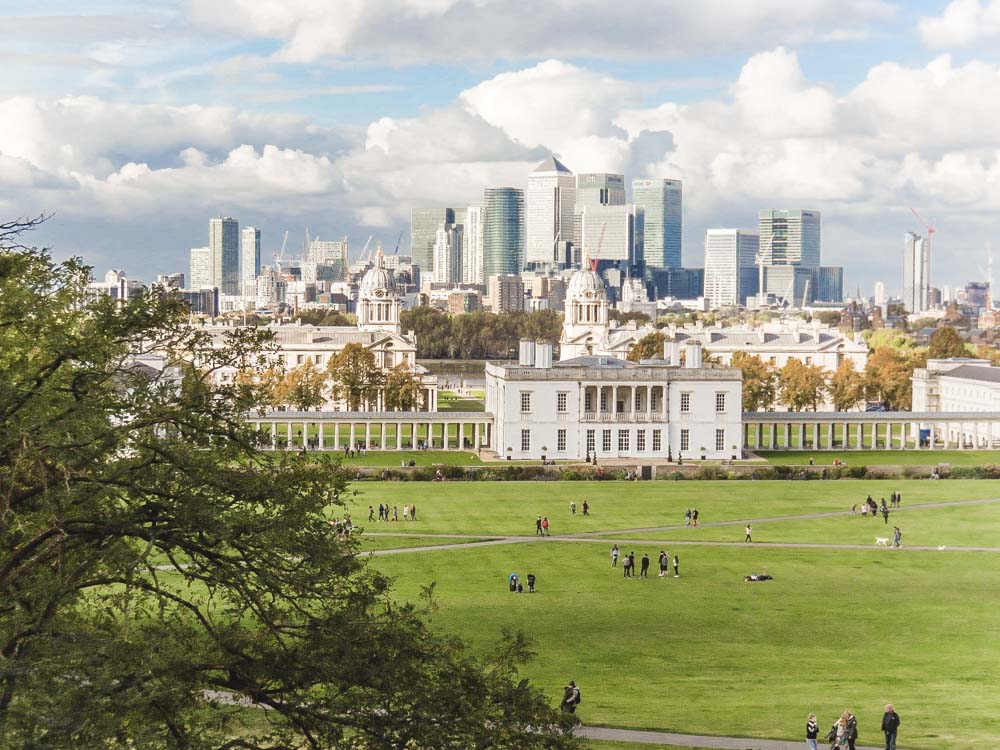
Walk up the hill to the Observatory and turn around. Below you is the Queen’s House and the Old Royal Naval College laid out on Inigo Jones’s axis, with Canary Wharf rising behind it, which is four hundred years of London architecture in a single frame.
The O2 and the Emirates cable car are off to the right, the Walkie Talkie and the Cheesegrater in the middle distance. Our Greenwich guide covers the rest of the hill.
Come up the hill at the end of the day rather than the middle of it. The sun sets behind the Old Royal Naval College from up there, and the crowd on the meridian line has gone home by six.
Greenwich, SE10 8QY
Trellick Tower
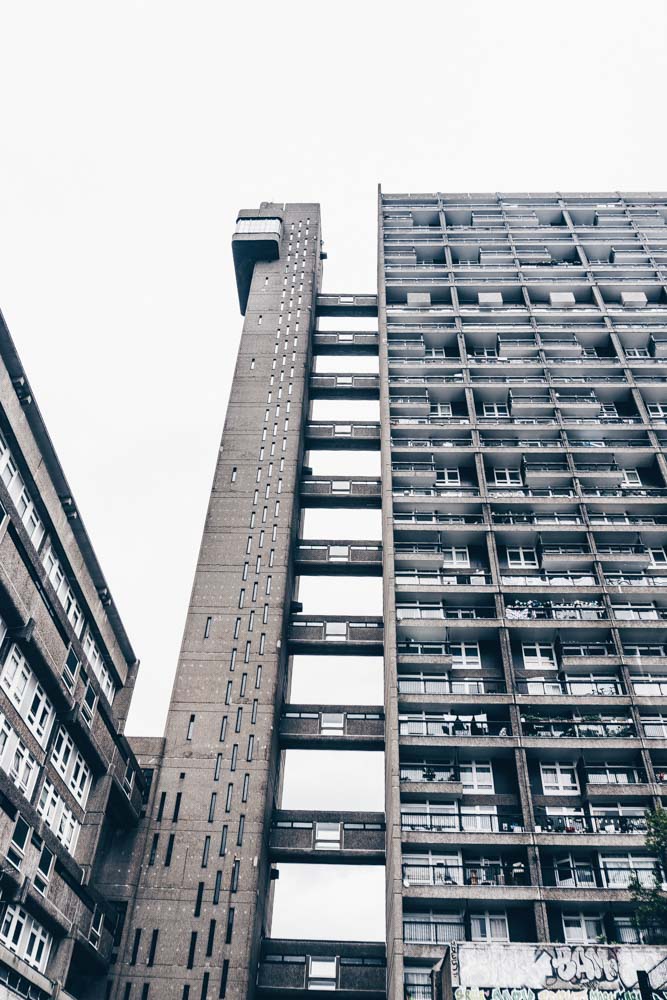
Ernö Goldfinger’s 322-foot brutalist tower, with its separated lift shaft joined to the block by walkways every three floors, and one of the buildings that most divides London. We are firmly in favour.
To be clear about access: it is private housing, so this is an exterior shot. Photograph it from Golborne Road, from the canal, or from Meanwhile Gardens. The only way inside is an Open House slot in September, which is heavily oversubscribed. Trellick Tower gets its own piece here and more in our guide to brutalist London.
5 Golborne Road, W10 5NR
The classic shots
The ones everybody wants, and where to stand so yours is not the same as everybody else’s.
St Paul’s from the Millennium Bridge
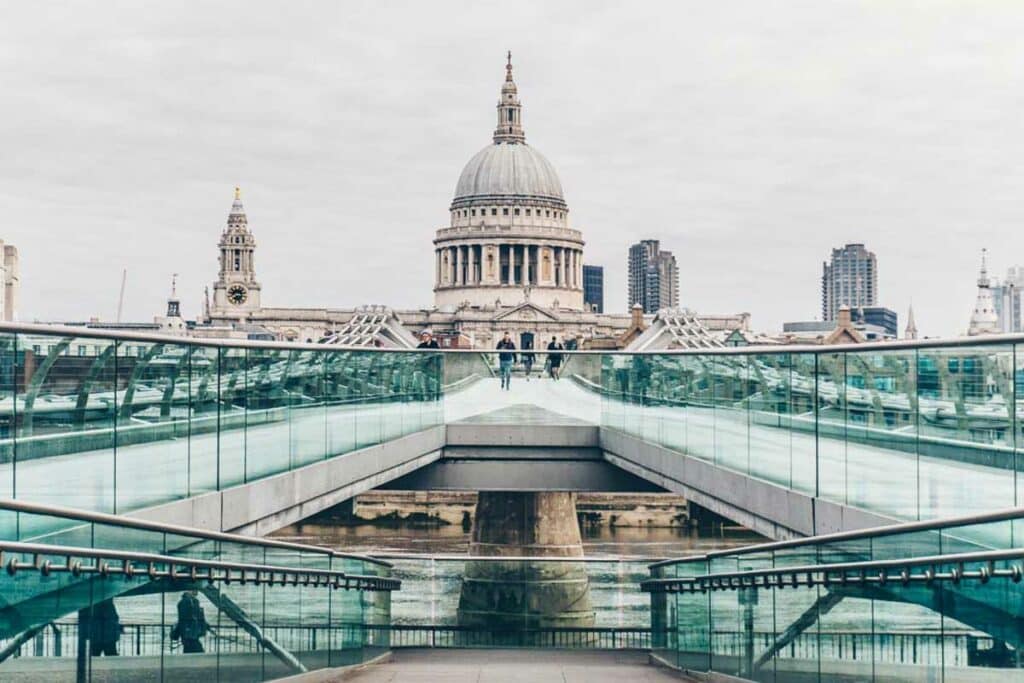
The single most reliable composition in London. Standing on the bridge, the dome sits perfectly framed between the office blocks either side, which is exactly what Foster intended.
Go at first light. By ten the bridge is full and you will be shooting over shoulders. The wobble, and why it happened, is in our Millennium Bridge facts.
Millennium Bridge, EC4V 3QQ
Big Ben from the South Bank
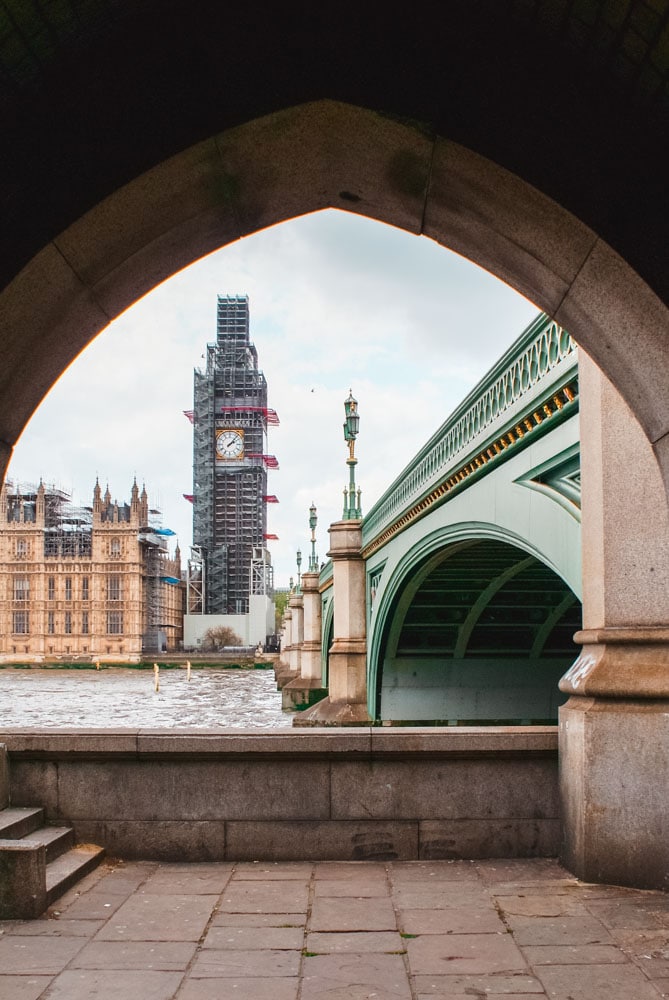
On the far side of Westminster Bridge from the Palace there is a small passage leading underneath it, and the entrance frames Big Ben almost too neatly. Now that the tower has been fully restored and repainted, it is worth another look even if you photographed it years ago. We have Big Ben facts, Parliament facts and a piece on Westminster Bridge if you want the detail.
Belvedere Road, SE1 7GA
Tower Bridge
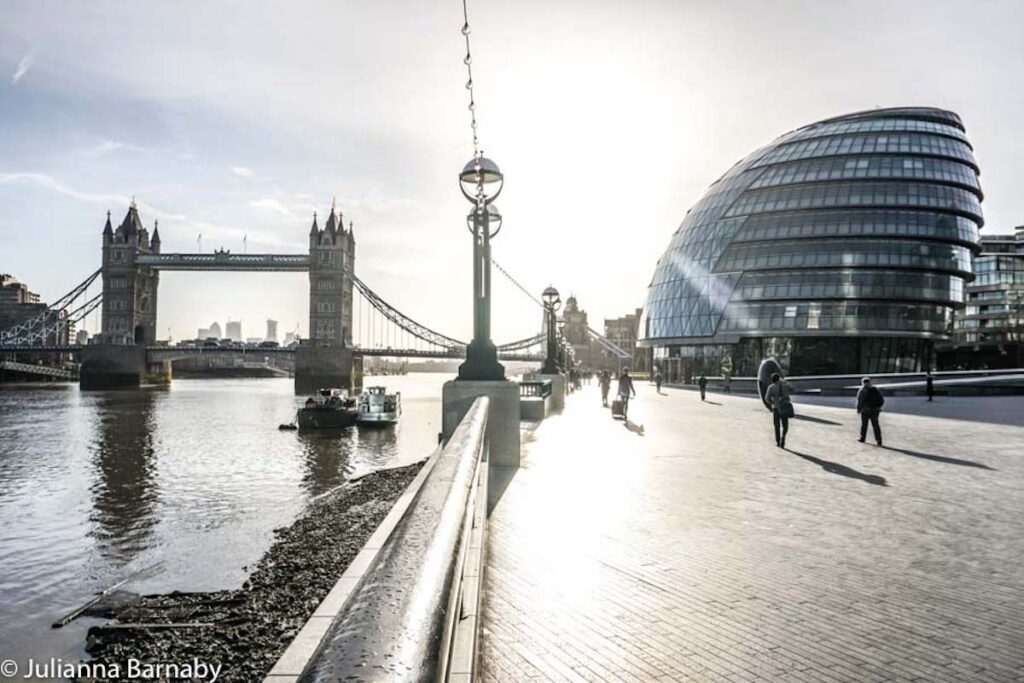
Two spots beat the obvious one. There is a traffic island in the middle of the road on the south side that gives you the bridge dead centre. Or head to Girl with a Dolphin on St Katharine’s Walk on the north bank, which puts the whole thing side-on with the river in front. Our Tower Bridge facts cover how the bascules actually work.
Tower Bridge Road, SE1 2UP
The Changing of the Guard
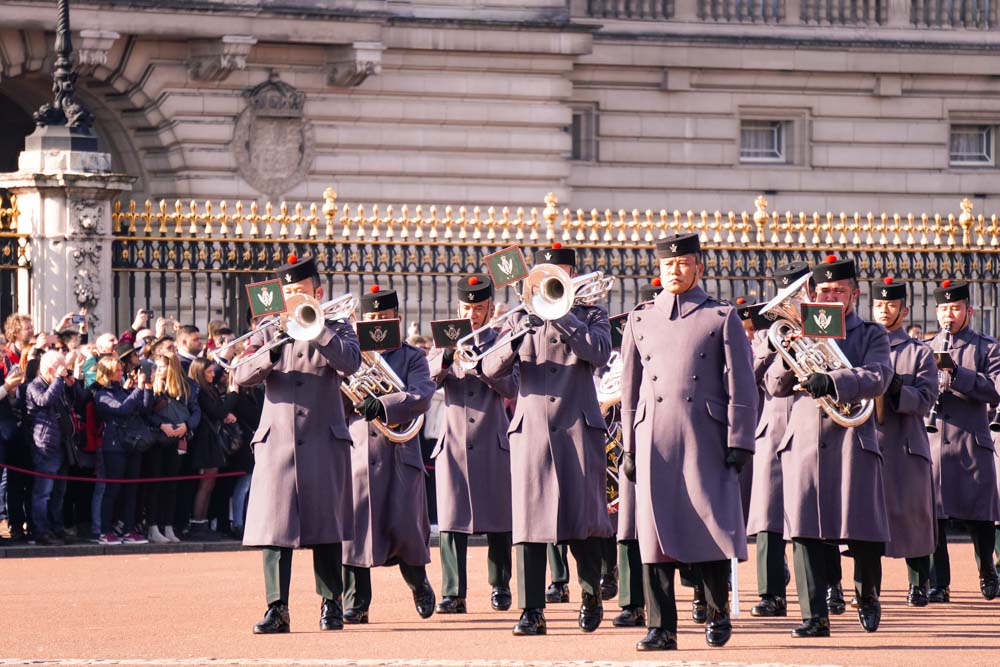
Buckingham Palace, and a crowd to match. It does not run daily, so check the schedule before you go rather than turning up and hoping, and arrive at least 45 minutes early for anywhere near the railings.
If the front of the palace is a scrum, the guards march down the Mall and along Birdcage Walk, which is where you get them moving rather than static behind a fence. Timings and route are in our Changing of the Guard guide.
Buckingham Palace, SW1A 1AA
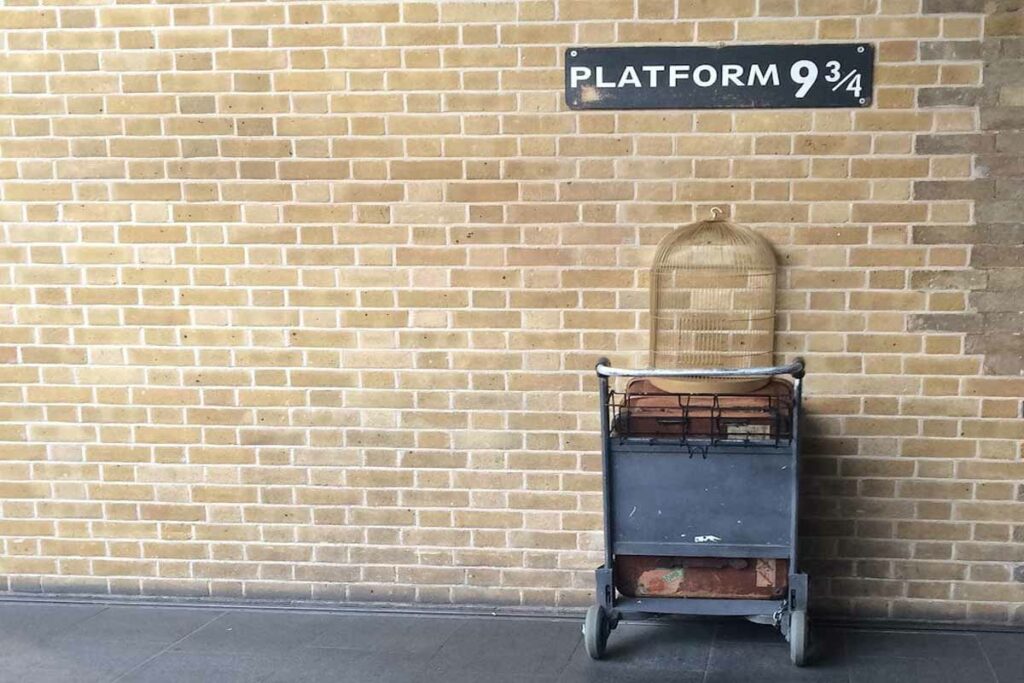
Platform 9 ¾
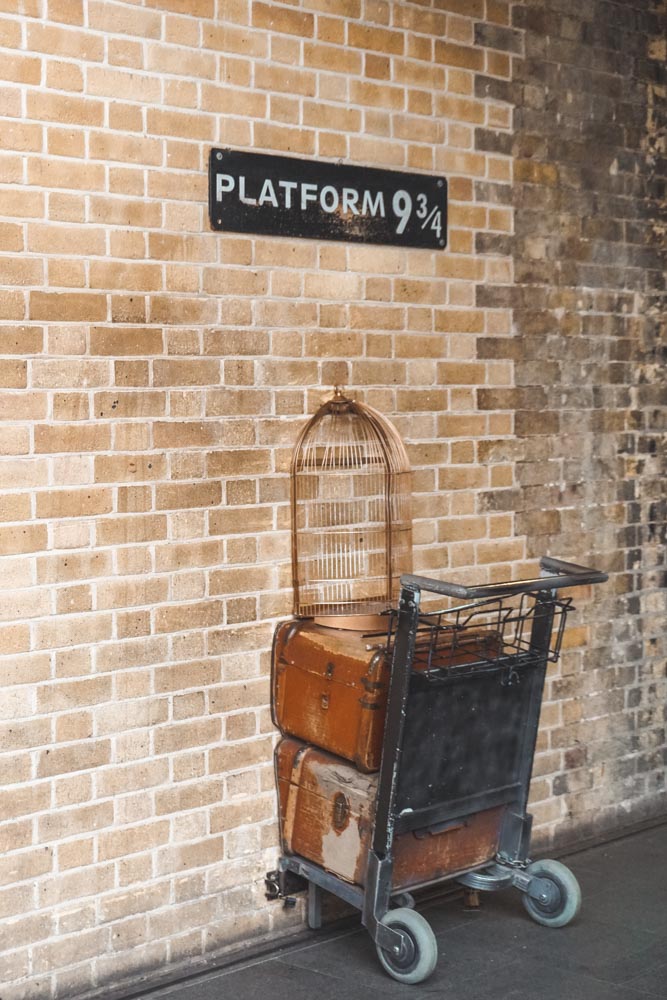
A trolley disappearing into a brick wall at King’s Cross, a plaque above it, and a queue that regularly runs to an hour at weekends. Staff will hand you a scarf and throw it for you mid-shot, which is the whole point.
Go on a weekday morning. The shop next door is where the queue actually starts. The other stops are in our Harry Potter London guide.
King’s Cross Station, N1 9AL
The K2 telephone boxes
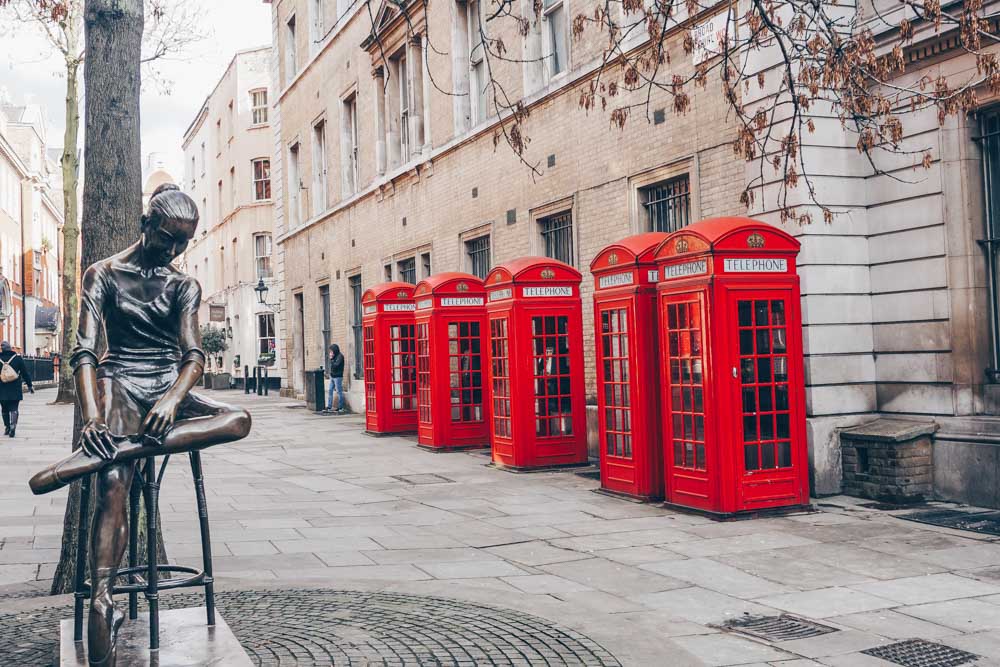
Not many of Giles Gilbert Scott’s original K2 boxes survive, and this row on Broad Court behind the Royal Opera House is the prettiest surviving set in the city.
Late afternoon light down the court is the best of it, and it is quieter than the Covent Garden piazza a minute away.
Broad Court, WC2B 5QH
Colour
Where London stops being grey. Two requests: several of these are people’s homes, and Sunday mornings are busier than you think.
The colourful houses of Notting Hill
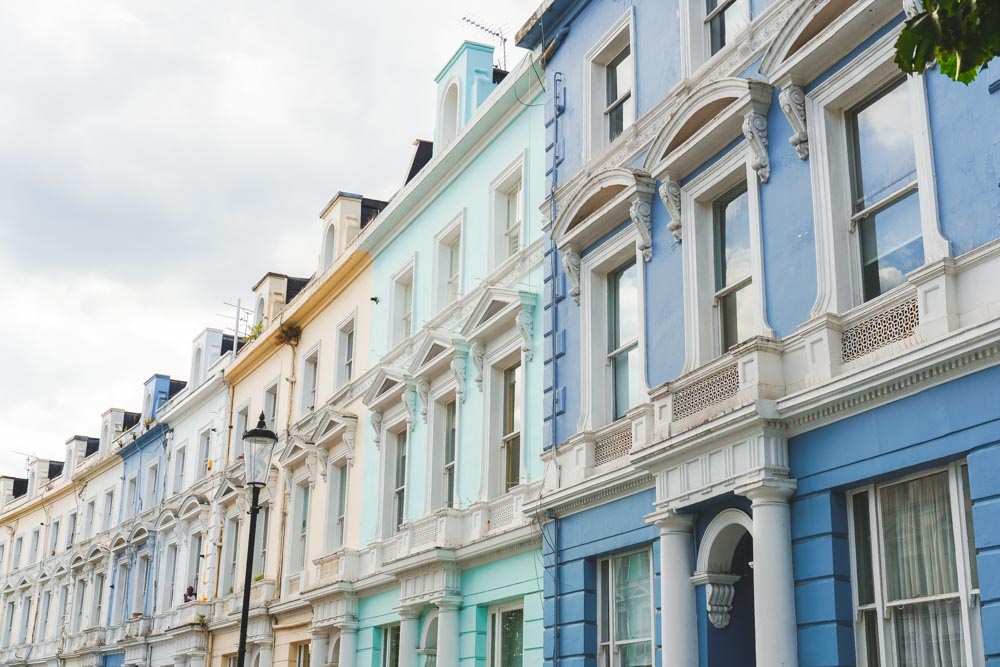
Lancaster Road and Portobello Road are the ones people come for, though there are equally good runs on Colville Terrace and Denbigh Terrace with a fraction of the traffic.
We feel duty bound to say it: these are people’s actual homes. Photograph the street, not somebody’s front door as though it were a film set. More of the area in our guide to things to do in Notting Hill.
Lancaster Road, W11 1QR
Chalcot Road, Primrose Hill
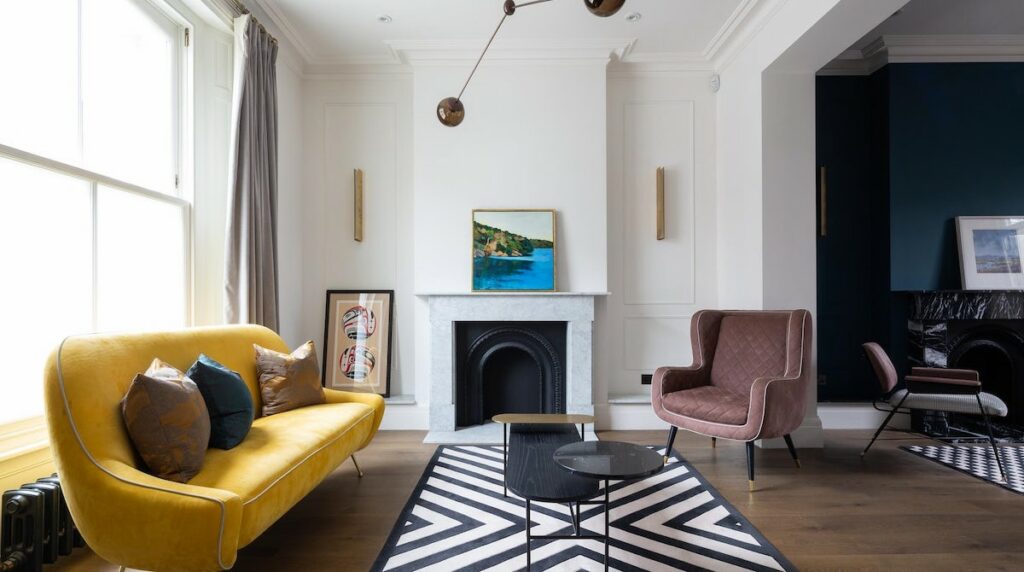
Chalcot Square and Chalcot Road are the pastel heart of it, with Gloucester Avenue nearby. Sylvia Plath and Ted Hughes lived at 3 Chalcot Square, which has a blue plaque, and the terraces around it run through every shade of ice cream.
Early morning, before the parked cars fill in. Same rule as Notting Hill about front doors. The rest of the streets are in our Primrose Hill guide.
Chalcot Road, NW1 8LH
Neal’s Yard
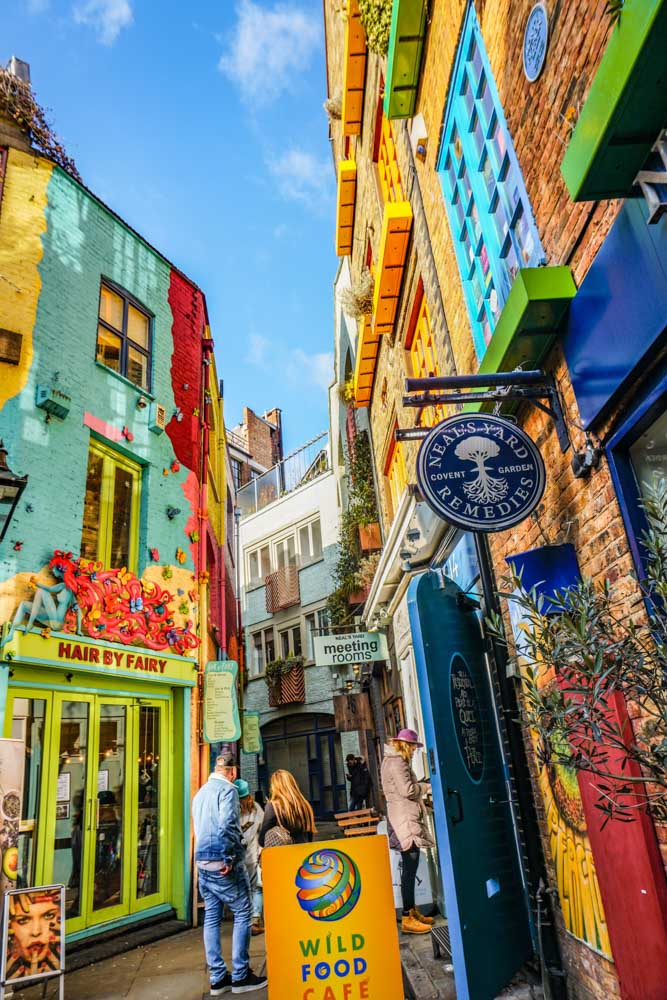
A courtyard of painted buildings and hanging plants reached through two easily-missed passages off Monmouth Street and Shorts Gardens. It was saved from demolition in the nineties and is now one of the most photographed corners of Covent Garden.
It is small, and by lunchtime there is a queue for the good angle. We have a full piece on Neal’s Yard and how to find it.
Neal’s Yard, WC2H 9DP
Columbia Road Flower Market
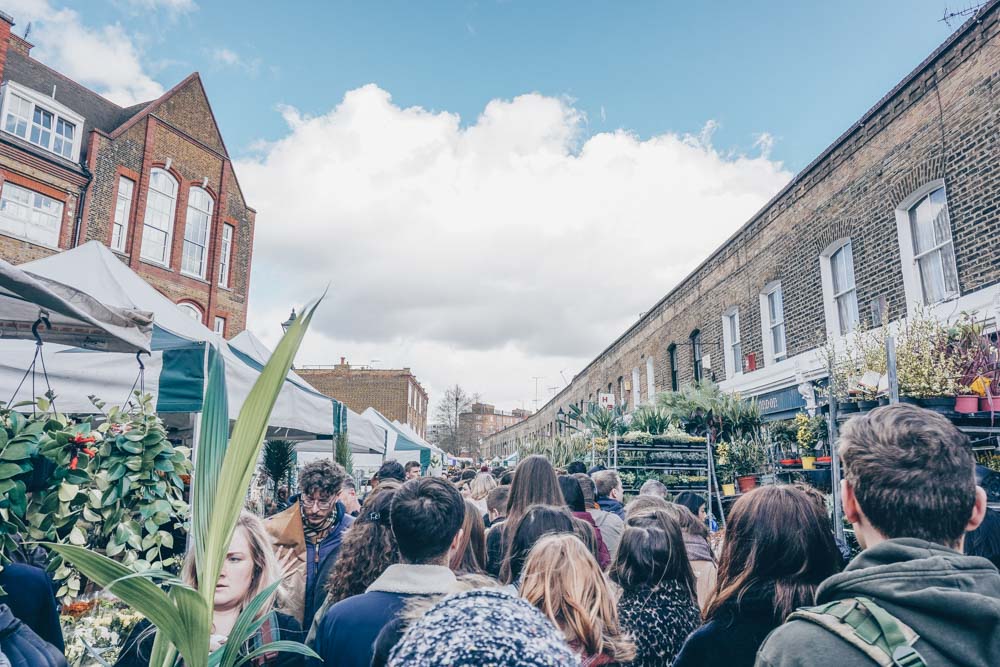
Sunday mornings only, and the flowers are the whole street. Get there before nine if you want the stalls full and the crowd thin, because by eleven you are photographing the backs of people’s heads.
The shops along the road open the same day and are worth the detour. Our Columbia Road guide has where to eat around it.
Columbia Road, E2 7RG
Leake Street Tunnel
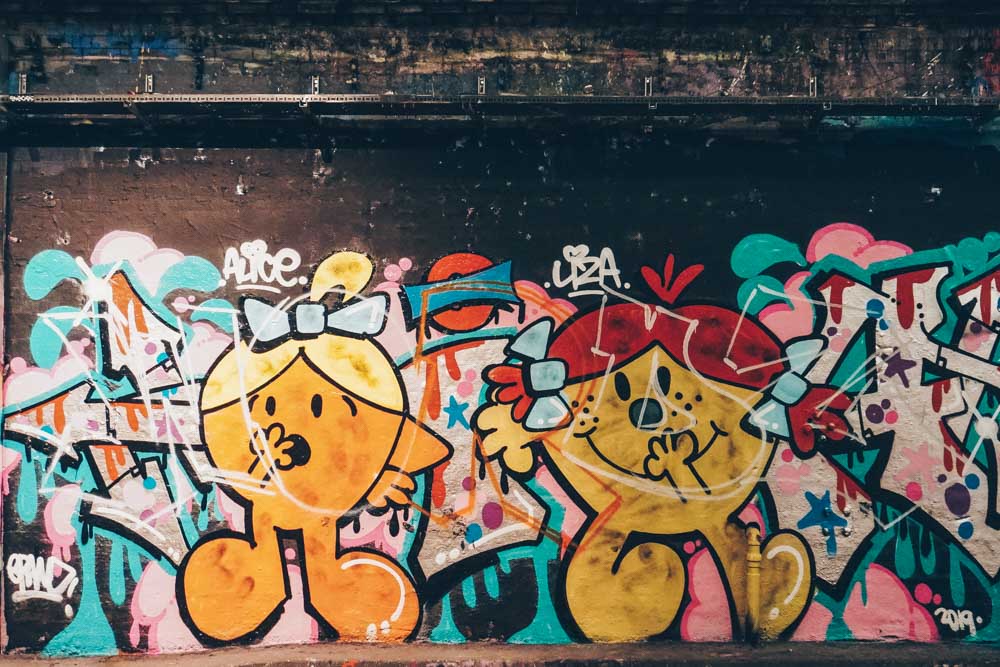
London’s largest legal graffiti wall, under the platforms at Waterloo, and it changes constantly. Get your timing right and you will photograph a piece that was finished that morning.
It is dark, so bring something fast or be prepared to push the ISO. There are bars and food places along it now, which has made it a good deal less grim after dark. Everything else about Leake Street is here.
Leake Street, SE1 7NN
Street art in Shoreditch
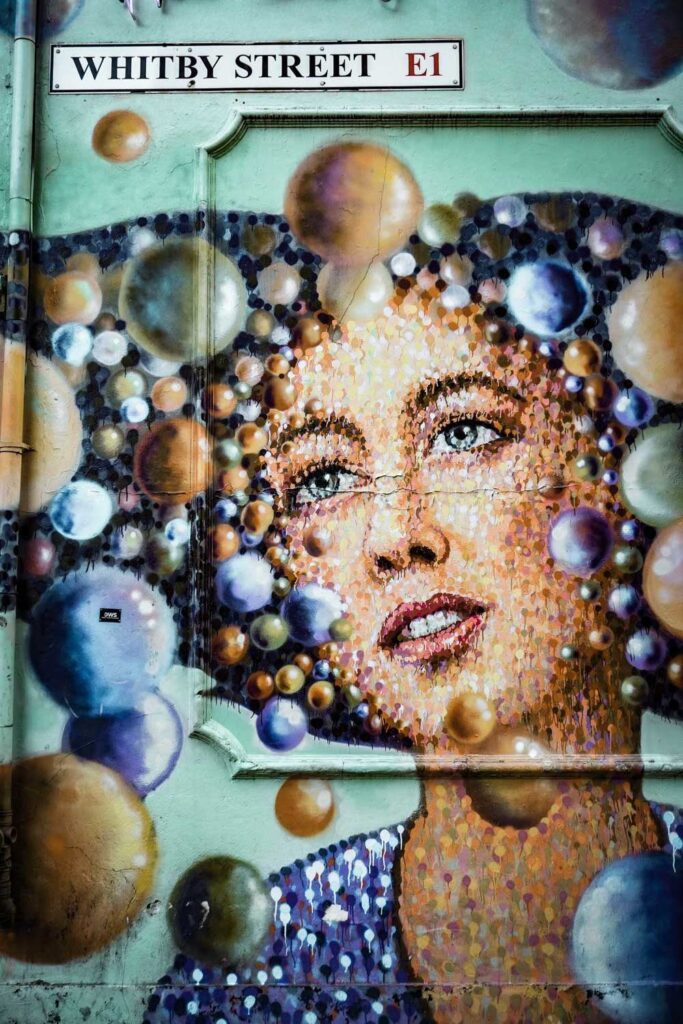
World class, and genuinely worth two hours minimum. The roads around Brick Lane carry work by Dale Grimshaw, Mr Cenz and others, and there is Banksy still hiding in plain sight if you know where.
We run a free self-guided route in our Shoreditch street art tour if you would rather not wander at random.
Shoreditch, E1
Penge street art

Our favourite piece of contrarianism on this list. Penge has murals by Zabou, Mr Cenz, Dan Kitchener and Ant Carver, the same names as Shoreditch, and none of the crowds whatsoever.
You can walk the lot in an afternoon and photograph every piece without a single person in frame, which is not something Shoreditch has offered since about 2014. Our Penge street art guide maps them.
Penge, SE20
God’s Own Junkyard
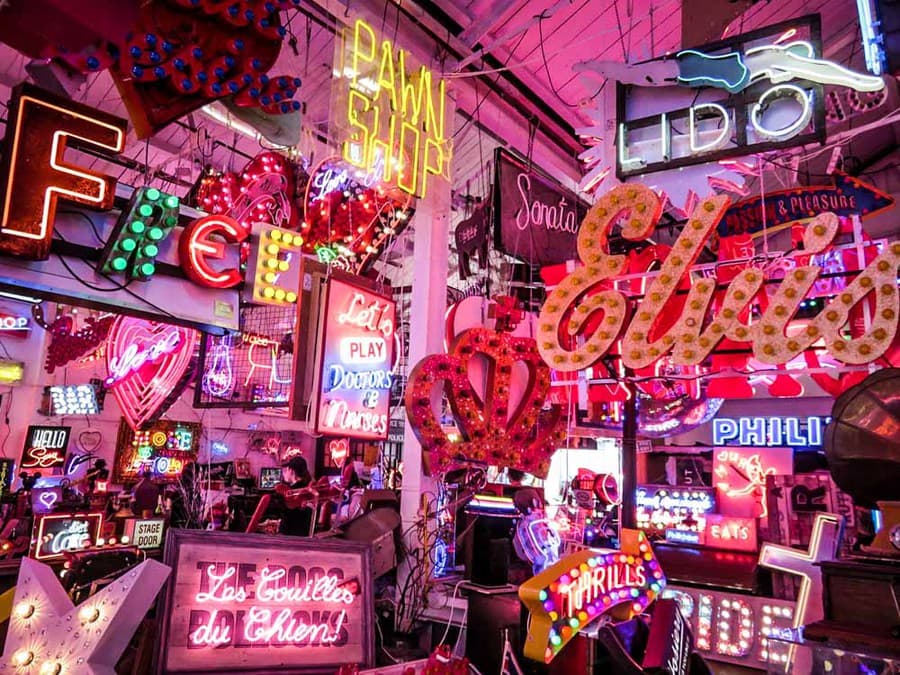
Walking into this warehouse of salvaged neon is like walking into a seventies film on fast-forward. Signs stacked to the ceiling, a lot of them from film sets and old Soho, and a café in the middle of it.
Entry is free. It opens Friday and Saturday 11am to 10pm and Sunday 11am to 6pm, and closes early for private events on some Saturdays, so check before you travel out to Walthamstow. We went into God’s Own Junkyard properly a while back.
Go on a Friday evening rather than a Sunday afternoon. The neon reads properly once it is dark outside, and the café in the middle is a much better hour than it looks.
Unit 12, Ravenswood Industrial Estate, Shernhall Street, E17 9HQ
Peggy Porschen
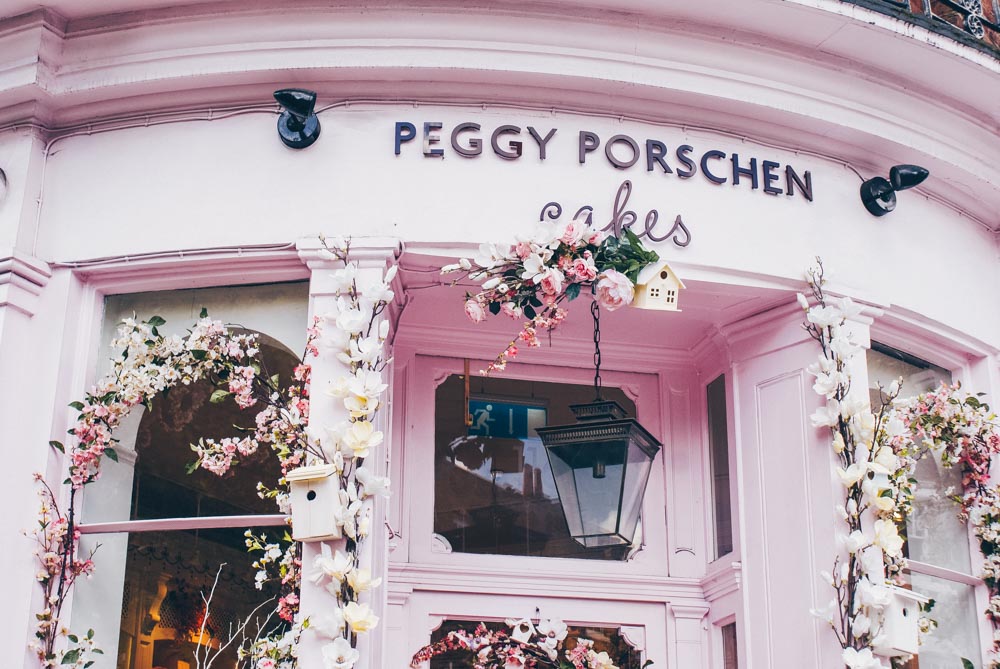
Pink facade, rose bushes, cupcakes to match. The Belgravia parlour is the original and, since 2024, the only one.
Walk in for the all-day menu; the parlour experiences need booking. It makes our list of London’s best bakeries, and the streets around it are in our Belgravia guide.
Walk in for a coffee and a slice rather than booking an afternoon tea. You get the same facade, the same rose bushes and the same cake for a fraction of the outlay.
116 Ebury Street, SW1W 9QQ
The Churchill Arms
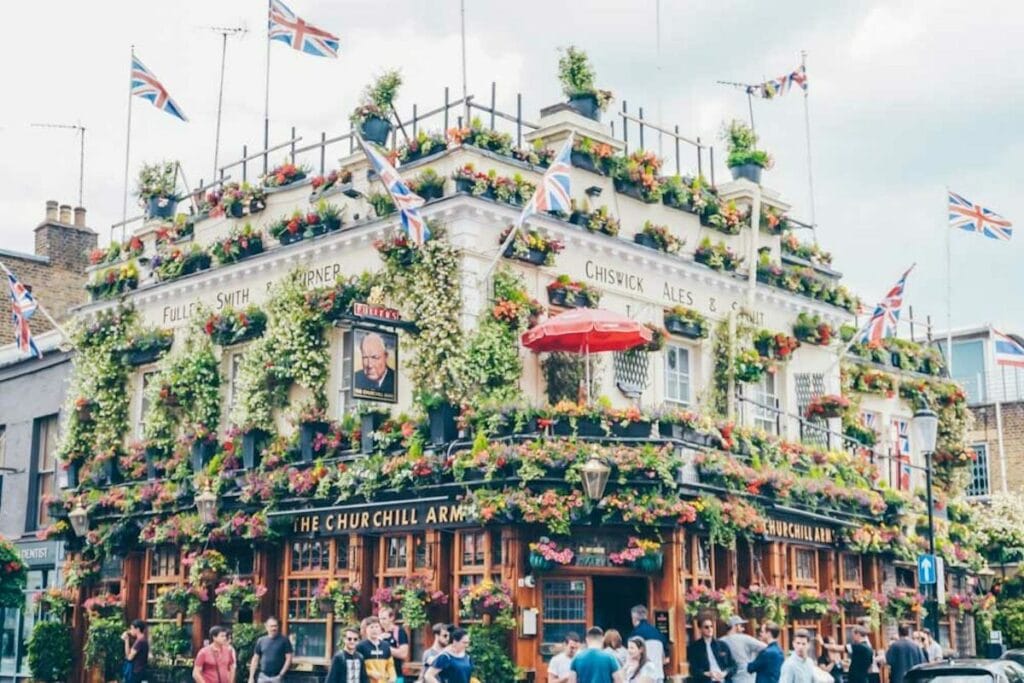
Around a hundred hanging baskets in summer and nearly a hundred Christmas trees in December, on a pub so buried in flowers you can barely see the brickwork. Inside is a wall-to-wall Churchill collection and a Thai kitchen at the back.
Winter is genuinely the better photograph. There is more nearby in our guide to things to do in Kensington.
119 Kensington Church Street, W8 7LN
Ceilings, staircases and grand rooms
The half of London that is indoors, and where most of the best photographs actually are.
The Painted Hall, Greenwich
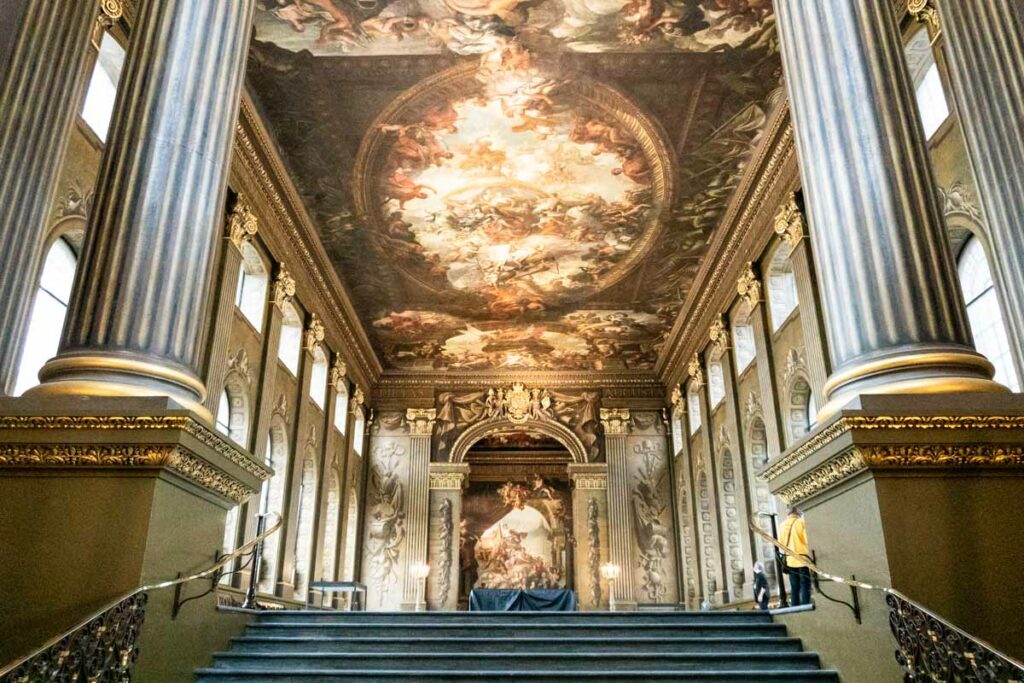
Britain’s answer to the Sistine Chapel, and unlike the Sistine Chapel you are allowed to photograph it. Four thousand square metres of ceiling, two hundred figures, and nineteen years of James Thornhill’s life. He was paid £6,685, which is around £500,000 today, and you can work out the hourly rate yourself.
Adult entry to the Old Royal Naval College is £19, and here is the part nobody mentions: convert it to an annual pass at no extra cost and you have twelve months of returns. Note the lift is currently out of service. Our Painted Hall guide has the rest.
King William Walk, SE10 9NN
The Tulip Stairs, Queen’s House
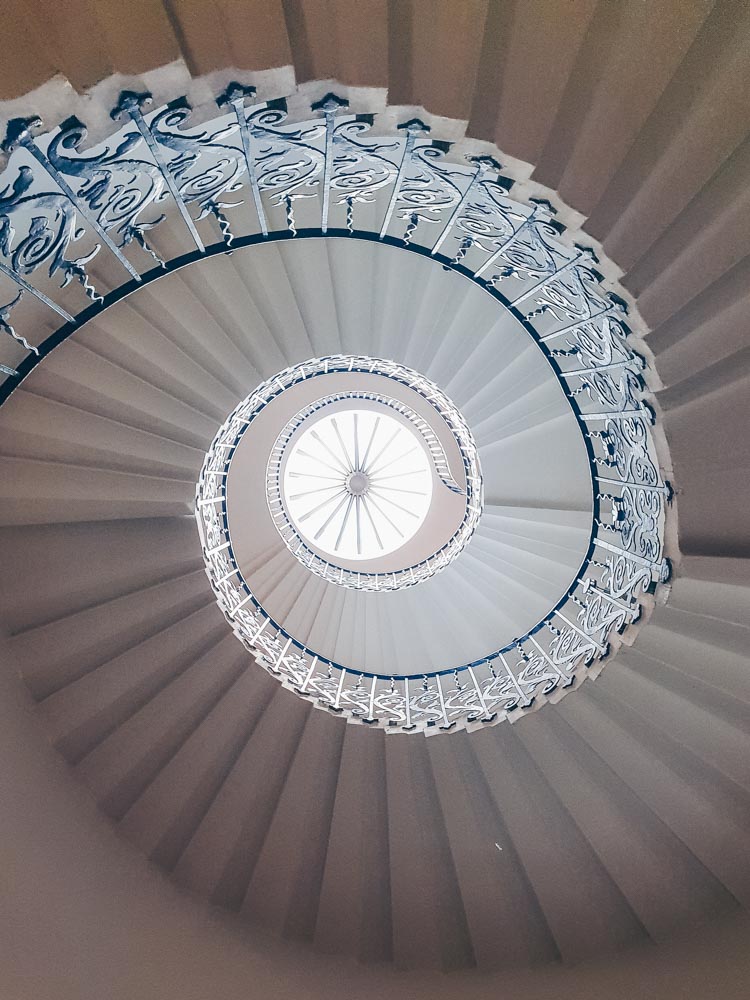
The first geometric self-supporting spiral staircase built in Britain, winding up to a lantern window, and free to visit. Shoot straight up from the bottom.
One practical warning for photographers: the Queen’s House publishes a list of dates when the stairs close for private events, sometimes from late morning. Check it the day before rather than making the trip to Greenwich on spec. The Tulip Stairs have their own write-up.
Romney Road, SE10 9NF
The Nelson Stairs, Somerset House
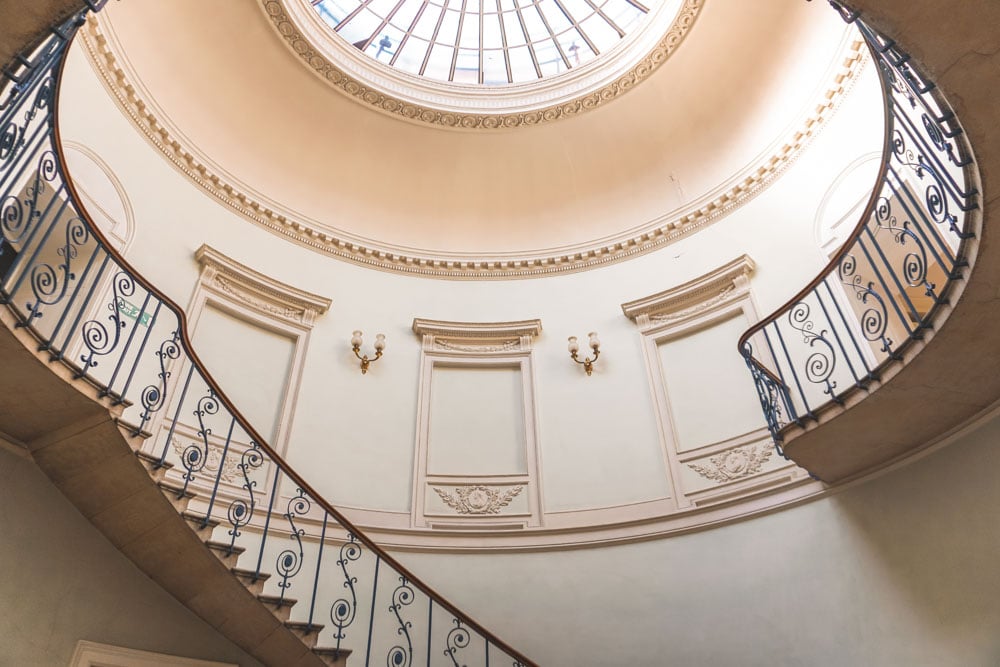
The last of the great Thames-side palaces, and through the maze of corridors is a beautifully winding staircase in a top-lit atrium. Named for Nelson, who used it when the Navy Board was based here. The rest of the building is worth an hour: see our Somerset House guide.
Ask at the front desk for the Nelson Stairs by name. It is not signposted from the courtyard and most people walk straight past the corridor that leads to it.
Strand, WC2R 1LA
The Barbican Conservatory
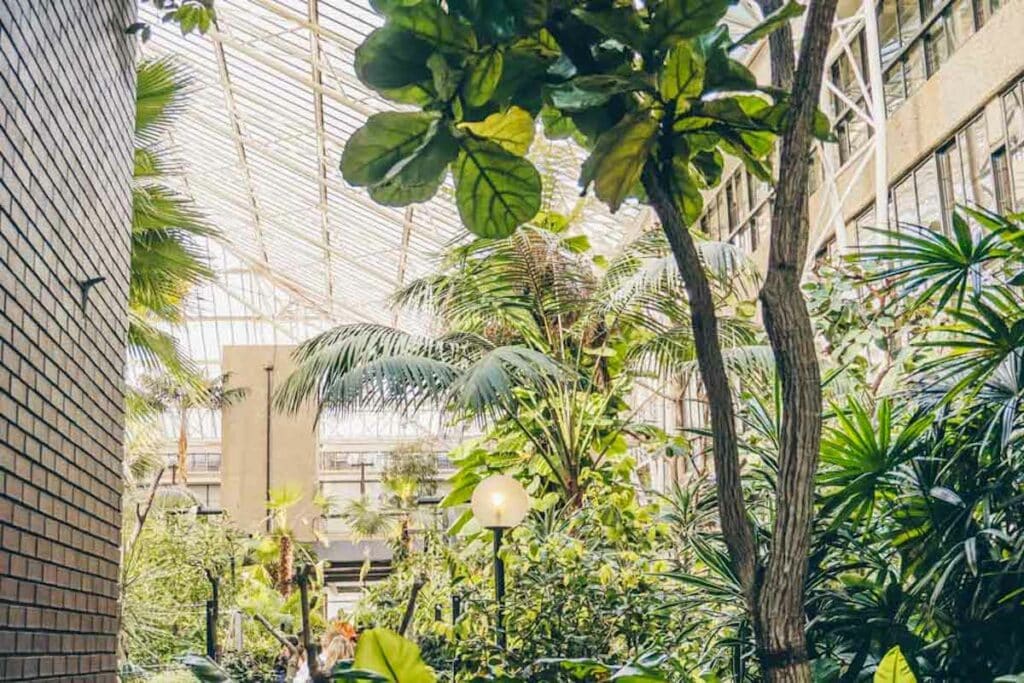
Two thousand species of tropical plant growing over the fly tower of a brutalist theatre, which is one of the strangest and best rooms in London. Free, but it is now ticketed with timed hourly slots released a month ahead, plus a small batch of day tickets from 9.30am.
It opens on scattered dates rather than a fixed weekly pattern, so check the calendar rather than assuming. Go this autumn rather than at some vague point next year: the Conservatory closes for three years from the start of 2027 for the Barbican’s refurbishment. We wrote up the Conservatory in detail after our last visit.
Silk Street, EC2Y 8DS
Leadenhall Market
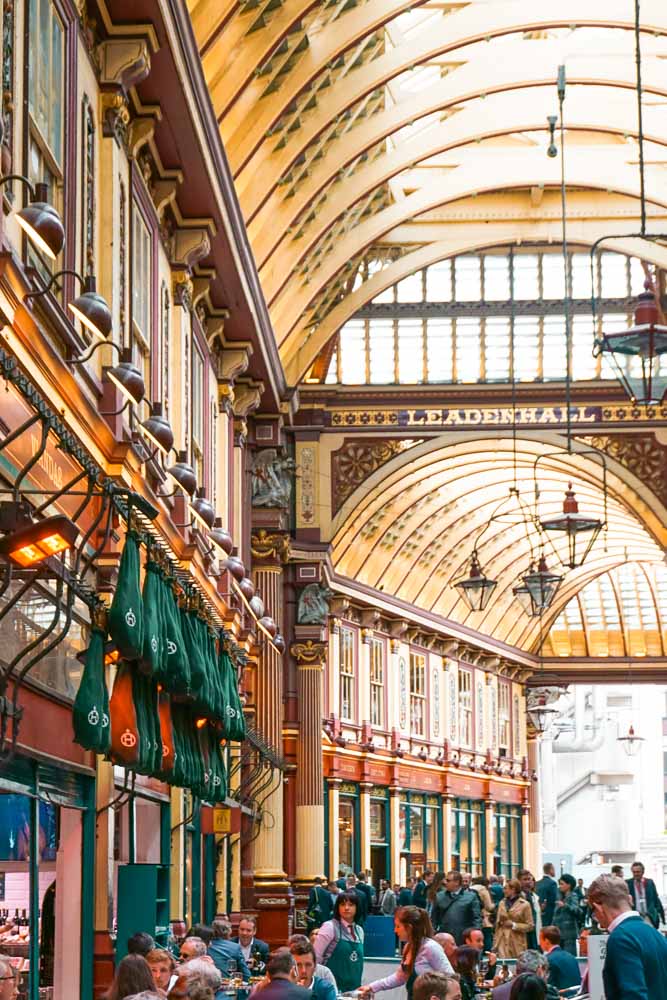
Fifteenth-century in origin, Victorian in its current form, all cream and maroon and gold under a painted glass roof. It stood in for Diagon Alley in the Harry Potter films, which is why the weekends are busier than they used to be.
Early on a weekday morning it is nearly empty and the light comes straight down the arcade. There is a longer read on Leadenhall Market, and another on the real Diagon Alley locations.
Gracechurch Street, EC3V 1LT
Tate Britain
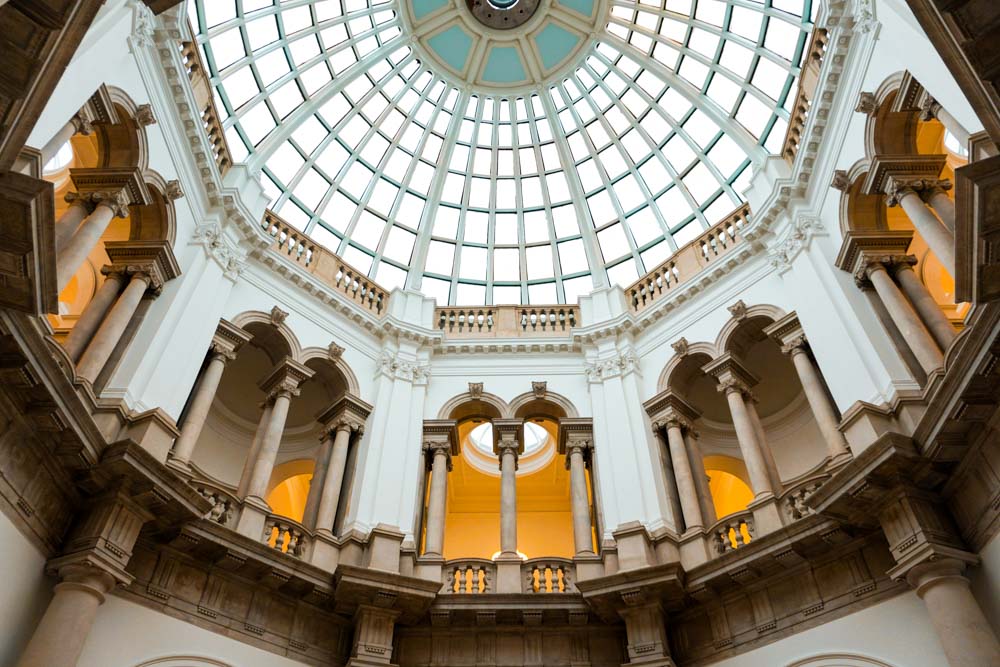
Overshadowed by its younger sister at Bankside, which is your gain. The Rotunda’s spiral staircase and the geometric tiled floor beneath the dome are the shots, and the light-filled Duveen galleries are the other. The very best angle in the building is in the members’ lounge, which is worth knowing if you have a card or know someone who does.
Free, as is most of London’s museum estate.
Millbank, SW1P 4RG
The Natural History Museum

Hintze Hall with Hope the blue whale suspended over it, and Waterhouse’s terracotta arches running the length of the building, carved with animals throughout. The architecture is as good as anything in the cases.
Get there for opening. By eleven the central staircase, which is the best vantage point, is three deep.
Cromwell Road, SW7 5BD
Wilton’s Music Hall
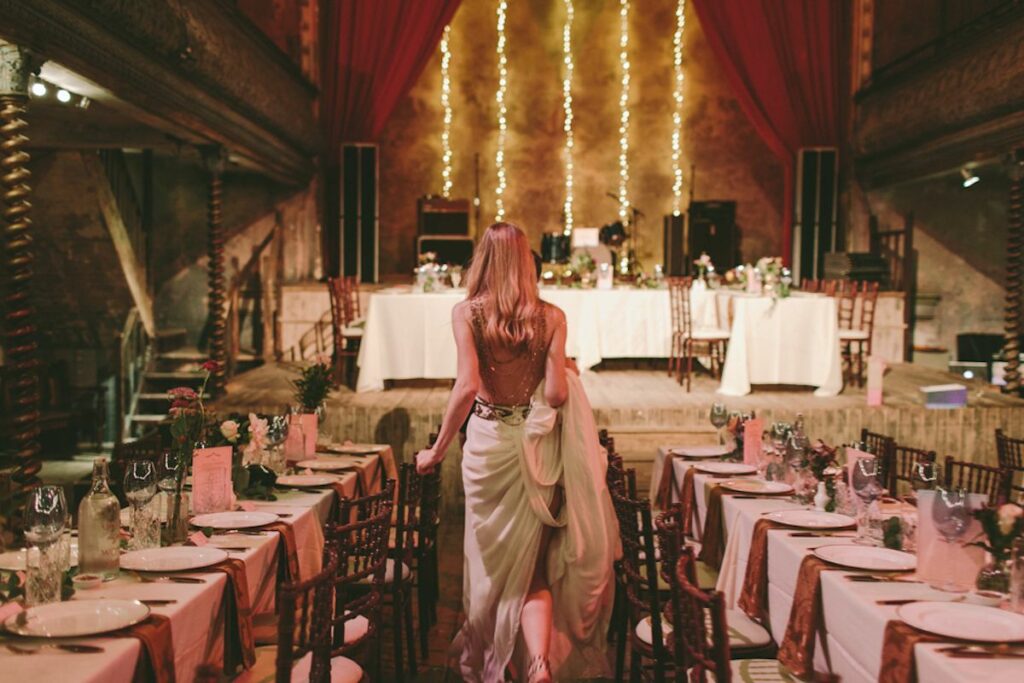
The last surviving grand music hall in the world, tucked down an alley in Whitechapel, and deliberately left in its faded state rather than restored to a shine. The barley-twist columns and the peeling paint are the point.
You will need to time a visit with a performance or with the bar being open, and ask before you set up a tripod.
1 Graces Alley, E1 8JB
Daunt Books
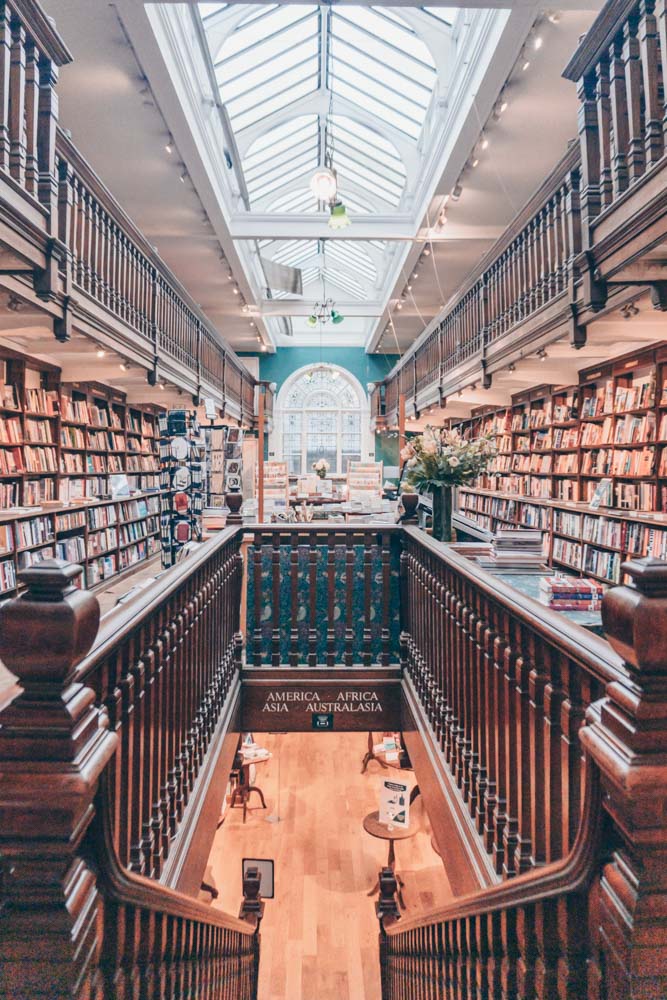
The Edwardian back room at the Marylebone branch is the one: a long oak gallery under a glass roof, with travel books shelved by country from floor to ceiling on both levels.
Be quick and be quiet. It is a working bookshop, not a set, and the staff have seen a great many people with cameras. It leads our roundup of London’s independent bookshops.
84 Marylebone High Street, W1U 4QW
The Winter Gardens at Rules
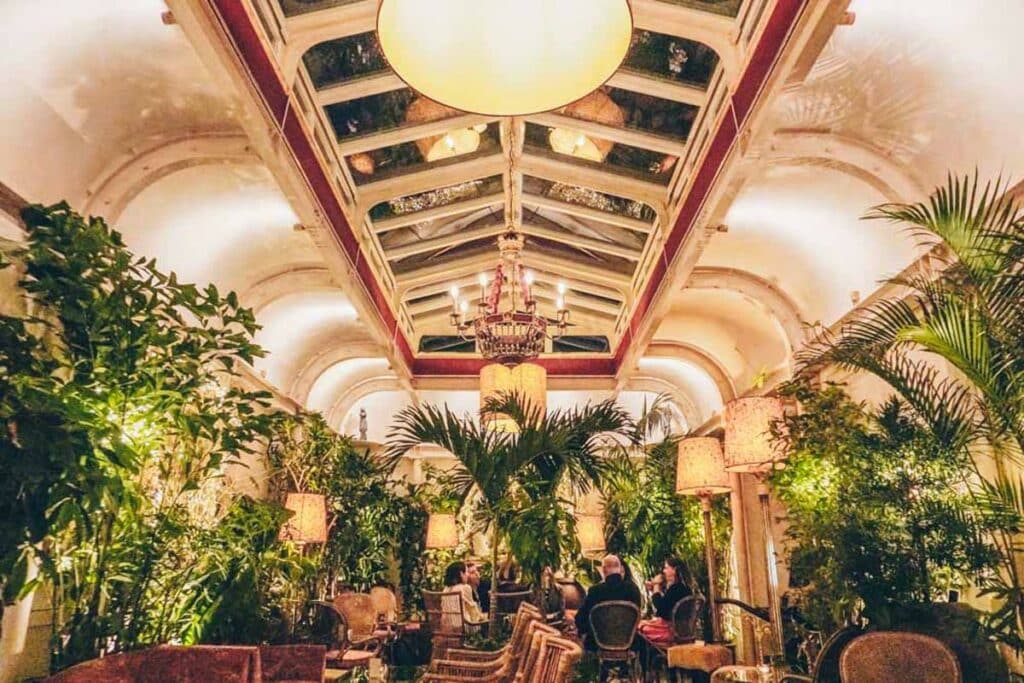
One of our more fiercely guarded recommendations. Above London’s oldest restaurant is a conservatory bar filled with chaise longues, tropical planting and flowers, and some of the best cocktails in town.
Ask for it by its current name, the Winter Gardens, and know that it still takes no reservations. Turn up and hope, ideally early evening midweek. We reviewed it as Upstairs at Rules when it opened, and it still makes our list of the best bars in London.
35 Maiden Lane, WC2E 7LB
Bob Bob Ricard
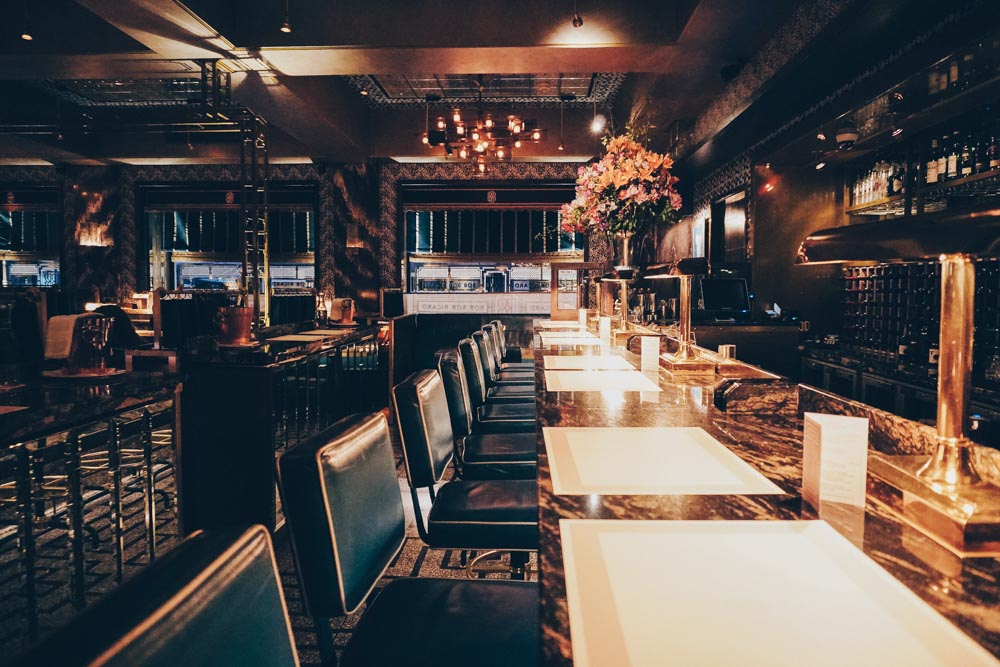
Orient Express booths in blue and gold, and a Press for Champagne button at every table which is still there and still the reason half the room is photographing its own table.
Reservations are for full meals only, so no drinks-only visit. More in our guide to the best restaurants in Soho.
Book the last sitting of the evening, when the room has thinned out and you can photograph the booths without half of Soho in the background.
1 Upper James Street, W1F 9DF
Green and quiet
Ruins, gardens and water, and the parts of this list we go back to most.
St Dunstan in the East
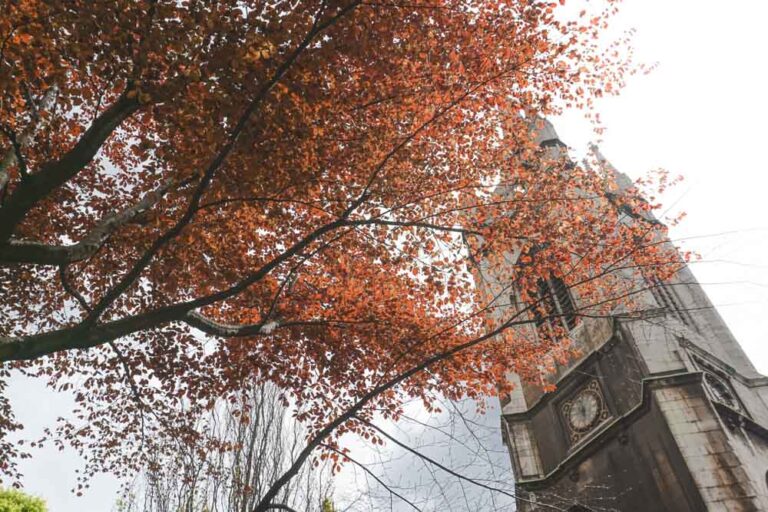
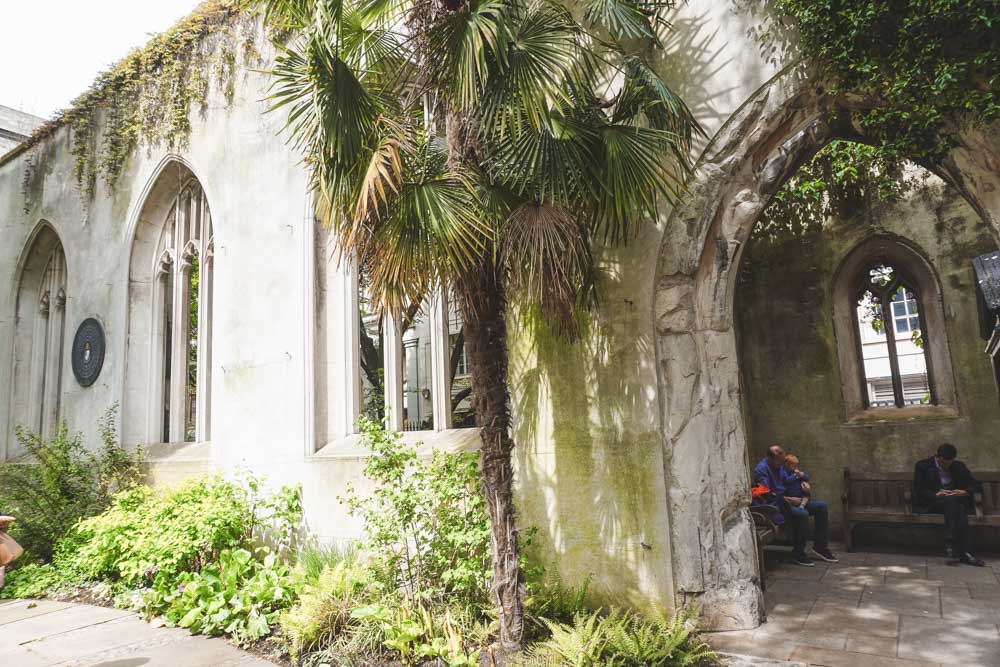
A Wren church gutted by the Blitz, left as a shell, and then planted. Vines pour through the windows, a fig tree grows where the nave was, and the tower still stands. It is free, always open, and the most affecting place on this entire list.
Early morning or the hour before dusk. It is small, and at lunchtime the City eats its sandwiches in it. The whole story of the church is in our St Dunstan in the East piece.
St Dunstan’s Hill, EC3R 5DD
The Hill Garden and Pergola
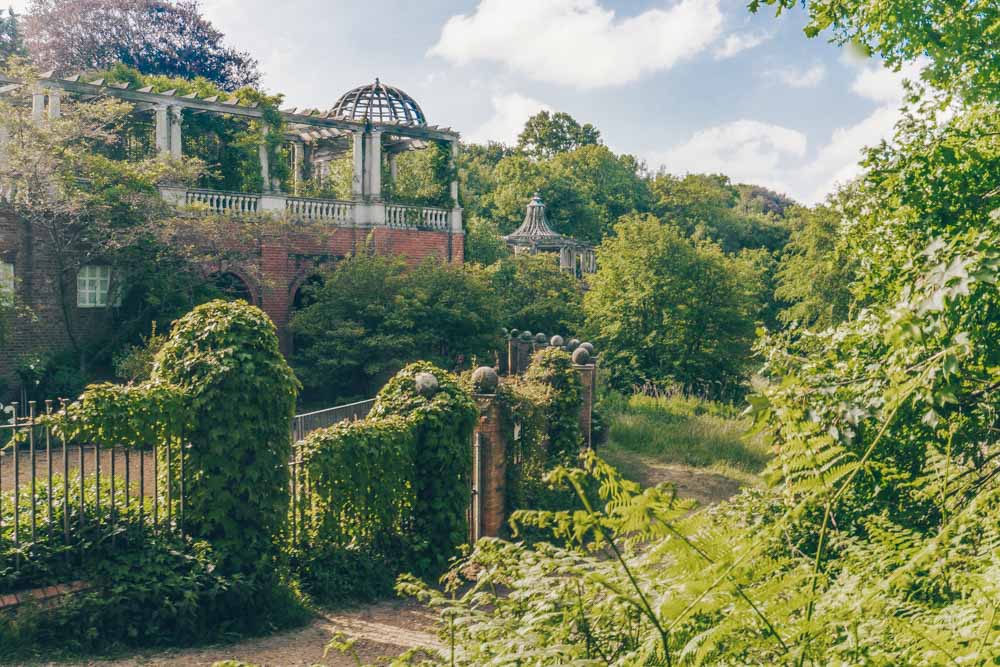
A crumbling Edwardian pergola on the Golders Green edge of Hampstead Heath, built by Lord Leverhulme with earth excavated from the Northern line. Raised walkways, stone columns and wisteria, and remarkably few people given how well known the Heath is.
May and June for the wisteria. Free, and open daily. We walked it properly for our Hill Garden and Pergola guide.
Inverforth Close, NW3 7EX
Chelsea Physic Garden
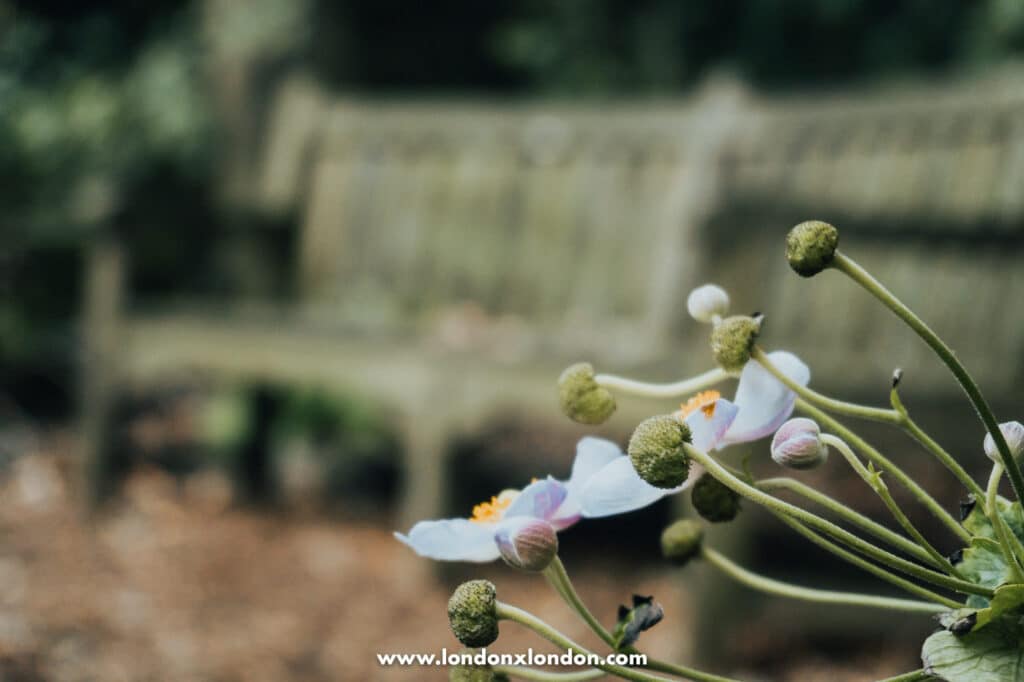
Founded in 1673 as an apothecaries’ garden and still four acres of walled planting between Royal Hospital Road and the river, with London’s warmest microclimate and an olive tree that actually fruits.
Entry is £15, or £13.50 without the voluntary donation. Note that it is closed on Saturdays, which catches people out. There is a longer piece on Chelsea Physic Garden, and the streets around it in our Chelsea guide.
66 Royal Hospital Road, SW3 4HS
Kew Gardens
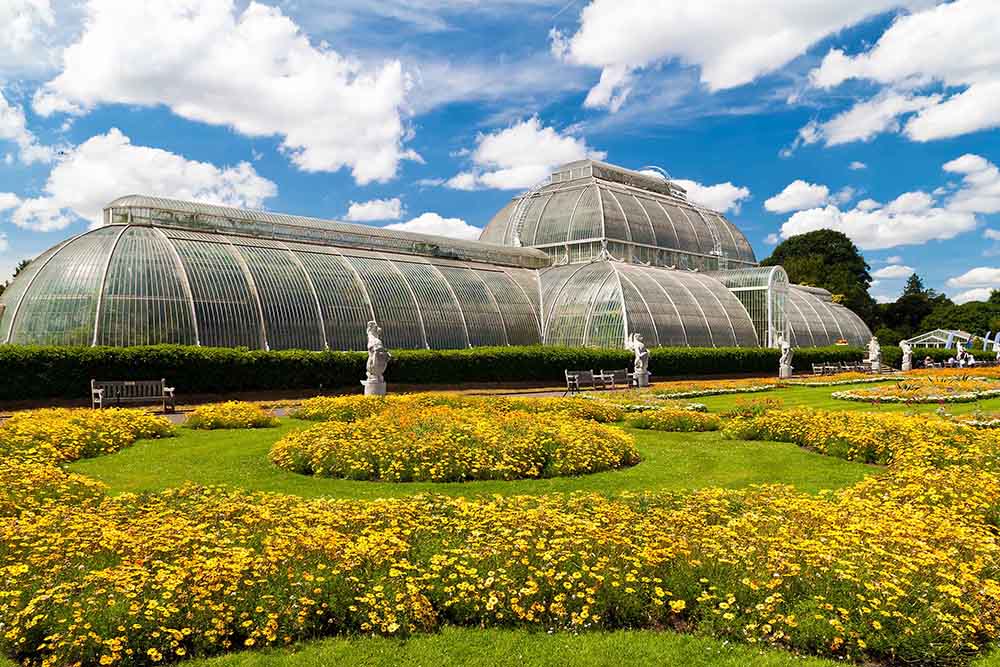
The largest collection of living plants in the world, and the Palm House and the Temperate House are two of the great Victorian glass structures anywhere. The Treetop Walkway puts you eighteen metres up in the canopy.
Winter is underrated here: the glasshouses are warm, empty and dripping with condensation, which photographs beautifully.
Kew, Richmond TW9 3AB
Richmond Park
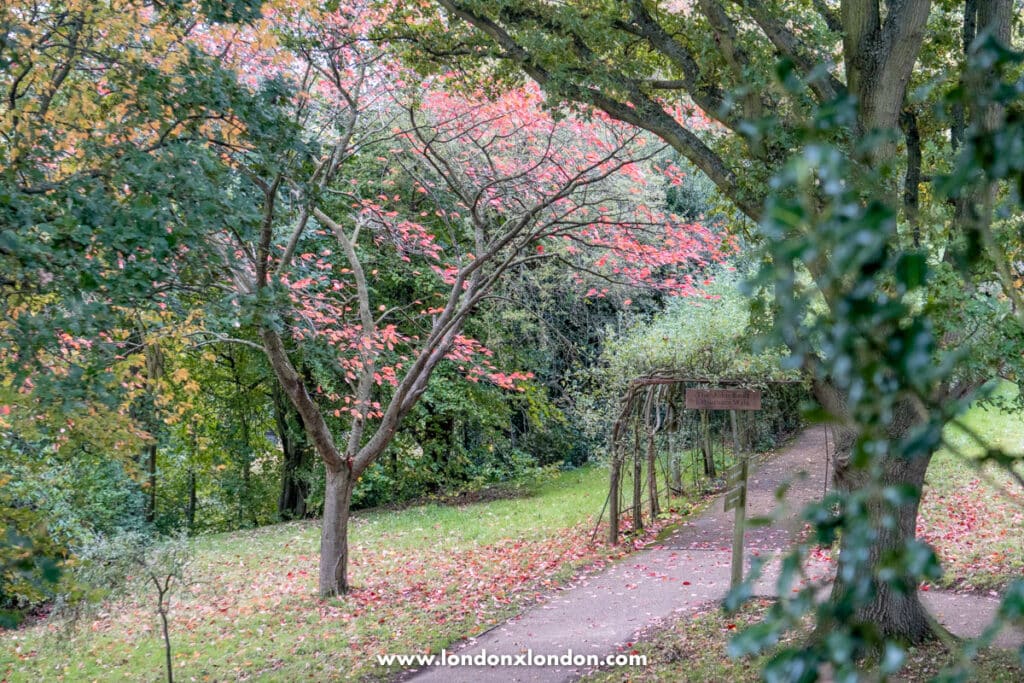
Two and a half thousand acres of former royal hunting ground with around six hundred red and fallow deer still roaming it. Autumn is the best of it, with bracken turning and mist in the morning.
A serious word of warning: keep well back during the rut in September and October and again when they calve in spring. People get hurt here every year trying to get closer. Our guide to Richmond Park has the best walking routes, and it tops our list of London’s parks.
Richmond, TW10 5HS
St James’s Park
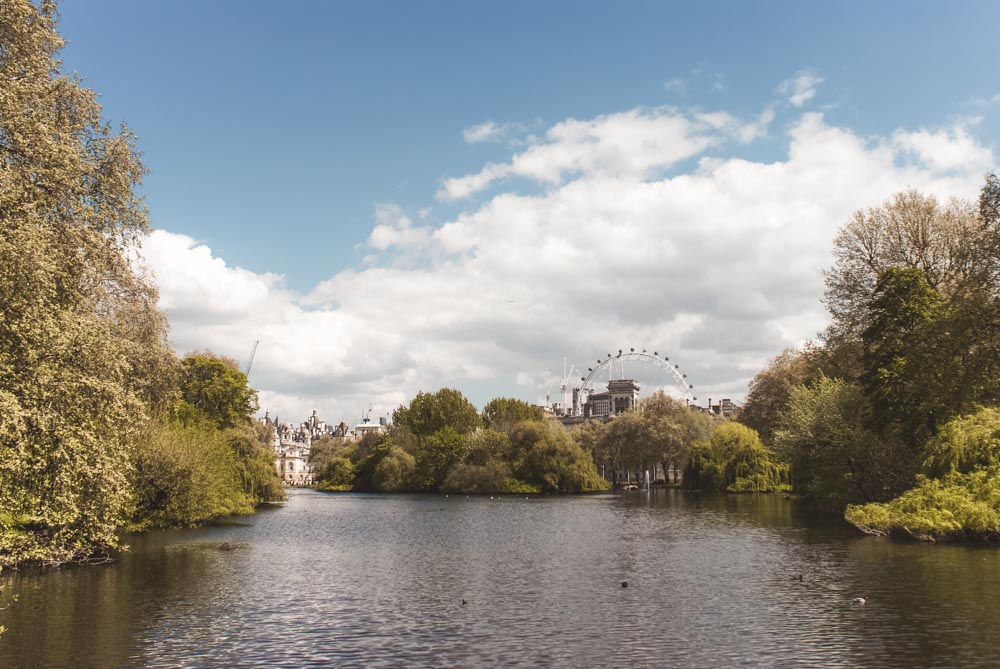
The prettiest of the royal parks and our go-to at sunrise. From the blue bridge you get Buckingham Palace one way and the turrets of Whitehall the other, looking like something out of a fairy tale over the lake.
Autumn on a bright cold morning is the best version. There are pelicans, which have been here since 1664.
St James’s Park, SW1A 2BJ
Little Venice
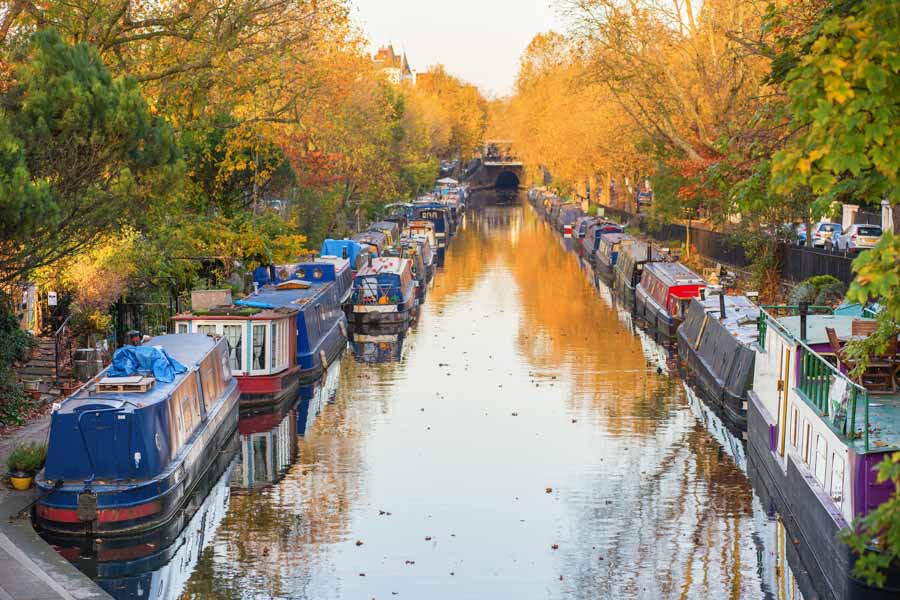
Where the Grand Union and Regent’s Canal meet, lined with painted narrowboats and white stucco. Walk the towpath from here to Camden through the Maida Hill tunnel and Regent’s Park, one of our favourite self-guided London walks. And Little Venice gets a piece to itself.
Walk it towards Camden rather than photographing the basin and leaving. The stretch through the Maida Hill tunnel and along the back of Regent’s Park is the good half and takes about an hour.
Maida Avenue, W2 1ST
The London Peace Pagoda
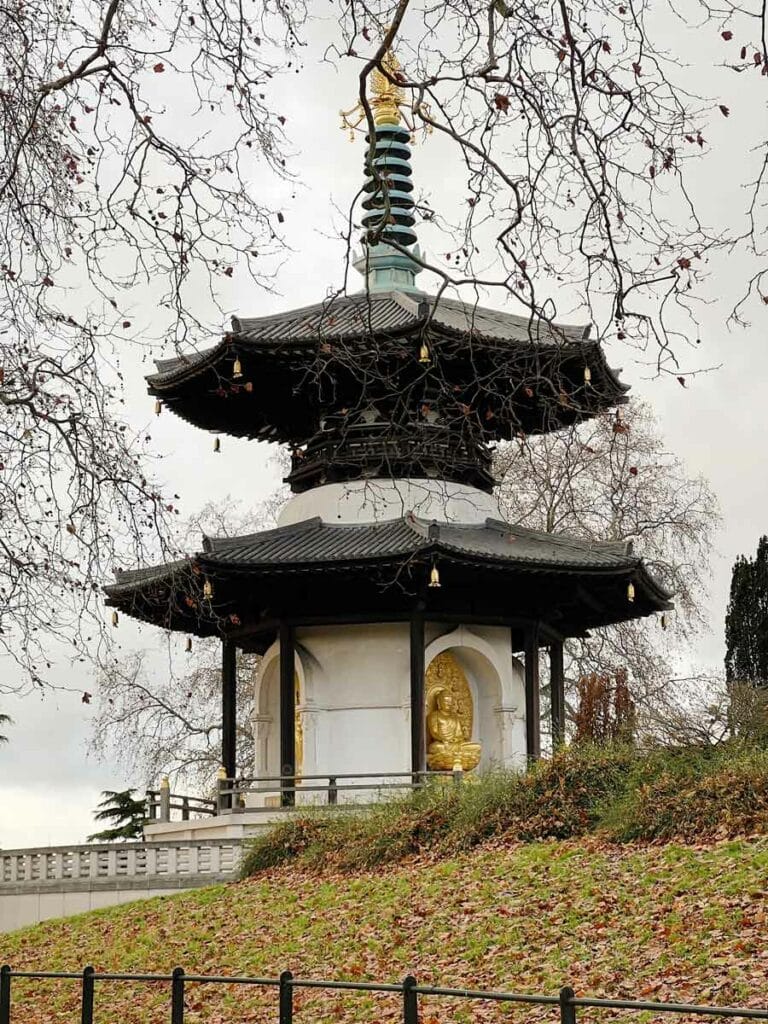
A Japanese Buddhist pagoda on the Battersea bank of the Thames, given to London in 1984 by the Nipponzan-Myôhôji order, with four gilded scenes from the Buddha’s life around it.
Every August there is a floating lantern ceremony marking Hiroshima and Nagasaki, which is quiet and moving and almost unphotographed. There is a longer read on the Peace Pagoda.
Battersea Park, SW11 4NJ
Brixton Windmill
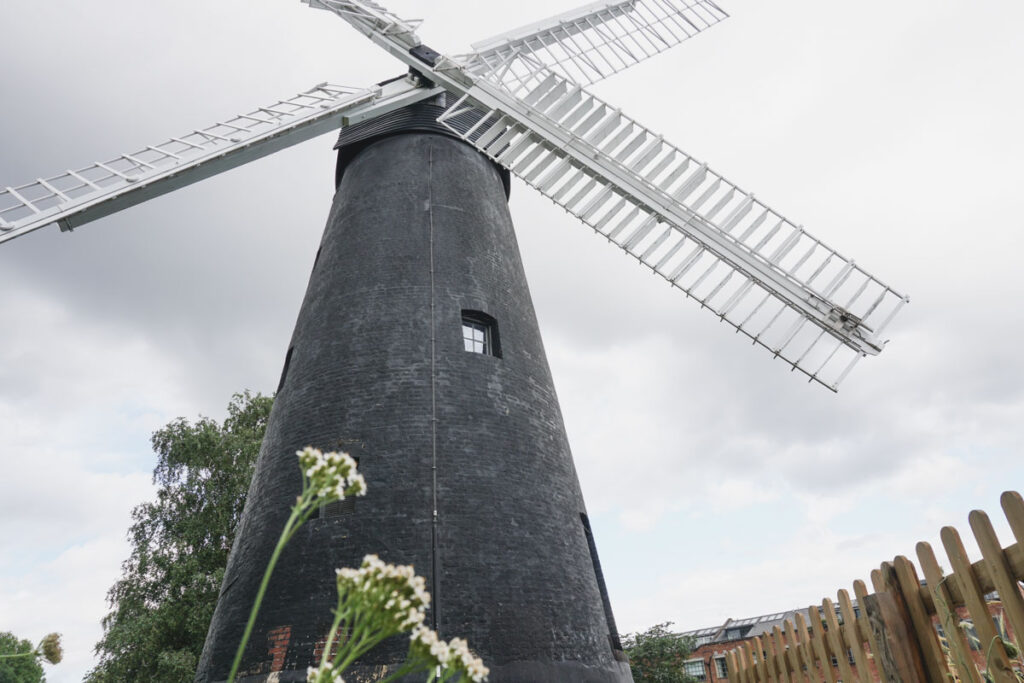
A genuine working windmill, built in 1816, standing between terraced houses on Brixton Hill, which almost nobody expects. We have to be honest, we lived in Brixton for years without ever stumbling across it, and it took researching the Unusual London book before we so much as heard the whisper of a windmill. It was restored in 2011 and still mills flour that is sold across London.
The exterior is the photograph and it is free to look at any time. If you want inside, open days run on the second weekend of the month in season, and the full £5 tours must be booked well ahead. Shorter turn-up tours run on open-day afternoons. There is more on the windmill and its history here.
Windmill Gardens, Blenheim Gardens, SW2 5DA
The London x London Take: the single biggest improvement you can make to any of these photographs is going at a time nobody else will. Almost every entry on this list is transformed at eight in the morning, and about half of them are ruined by eleven. The other thing worth saying is that the best pictures here are not the famous ones. Nobody needs another Tower Bridge. What they have not seen is a fig tree growing out of a bombed church in the middle of the City, or a windmill behind a Brixton housing estate, or a Penge wall by the same artist whose Shoreditch piece has four thousand people queueing at it. Go south, go early, and go on a Tuesday. There is a great deal more of the city in our guide to things to do in London.
Before you go
- Book what needs booking. Sky Garden tickets go on Mondays three weeks out, the Barbican Conservatory releases a month ahead, and Brixton Windmill tours sell out fast
- Check for closures. The Tulip Stairs shut for private events on published dates and God’s Own Junkyard closes early for them too
- Respect the doorsteps. Notting Hill and Primrose Hill are residential streets and people live behind those pastel doors
- Tripods are usually a no. Most of the indoor entries here allow handheld photography and not much more. Ask first
- Go early. It is the only tip on this list that works everywhere
More in the same vein: our guides to the most beautiful places in London, London’s lesser-known corners and the best gardens in the city.
This article is awesome! I love this! There are so many places you’ve listed on here that I haven’t been to yet. I’m hoping to go to these recommended places soon.
Thanks Shunda! Hope you have fun exploring and get some banging pictures in the mix.
The only difficult part is getting access nowadays! Can’t wait till everything becomes normal again. Wiltons definitely on the list!
Can’t wait until things are back to normal too! Looking forward to exploring the city, camera in hand, once again! Enjoy!