London has so much tree cover that it meets the UN’s definition of a forest. Twenty-four parks worth crossing town for, from a bombed-out church swallowed by climbing plants to a herd of deer twenty minutes from Waterloo.
Nearly half of Greater London is green space, and the good ones are not the ones on the postcards. What follows is organised by area, cut to the parks we actually go to, and honest about which are worth a journey and which are only worth it if you live nearby.
For feeding yourself around the Heath, see our guide to the best restaurants in Hampstead.
Central London
St James’s Park
Westminster, SW1A
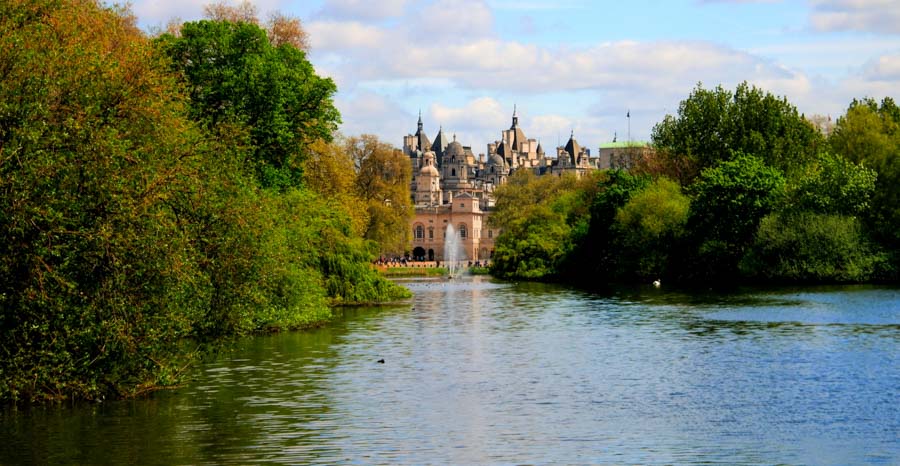
Twenty-three hectares squeezed between Buckingham Palace, Horse Guards Parade and Downing Street, and still the prettiest of the Royal Parks. The lake with its two islands does most of the work.
The pelicans are the thing. There have been pelicans here since the Russian ambassador gave a pair to Charles II in 1664, and the current birds are fed at around 2.30pm most afternoons near Duck Island Cottage. Stand on the blue bridge looking west for the view of the palace that every guidebook uses, then walk east for the one they do not, with the Horse Guards roofline and the London Eye stacked behind it.
Go on a weekday morning. By noon in summer the deckchairs are full and the path round the lake is a slow-moving queue. It pairs neatly with the rest of central London if you are making a day of the area.
Address: St James’s Park, London SW1A 2BJ
Green Park
Westminster, W1J
Forty acres of grass and plane trees with no lake, no flowerbeds and almost no ornament, which is the point. It is the simplest of the central Royal Parks and the easiest to sit down in.
The absence of flowers is supposedly deliberate: the story goes that Charles II’s wife had them all pulled up after catching him picking some for another woman. It is almost certainly apocryphal and we are printing it anyway. Come in April when the daffodils are out under the trees, which is the one week it looks like a garden.
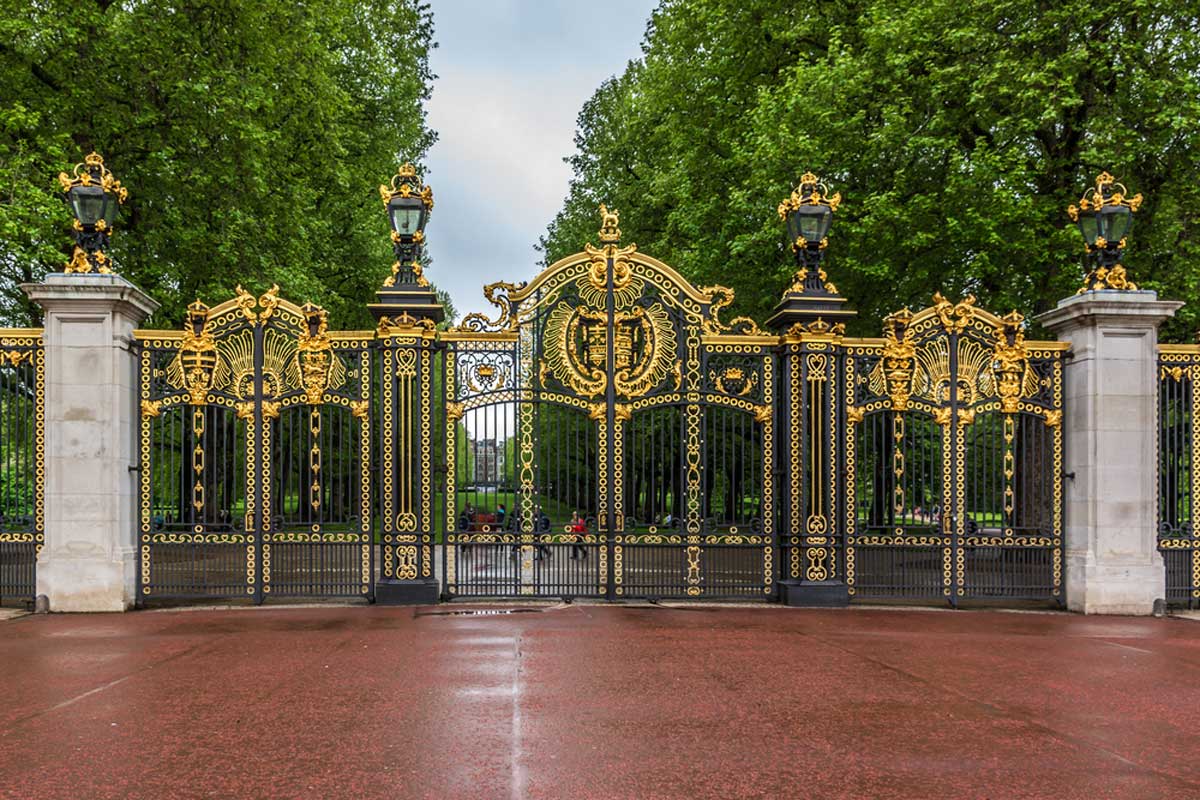
Enter through Canada Gate opposite the palace, which is the best-looking entrance to any park in London and the one most people walk straight past.
Address: Green Park, London SW1A 1BW
Hyde Park
Westminster, W2
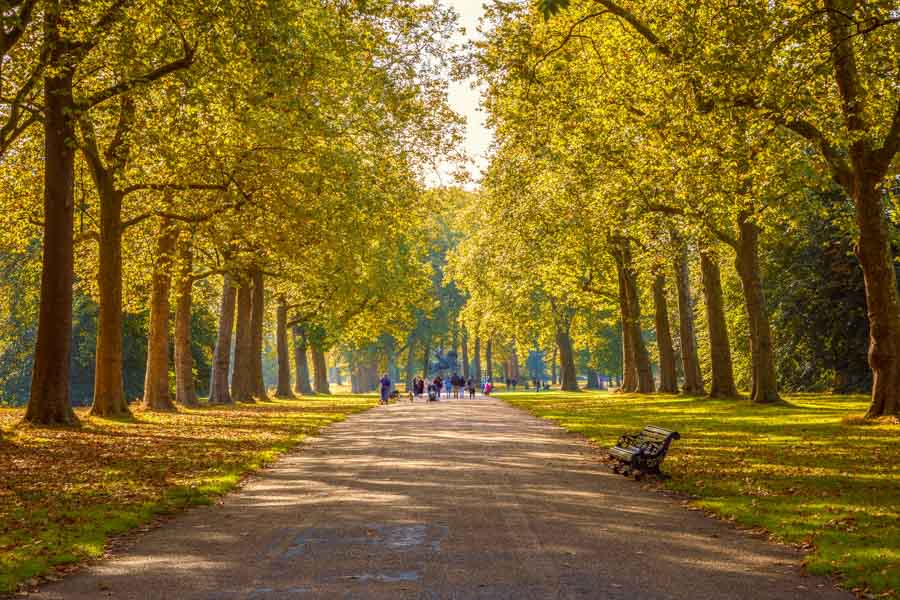
The biggest of the four central Royal Parks, established by Henry VIII in 1536 and not opened to the public for another century. Three hundred and fifty acres, the Serpentine down the middle, and more going on than any other park in London.
Speakers’ Corner on Sunday mornings is still genuinely worth an hour, and not for the reasons people expect: the crowd is the show, not the speakers. Elsewhere, the Serpentine Lido opens for swimming in summer, the Diana Memorial Fountain is better than its reputation and the Serpentine galleries at the Kensington Gardens end are free all year.
Avoid the stretch between Marble Arch and Speakers’ Corner if you want quiet. Head south-west towards the Rose Garden instead, which is the least-visited good corner of the park.
Address: Hyde Park, London W2 2UH
Kensington Gardens
Kensington, W2
Two hundred and seventy acres that started life as the western end of Hyde Park and separated off when William III moved into Kensington Palace. The palace still sits in the middle of it.
The Italian Gardens at the northern end are the reason to come: a Victorian ornamental water garden built as a gift from Albert to Victoria, with four basins, a pump house disguised as a villa and almost nobody in it on a weekday. The Albert Memorial on the southern edge is the most extravagantly gilded object in any London park.
The Round Pond is where the model-boat sailors gather, mostly on Sunday mornings. More on the area in our guide to Kensington.
Address: Kensington Gardens, London W2 2UH
St Dunstan in the East
City of London, EC3R
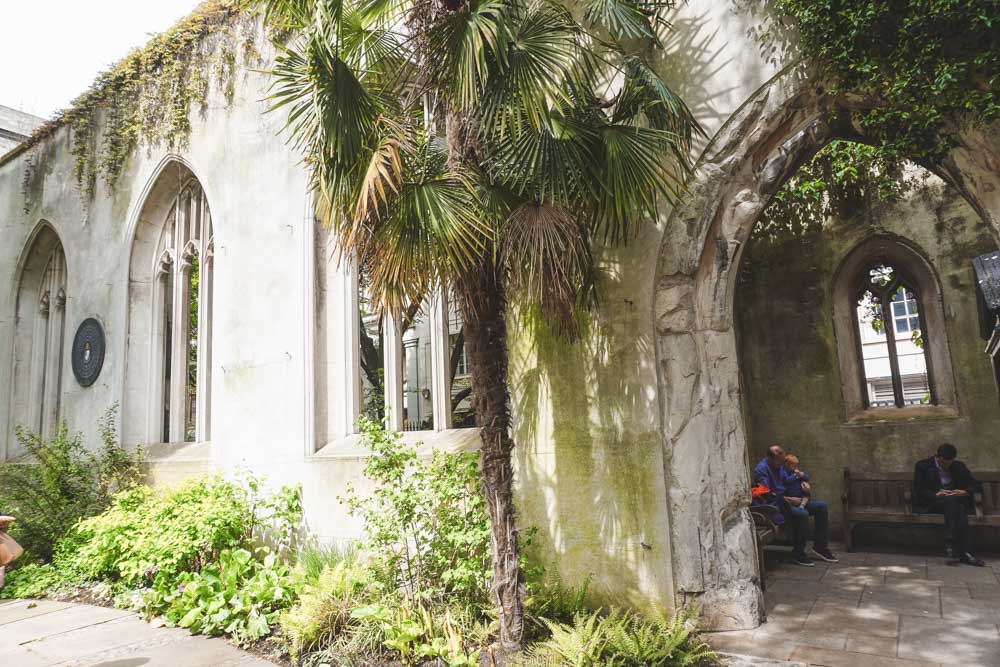
A bombed-out Wren church with plants growing through it, tucked down a lane between Monument and the Tower and missed by nearly everyone walking past on Lower Thames Street.
The church was rebuilt after the Great Fire, then destroyed in the Blitz in 1941. Rather than rebuild a second time, the City turned the ruin into a public garden in 1971. What is left is a shell of gothic windows with climbing plants pulling it apart, a small fountain in the nave, and a handful of benches.
It is small, it takes ten minutes, and it is the single best photograph in the City. Go before nine or after five, because the lunchtime crowd from the surrounding offices fills every bench. Our full guide to St Dunstan in the East.
Address: St Dunstan’s Hill, London EC3R 5DD
Holland Park
Kensington, W8
Fifty-four acres of formal gardens, woodland and peacocks in the middle of one of the most expensive postcodes in Britain. It was the first place in the UK to grow dahlias and they are still in the beds.
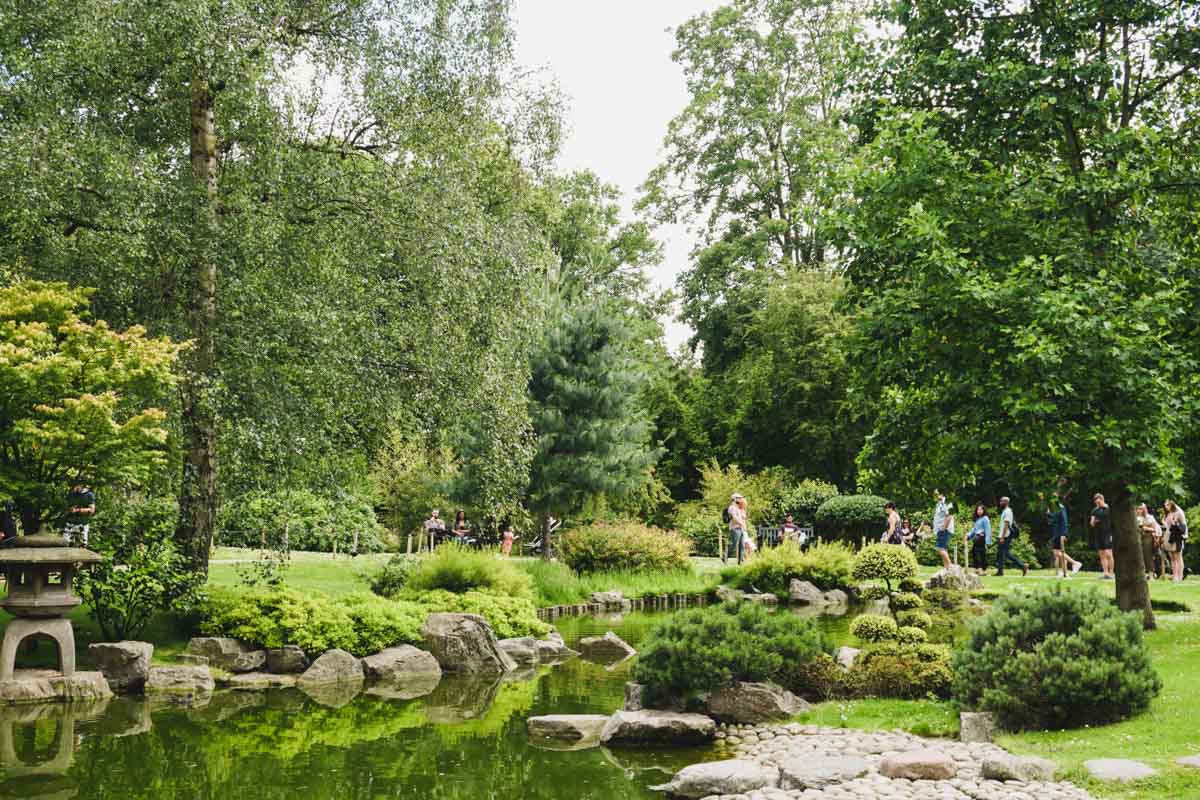
The Kyoto Garden is why most people come: a Japanese garden given by the city of Kyoto in 1991, with a tiered waterfall, koi and, very often, a peacock standing on the bridge refusing to move. It is beautiful and it is also tiny, so go early or accept you will be queuing to cross the stepping stones.
Opera Holland Park runs open-air productions in a temporary canopy over the ruins of Holland House across the summer. More on the Kyoto Garden.
Address: Ilchester Place, London W8 6LU
West London
Richmond Park
Richmond, TW10
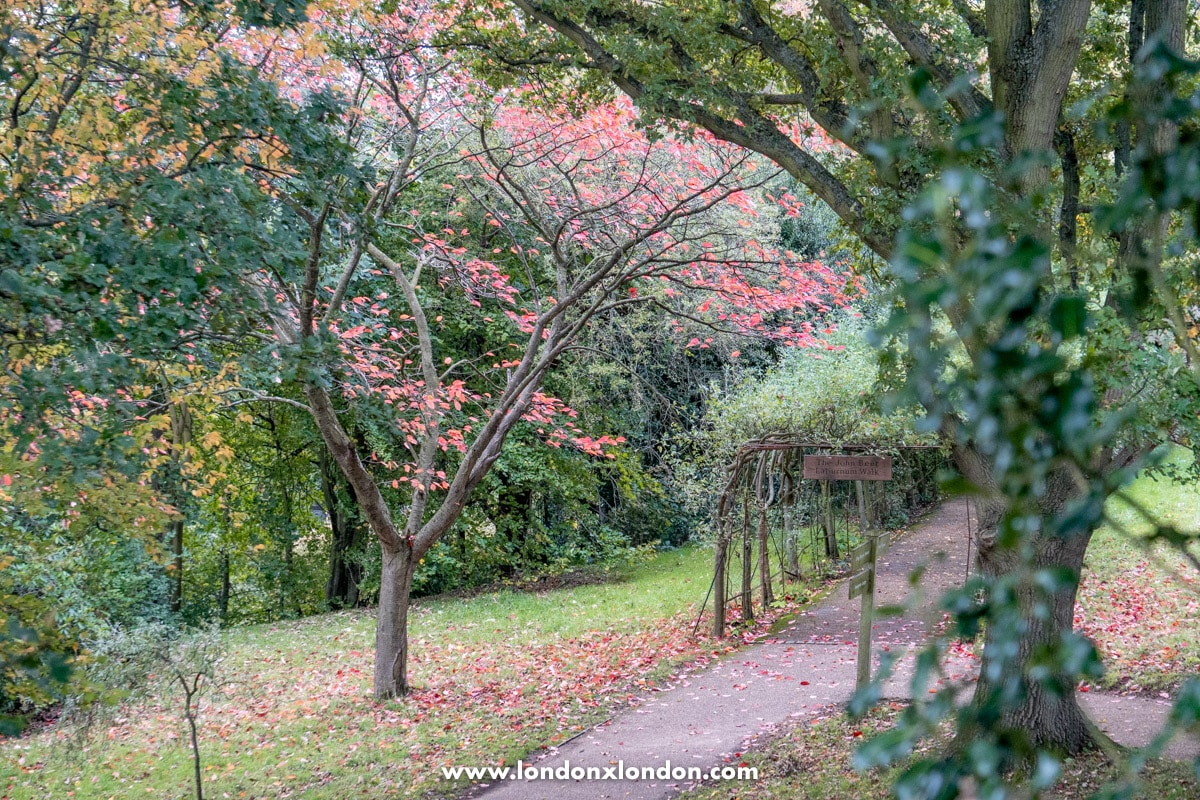
Two and a half thousand acres, the largest of the Royal Parks and about three times the size of Central Park. Around 600 red and fallow deer roam it freely, descended from the herd Charles I enclosed here in 1637.
October is the month to come, when the rut is on and the stags bellow across the Isabella Plantation side of the park. The Royal Parks ask for fifty metres of distance at all times and people routinely ignore it; use a long lens, and if you walk a dog, come back in December.
King Henry’s Mound in Pembroke Lodge Gardens holds a protected sightline to St Paul’s ten miles away, through a gap cut in the trees. Get there for the gates opening if you want the mist. Our full Richmond Park guide.
Address: Richmond Park, Richmond TW10 5HS
Bushy Park
Hampton, TW12
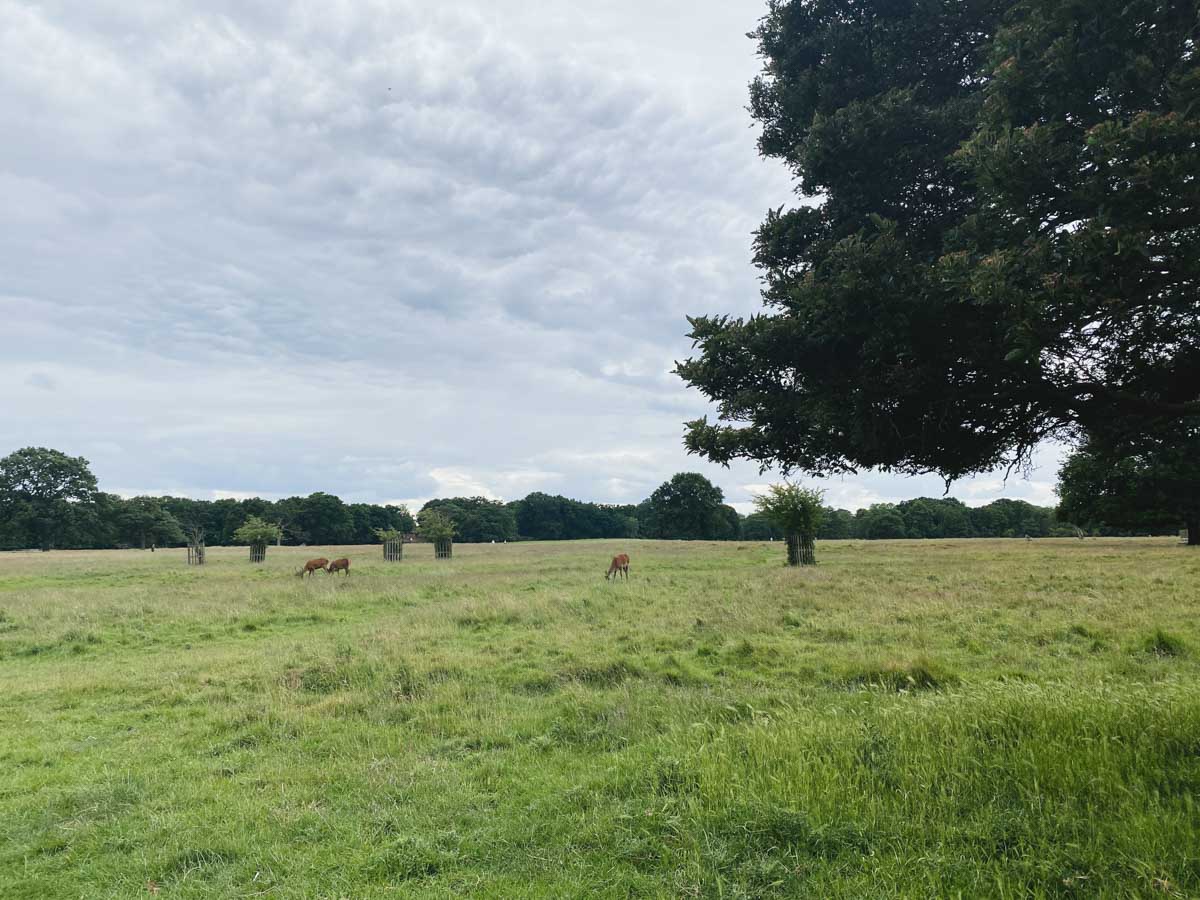
The second-largest Royal Park at over a thousand acres, and the one Richmond gets the visitors instead of. It has its own deer, a Site of Special Scientific Interest designation and considerably more space per person.
The Water Gardens on the eastern side were restored a few years ago and are the best bit: a formal baroque water garden that had been left to silt up for two centuries. The Diana Fountain at the end of Chestnut Avenue is the landmark, and the avenue itself is worth timing for the second week of May when the horse chestnuts flower.
The very first parkrun in the world started here in 2004, with thirteen runners. It still goes at 9am every Saturday.
Address: Bushy Park, Hampton TW12 2EJ
South London
Greenwich Park
Greenwich, SE10
The oldest enclosed Royal Park in the country, and the one with the view. From the top by the Royal Observatory you get the Queen’s House, the Old Royal Naval College, the river and Canary Wharf stacked in one frame.
It has its own small deer herd in The Wilderness, a scented herb garden that is worth a detour in high summer, and tree-lined paths that draw genuine crowds in blossom season. Henry VIII and Anne Boleyn conducted a good deal of their courtship here.
Come up the hill from the Maritime Museum side rather than driving to the top. The view is the payoff and it is better earned.
Address: Greenwich Park, London SE10 8QY
Blackheath
Blackheath, SE3
Two hundred and eleven acres of flat open common on the hill above Greenwich, with no trees to speak of and nothing to hide behind. That is the appeal.
It is ancient common land rather than a designed park, and it has been the assembly point for every angry crowd marching on London since the Peasants’ Revolt in 1381. Wat Tyler’s men gathered here, so did Jack Cade’s in 1450. The persistent story that it is a plague pit has never been proven and the name predates the Black Death by centuries.
It is the best kite-flying ground in London by a distance, because there is nothing to interrupt the wind. Walk across it into Greenwich Park rather than treating them as two trips.
Address: Blackheath, London SE3 0TA
Brockwell Park

Herne Hill, SE24
Fifty acres on a hill between Herne Hill and Brixton, created largely through the efforts of the MP Thomas Bristowe, who died moments after the opening ceremony in 1892.
The walled formal garden at the top is the part people miss, a genuinely lovely enclosed space with a pond and benches that almost nobody finds. There is also a BMX track, tennis courts, a community greenhouse you can volunteer in, and Brockwell Lido, one of the best of the London lidos.
The view north from the top of the hill across the whole city is the best free view in south London. More on the lido.
Address: Brockwell Park Gardens, London SE24 9BJ
Dulwich Park
Dulwich, SE21
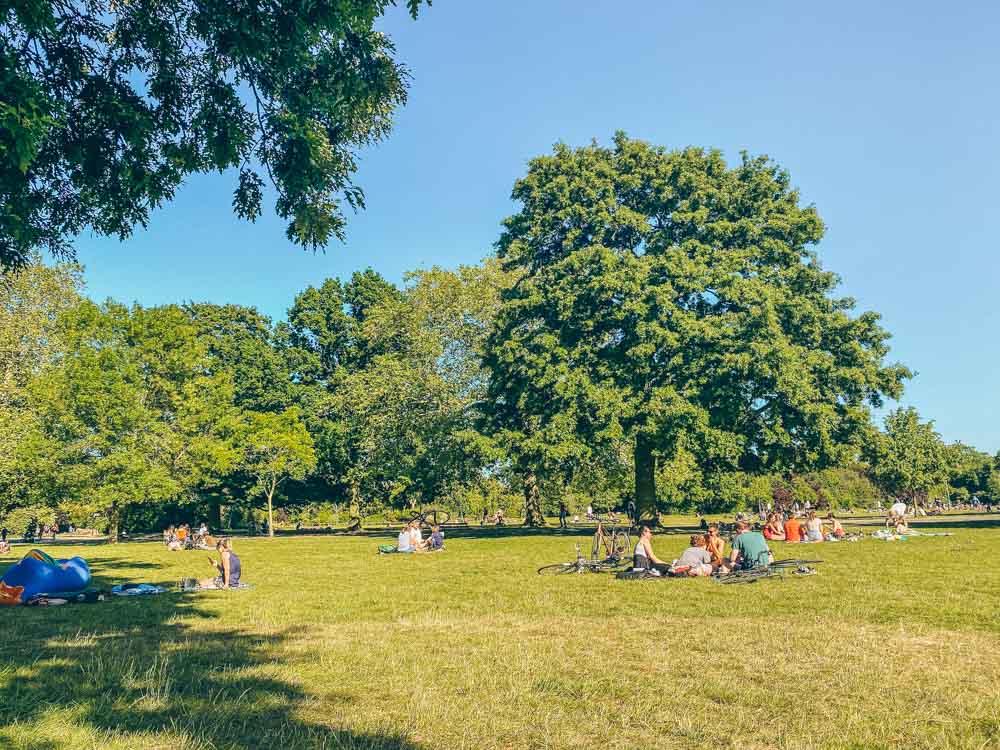
Farmland until 1890, now one of the most carefully landscaped parks in south London: manicured without being fussy, with a dry garden and a winter garden both worth seeking out.
The boating lake has pedalos and rowing boats in season and the tennis courts are free to use, which is rarer than it should be. The rhododendrons in the American Garden in late May are the single best flowering display in a south London park.
It is ten minutes from Dulwich Picture Gallery, so do the two together. Our Dulwich Park guide.
Address: College Road, London SE21 7BQ
Clapham Common
Clapham, SW4
Two hundred and twenty acres of flat grass with three ponds, and the closest thing south London has to a village green, if a village green had a bandstand the size of Clapham’s.
That bandstand is the largest in London, built in 1890, and it hosts free concerts through the summer. Holy Trinity on the north side is where the Clapham Sect campaigned to abolish the slave trade, which is a heavier piece of history than the frisbee-throwing suggests.
It is at its best at the Old Town end and its worst on a hot Saturday, when the whole of SW4 is on it. The Long Pond is where the model boats go.
Address: Clapham Common, London SW4 9DE
Tooting Common
Tooting, SW17
Two commons in one: Tooting Bec and Tooting Graveney, 220 acres between them, with the tree-lined avenues doing the heavy lifting.
The Bec in the name comes from Bec Abbey in Normandy, which held the manor here from the eleventh century. The real draw is Tooting Bec Lido, which opened in 1906, is a hundred yards long, is the largest freshwater pool in England and is unheated all year. The brightly painted changing cubicles down one side are the most photographed thing in SW17.
Swim in June rather than August, when the water has warmed up but the queue has not started.
Address: Tooting Bec Road, London SW16 1RU
Battersea Park

Battersea, SW11
Two hundred acres reclaimed from Thames marshland in the 1850s, which is why it sits right on the river with the best stretch of south-bank promenade in the city.
The Peace Pagoda was built by Buddhist monks in 1985 and is still tended by one. There is also a children’s zoo with meerkats, a boating lake, a Go Ape course in the trees and the Pump House Gallery. The Festival of Britain gardens at the eastern end are a proper piece of 1951 design that survived.
Cross Chelsea Bridge on foot at dusk for the approach. The pagoda lit against the river is worth the detour on its own.
Address: Battersea Park, London SW11 4NJ
Crystal Palace Park
Crystal Palace, SE19
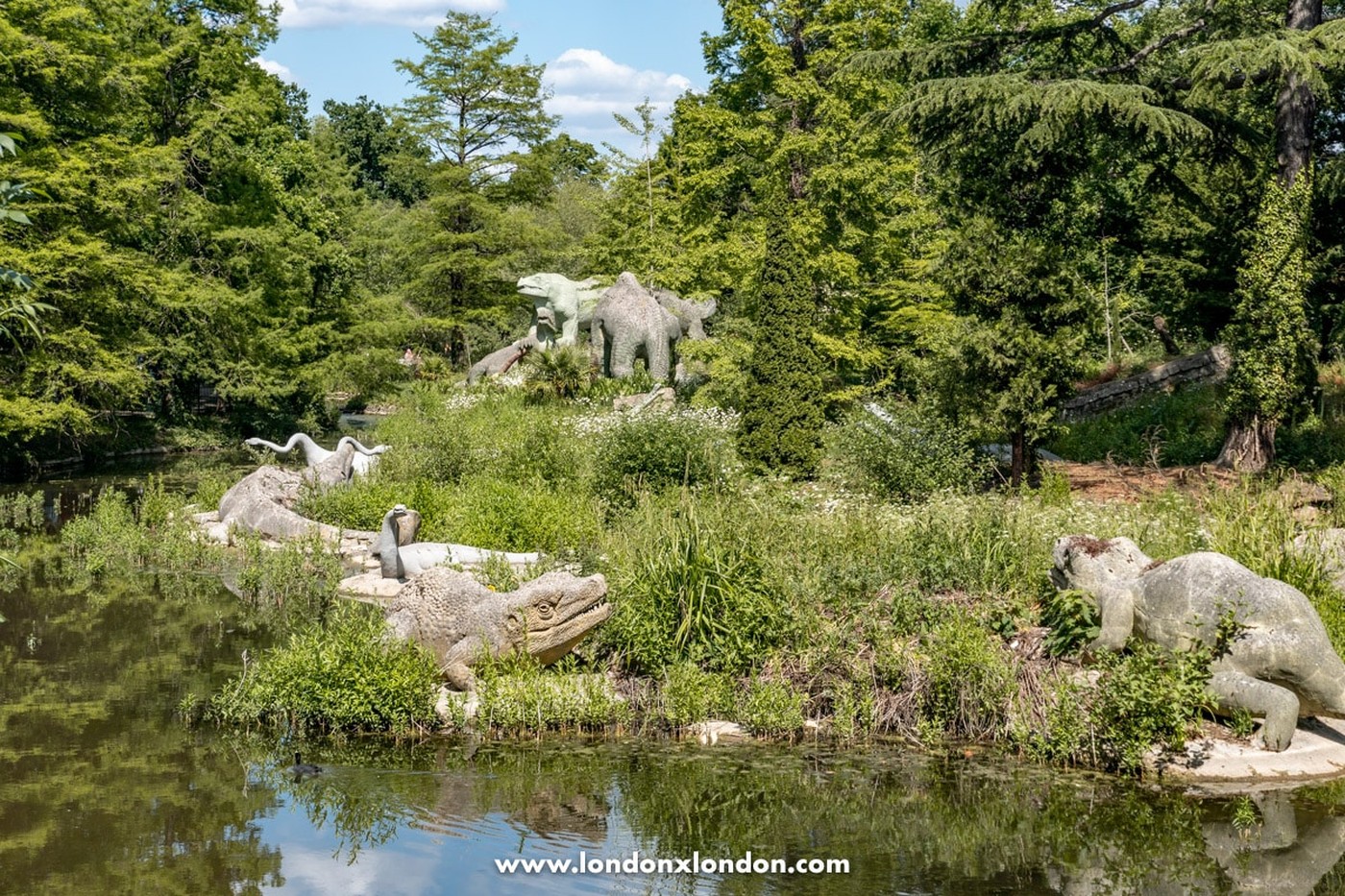
A Victorian pleasure ground built to house the relocated Crystal Palace, which burned down in 1936. What is left is stranger and better: Italian terraces, a maze, a skate park, an athletics track and the dinosaurs.
Those dinosaurs are the reason to come. Thirty full-size Victorian models of prehistoric animals, positioned round a lake, built in 1854 by Benjamin Waterhouse Hawkins before anyone knew what most of these animals looked like. They came through a major restoration completed in July 2026, repainted in their original colours and taken off Historic England’s Heritage at Risk Register.
If you have not been in the last two years, go again. The new visitor centre, restored terraces and dinosaur playground are all open. Our guide to the dinosaurs.
Address: Thicket Road, London SE19 2GA
North London
Regent’s Park
Marylebone, NW1
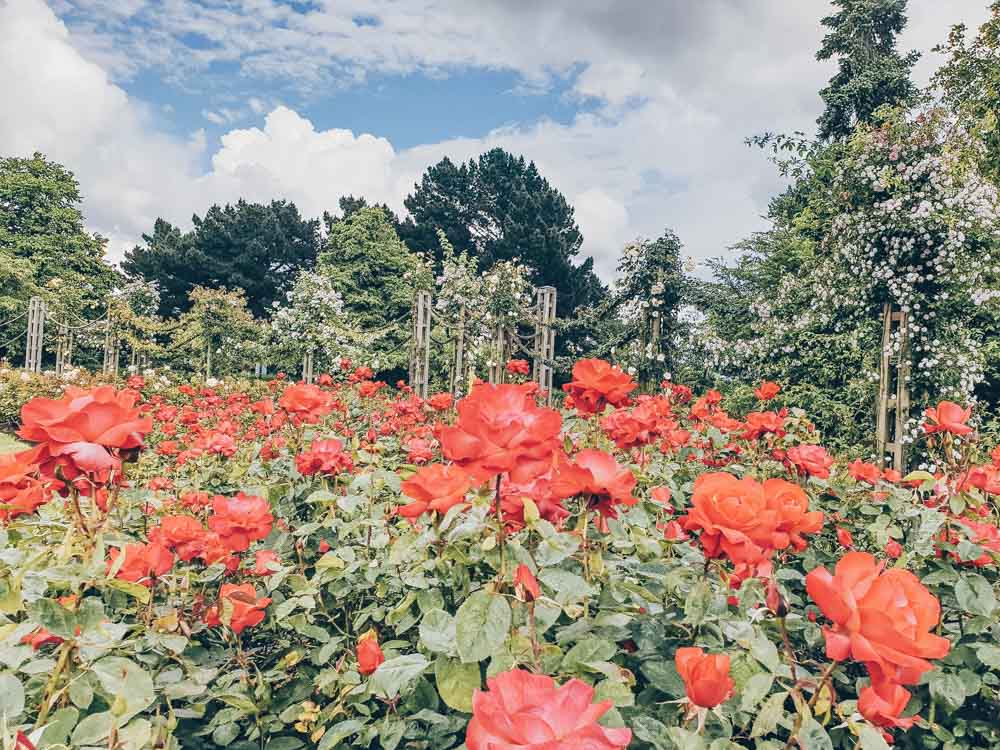
Four hundred acres laid out by John Nash, and the most formally beautiful park in London. Queen Mary’s Gardens hold around 12,000 roses across 85 varieties, and the first two weeks of June are when to see them.
The park also contains London Zoo, the Open Air Theatre, a boating lake and an actual Japanese Garden Island. From mid-September to the start of November it holds Frieze Sculpture in the English Gardens, which is free, needs no ticket and is the best free art in London while it runs.
Walk up to Primrose Hill afterwards rather than treating them as separate outings; they share a boundary.
Address: Regent’s Park, London NW1 4NR
Hampstead Heath
Hampstead, NW3
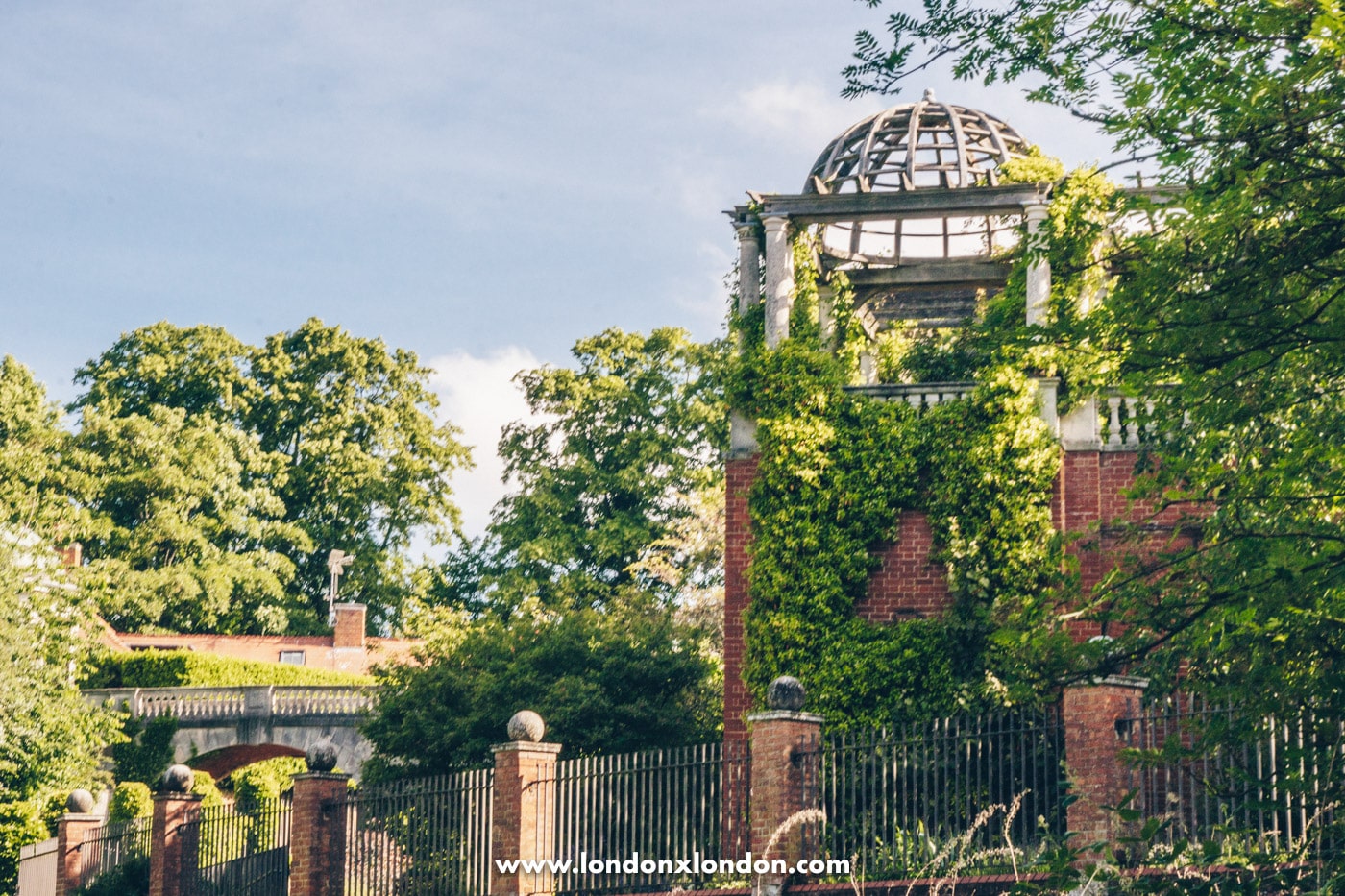
Eight hundred acres of properly unmanicured heath, woodland and ponds, and the only large green space in London that has genuinely never been landscaped into submission.
The three bathing ponds, men’s, ladies’ and mixed, are open all year and swum in through the winter by people who will tell you about it. Kenwood House at the northern end is free to enter and holds a Vermeer and a late Rembrandt self-portrait. The view south from Parliament Hill is protected by law, which is why the skyline in it still has gaps.
Go on a weekday and take the Highgate side. The Hampstead approach is the busy one, and the heath is big enough to lose everyone in ten minutes. More of the best views in London.
Address: Hampstead Heath, London NW5 1QR
Alexandra Park
Muswell Hill, N22
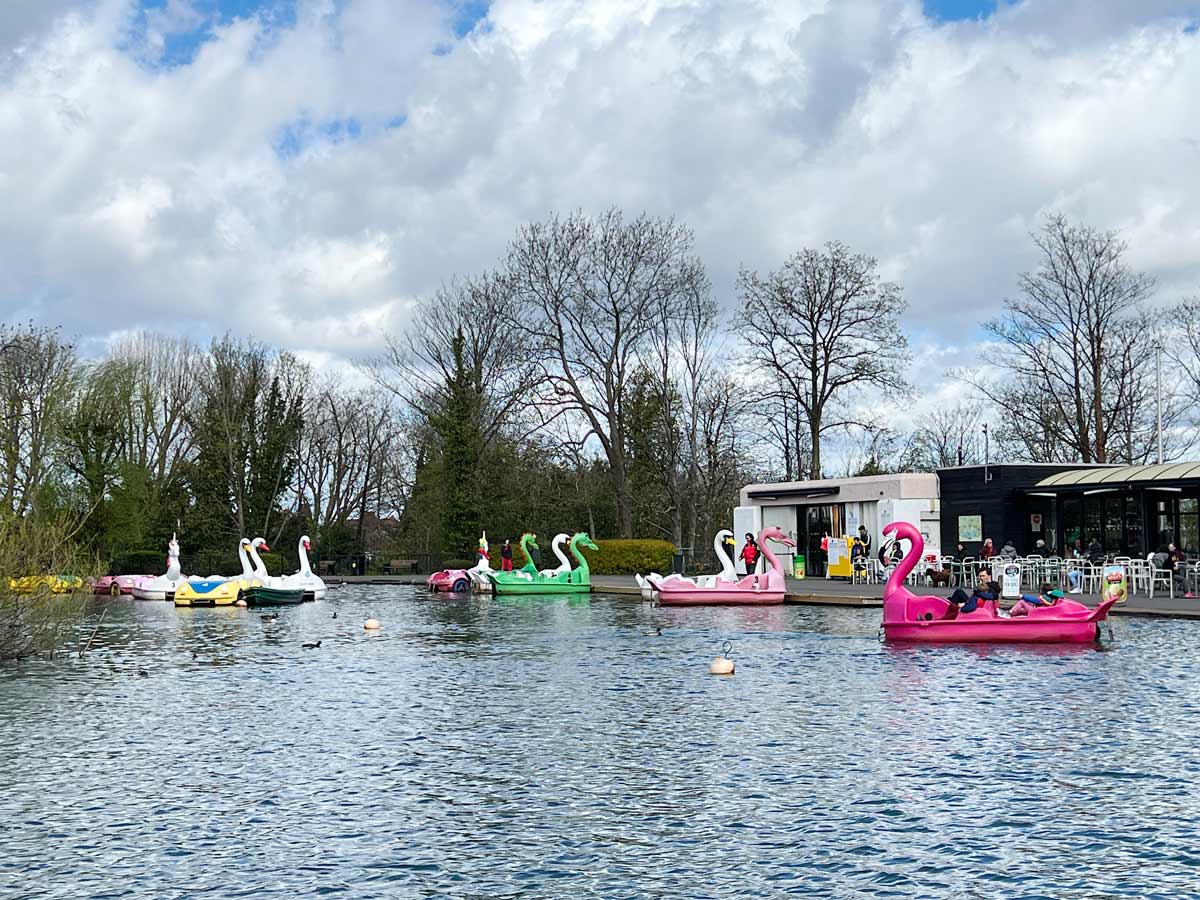
Two hundred acres wrapped round Alexandra Palace, with a view over the whole of London from the terrace that is arguably better than Parliament Hill’s because it is higher and less crowded.
The palace was where the BBC made the world’s first regular high-definition television broadcasts in 1936, and the restored Victorian theatre inside reopened in 2018 after eighty years shut. The park itself has a boating lake, a pitch and putt, a deer enclosure and a farmers’ market most Sundays.
Come for sunset and stay for the ice rink if it is winter. The ‘Ally Pally’ terrace is the single best free viewpoint in north London.
Address: Alexandra Palace Way, London N22 7AY
Primrose Hill
Primrose Hill, NW1
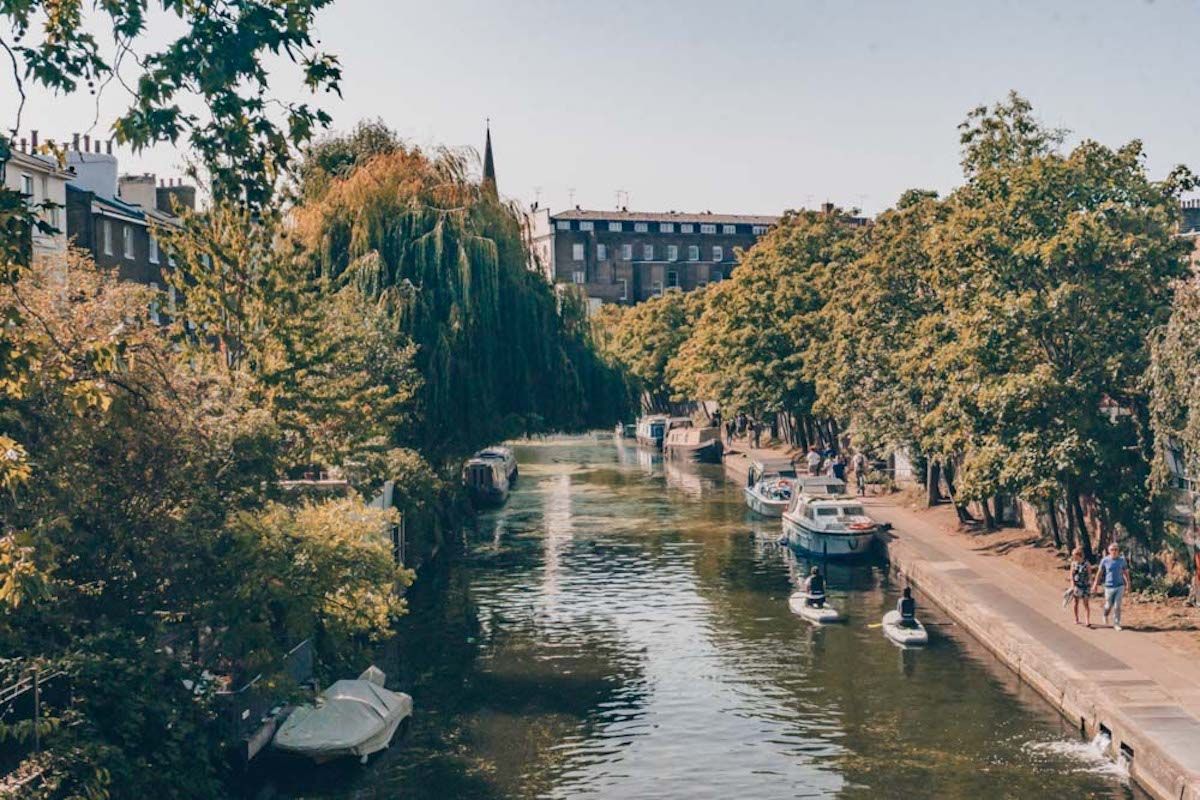
Sixty-two acres and a single hill, and the view from the top is the one everyone has seen: the whole central London skyline laid out with the zoo in the foreground.
There is an inscription in the paving at the summit from William Blake: ‘I have conversed with the spiritual sun. I saw him on Primrose Hill.’ The hill was also where the Gorsedd of Bards held its first ceremony in 1792, which is why druids still turn up here at the solstices and equinoxes.
It is at its most crowded at sunset in summer and genuinely empty at eight on a winter morning, when the view is better anyway. More things to do in Primrose Hill.
Address: Primrose Hill, London NW1 4NR
Clissold Park
Stoke Newington, N16
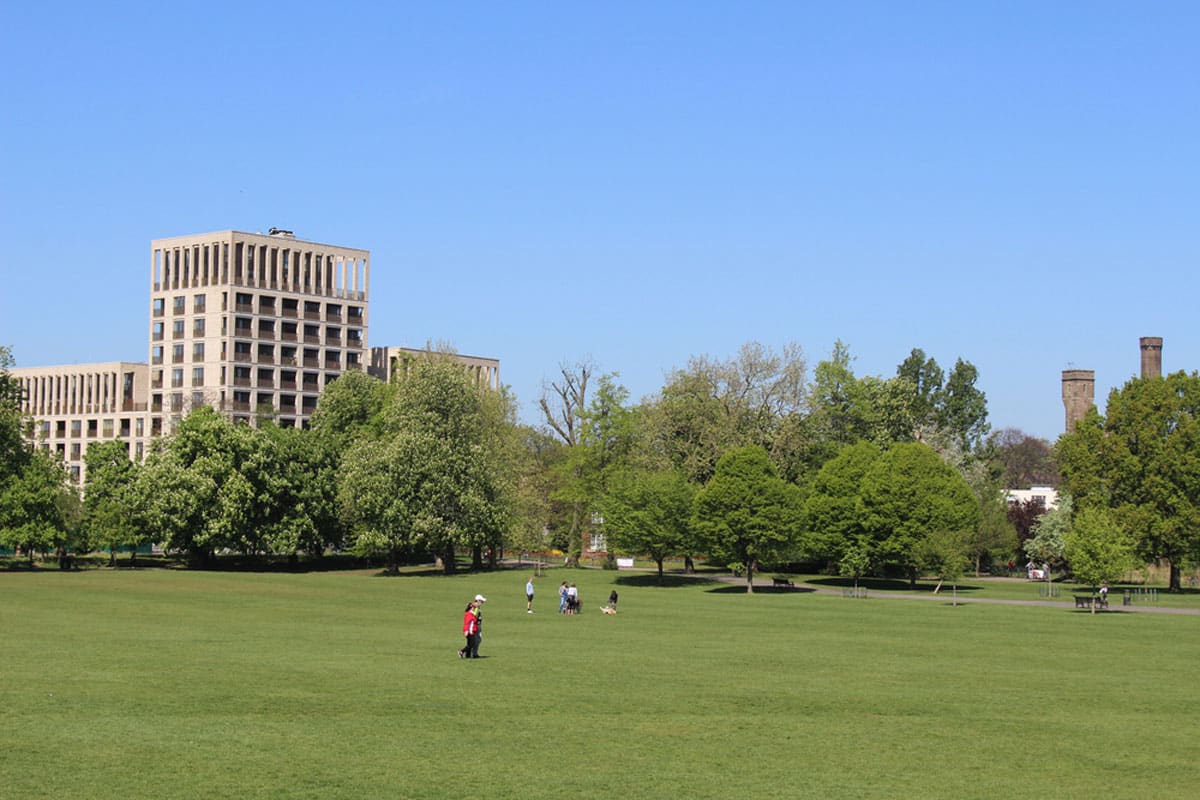
Fifty-five acres in Stoke Newington, open to the public since 1889 and holding a Green Flag award for more than fifteen years running.
It has a genuinely odd collection of residents: a small herd of fallow deer, a goat enclosure, an aviary and a butterfly tunnel, plus two ponds fed by the New River. Clissold House, the Georgian villa in the middle, does a decent cafe with a terrace over the park.
The paddling pool is the best free thing to do with small children in north London in August. Our Clissold Park guide.
Address: Green Lanes, London N16 9HJ
East London
Victoria Park
Hackney, E9
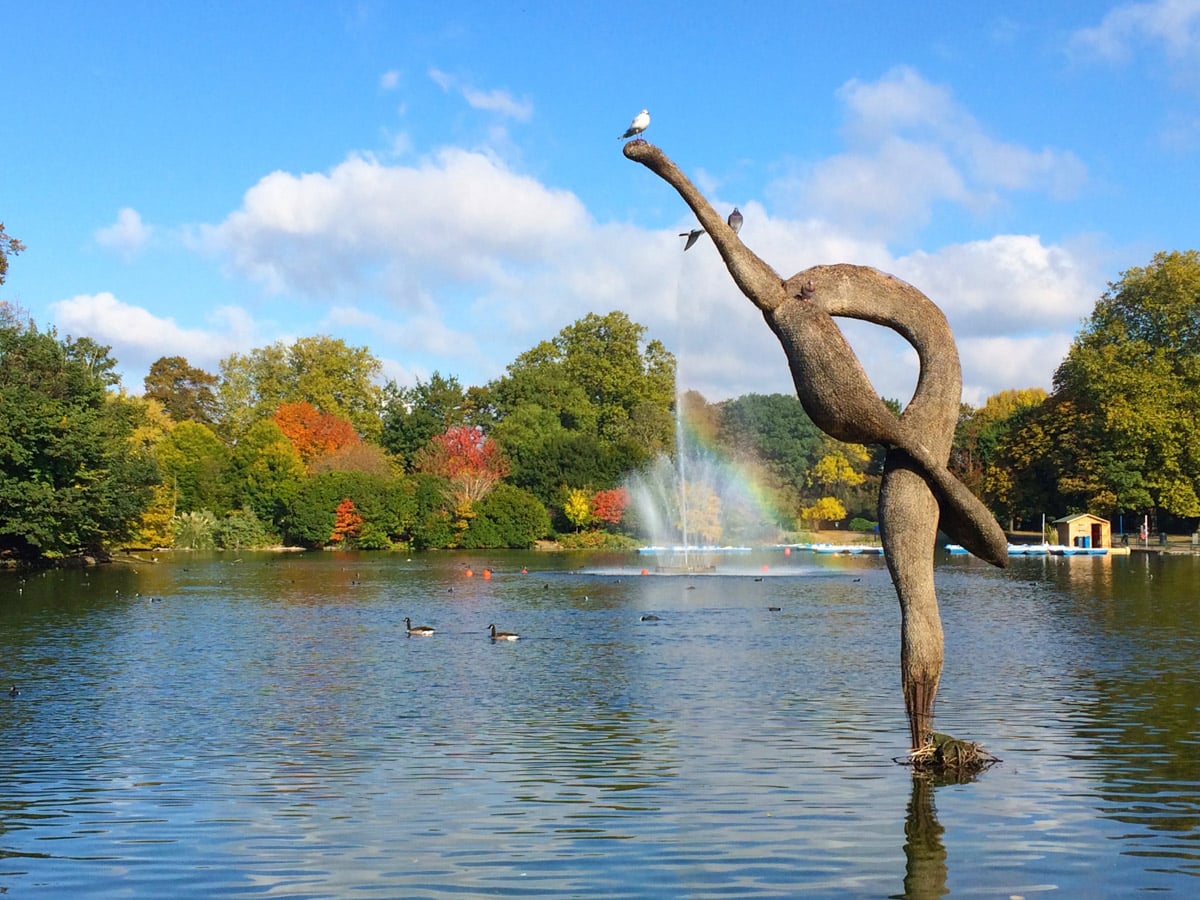
Two hundred and eighteen acres, opened in 1845 after a petition of 30,000 signatures from east London residents, which is why it has always been called the People’s Park.
It has two cafes, a lido-turned-pool, a cricket pitch, a model boating lake and a genuine Chinese pagoda that arrived from a demolished pleasure garden in 1847. It also hosts All Points East and a run of other festivals across the summer, which is worth knowing if you want the park empty.
The Hertford Union Canal runs along the southern edge, so walk in from Mile End along the towpath rather than arriving at a gate. Our Victoria Park guide.
Address: Grove Road, London E3 5TB
London Fields
Hackney, E8
Thirty-one acres in Hackney, recorded as common grazing land as far back as the sixteenth century and now the most densely used patch of grass in east London.
The reason to make a trip is London Fields Lido: fifty metres, outdoors, heated to 25 degrees all year, and open from 6.30am. It closed in 1988, sat derelict for two decades and reopened in 2006 after a local campaign. Book ahead, because the lane swimming sells out.
Broadway Market runs along the eastern edge on Saturdays and the park becomes an overflow for it. Come on a Tuesday if you want to sit down.
Address: London Fields, London E8 3EU
Wanstead Park
Wanstead, E11
Three hundred acres of lakes, woodland and grassland on the edge of Epping Forest, and the least-visited large park in this guide by some distance.
It is the surviving grounds of Wanstead House, a Palladian mansion that rivalled Blenheim and was demolished in 1825 to pay its owner’s gambling debts. What is left is the landscape: the Ornamental Water, the Heronry Pond, and The Temple, an eighteenth-century banqueting house now used as a small exhibition space.
The Grotto ruins on the edge of the Ornamental Water are the strangest thing in any east London park. Combine it with a walk in Epping Forest, which starts on the other side of the North Circular.
Address: Warren Road, London E11 2LT
Practical information
- Opening hours vary. Some are open around the clock, most of the Royal Parks open at 5am and close at dusk, and closing time moves with the season. Check before an evening visit, because the gates do get locked
- Bring a plastic-backed picnic blanket. London ground is rarely as dry as London sky suggests, and nobody wants a soggy bottom
- Dogs: allowed off-lead in most, restricted in the deer parks during the autumn rut and in fenced gardens. Richmond and Bushy are best avoided entirely with a dog in October and November
- Swimming: Hampstead’s ponds, Tooting Bec Lido, Brockwell Lido, London Fields Lido and the Serpentine are all open-water or outdoor options, and most need booking
- Getting there: every park in this guide is within a fifteen-minute walk of a tube, Overground or rail station
Which is the most beautiful park in London?
St James’s Park, for the lake, the islands and the view of the palace from the blue bridge. If you want beautiful without the crowds, the Kyoto Garden in Holland Park at nine on a weekday morning.
How many parks are there in London?
More than 3,000 parks and open spaces, of which eight are Royal Parks: Hyde Park, Kensington Gardens, Green Park, St James’s Park, The Regent’s Park, Greenwich Park, Richmond Park and Bushy Park.
Which is the biggest park in London?
Richmond Park, at around 2,500 acres, followed by Bushy Park, Hampstead Heath and The Regent’s Park. Lee Valley Regional Park is larger but stretches well beyond the city into Essex and Hertfordshire.
Which London parks have deer?
Richmond Park and Bushy Park have large free-roaming herds. Greenwich Park has a small enclosed herd in The Wilderness, and Clissold Park in Stoke Newington keeps a handful of fallow deer.
The London x London Take: If you only have one afternoon, make it Richmond Park in October, because a thousand acres of bracken with rutting stags in it twenty minutes from Waterloo is not a thing most capital cities can offer. If you have an hour, St Dunstan in the East, which takes ten minutes and rearranges how you think about the City. And if you want the one nobody sends you to, go to Wanstead Park and find the Grotto. We would also gently suggest that the parks worth your time are rarely the ones with the best cafes: Blackheath has nothing on it at all, which is exactly why you can fly a kite there.
More green space in our guides to the best parks in south London, north London and east London, and the best gardens in London if you want something more formal.