Soho is a square mile of contradictions. A Georgian church with Jean Cocteau murals sits four minutes from a five-floor queer nightclub that opened this summer, and the water pump that founded modern epidemiology stands outside a pub named after the doctor who worked it out. We have spent years eating, drinking and getting lost around here. This is where we send people.
Most Soho guides start on Carnaby Street and run out of ideas by the second paragraph. That is a shame, because Carnaby is the least interesting thing about a neighbourhood that has been London’s engine room for music, food, film and sex for three hundred years, and which is currently going through one of its more eventful decades.
What follows is split into two halves, because Soho at eleven in the morning and Soho at eleven at night are not the same place and barely share a population.
By day
The Photographers’ Gallery
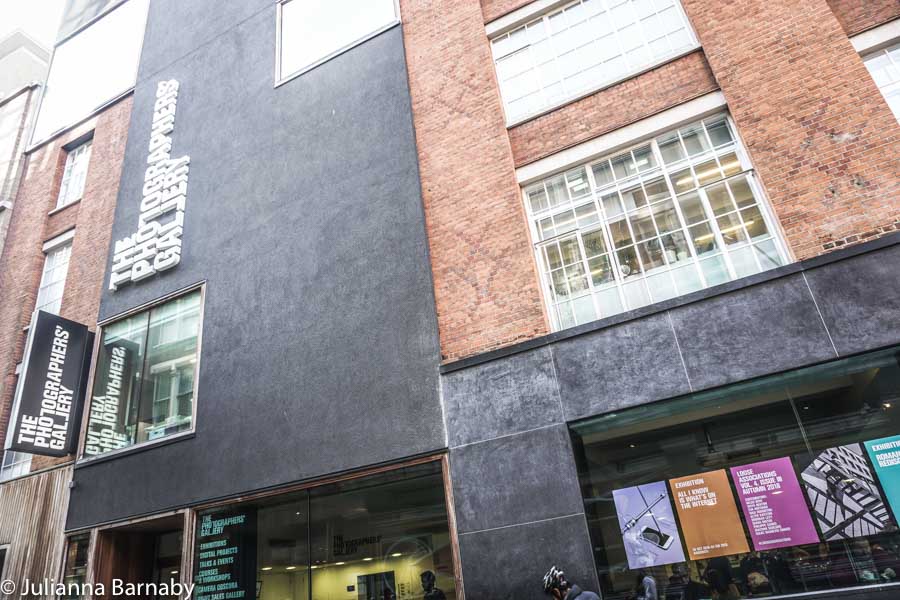
Here is a fact that says something uncomfortable about British art: gallery-rich London had no dedicated public venue for photography until 1971, when this place opened. It spent four decades arguing that photography belonged on a wall rather than in a magazine, outgrew its building doing it, and reopened in 2012 with six floors to make the point properly.
We go on Fridays after 5pm, when the exhibitions are free and the top floor empties out of people on their lunch break. The rest of the week it is £14 on the door and £12 booked online. Whichever day you pick, budget for the bookshop on the ground floor, which we have never once managed to leave empty-handed, and the cafe above it, which is one of the better places in this part of Soho to sit down with something you have just bought.
It is on Ramillies Street, a side street behind Oxford Street that thousands of people walk past every day without ever turning down.
House of MinaLima
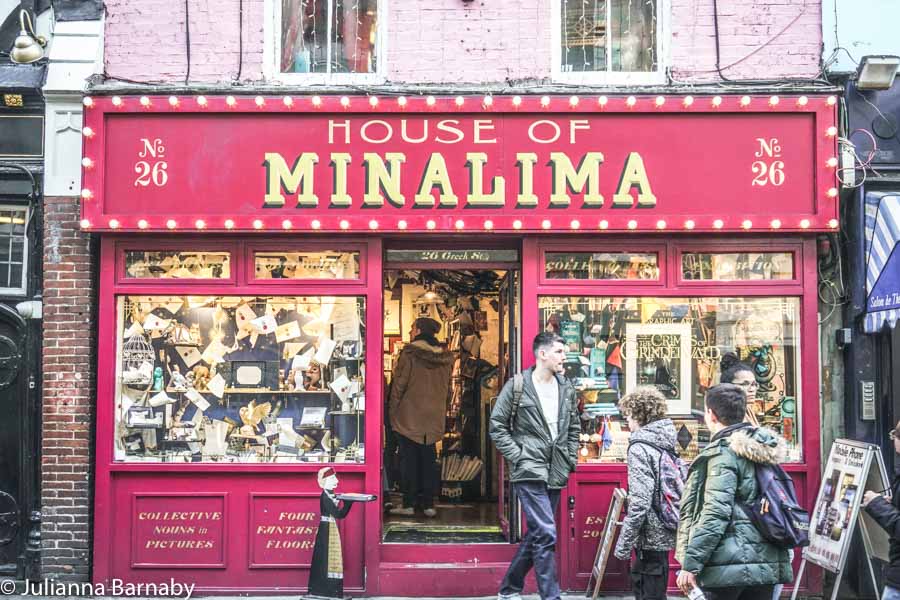
This is where we send people who ask about the Harry Potter studio tour and do not have a spare day and £60 to spend on it.
Miraphora Mina and Eduardo Lima designed the graphic world of the films: the Marauder’s Map, the Daily Prophet front pages, the Hogwarts acceptance letters, the shop signs in Diagon Alley. MinaLima is their two surnames pushed together, which is either charming or the kind of thing you will now not be able to unsee. They have filled a Soho townhouse with the work, and the stairwell between the floors is papered floor to ceiling, so we go up it slowly every single time.
It is free, it takes about twenty minutes, and it is open daily until 6.45pm.
One correction, because plenty of guides still have this wrong: it is at 157 Wardour Street. It left Greek Street in 2020.
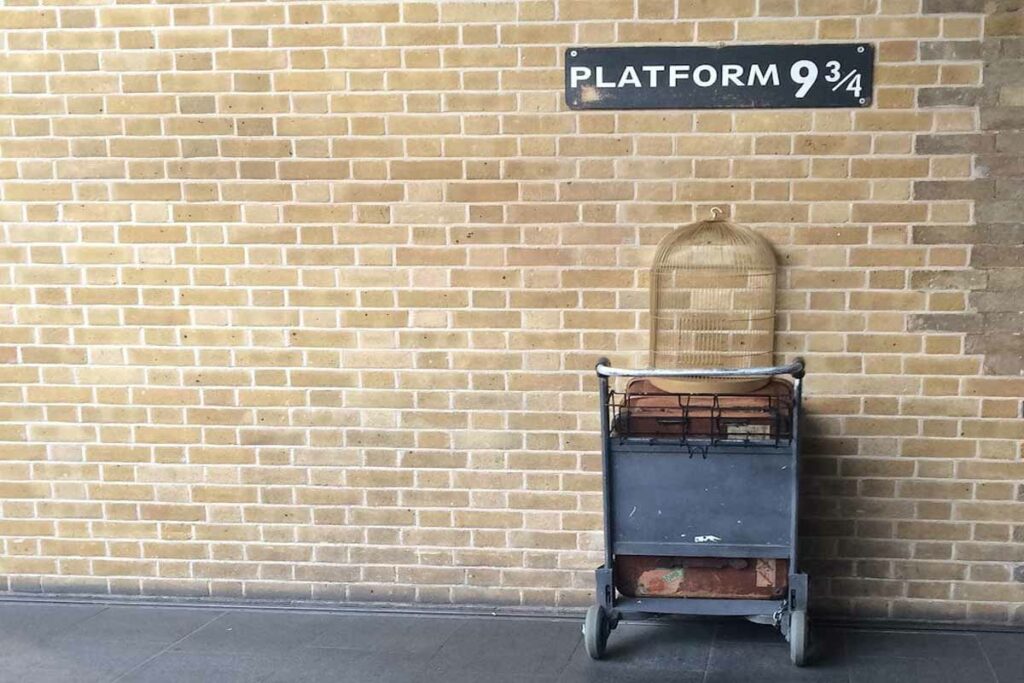
More in our guide to Harry Potter London, and the studio tour if you do have the day.
Notre Dame de France
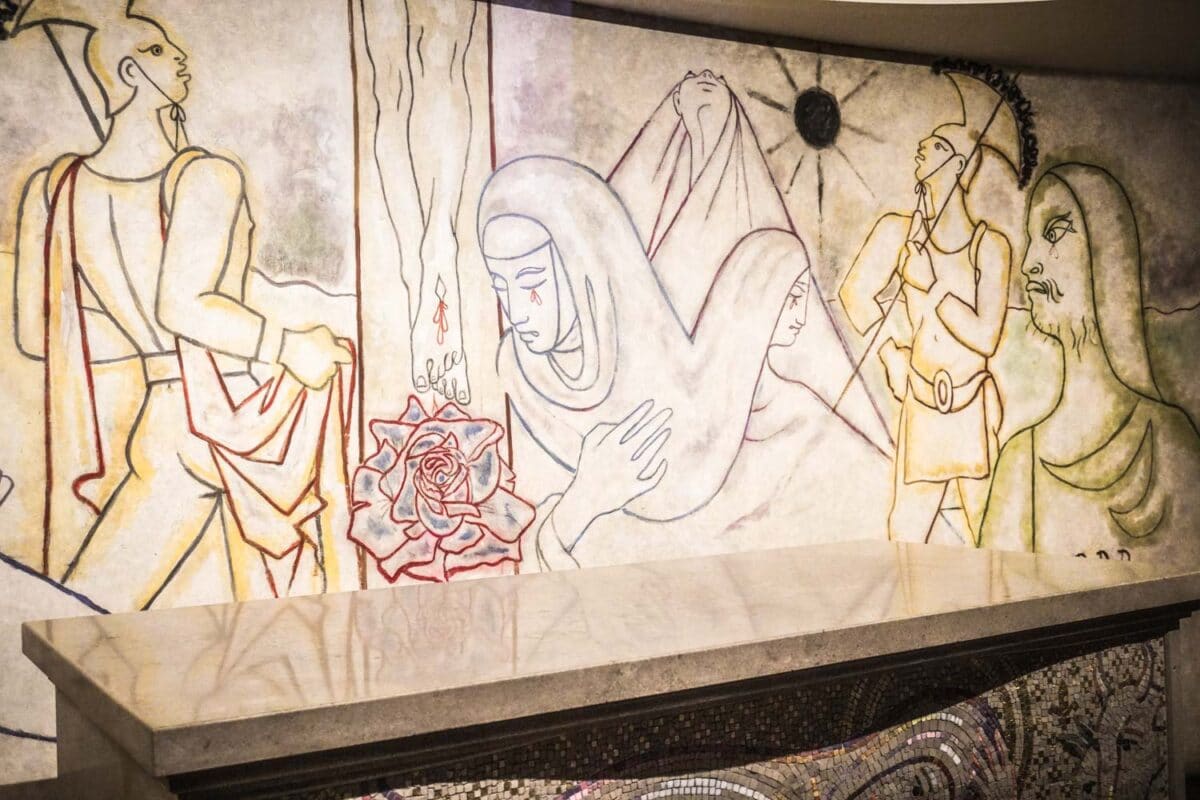
We have walked people in off Leicester Place mid-conversation and watched them stop talking.
From the street it is an unremarkable door. Inside it is circular, which almost no London church is, and it was consecrated in 1868 as the first cast-iron church in the city. That is not the reason to go. In 1959 Jean Cocteau spent a week decorating the Lady Chapel, drawing the Annunciation, the Crucifixion and the Assumption straight onto the wall, chain-smoking throughout and, by several accounts, talking to the figures as he made them. He put himself in the corner of one panel, watching.
It is free and open daily from 9am to 9pm. The queue for the cinema forty feet away has no idea it is there.
Foyles
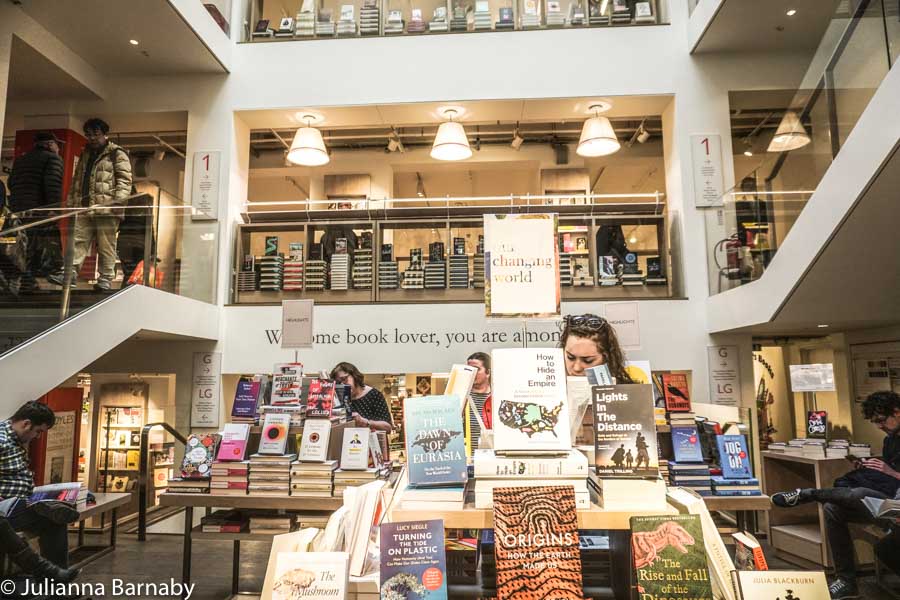
Book lovers, consider this a warning rather than a recommendation. Foyles holds around 200,000 titles across four miles of shelving, once held a Guinness World Record for exactly that, and has been separating Londoners from their money on Charing Cross Road for over a century.
The ground floor is where everyone stops. The one we go back for is the fourth-floor music section, which is deep enough that we have twice gone in for a birthday present and come out with something for ourselves instead.
It stays open until 9pm Monday to Saturday, which is the detail that matters: it turns a bookshop into a pre-dinner hour rather than an errand you have to do before six.
If you want them older and cheaper, we have a full guide to London’s secondhand bookshops.
The noses of Soho
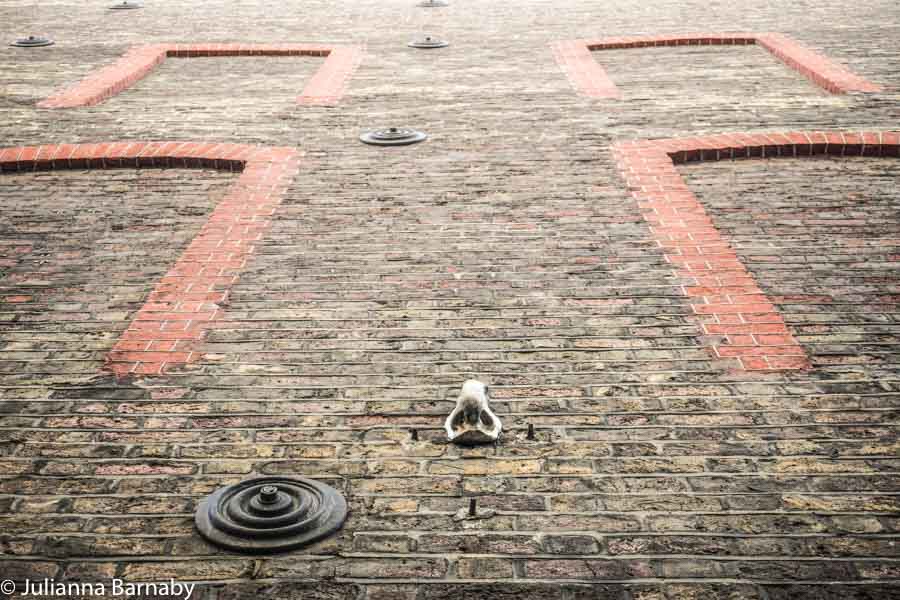
In 1997, an artist called Rick Buckley cast his own nose in plaster around 35 times and stuck the results to buildings across central London. Nobody knew why. The theories piled up for more than a decade, most of them wrong and several of them elaborate, before Buckley finally came forward and explained he had been protesting against the spread of CCTV, on the grounds that if the city was going to watch him he would leave a bit of himself watching back.
When we went hunting for them we found the Dean Street one outside Quo Vadis and the one under Admiralty Arch quickly, then lost most of an afternoon failing to confirm several others. The “seven noses” name has stuck even though nobody agrees on how many survive, so treat any number you read with suspicion, including ours.
We mapped the ones we could stand up in our guide to the noses.
Chin Chin Club
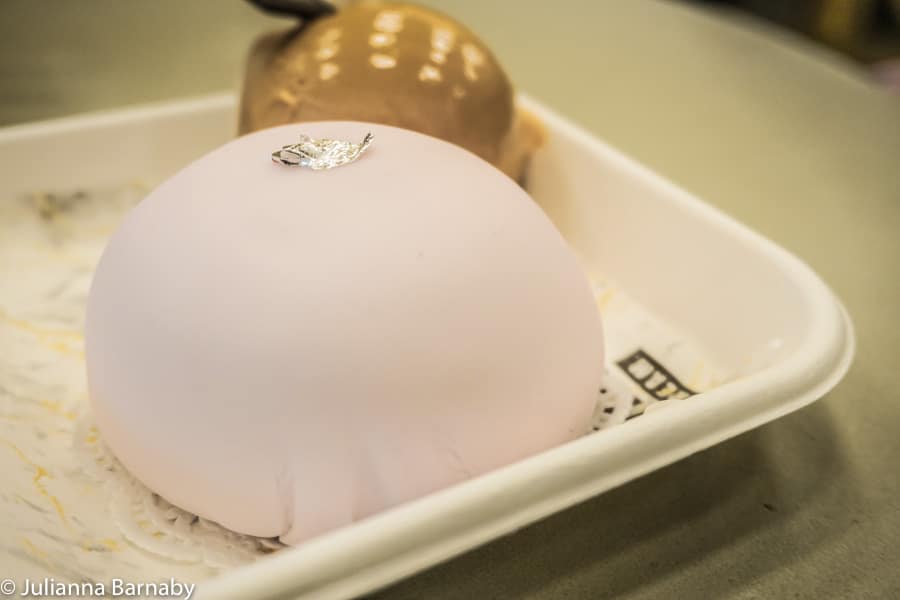
We went the first time for the theatre and have gone back ever since for the physics.
Ice cream here is frozen to order with liquid nitrogen, in a cloud of vapour, in about thirty seconds. That is not a party trick: freezing it that fast gives you much smaller ice crystals, and smaller crystals give you a denser, smoother scoop than anything churned slowly ever will. The flavours run from the sensible to the frankly experimental, and the ones that sound like a dare, coffee and olive oil among them, are usually the ones worth ordering.
The Greek Street site opens from 1pm daily and runs to 10pm most nights. It is a different address from the original Camden branch, though the same people are behind both.
Yauatcha
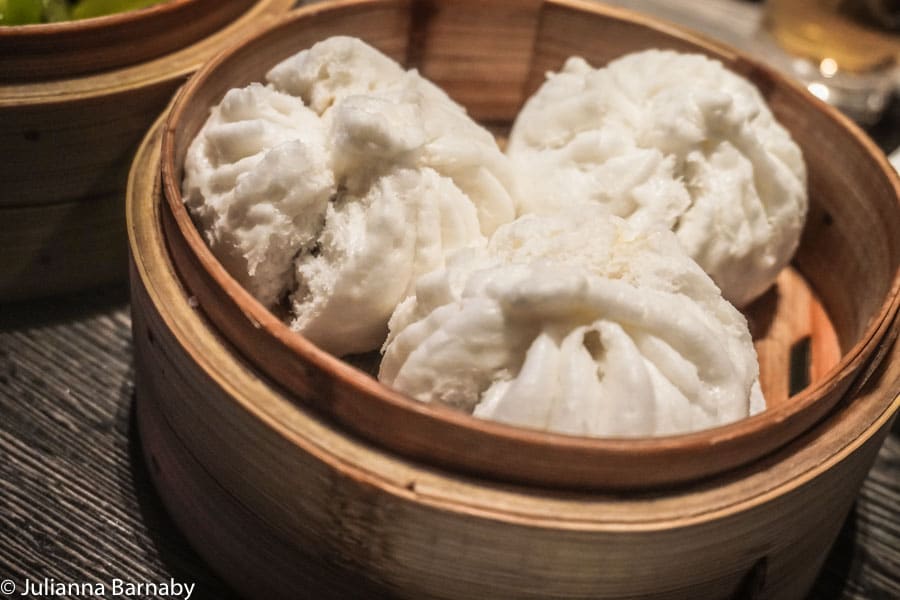
Yauatcha opened on Broadwick Street in 2004 and has held a Michelin star for most of the time since, which in a neighbourhood with Soho’s turnover makes it something close to permanent.
The dim sum is the headline and the tea list is the surprise: around sixty of them, with set menus that pair the two if you would rather not gamble. What actually gets us every time is the patisserie counter by the door, which is not something you find in a conventional dim sum room and which we have never once walked past without stopping. We go in for lunch and leave having spent more on cake than on dumplings.
More options in our dim sum guide.
Soho Square
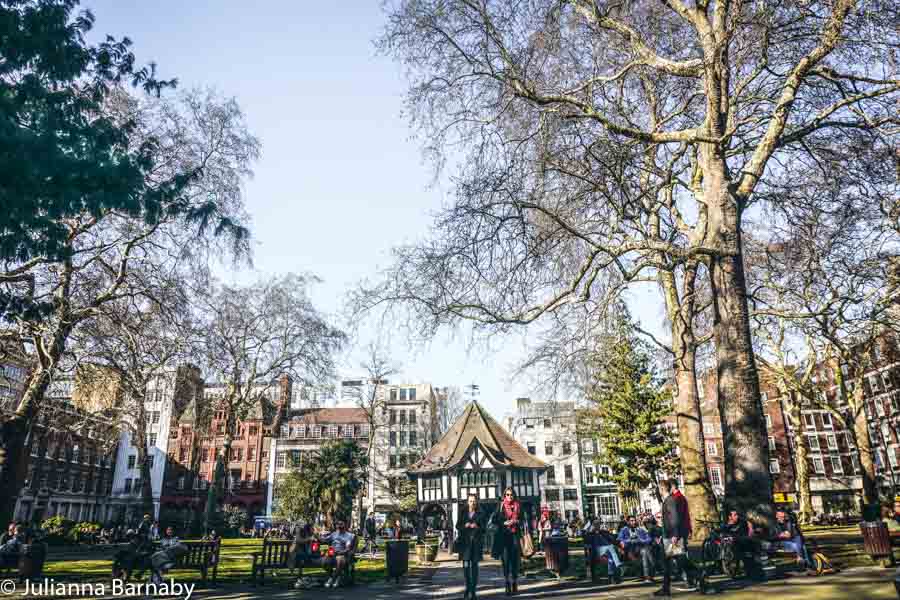
The half-timbered hut in the middle looks Tudor and is not. It went up in the 1920s, and underneath it is the entrance to an air raid shelter that runs beneath the grass. The square itself dates to the 1680s, which makes the hut the newcomer by about 240 years.
It is the closest thing central Soho has to a lawn, and on the first genuinely warm day of the year the whole of W1 arrives at once. We have never managed to get a bench on one of those days, which is entirely our own fault for turning up at one o’clock alongside everyone else with an hour to kill.
The plaques on Broadwick and Dean Street
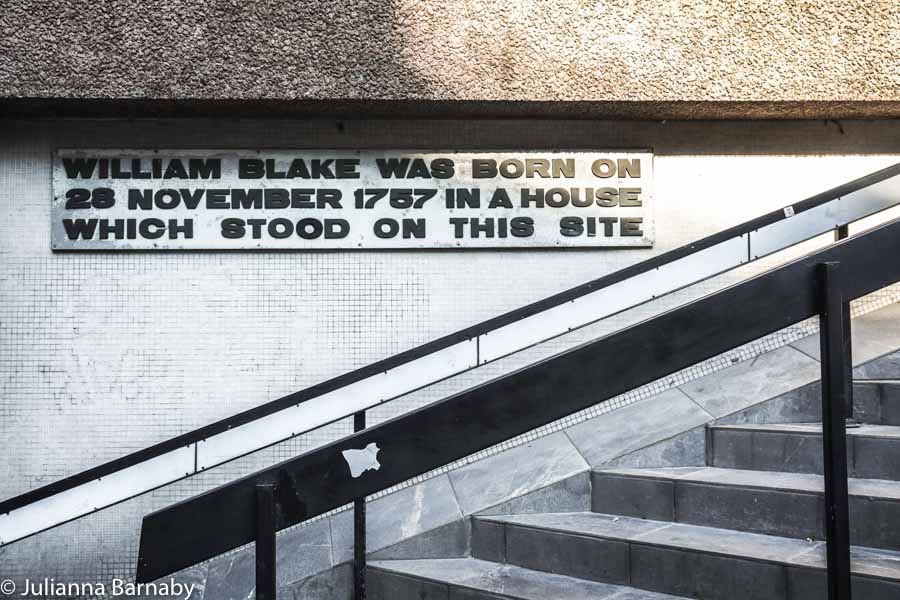
Two of London’s better blue plaques sit five minutes apart, and we walk between them whenever we are showing someone around.
William Blake was born at 28 Broad Street, now Broadwick Street, in 1757, and lived there until he married in 1782. The house is long gone and the plaque marks the spot. It was also the site of one of his earliest exhibitions, which was a comprehensive failure at the time and is quite cheering to think about now.
Karl Marx arrived in London in 1849 with no money and rented two upstairs rooms at 28 Dean Street, where he lived with his wife and children for five years and where several of those children died. He called it a hovel. A visitor, more generously, wrote that spirited conversation made up for the domestic defects. The building today is Quo Vadis, and the plaque still says 28 even though the address is now 26 to 29, which catches people out.
Carnaby Street
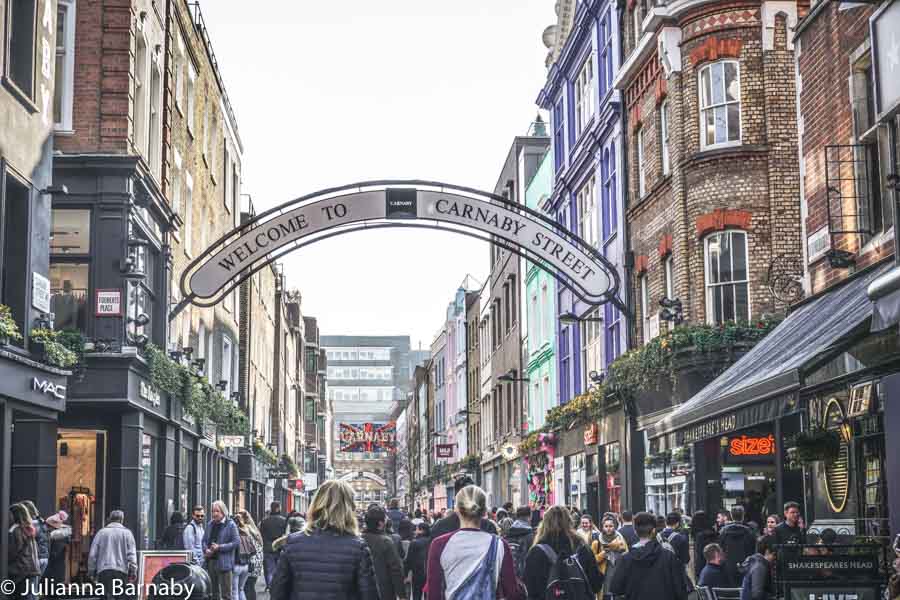
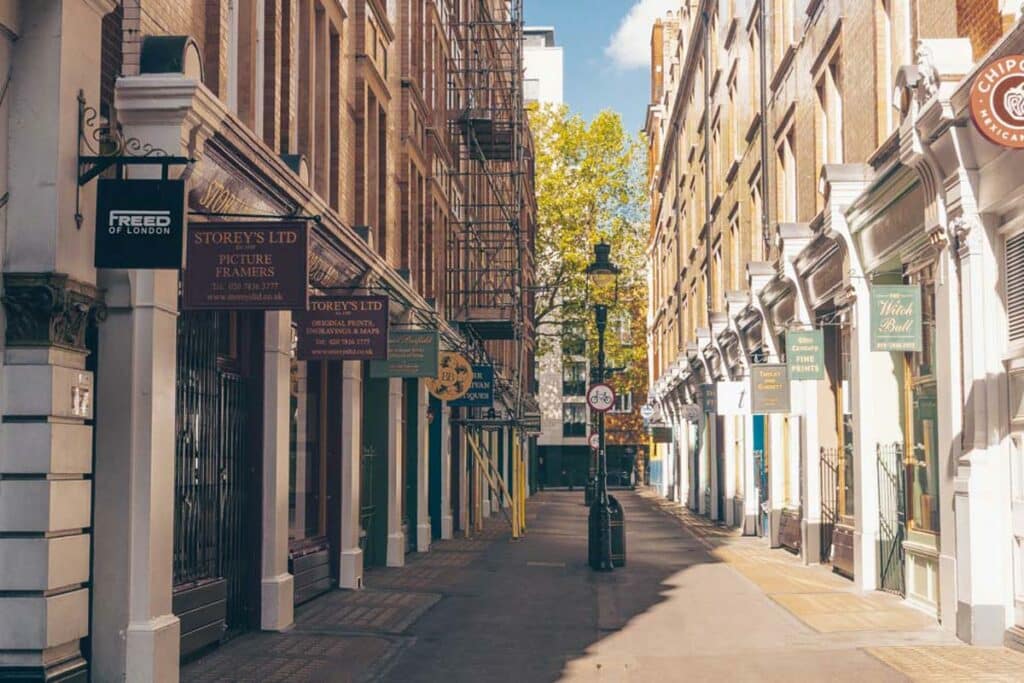
We walk the length of it in about ninety seconds and turn straight into Kingly Court off the eastern side, which is where the eating happens.
That is not a snub so much as an efficiency. Carnaby has an extraordinary history for a street this short: it housed plague victims in the 1600s, then spent the 1960s as the single most fashionable hundred metres in Europe, with Hendrix, the Stones and half of Swinging London going in and out of shops that no longer exist. What replaced them is a perfectly good high street with better rents than most.
It is also about to change again. A full streetscape overhaul was announced in December 2025 to mark sixty years since the Sixties peak, and the retail mix has already shifted noticeably in the last two years.
More in our Carnaby Street guide.
The record shops
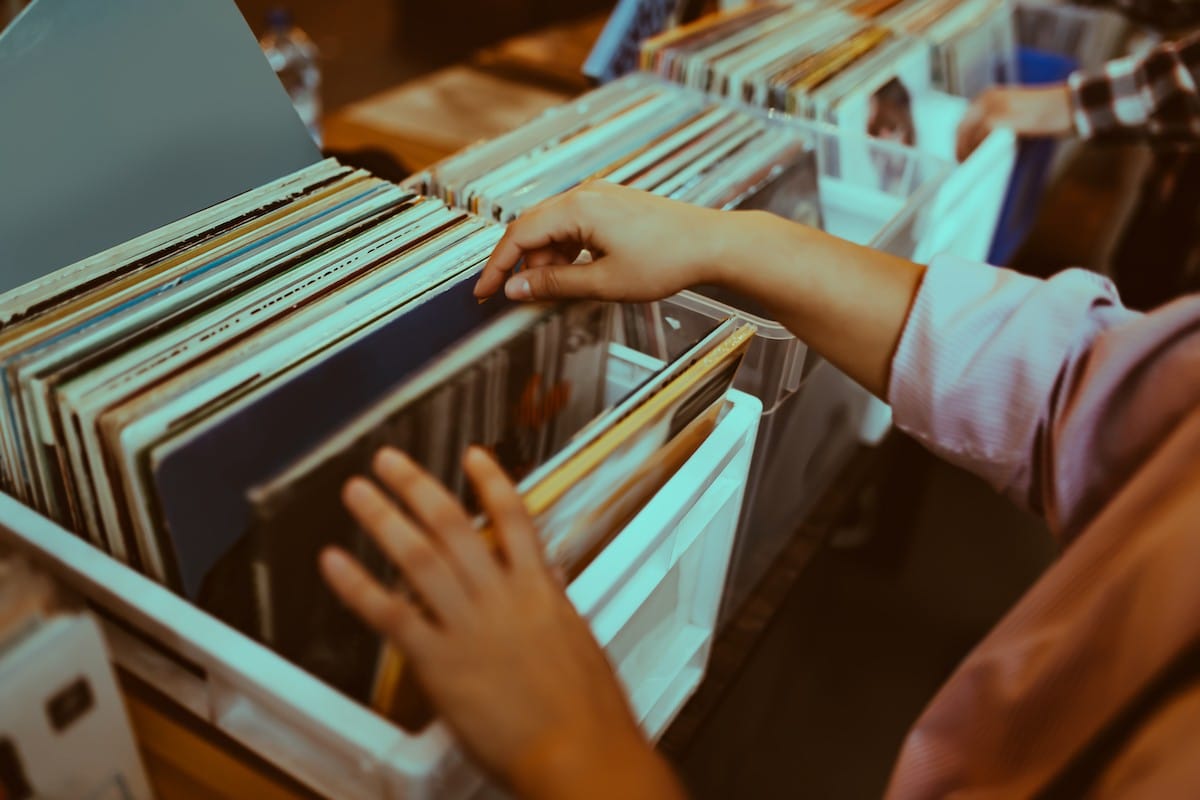
London has more than fifty record shops and a disproportionate number of the good ones are within four streets of each other here, which is what happens when an industry spends fifty years clustered around Denmark Street and Berwick Street and then refuses to leave.
We start at Sister Ray at 75 Berwick Street and, on a good afternoon, do not make it past Reckless at number 30. Phonica on Poland Street is the one for electronic and the staff there will talk you into something you did not come for. Sounds of the Universe on Broadwick handles reggae, jazz and soul and is run by the people behind Soul Jazz Records, which tells you most of what you need to know about the racks.
All four are still trading, which after the decade physical music has had is genuinely worth saying out loud.
Our full guide to London’s record shops has the rest.
The Broad Street pump
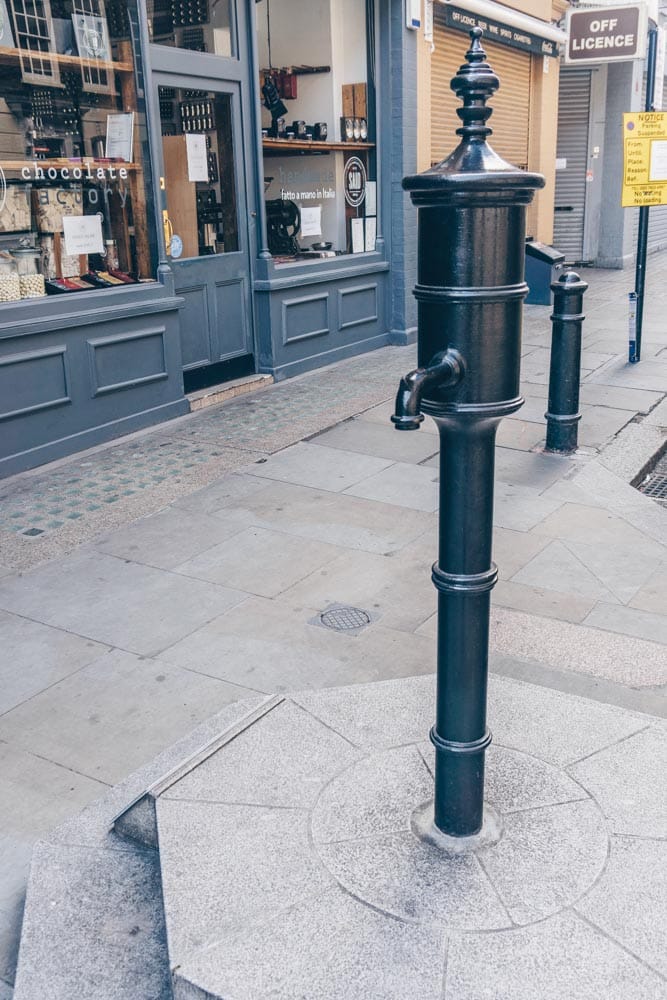
Say the name John Snow now and most people think of the Night’s Watch. Before that, it belonged to the man who worked out how cholera actually spreads, and he did it standing here.
In 1854 a cholera outbreak killed hundreds of people in a few streets of Soho. The prevailing theory was bad air. Snow mapped the deaths house by house, saw them cluster around one water pump on what was then Broad Street, and persuaded the parish to remove the handle. The outbreak collapsed. Modern epidemiology starts at that kerb.
This is our favourite thing to show people in Soho precisely because it looks like nothing: a stub of pipe and a plaque. The replica was taken away during building works in 2015 and put back in 2018, this time in the right spot. We finish the story in the pub named after him thirty seconds away, which is pleasingly, and pointedly, a former temperance house.
The full story is in our pieces on the Broad Street pump and the John Snow pub.
Bar Italia
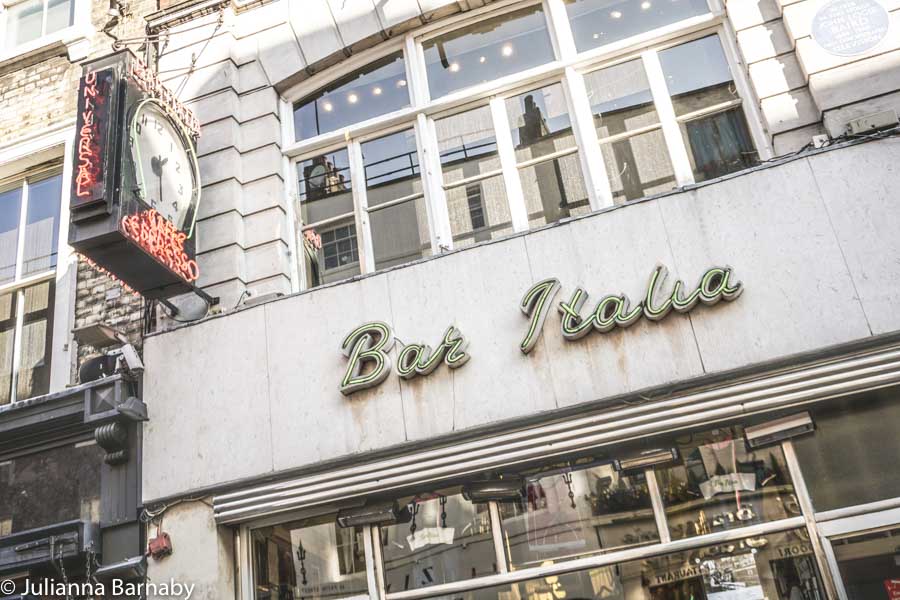
We drink it standing at the counter, which is the only correct way, ideally at an hour when the room contains both people starting a shift and people who have not yet been to bed.
Bar Italia has been on Frith Street since 1949, run by the same family throughout, under a neon sign and a photograph of Rocky Marciano. The mood changes completely depending on when you walk in: pasta and pizza at sensible prices through the day, a counter stacked with pastries, and something closer to a bar as the night goes on. It occupies the ground floor of 22 Frith Street, the building in which John Logie Baird gave the first public demonstration of television in 1926, which nobody inside will mention to you. It runs to 4am, which puts it among the latest kitchens in London.
It was named the best cafe in Britain at the 2026 Italian Awards and has since opened a second site inside Outernet, but Frith Street is the one that counts.
Our Soho cafe guide has the rest of the neighbourhood’s coffee.
After dark
Ronnie Scott’s
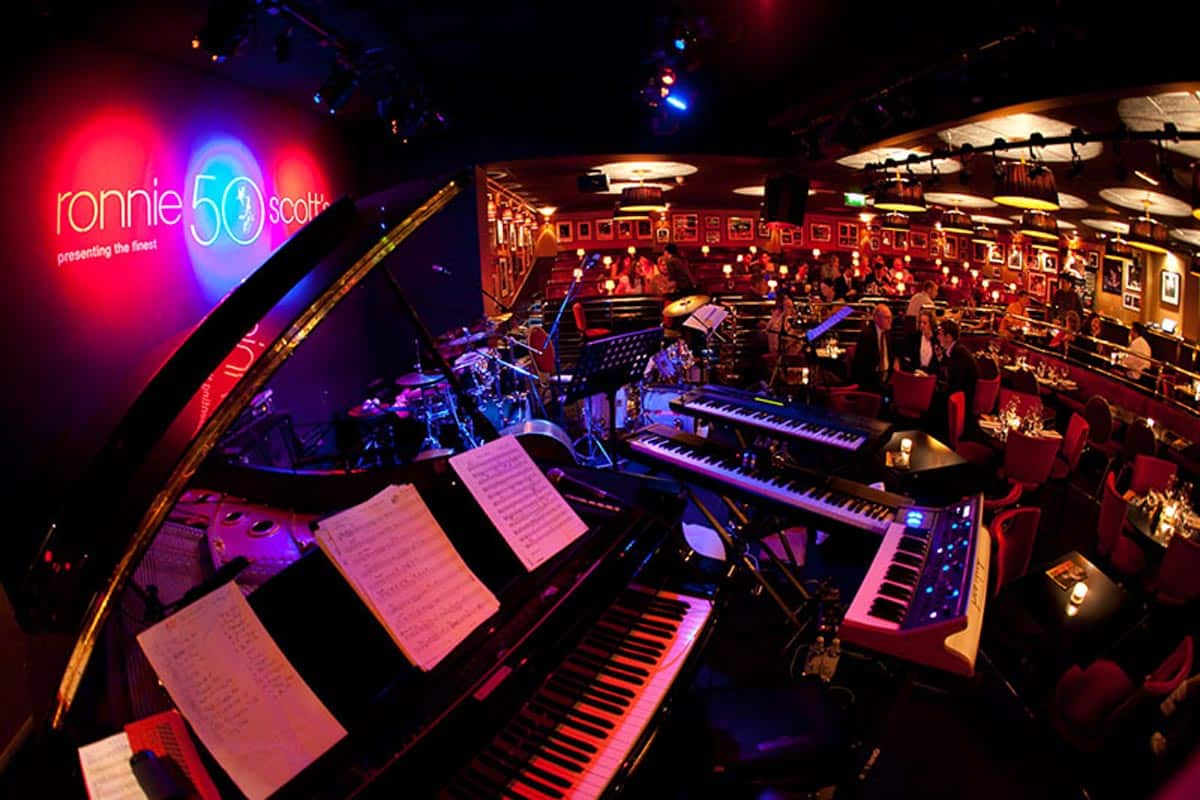
Jazz the way it is supposed to be delivered: a dark room, small tables, candles, and a stage close enough that you can watch a saxophonist decide what to do next. Ronnie Scott’s has been on Frith Street since 1959 and the list of people who have played it needs no introduction, which has not stopped anyone reciting it since.
Book the late set. Smaller crowd, looser playing, and the room stops performing at you and starts doing the thing it does. We have sat through more of them than we have kept count of.
New for 2026 is Upstairs at Ronnie’s, a 140-seat space on the first floor that opened in February and programmes well beyond jazz. Classical, gospel, soul and hip-hop have all been through it already, which for a venue this protective of its identity is a real shift.
More in our guide to London’s jazz clubs.
Coven
Soho has been London’s queer heartland since long before it was legal to say so, with Old Compton Street as the spine of it and gay bars documented here since the nineteenth century.
The street changed in October 2025, when G-A-Y Bar closed after its owner pointed at rents and a Soho he no longer recognised. Coven opened in the same building in June 2026: five floors, run as a club and community space rather than a bar with a dancefloor bolted on. We have not been through the doors yet, and we would rather say so than have you turn up somewhere on our word that we have not seen.
The old guard is still standing either side of it. The Admiral Duncan at 54 and Comptons at 51 have both been on Old Compton Street longer than a lot of their customers have been alive.
More in our guide to London’s LGBTQ+ bars and clubs.
Cahoots
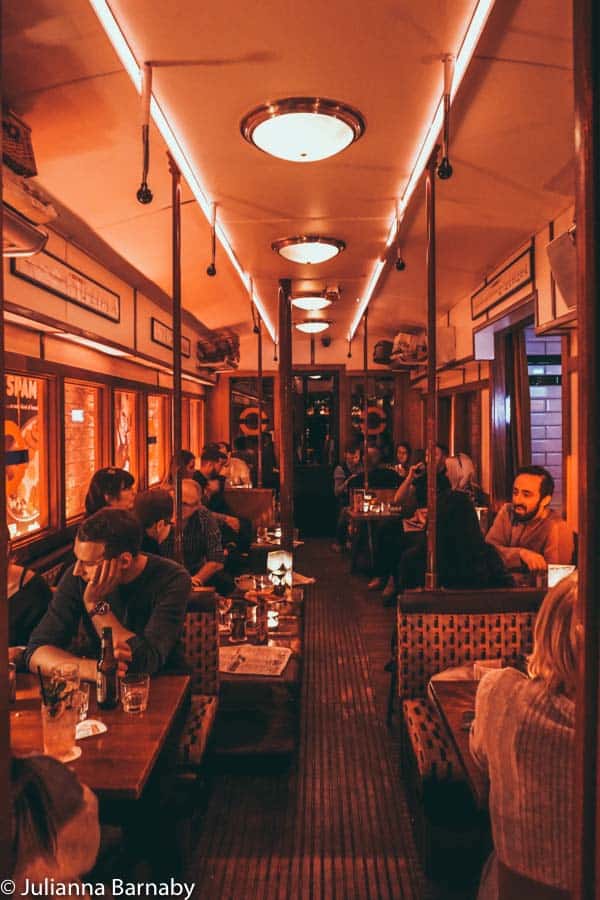
A decommissioned 1940s Underground carriage, parked under Kingly Court, serving cocktails to people who are gently encouraged to dress like it is 1946. The menu is laid out like a ration book and the staff commit to the bit with a straightness of face we can only admire.
We went braced for it to be unbearable and stayed about two hours longer than we had planned, which is the review really. The trick is that the detail is good enough to carry it: the carriage is real, the fittings are right, and nobody winks at you.
Experimental Cocktail Club
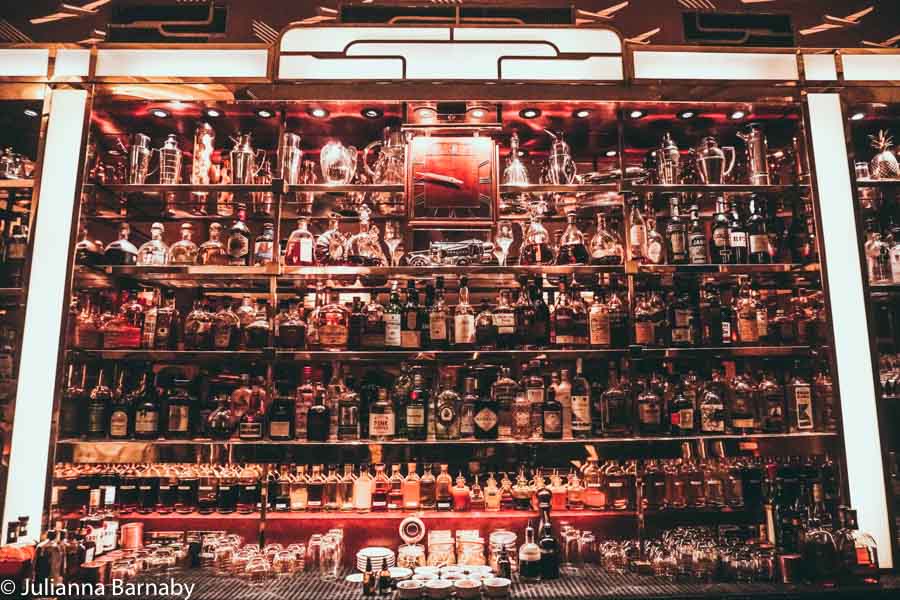
There is nothing on the door. You find the right number on Gerrard Street, press the buzzer, climb three flights, and come out somewhere that feels considerably older and further from Chinatown than it has any business feeling.
It has been there for well over a decade and we have still walked past it with people who had no idea it existed, which after that long is quite a trick to have pulled off. The drinks are serious without being solemn about it.
Swift and Disrepute
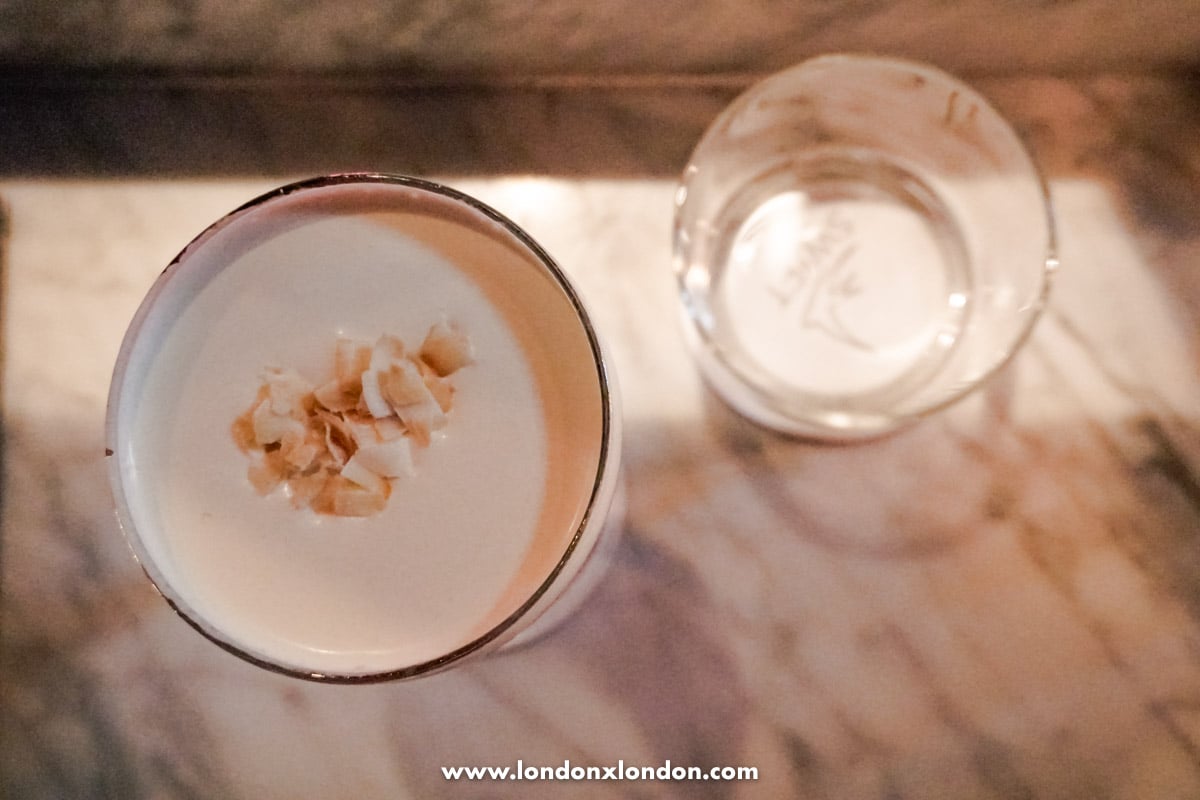
Two more we send people to, for different halves of an evening.
Swift on Old Compton Street is really two bars stacked in one building, and we use it as both: a fast one standing at the aperitivo counter upstairs before dinner, or the low-lit whisky room downstairs after it, where the list runs long enough to be a problem.
Disrepute sits under Kingly Court and does the velvet-booth, low-ceiling, no-natural-light thing properly, without any of the winking that usually comes with it.
One to strike off any older list you are reading: the Blind Pig has gone. Social Eating House closed in 2024, the concept moved to Mayfair, and that closed too in 2025. A number of directories still list it as trading, which is stale data rather than good news.
Speedboat Bar
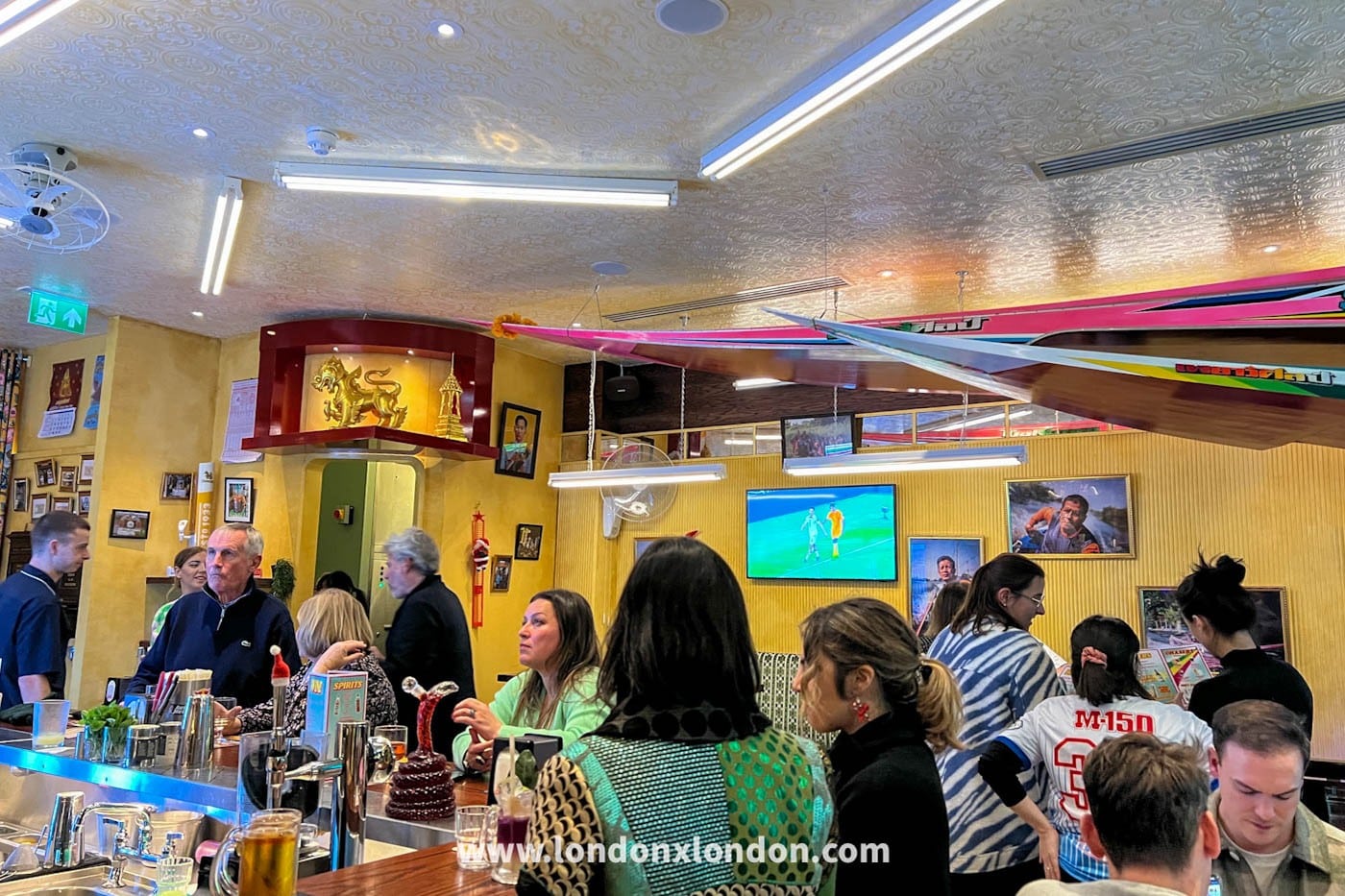
Bangkok’s Chinatown lifted and dropped onto Rupert Street: Thai-Chinese food, strip lighting, snooker on the screens and a volume level that makes conversation a negotiation.
We have been several times across a couple of years, ordered badly once and well every time since, and it has never let us down. Four stars from us, and the only thing keeping it off five is that you will not hear a word your companion says after nine o’clock.
Pho Pham
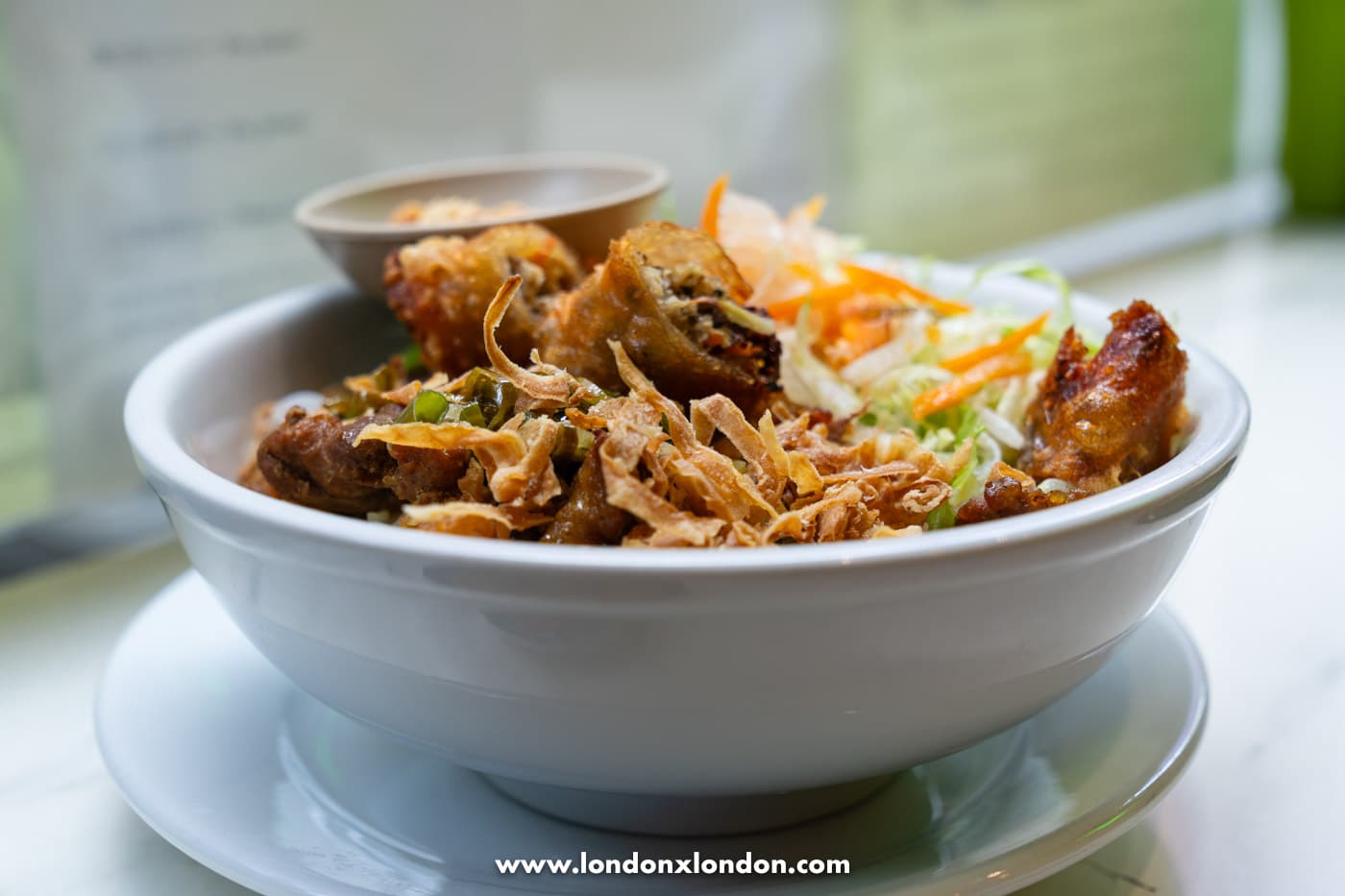
Sixteen seats on Manette Street, no bookings, no decor worth describing, and a queue that moves considerably faster than it looks because nobody comes here to sit around. This is Vietnamese cooking with nothing built on top of it: no concept, no cocktail list, no reason to be here other than the food.
The bun cha gio is the thing. Cold vermicelli, herbs, nuoc cham, and spring rolls fried to the point where they shatter rather than bend, and we have long since stopped pretending we are going to order anything else. Five stars from us, which we hand out rarely enough that it should mean something.
Go early or go late. At one o’clock on a weekday you will be standing on Manette Street for a while, and it is not a street with much to look at.
Burger and Beyond
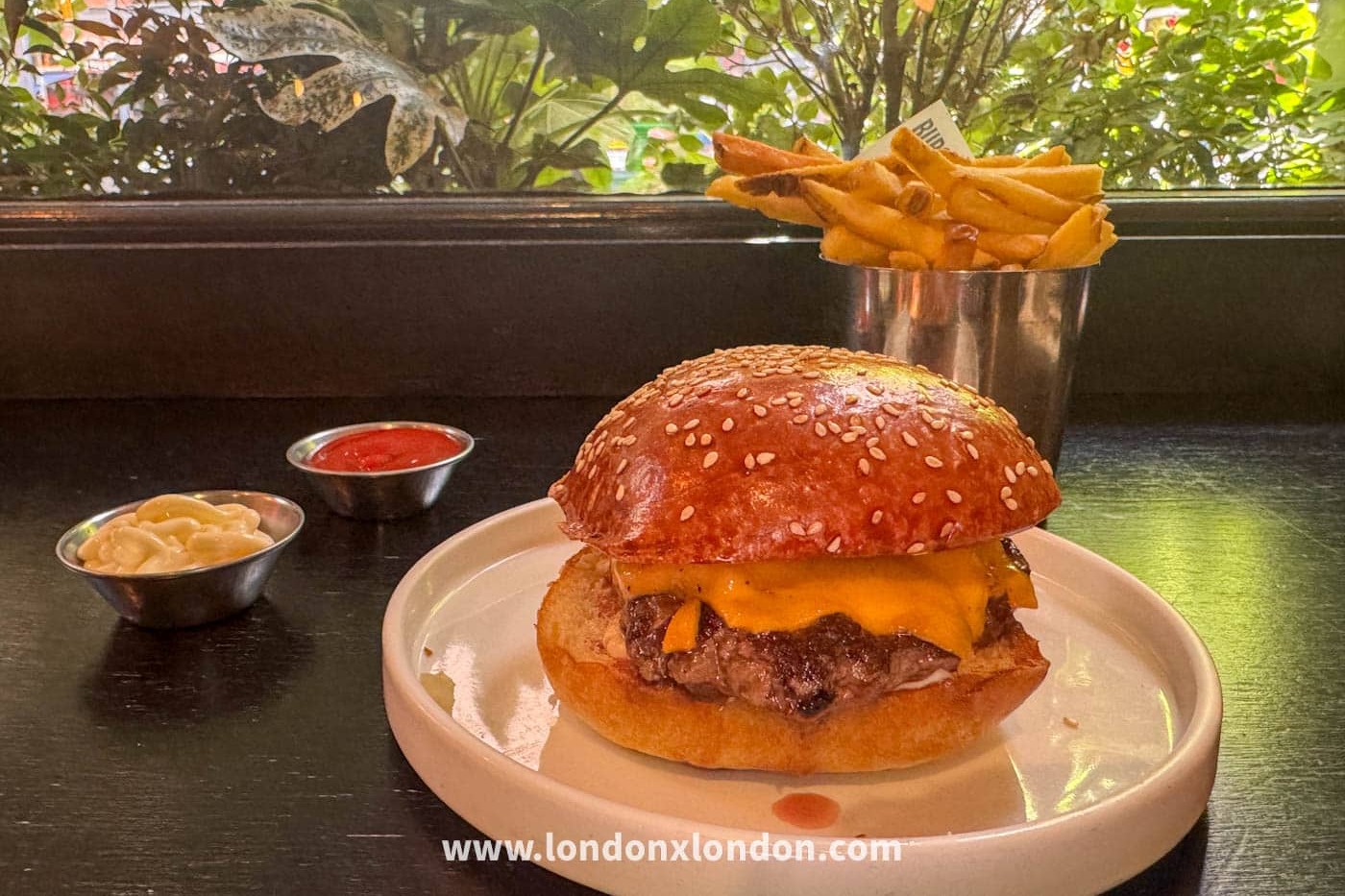
London has more burger restaurants than it has any use for, and most of them have confused height with quality. Burger and Beyond has never made that mistake. It built a following in Shoreditch on a short menu done properly, with a beef blend it actually thinks about and a bun that does the job it is given, and the usual thing that happens when a cult favourite moves west is that the edges come off it.
That has not happened. The Soho room is busier and louder and the burger is the same burger, which is the only test that matters. Get the bone marrow one if you are only having a single sitting.
Marrone
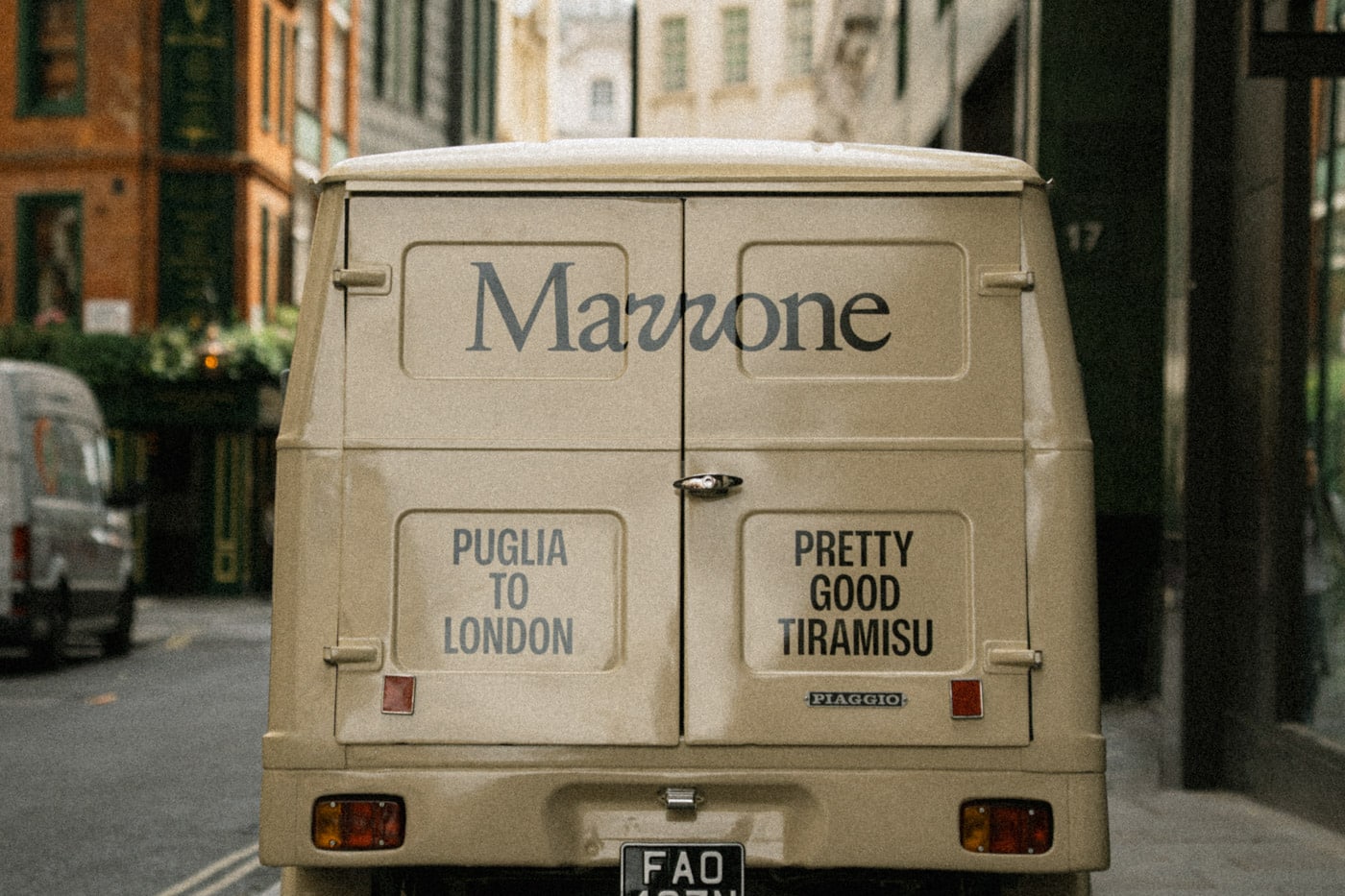
London finally has a counter dedicated entirely to tiramisu, and it turned up in Soho, which is the correct address for a business with one idea and total commitment to it.
Not tiramisu as the last line of a menu, then. Tiramisu as the whole proposition, assembled in front of you, in more variations than you would think the format could stand: the classic, the pistachio, the seasonal ones that change often enough to be worth asking about. The base recipe is the same every time and the difference is in what goes over it.
We got there early enough in its life to walk straight up to the counter, which we suspect is not going to be true for much longer.
Bar Douro
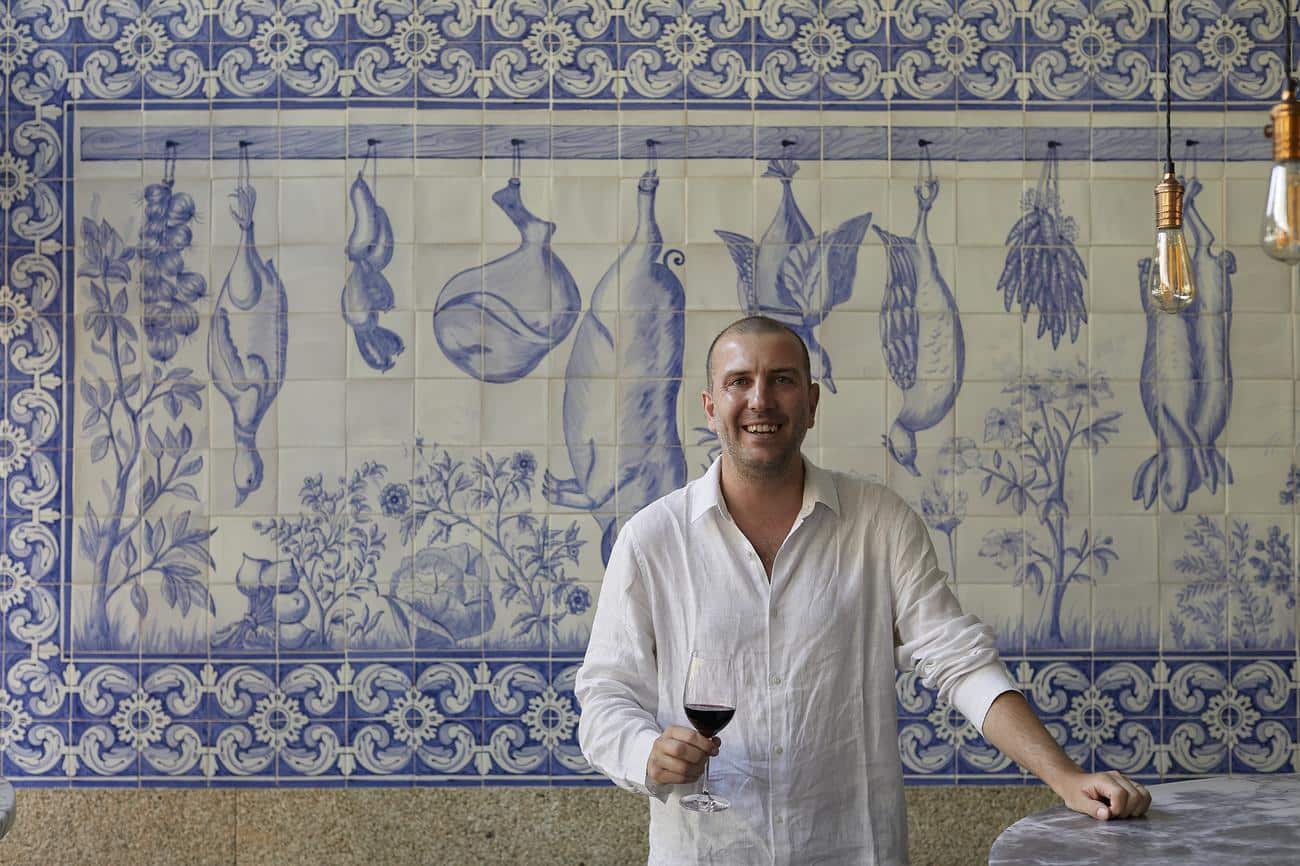
Portuguese small plates from the team who started under the railway arches at Flat Iron Square a decade ago, in a room lined with the tiles that have become their signature.
We have followed them since the first site and the Soho room is the most confident version of it: the same cooking, more space to do it in, and a wine list that makes a proper case for Portugal rather than treating it as the cheap option.
NQ64
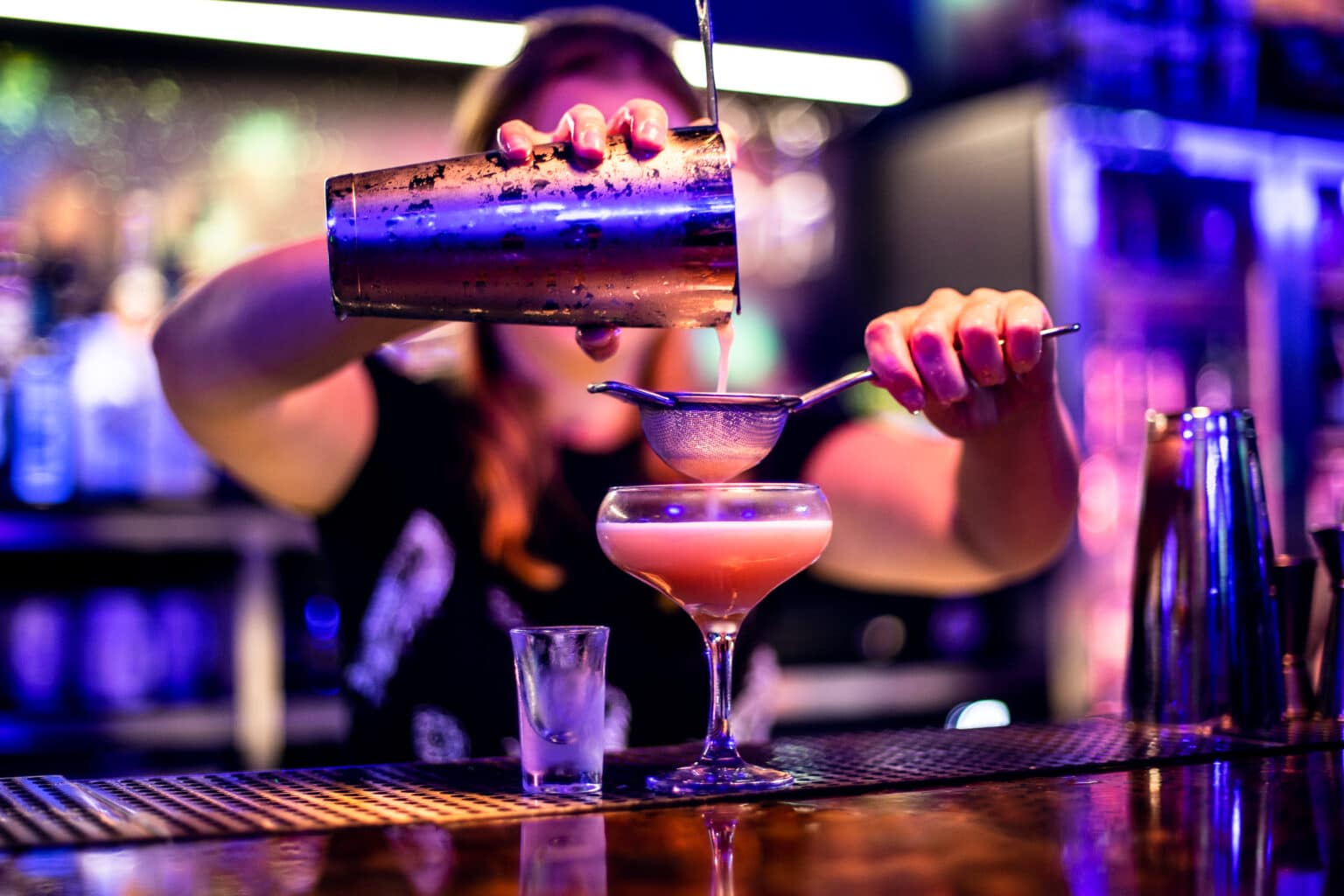
Two floors of retro arcade cabinets, a wall of pinball and cocktails named after video games, in the largest site the group has opened anywhere. Street Fighter, Time Crisis, Daytona, Mario Kart, and a token system designed by someone who understands that nobody has ever stopped after one go.
The drinks are better than they need to be, which is the bit that surprises people who arrive expecting a themed bar and a hangover. We lost an entire evening to it and did not notice until the lights came up, which we assume is the business model working exactly as intended.
It is a genuinely good answer to the perennial Soho problem of what to do with a group that cannot agree on anything.
Bob Bob Ricard
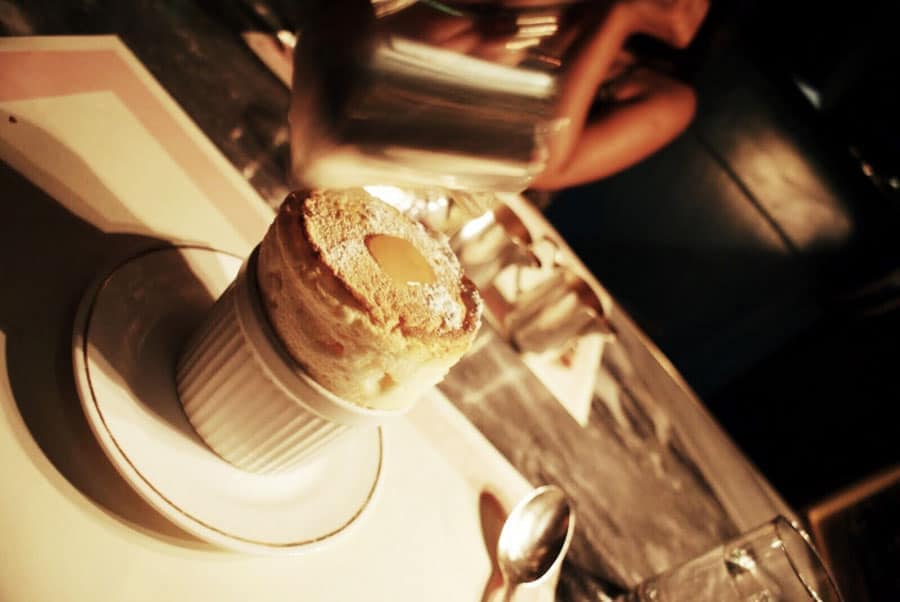
There is a gold button on every table that says Press for Champagne. Need we go on? We probably should, because the button gets all the attention and the rest of the room deserves some.
The interior is best described as an argument in favour of excess: gold leaf, blue leather booths, a ceiling that belongs in a different building and possibly a different century. The Anglo-Russian menu is considerably better than a restaurant with a novelty button needs it to be, which is what has kept the place booked out for well over a decade rather than for one viral summer.
We have pressed the button. Obviously we have pressed the button.
One clarification, since there has been some confusion: the Soho original is trading and fine. It was Bébé Bob in Golden Square that closed, in March 2026.
Hovarda
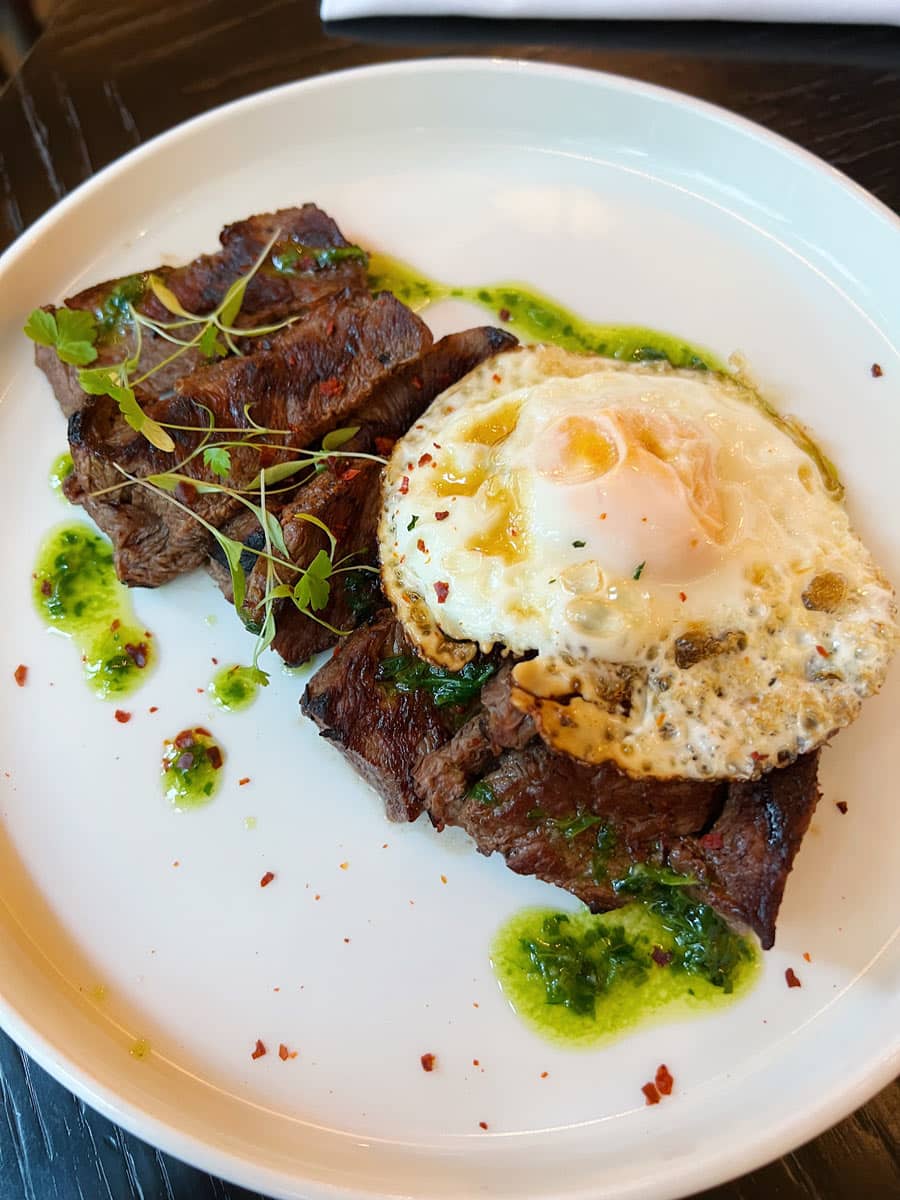
Aegean cooking on Rupert Street, sitting somewhere between Greek and Turkish and refusing to be pinned to either. White parquet, good tiling, and plates that arrive looking like they have been styled, which is normally a warning sign and here is not.
Expect a lot of seafood, sharp salads and lamb that has been given the time it needs. No plate throwing, no bouzouki, nobody putting a napkin on their head.
It is one of the few rooms around here we would book for a long dinner rather than a quick one, helped by a kitchen that runs until 1am Tuesday to Saturday. Reckon on about £110 for two with drinks.
The French House
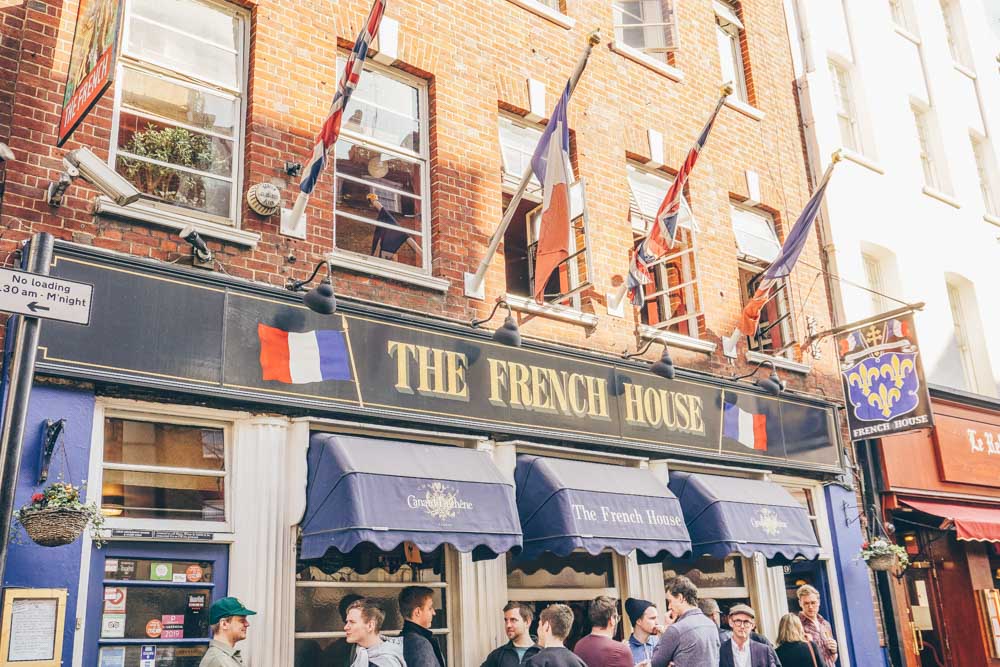
It is close to bad manners to spend an evening in Soho without putting your head round the door of the French House.
De Gaulle ran the Free French from the room upstairs during the war, and the pub has been collecting stories about it ever since, most of which we would not put our name to. What is not in dispute is the drinking that came after: Francis Bacon, Lucian Freud and most of post-war literary Soho were here so persistently that the place is effectively a footnote in the history of British painting.
The rules are the point. No music, no television, no mobile phones, and beer served in halves as a matter of policy every day except April Fool’s Day. That last one catches out everyone we have ever brought here on their first round, and watching it happen has become part of the visit.
More in our Soho pub guide.
The Prince Charles Cinema
What improves a musical? Two hundred strangers singing over it, badly, having paid a fraction of what the West End charges. The Prince Charles has built forty years of loyalty on singalong screenings, all-night marathons and the best repertory programming in London, a minute from Leicester Square and at a price that makes the surrounding chains look absurd.
We book the repertory rather than the singalongs, and we accept this is a minority position in a room belting out Grease.
Go soon either way. It has been in a lease dispute with its landlord since early 2025 over rent and a redevelopment clause, with a court hearing this month and nothing settled. It is a registered Asset of Community Value with a great many people fighting for it, which is not the same as being safe.
The theatres on Shaftesbury Avenue
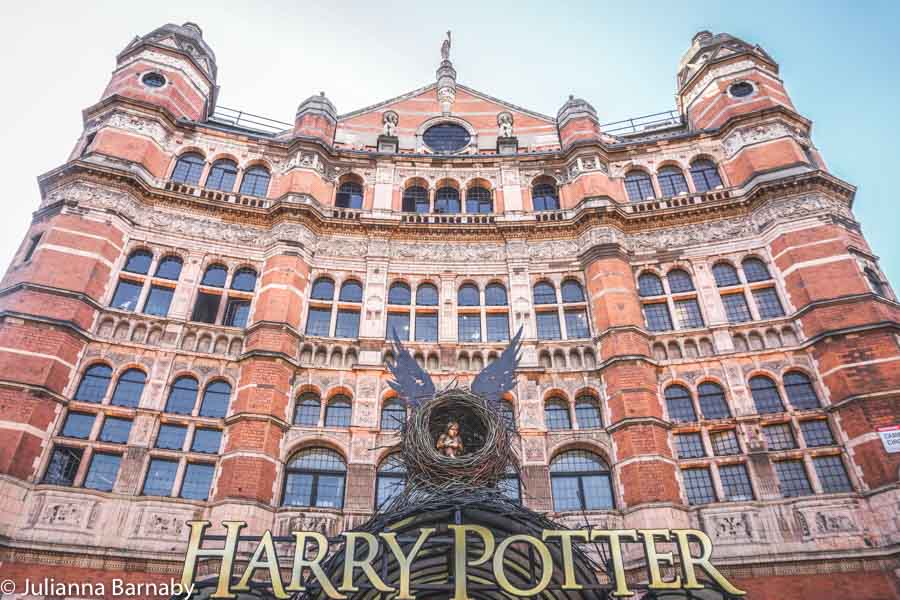
The Lyric, the Apollo, the Gielgud and the Sondheim stand in a row, with the Palace looming over the Cambridge Circus end, on one of the very few streets anywhere in the world where you can choose between four plays by walking a hundred metres and reading the boards. We have more than once decided an evening exactly that way.
Just off it, @sohoplace opened in 2022 as the first new West End theatre in fifty years, built in the round above a Tube station, which is a sentence that would have sounded like a fantasy to anyone in Soho a decade ago.
Soho practicalities
Getting there: Tottenham Court Road, Oxford Circus, Piccadilly Circus and Leicester Square all drop you on an edge of it. Tottenham Court Road is best for the eastern half, Oxford Circus for Carnaby and the west.
When to go: if you only have one visit in you, arrive late afternoon and stay. You will get both Sohos for the price of one.
Eating: book, and book early. The better rooms here are small and most fill a fortnight out. The exceptions are the counters, which take no bookings at all and reward turning up at six.
Deeper on the neighbourhood: our guides to Soho restaurants, Soho bars, Soho breakfast and brunch and Chinatown go further on each.
The London x London Take: Soho rewards the person who turns off the main drag. Carnaby and Old Compton Street are the streets everyone photographs, but the neighbourhood’s actual character lives on Berwick, Rupert, Frith and Broadwick, where a sixteen-seat noodle counter, a 1959 jazz room and the water pump that founded epidemiology sit within four minutes of each other. Come for one thing. You will not leave with one thing.