Three of the world’s great museums sit within five minutes of each other in South Kensington, and every one of them is free. That is the reason most people come. What keeps them here is everything in the streets around it: a Victorian pet cemetery you can only see on a booked walk, a Japanese garden built on the ruins of a Blitzed mansion, and a painter’s house with an Arab hall dropped into the middle of it.
Kensington does grand very well. It also does peculiar, which is the half most visitors miss entirely while queueing for the dinosaurs. A remarkable amount of it costs nothing, which is why so much of this borough turns up in our roundup of free things to do in London.
You could spend weeks working through Kensington and if you are short on time our top three would be Kensington Palace, the Churchill Arms and the V&A. This is the longer version, museums and palaces first, then the quieter corners, then where to eat, drink and stay. Everything here is current on prices and opening as of this month.
Quick answers
- The big three museums are the V&A, the Science Museum and the Natural History Museum, all free and all within a few minutes of South Kensington station
- Do you need to book? No. None of the three requires pre-booking any more, though free tickets let you skip the queue
- Best free thing nobody does: the Natural History Museum’s Evolution Garden, opened in 2024, which you can walk through without going into the museum at all
- Kensington Palace is £24.70 for adults, and its Queen’s State Apartments are closed until spring 2027
- Rainy day: Leighton House and Sambourne House on a joint ticket, £23 for both
The museum quarter
Exhibition Road and the streets off it hold more free world-class collections than anywhere else in the country, and they are only part of the picture: we count 39 free museums in London altogether. You could do all three in a day. You should not.
Victoria and Albert Museum
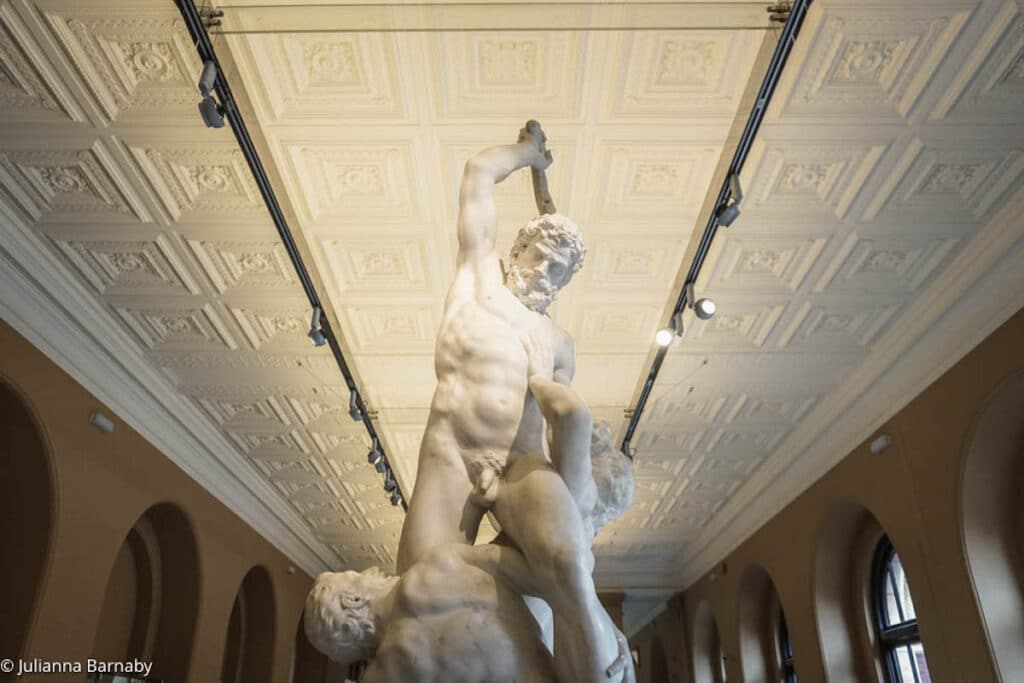
The largest museum of applied design in the world, and the one most people skip in favour of the dinosaurs and the space rockets. It took us a while to properly appreciate the V&A, and these days it is comfortably our favourite of the three.
Five hectares, 2.25 million objects, 5,000 years. The Islamic collection is among the finest in the western world, the cast courts are the most startling room in the building, and the completed Photography Centre is now the largest permanent photography gallery in the country. Go on a Friday when it stays open to 10pm and the crowds have gone.
Where: Cromwell Road, SW7 2RL. Open: daily 10am to 5.45pm, Fridays to 10pm. Price: free, except for special exhibitions.
Go straight to the Cast Courts, which is the room nobody expects and the one everyone remembers. Two hours is right here; four is a mistake. Worth knowing that the V&A now has an east London outpost too. V&A East opened in Stratford in 2026, alongside the Storehouse, and both are free.
Science Museum
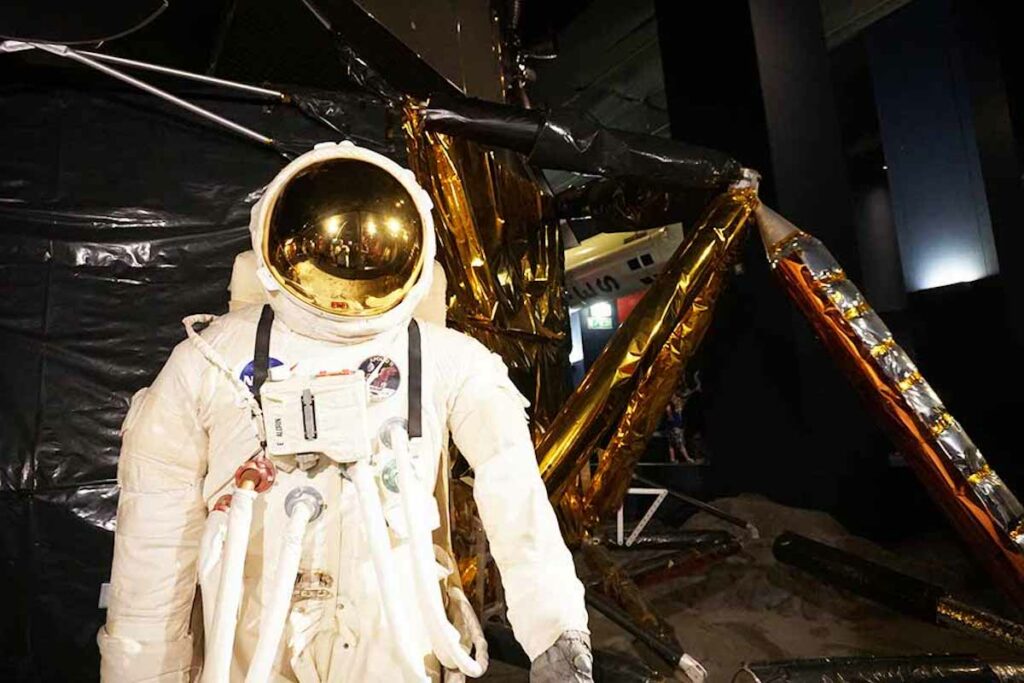
Do not be fooled by the name. The Science Museum sounds like somewhere you take children and is genuinely better as an adult, when you can read the labels properly and nobody is pulling you towards the next lever. Trust us, we visit far too often.
The newest permanent addition is the Energy Revolution gallery, which opened in 2024 and covers the shift away from fossil fuels, with a seven-metre tidal turbine blade and a hundred-year-old electric taxi. The Apollo 10 command module downstairs remains the single most affecting object in the building.
Go up to the Apollo 10 command module first, before the school groups work their way up to it.
Where: Exhibition Road, SW7 2DD. Open: daily 10am to 6pm, last entry 5.15pm. Price: free. Booking is recommended but walk-ups are fine.
Natural History Museum
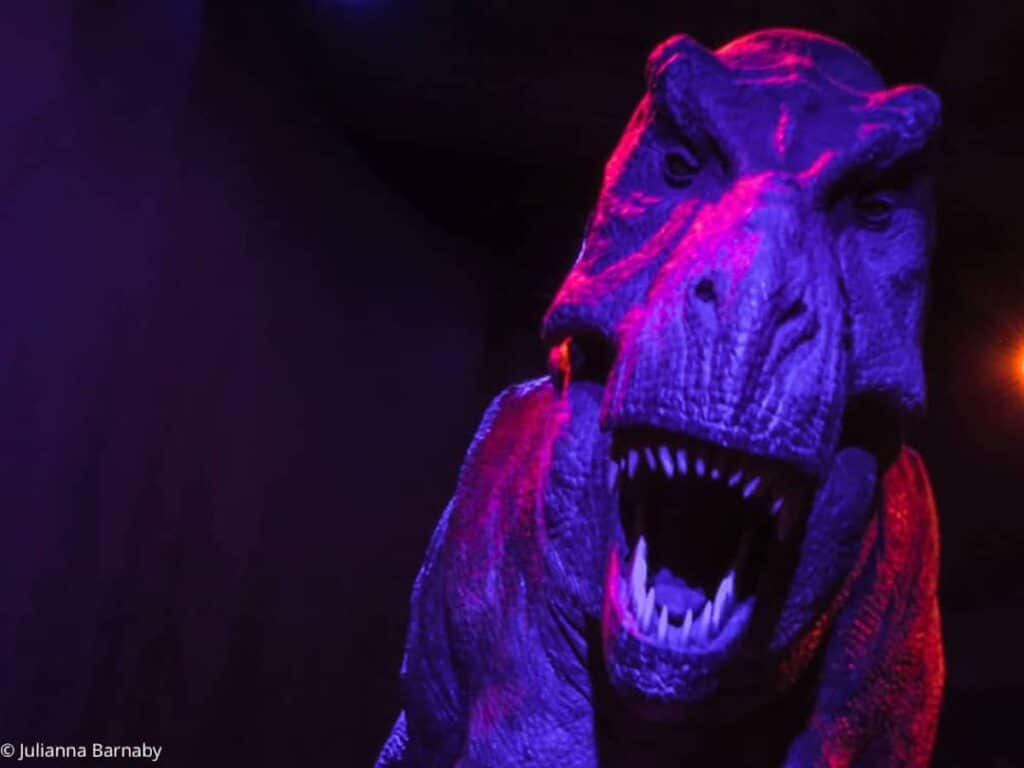
A cathedral to the natural world with a blue whale hanging in the entrance hall, and one of the best free days out in the city. The Natural History Museum is a rite of passage for British children, which is also the warning: avoid weekends and school holidays unless you enjoy queueing shoulder to shoulder.
The genuinely new thing is outside. The transformed gardens opened in 2024 and are free, ticketless and almost empty compared to the galleries. The Evolution Garden walks you through 2.7 billion years of geological time in real rock, with Fern, a full-size bronze diplodocus, at the end of it. Note that this is not Dippy, who is not on display here, whatever you may have read.
Use the Exhibition Road entrance rather than Cromwell Road, which is where the queue forms.
Where: Cromwell Road, SW7 5BD. Open: daily 10am to 5.50pm; the Evolution Garden keeps the same hours. Price: free, no booking required.
Royal College of Music Museum
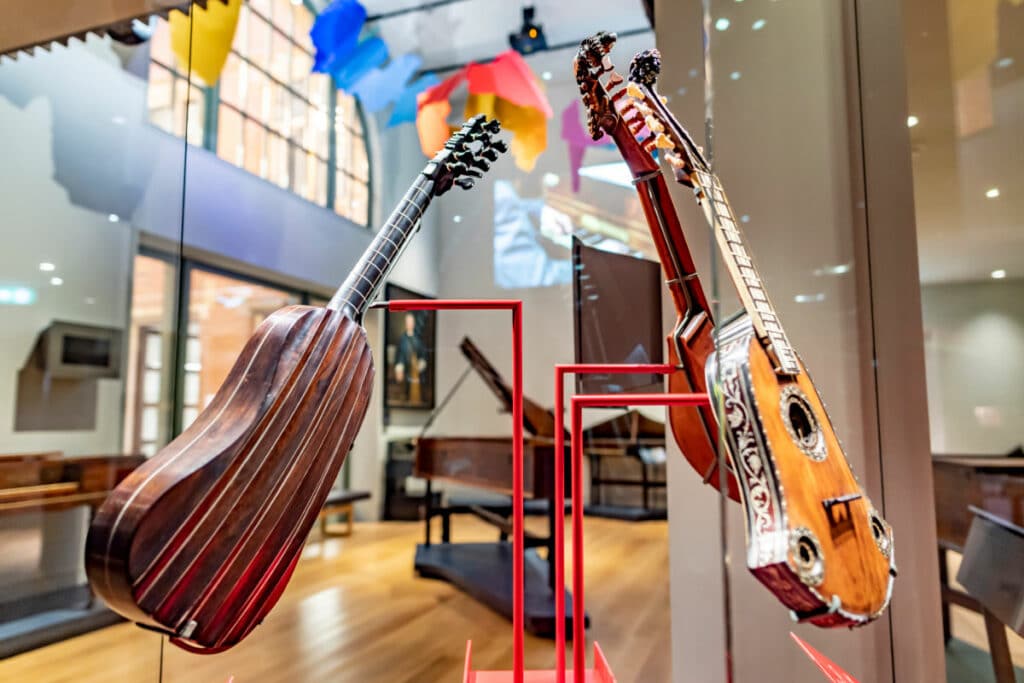
Five minutes from the Albert Hall, free, and almost nobody goes in. The Royal College of Music Museum holds 14,000 objects including the earliest known guitar, made in 1581, and the most widely reproduced portrait of Haydn.
It was redeveloped with Lottery funding and the Wolfson Centre now lets visitors handle parts of the collection, which is not something most instrument museums allow. Free guided tours run on Wednesday lunchtimes and Saturday afternoons in term time.
Time it for a free Wednesday lunchtime tour in term time, which is when you get to handle the collection rather than look at it.
Where: Prince Consort Road, SW7 2BS. Open: Tuesday to Friday 10.15am to 5.45pm, weekends 11am to 6pm, closed Mondays. Price: free.
Ciné Lumière
South Kensington’s arthouse cinema, inside the Institut français, reopened in August 2026 after the first phase of a three-year renovation with better seats, picture and sound. It is where to see French and European cinema in London, subtitled, in a proper single-screen room.
Two more phases follow over the next two summers, so expect further closures, but the auditorium is open now.
Where: 17 Queensberry Place, SW7 2DT. More: institut-francais.org.uk. It is one of the best independent cinemas in London and among the better value screens in this part of town.
Palaces, parks and memorials
Kensington Palace
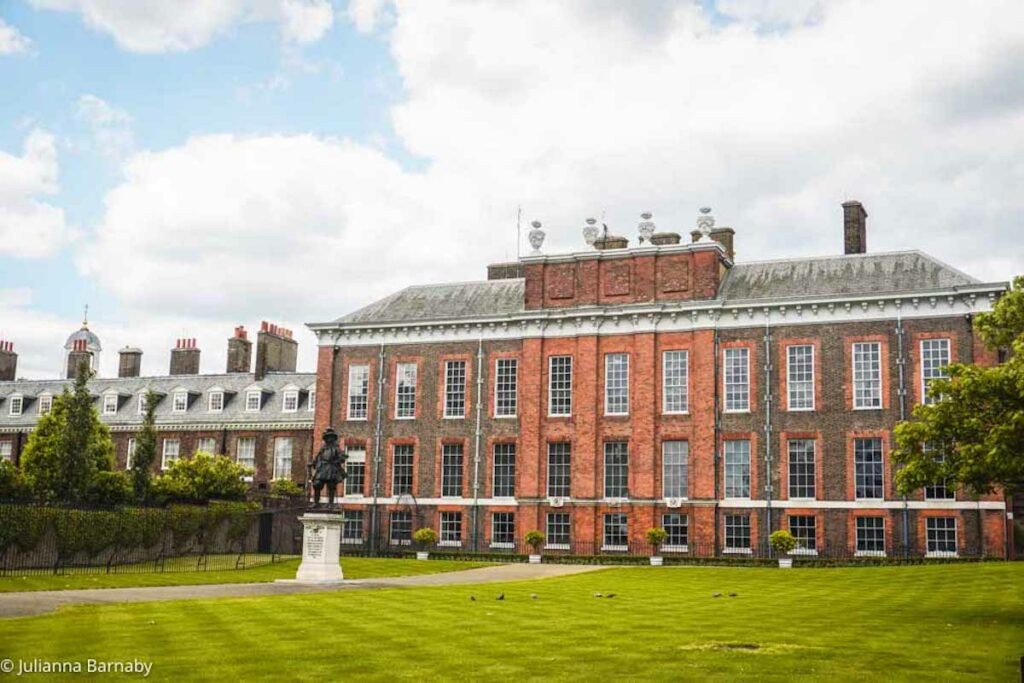
Everyone knows Buckingham Palace. Kensington Palace is the one that is actually lived in, and the more interesting building for it. The land was bought in the early 1600s and added to for three centuries, and a good deal of it is open.
A note on the royals: the Prince and Princess of Wales moved their family home to Windsor in 2025, so Kensington is their official London residence and office base rather than where they live. The Gloucesters, the Kents and Prince and Princess Michael of Kent still have apartments here.
The other thing to know before you book: the Queen’s State Apartments are shut for a full re-presentation and will not reopen before spring 2027. What remains open is still substantial, including the Jewel Room, Victoria: A Royal Childhood, and the Sunken Garden, which is the prettiest corner of the whole estate and worth the ticket on a summer afternoon on its own.
If the Queen’s State Apartments are what you came for, wait: they are closed until spring 2027. The Sunken Garden is free, open regardless, and the better twenty minutes.
Where: Kensington Gardens, W8 4PX. Open: daily 10am to 6pm, though hours shorten in winter. Price: £24.70 adults, £12.40 children.
Kensington Gardens
All of London’s royal parks are beautiful and we have to say we have a particular soft spot for this one. Two hundred and sixty-five acres, and the calmer half of the Hyde Park complex. J M Barrie lived on the edge of these gardens and took Peter Pan from them, and the statue still stands near the Long Water where he put it, quietly, in the night, in 1912, with no announcement, so that children would think the fairies had done it.
That is the sort of detail that makes a walk here better than a walk anywhere else. The Italian Gardens at the north end, the Round Pond, and the Serpentine bridge are the route we take.
Where: W2 2UH. Open: 6am to dusk. Price: free.
It makes our roundup of the best parks in London, alongside Holland Park further west.
The Albert Memorial
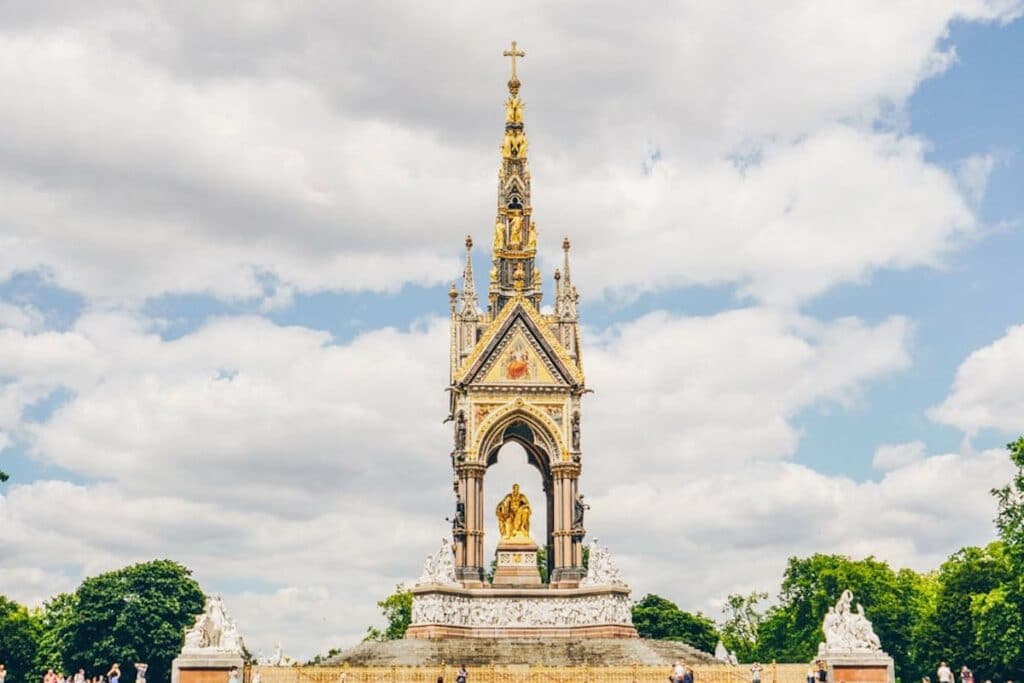
You will have noticed by now how many things here are named after Queen Victoria’s husband. The memorial is the least subtle of them: 176 feet of gilded Gothic revival, a seated Albert holding the catalogue of the Great Exhibition, and a frieze of 169 composers, architects, poets and painters running round the base.
It faces the Albert Hall across the road, which is the pairing Victoria intended. Free guided tours run occasionally through The Royal Parks and are the only way to get inside the railings.
Where: Kensington Gardens, opposite the Royal Albert Hall. Price: free to look at.
We have the full story of its building and its symbolism in our piece on the Albert Memorial.
Royal Albert Hall
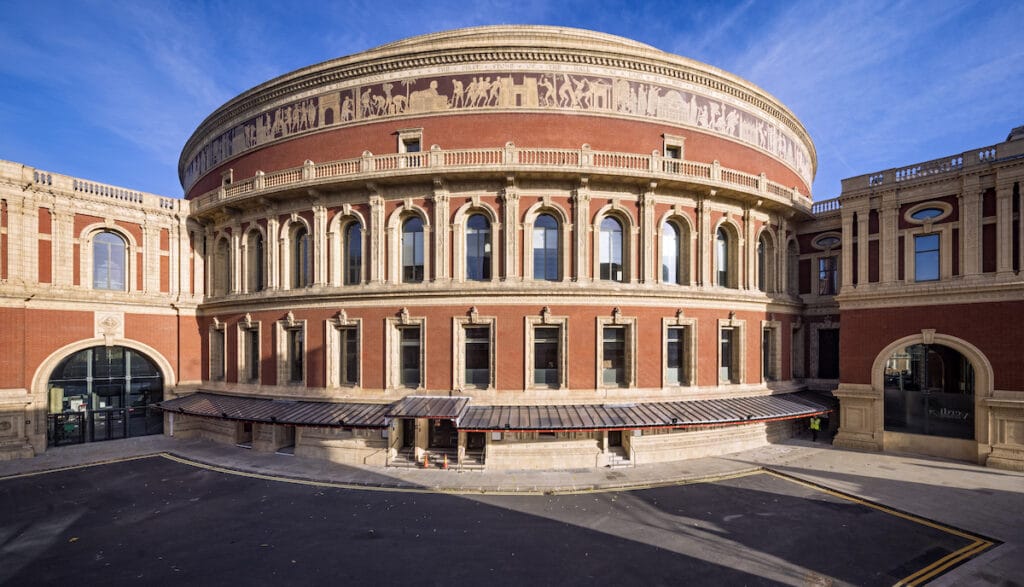
Originally to be called the Central Hall of Arts and Sciences, which is a considerably worse name, until Victoria renamed it for Albert at the opening. The hall runs several hundred events a year and the Proms in high summer is the one that matters, eight weeks of it, with standing tickets in the arena for a few pounds if you are willing to queue.
If nothing on the programme appeals, take a tour instead. Several run daily, including a behind-the-scenes route and an architectural one, and the building is worth an hour on its own. Prices vary, so book through the hall directly.
Do the tour rather than walking past it. An hour, and the only way to see the Gallery and the box corridors.
Where: Kensington Gore, SW7 2AP. Tours: daily, booking ahead advised.
Serpentine Galleries
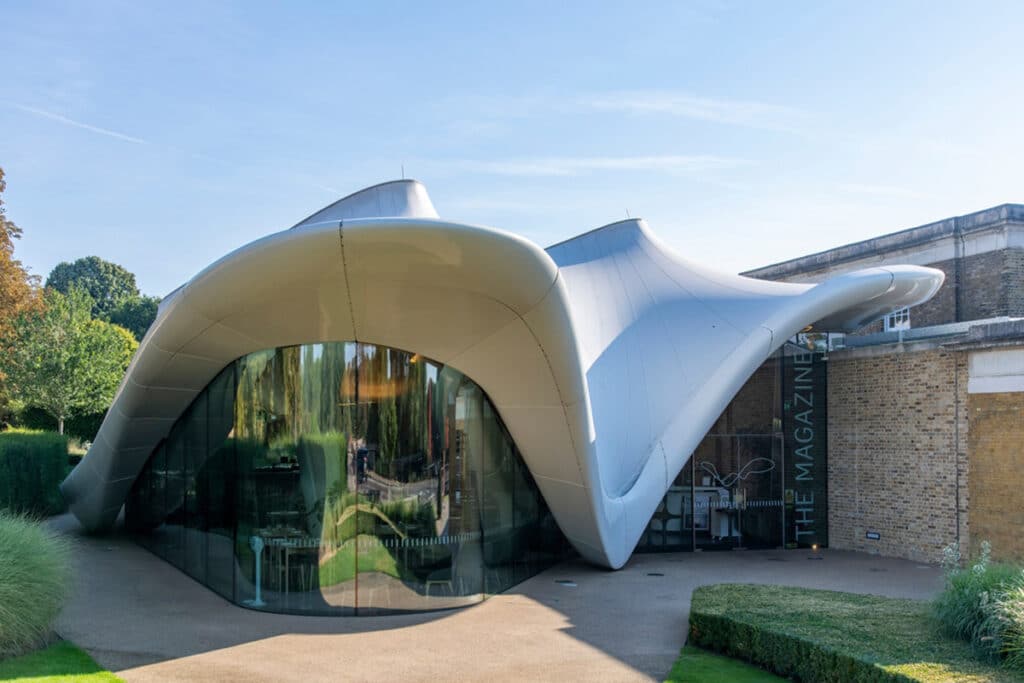
Two free galleries a short walk apart across the Serpentine bridge, showing contemporary art that has been reliably ahead of the rest of London since 1970. Man Ray, Henry Moore, Basquiat and Warhol have all shown here, and the North gallery sits in a former gunpowder store with an extension by Zaha Hadid.
The reason to time a visit for summer is the Pavilion, commissioned annually from an architect who has not yet built in England. The 2026 commission is by LANZA Atelier of Mexico City, a brick structure that takes its shape from the English crinkle-crankle wall and curves its north side around the existing trees. It stands until late October, and it is free to walk into.
Come in summer for the Pavilion. Out of season the two galleries are a twenty-minute stop rather than an afternoon.
Where: Kensington Gardens, W2 3XA and W2 2AR. Open: Tuesday to Sunday 10am to 6pm, later at weekends, Mondays from midday. Price: free.
Kyoto Garden, Holland Park
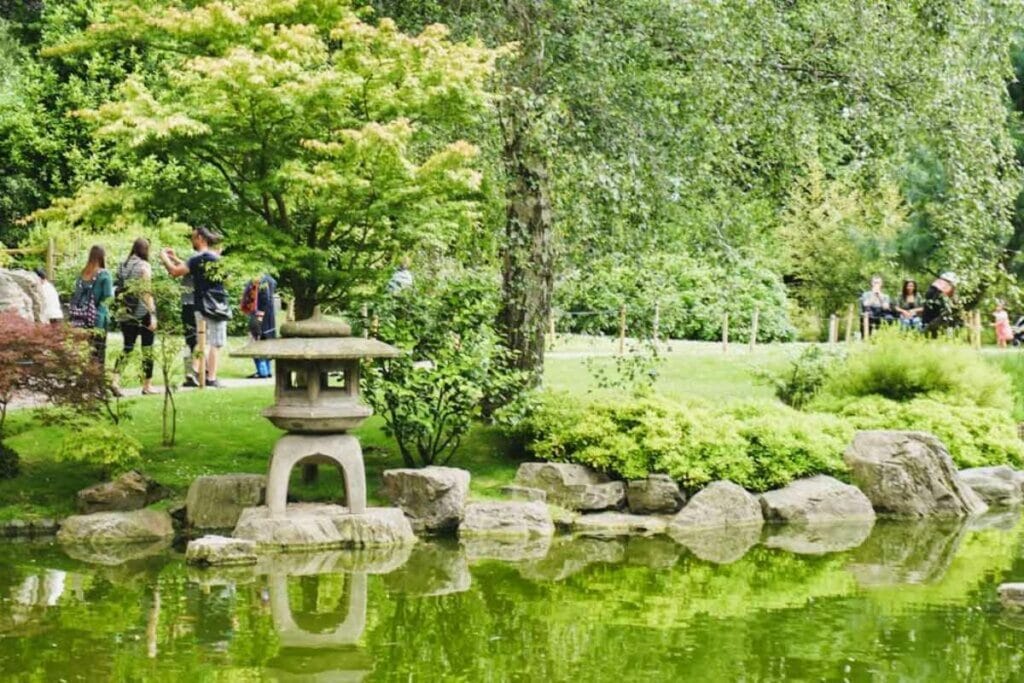
A Japanese garden in the middle of a west London park, tiered over several levels around a waterfall, with koi in the pond and, if you are lucky, a peacock stalking about with total confidence. It was given by the Kyoto Chamber of Commerce in 1991 for the Japan Festival the following year.
The setting is the sad part and the good part at once. It sits near the ruins of Cope Castle, later Holland House, a great seventeenth-century mansion largely destroyed by incendiary bombs in 1940. What is left of it now forms the backdrop to an open-air opera season each summer. Come on a weekday morning; weekends the garden is small and everybody has had the same idea.
It is all stupidly pretty, and our favourite spot, along with most other visitors’, is the tiered waterfall. The neighbouring Fukushima Garden, added in 2012 as thanks for British support after the tsunami, is quieter still and almost nobody finds it.
Where: Holland Park, Ilchester Place, W8 6LU. Open: 7.30am to dusk. Price: free. Dogs are not allowed in the Kyoto Garden.
There is more on its history and the best time to go in our guide to the Kyoto Garden.
The Hyde Park pet cemetery
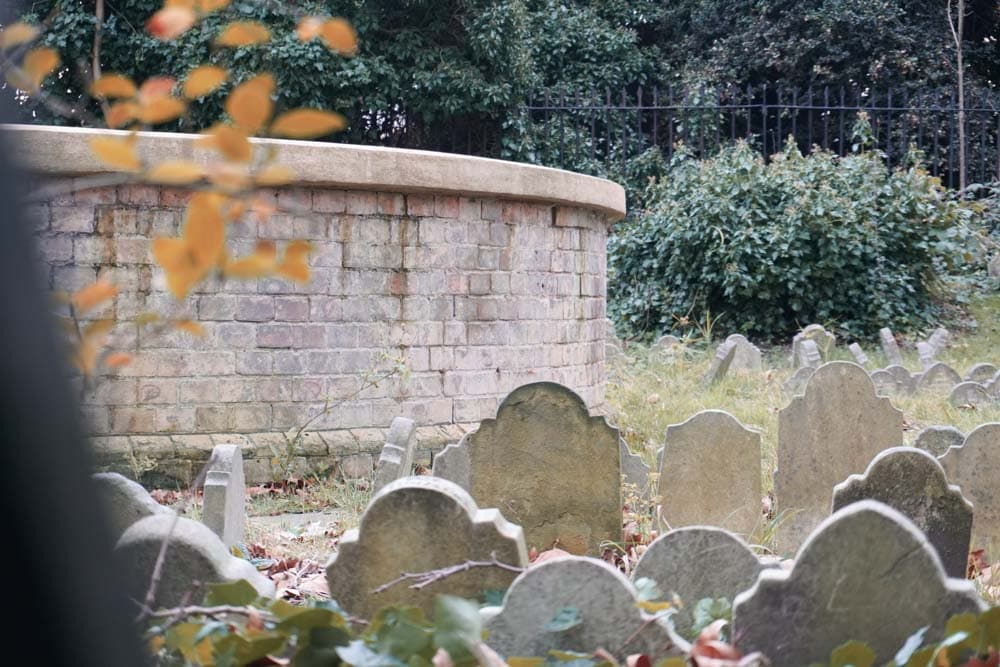
Behind the Gatekeeper’s Lodge on the Bayswater edge of the gardens, three hundred-odd Victorian pets lie under miniature headstones, most of them dogs, with inscriptions written entirely without irony. It started in 1881 when a Maltese terrier called Cherry was buried there, and closed to new burials in 1903.
The important practical point: you cannot simply turn up. It is only opened as part of a Royal Parks guided walk, the Hidden Stories of Hyde Park tour, which runs on scattered dates and finishes inside the railings. Otherwise you are peering through the fence from the pavement, which is still worth doing.
Where: Victoria Gate, Kensington Gardens. Access: booked guided tour only, small charge; dates go up on The Royal Parks events page. There is more on the graves, and the families who paid for them, in our piece on the Hyde Park pet cemetery.
Brompton Cemetery
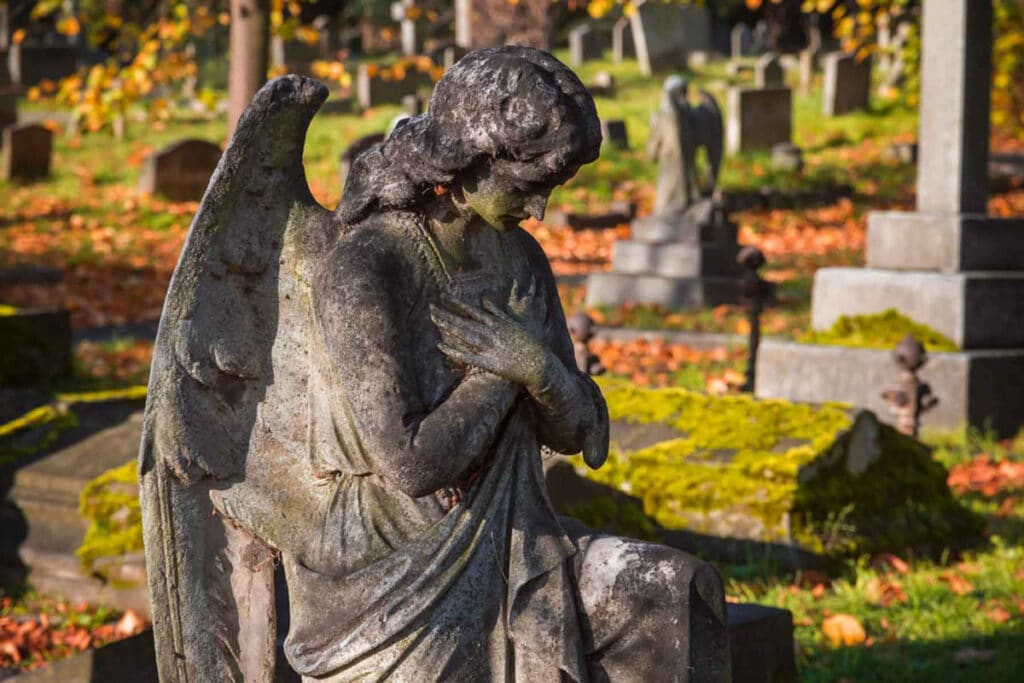
One of the Magnificent Seven, laid out in 1840 as a formal garden cemetery with a colonnade and a domed chapel at the end of a long central avenue, and more than 200,000 people buried in it. We walk here often; it is one of the calmest places in this part of London.
Emmeline Pankhurst is here, as is Lizzie Le Blond the mountaineer, and Beatrix Potter lived nearby and took several names from the headstones, including a Mr Nutkins and a Mr McGregor. A printable trail map is on the Royal Parks site. The café in the restored North Lodge opens from 8.30am, which is earlier than almost anything else around here.
Where: Fulham Road, SW10 9UG. Open: from 7am, closing seasonally between 4pm and 8pm. Price: free.
We have a full piece on Brompton Cemetery if you want the history, and guides to Kensal Green and Nunhead if you get a taste for it.
The quieter corners
Leighton House
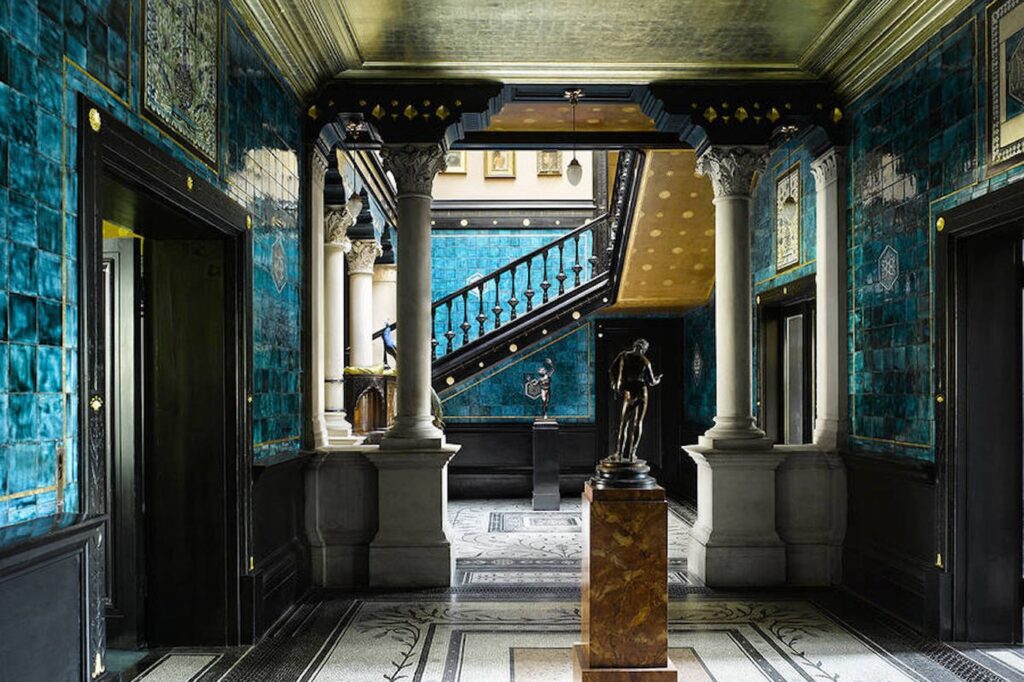
The best building in Kensington and it is not close. Frederic, Lord Leighton, painter and president of the Royal Academy, spent thirty years building himself a house around a single idea, and the result is the Arab Hall: a domed, gold-mosaiced, fountain-centred room lined with sixteenth and seventeenth-century Damascus tiles he collected himself.
It reopened in 2022 after an £8 million project that added a new wing, a café onto the reinstated garden and step-free access for the first time, plus Shahrzad Ghaffari’s eleven-metre Oneness mural winding up the new staircase. Unfortunately for Frederic but fortunately for us, he held the shortest peerage in history: made a baron and dead the following day, with no heir, which is why the house survived intact. You may recognise it too, since it is a popular filming location and the Arab Hall is a particular favourite with the screen luvvies.
The café and the drawings gallery can be visited without a ticket.
Buy the £23 joint ticket and do both houses in an afternoon. Separately they are £14 and £12, so it pays for itself the moment you decide you want the second.
Where: 12 Holland Park Road, W14 8LZ. Open: Wednesday to Monday 10am to 5.30pm, closed Tuesdays. Price: £14, or £23 with Sambourne House.
Sambourne House
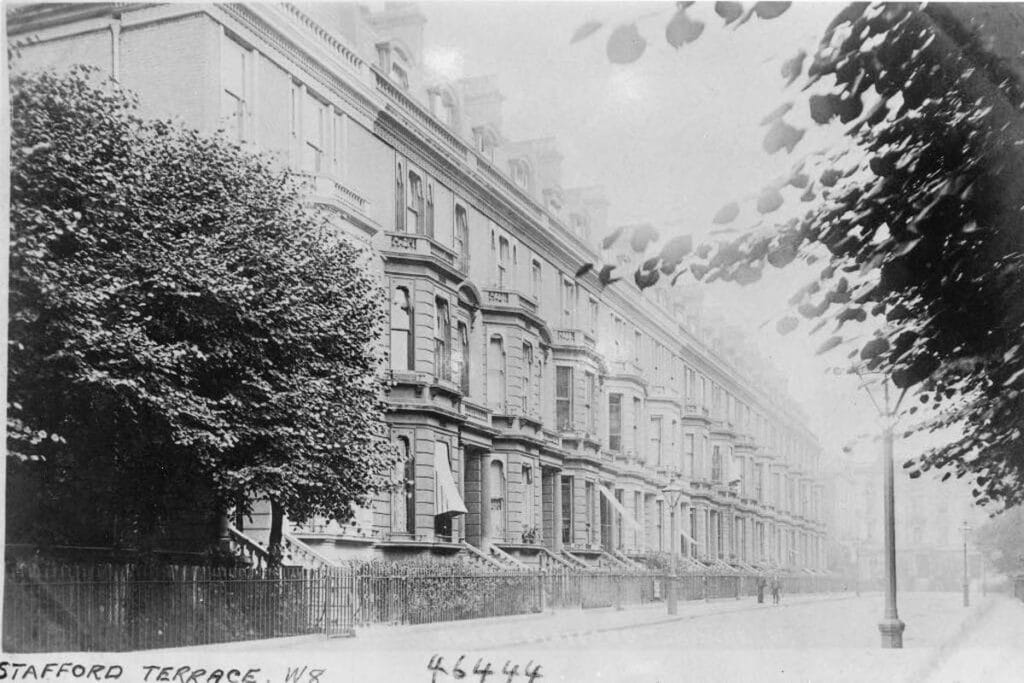
Formerly 18 Stafford Terrace, and the reason we love it is that the Sambournes were comfortable rather than rich. Linley Sambourne was a Punch cartoonist, and the family kept the house essentially unchanged, so what survives is an ordinary upper-middle-class Victorian interior rather than a palace.
It looks like the family have stepped out for an hour. Every surface is crowded, the wallpaper is Morris, and the photographs Sambourne took of models posing in the back garden for his cartoons are still in the drawers. It is open five days a week.
Where: 18 Stafford Terrace, W8 7BH. Open: Wednesday to Sunday 10am to 5.30pm. Price: £12, or £23 with Leighton House.
It is the single best surviving interior on our tour of Victorian London, and we have written up Sambourne House on its own.
The Design Museum
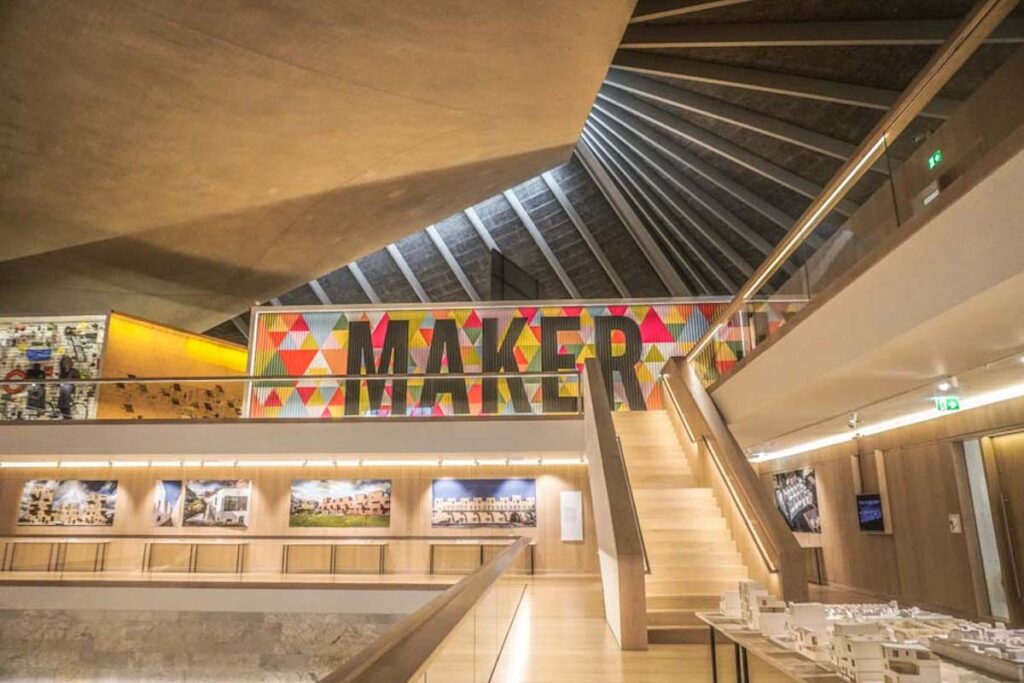
What makes a good design? We had not really thought about it before walking into the Design Museum to research a piece one morning and leaving four hours later, having pored over every one of the thousands of objects inside. No regrets.
The permanent collection, Designer Maker User, is free and takes apart the objects nobody looks at twice: the tube map, the Anglepoise, the Biro, the moulded plywood chair. Temporary shows are ticketed and usually worth it. The building itself, a 1962 Commonwealth Institute with a hyperbolic paraboloid roof, is half the appeal.
The free permanent collection is the better half. Only pay for the temporary show if the subject genuinely interests you.
Where: 224-238 Kensington High Street, W8 6AG. Open: Monday to Thursday 10am to 5pm, Friday to Sunday to 6pm. Price: free for the permanent collection.
The mews
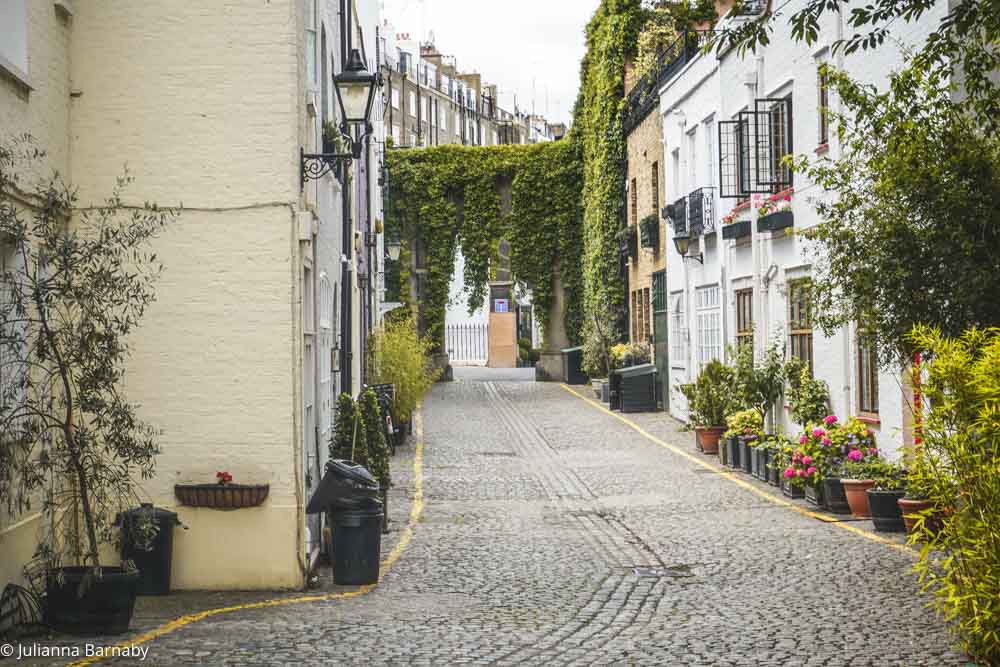
Kensington’s mews were built to house horses, carriages and the men who drove them, tucked behind the big houses so the gentry did not have to look at any of it. A century of rising land values later, they are some of the most expensive addresses in London.
Half the pleasure is finding them yourself, but Elvaston Mews and Holland Park Mews are the two to aim for. While it is lovely to go and explore them, can we just remind you that these are people’s homes and not a film set. Take your photograph from the street and leave the doorsteps alone.
They turn up on our list of the most photogenic places in London, we have rounded up the prettiest mews in the city, and there are more of the same a little north in Notting Hill.
The Churchill Arms
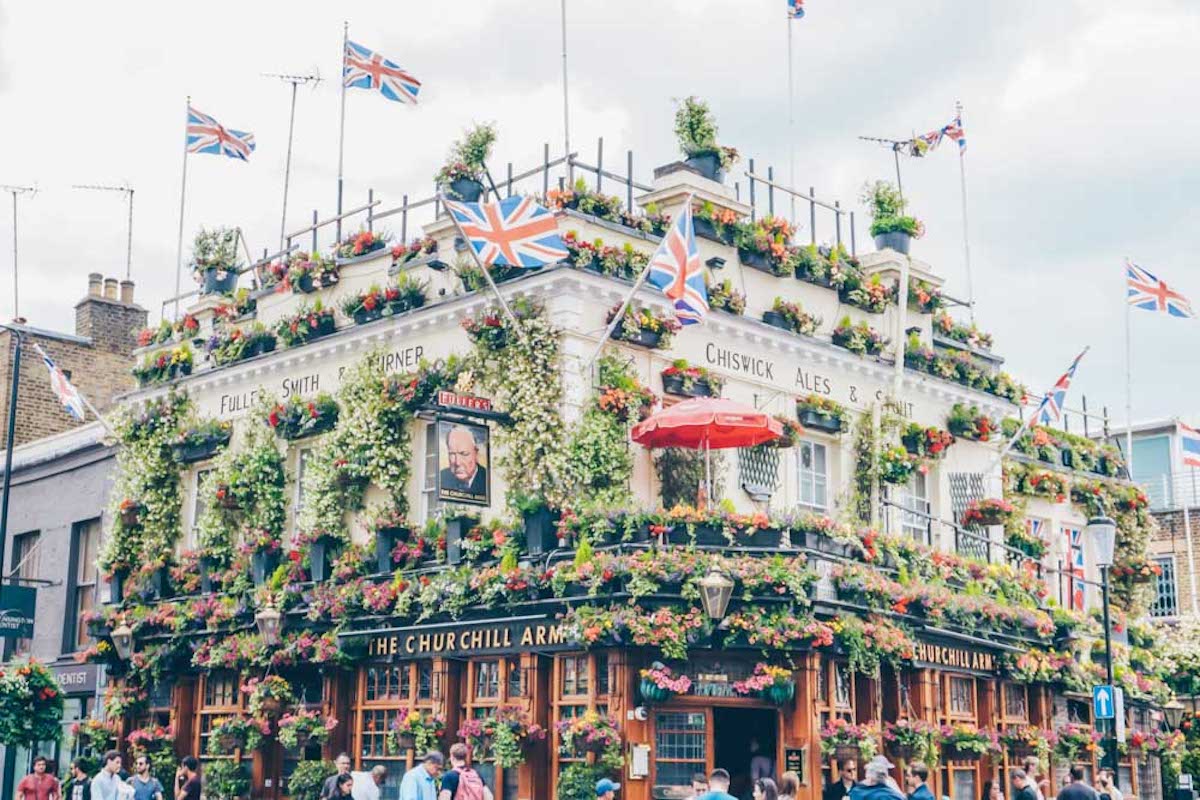
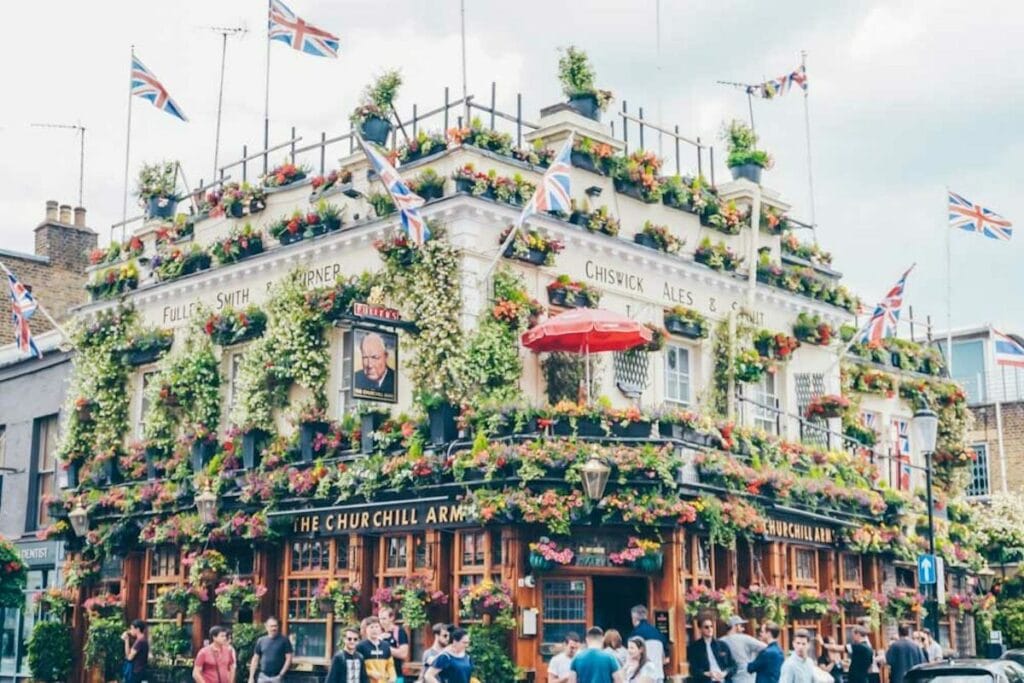
You have seen it even if you have not heard of it: a pub on Kensington Church Street so completely buried in flowers that the building underneath is barely visible, with around a hundred flower pots, forty-eight window boxes and forty-two hanging baskets on it at any one time, and a Christmas display of ninety-five trees and 21,000 lights. The landlord spends roughly £25,000 a year on the flowers alone. Even we have bowed to the aesthetic and put it on our own feed.
Inside is stranger. It is packed with Churchill memorabilia, largely because his grandparents drank here, and there is a Thai kitchen at the back that has been running more than thirty-five years and holds its own against London’s best Thai restaurants. Order the real ale and a green curry, which should not work and does.
Where: 119 Kensington Church Street, W8 7LN. Open: Monday to Saturday 11am to 11pm, Sunday to 10.30pm.
We have a full piece on the Churchill Arms, and more like it in our roundup of London’s oldest pubs.
South Kensington Books
An independent that has been a bookshop on the same site since the 1940s, and the antidote to the museum gift shops around the corner. It leans into art, history and science to match the neighbours, but there is plenty of fiction and a good children’s section.
Where: 22 Thurloe Street, SW7 2LT. Open: weekdays 10am to 8pm, weekends from 11am.
There are more of them in our guide to London’s independent bookshops.
St Cuthbert’s, Earl’s Court
Hidden inside a Victorian crescent two minutes from Earl’s Court station, St Cuthbert’s is one of the most extravagant Arts and Crafts interiors in London and is Grade I listed. It is an Anglo-Catholic church built for maximum theatre: a towering reredos, metalwork, carving and colour everywhere.
It is a working parish church rather than an attraction, so opening depends on services. Evening Prayer at 6pm most days is the reliable way in, and it is free.
Where: 50 Philbeach Gardens, SW5 9EB. Price: free. Phone ahead for daytime access.
Where to eat and drink
A handful of the best below. For the full picture we keep separate guides to restaurants in Kensington and Kensington’s coffee shops.
Jacuzzi
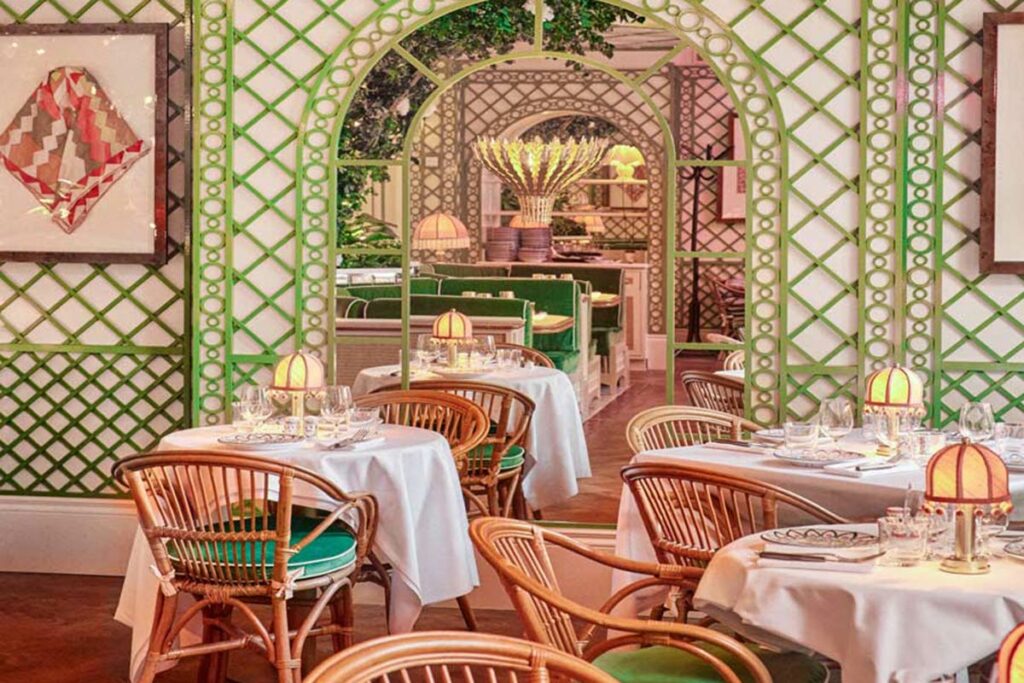
Big Mamma’s Kensington outpost, described by its own team as a four-floor pleasure palace and not overstating it. Faux rococo everywhere, a full-size tree in the dining room, and it is difficult to find a light fitting that is not a chandelier.
The food is better than the theatre suggests. It is the Big Mamma formula of enormous, cheerfully unsubtle Italian cooking, and the truffle pasta finished tableside in a wheel of cheese is exactly as silly as you want it to be.
Book the Pranzetto lunch set from £18 rather than dinner. Same room, same kitchen, half the outlay.
Where: 94 Kensington High Street, W8 4SH. Open: lunch and dinner daily. Price: ££. Book well ahead.
The Lavery
The museum quarter has needed a proper grown-up restaurant for years and got one in 2025. The Lavery occupies the listed townhouse that was the home and studio of the painter Sir John Lavery, directly opposite the Natural History Museum.
The kitchen is run by Yohei Furuhashi, nine years at The River Cafe, cooking Mediterranean food with produce from a Scottish estate. Small plates from £9, mains £19 to £32. There is a separate cocktail bar and an all-day café if you want it less formal.
Book it in daylight. The north-facing studio windows are the whole point and they do nothing after dark.
Where: 4 Cromwell Place, SW7 2JE. Price: £££.
Maggie Jones’s
Back, at last. Maggie Jones’s opened in 1964 as Nan’s Kitchen and was renamed after the pseudonym Princess Margaret used when she dined here with Lord Snowdon. An electrical fire closed it in September 2023 and it stayed shut for two years, reopening in November 2025.
Nothing has been modernised, which is the point. Pine settles, candle wax down the wine bottles, and the same menu: fish pie, shepherd’s pie, bread and butter pudding.
Ask for a booth downstairs rather than a table upstairs, which is where the candlelit-farmhouse effect actually works.
Where: 6 Old Court Place, W8 4PL. Price: ££.
Jackie’s Counter
The newest thing on this list, opened in August 2026 from the pair behind The Mall Tavern. A New York luncheonette on a stretch of Kensington Church Street otherwise given over to antique dealers: breakfast bagels, reubens, salt beef, tuna melts, black-and-white cookies and cold brew slushies.
An after-hours martini and dessert bar in the same room is due to follow, which would give this end of Kensington something it has not had in years.
Get it to take away and eat it in Kensington Gardens, five minutes down the road.
Where: 178 Kensington Church Street, W8 4DP. Price: £.
Afternoon tea
Three we would actually book, all of them in Kensington rather than over the border in Knightsbridge.
The Orangery at Kensington Palace is the one we would pick. Queen Anne’s 1704 greenhouse reopened in 2024 after six years shut, and crucially you do not need a palace ticket to eat there, so you can walk straight in from the gardens. Afternoon tea is £55, or £68 with English sparkling.
The Milestone Hotel, directly opposite the palace, does a more traditional version in its Park Lounge from £85, with sittings at 1pm, 3pm and 5pm. The Ampersand in South Kensington does a Science Afternoon Tea themed on the museum next door, which is as silly as it sounds and rather good. More across the city in our afternoon tea guide.
After dark
Kensington is not a late-night neighbourhood, with two exceptions. ESQ, in the lower ground floor of 100 Queen’s Gate, is a proper cocktail bar with house-infused spirits, small plates and live music nights, open to 11pm and midnight at weekends.
And Gallery on Kensington High Street, which opened in 2025 from the team behind B Club, has given the area a serious club for the first time since Boujis closed: 400 capacity, a 360-degree DJ booth, a hidden Neapolitan pizzeria and a Cuban bar, with Pete Tong and Seth Troxler among those who have played it.
Otherwise head south into Chelsea or east into town. We have the full picture in our guides to London’s best cocktail bars and its best nightclubs.
Harrods
An honest note first: Harrods is in the Royal Borough of Kensington and Chelsea, but the neighbourhood is Knightsbridge, not Kensington. The SW1X postcode confuses everyone into thinking it is Westminster. It is a ten-minute walk from South Kensington and worth folding into a day here, and there is plenty more next door in our guide to things to do in Knightsbridge.
Opened in 1824, now the largest department store in Europe, and the food halls are the part to see whether or not you intend to spend anything. The tiled Meat and Fish Hall from 1902 is one of the great Edwardian interiors in London. Teddy bears, chocolate and postcards let you say you bought something at Harrods without a second mortgage.
Where: 87-135 Brompton Road, SW1X 7XL. Open: Monday to Saturday 10am to 9pm, Sunday 11.30am to 6pm.
Earl’s Court is worth a look again
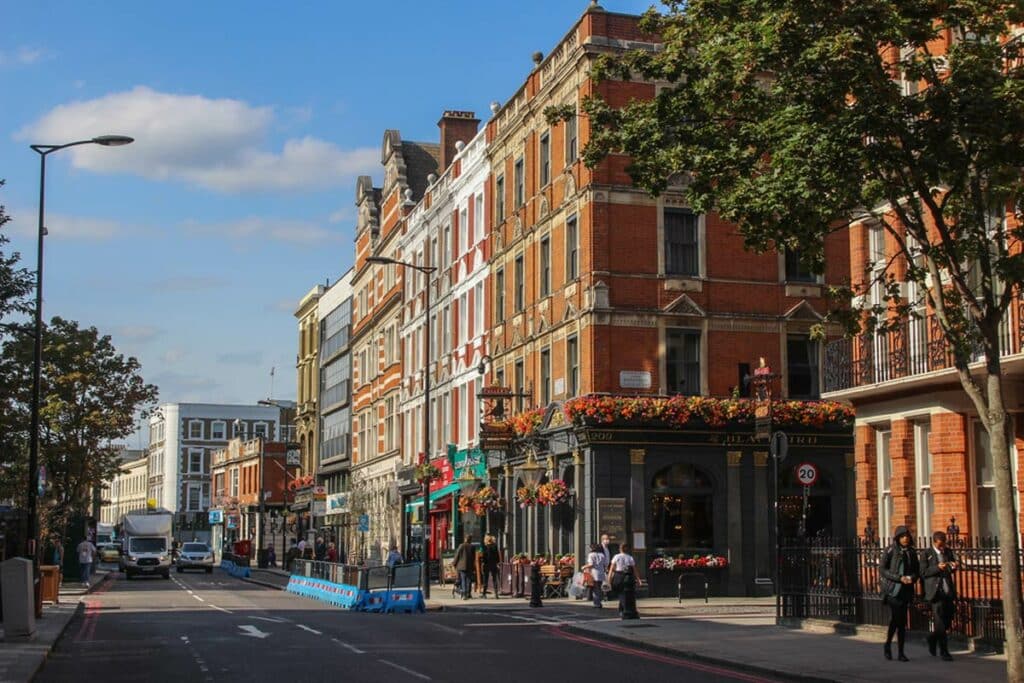
For a decade after the exhibition centre came down in 2015, there was nothing here but hoardings.
The Stone Demonstrator is the strangest and the best of it: a three-storey prototype building made of pre-tensioned structural stone, roughly seventy per cent less carbon than reinforced concrete, built for the Design Museum’s national research programme. The ground floor and the park around it are free and open daily, no ticket.
Alongside it, Come Alive! runs an immersive circus show in a 700-seat big top, and Padel Social Club has six courts with a bar and roof terrace on the old exhibition-hall footprint, under the Empress State Building. There is also a free self-guided walk, 20 Things Earl’s Court, curated by the architect Sam Jacob, which takes in ghost signs, bollards and the Clareville Grove flat where Bowie worked on Space Oddity.
Where: Empress Place, SW6 1TT. More: earlscourt.com.
There is more of the neighbourhood in our guide to things to do in Earl’s Court.
The London x London Take: the mistake everyone makes here is trying to do the big three museums in a day, which turns three extraordinary collections into a forced march and leaves you with nothing but sore feet and a vague memory of a whale. Pick one, give it three hours, and spend the rest of the day on the half of Kensington that nobody queues for. Our ideal version: the Evolution Garden first thing when it is empty, an hour in the V&A cast courts, lunch at The Lavery, then Leighton House in the afternoon, because walking into the Arab Hall having spent the morning among Victorian ambition is the closest this borough gets to a punchline. Finish with a green curry at the Churchill Arms. If you have a second day, book the pet cemetery walk.
Where to stay
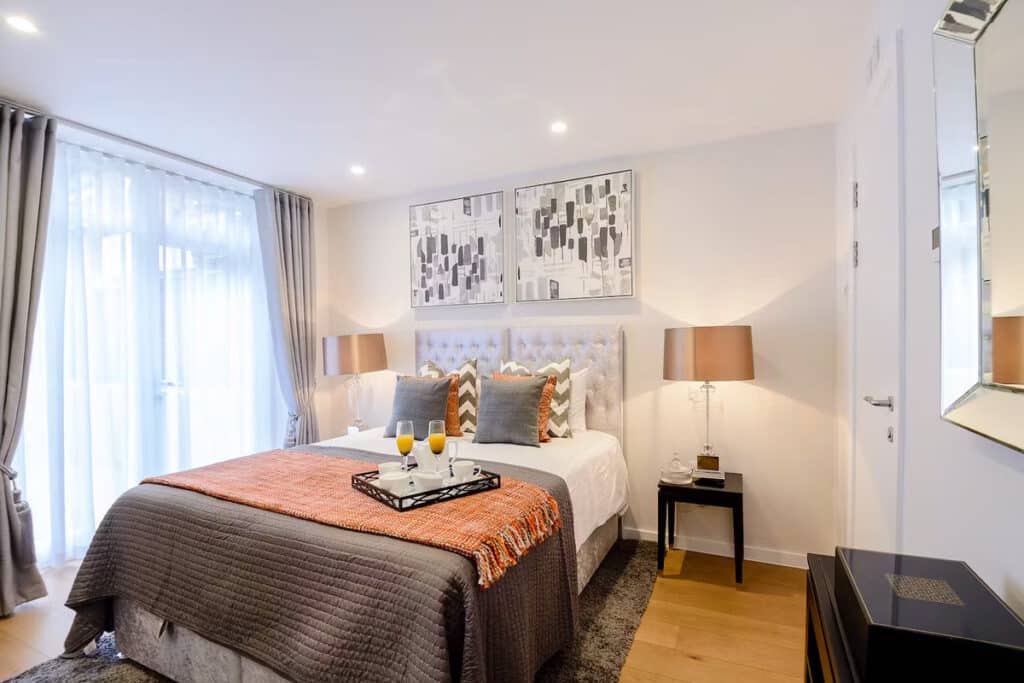
The Milestone Hotel is the luxury pick, a Red Carnation townhouse hotel directly opposite Kensington Palace with individually designed rooms and a good bar. The Ampersand in South Kensington is the smarter mid-range choice, a few minutes from the museums with a science-themed streak running through it. The Harrington on Harrington Gardens does serviced apartments rather than hotel rooms, which suits families and longer stays, and is two minutes from Gloucester Road.
If you want the grandest option in the area, the Mandarin Oriental is a short walk away in Knightsbridge, and our guide to where to stay in London covers how this corner compares with the rest of the city. Worth knowing that Dinner by Heston Blumenthal, its two-Michelin-starred restaurant, closes for good at the end of January 2027 after sixteen years.
Getting there
- High Street Kensington on the Circle and District lines, for the Design Museum, the Churchill Arms, Jacuzzi and Holland Park
- South Kensington on the Circle, District and Piccadilly lines, for the three big museums, the Royal College of Music and Cromwell Place
- Gloucester Road for the hotels and the southern end
- Earl’s Court for the development site and St Cuthbert’s
- Knightsbridge for Harrods and the Mandarin Oriental
Neighbouring Chelsea is a fifteen-minute walk south and worth folding into the same day. There is more of the neighbourhood, and everything around it, in our guide to west London. The three big museums are a few minutes apart on foot, and the subway tunnel from South Kensington station comes out inside the Science Museum, which is invaluable in the rain.