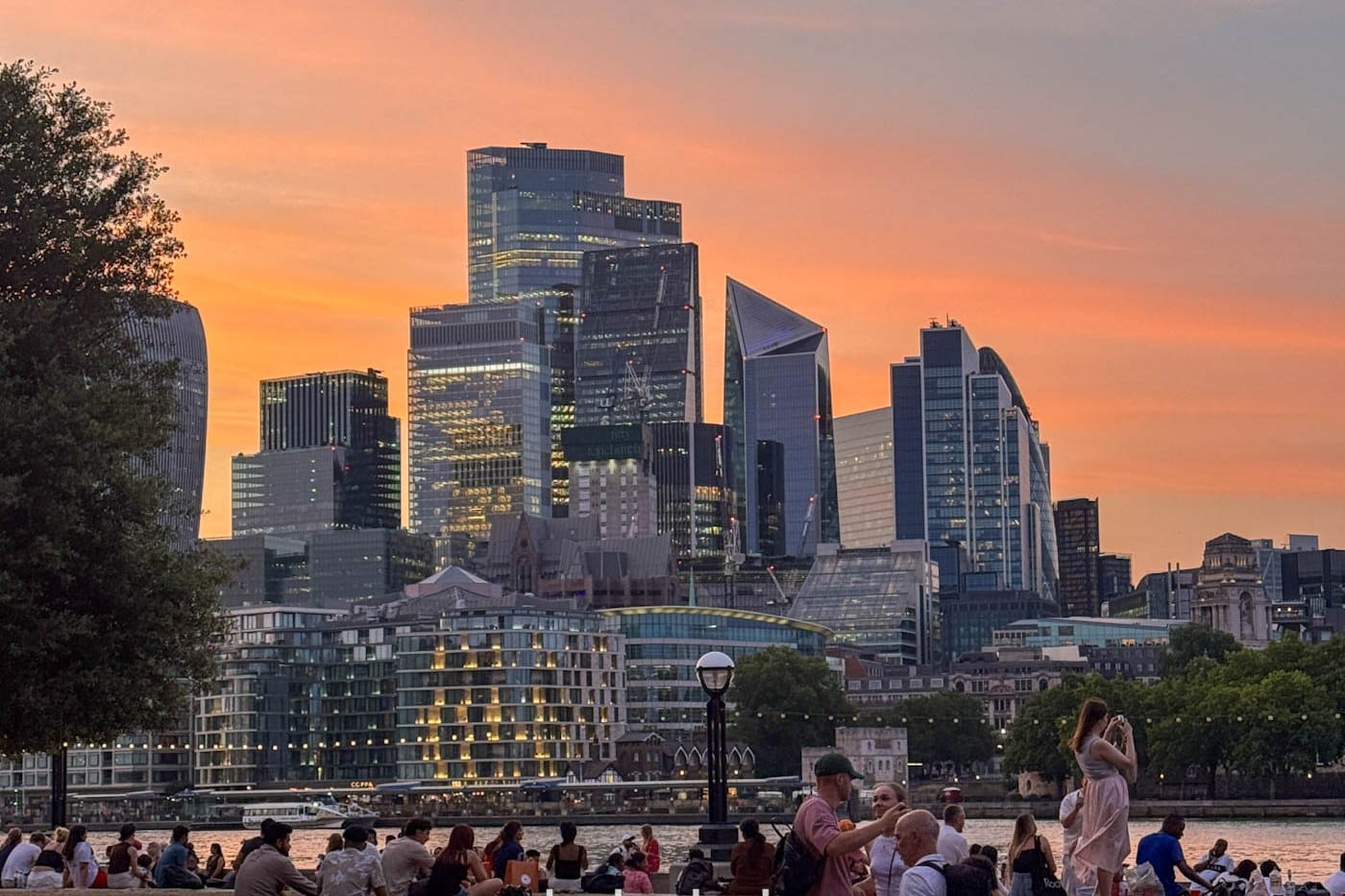
Twenty-two buildings on the London skyline, what they are actually called, who built them and which ones you can get inside. Including the one that melted a car, the one named after a kitchen utensil and the one that is currently being taken down to make way for something taller.
Half the fun of a view over London is working out what you are looking at. The other half is discovering that most of it has a rude nickname. Here is the whole cluster, area by area, with the ones that have opened since 2023 included.
The City cluster
30 St Mary Axe, the Gherkin

180m, 2003, Foster + Partners
The one everybody can name. Norman Foster’s bullet with the diamond-lattice windows, visible from as far out as Windsor Great Park, and still the best-looking tower in the cluster twenty years on.
It stands on the site of the Baltic Exchange, wrecked by an IRA bomb in 1992. The glass lens at the very top is a deliberate echo of the dome that stood in the old building’s trading floor, which is now in the National Maritime Museum.
There is a bar and restaurant at the top, Helix and Iris, but access is for tenants and their guests rather than walk-ins, so admire it from the street.
20 Fenchurch Street, the Walkie Talkie
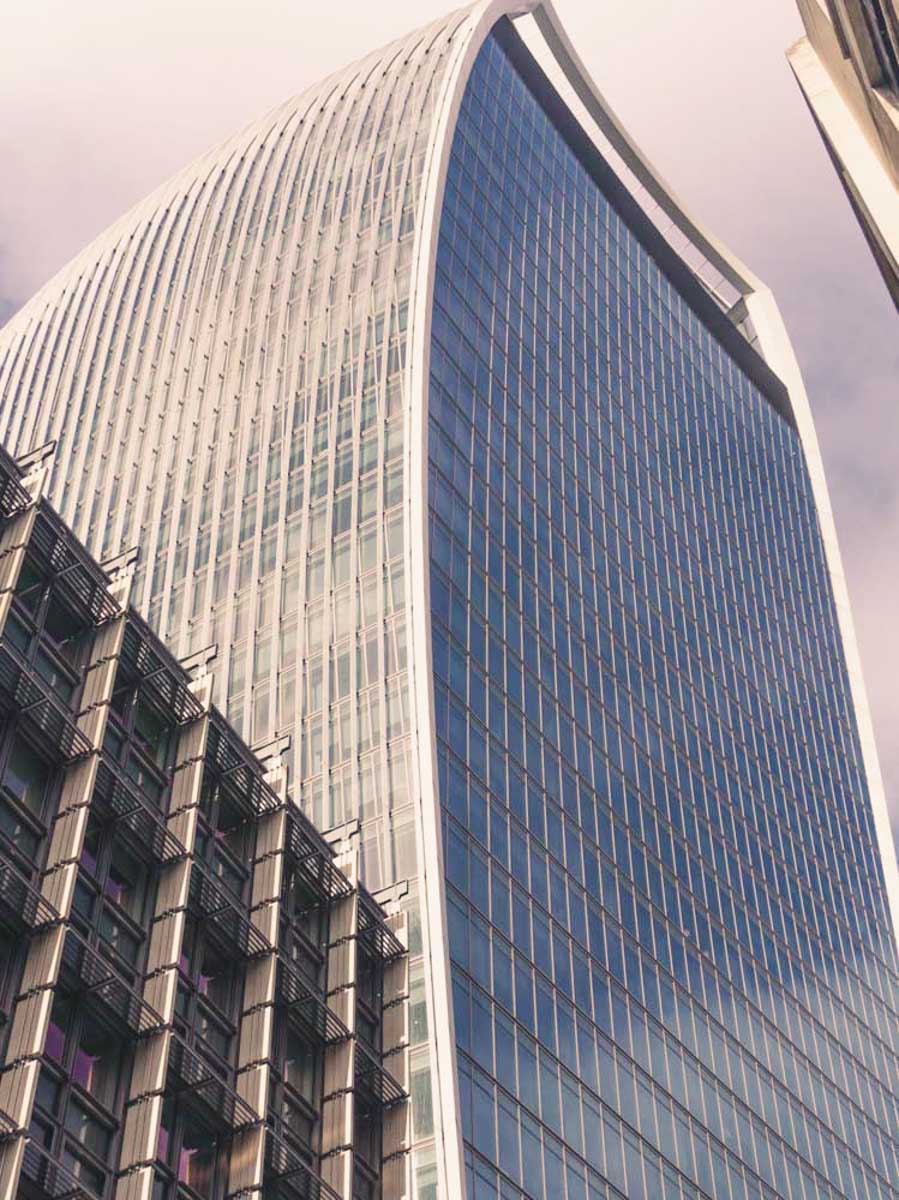
160m, 2014, Rafael Viñoly
A building shaped like a 1990s mobile phone, and famous chiefly for melting a car. The concave south face focused sunlight onto Eastcheap during construction, reaching 117 degrees, buckling a parked Jaguar’s panels and allowing a City A.M. journalist to fry an egg on the pavement.
The brise-soleil fixed it, and what is left is the Sky Garden: three storeys of planting under a glass roof on floors 35 to 37, and the only free viewing gallery in London with a garden in it.
Book a free timed ticket up to three weeks ahead, because walk-ins depend on space and are not accepted after 5pm on weekdays. Our full Sky Garden guide.
The Leadenhall Building, the Cheesegrater
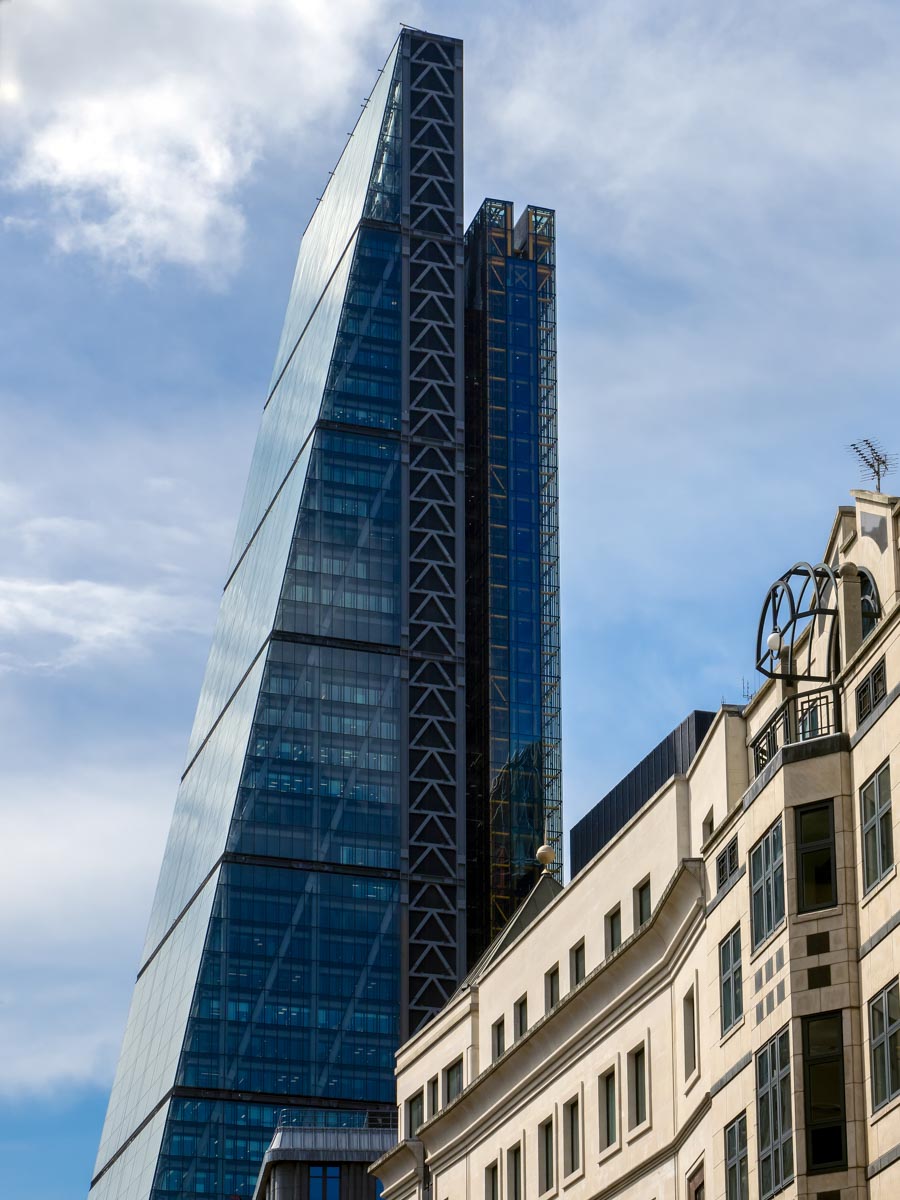
225m, 2014, Rogers Stirk Harbour
Richard Rogers’s wedge, tapered on its northern side specifically to protect the protected sightline to St Paul’s from Fleet Street. The slope is not a style choice, it is planning law made visible.
The nickname came from the City’s own chief planning officer, who took one look at the model and told Rogers he could imagine his wife using it to grate parmesan. It stuck within the week.
Rogers put the lifts, stairs and services on the outside in bright orange, the same trick he used on the Pompidou Centre. Stand underneath on Leadenhall Street and look up at the exposed steel.
52-54 Lime Street, the Scalpel
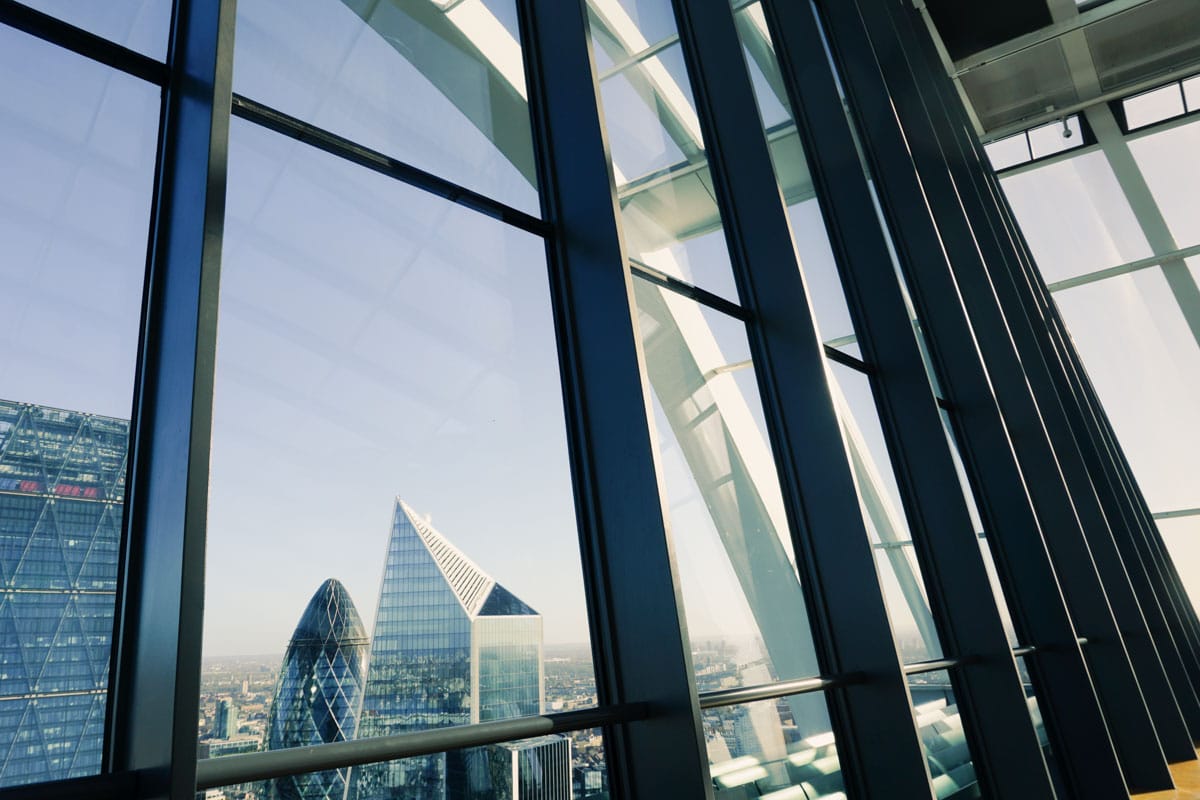
190m, 2018, Kohn Pedersen Fox
The angular one that looks like folded paper, and the only tower in the cluster whose nickname was coined by the developer rather than the press. They liked it enough to trademark it.
Like the Cheesegrater, its faceted shape is dictated by the St Paul’s sightlines. The architects described the cluster as being in conversation with each other, which is generous, but the angles genuinely do fit.
At street level, look for the stone reliefs of earth, air, fire and water by James Woodford, salvaged from the 1950s building that stood here before.
22 Bishopsgate
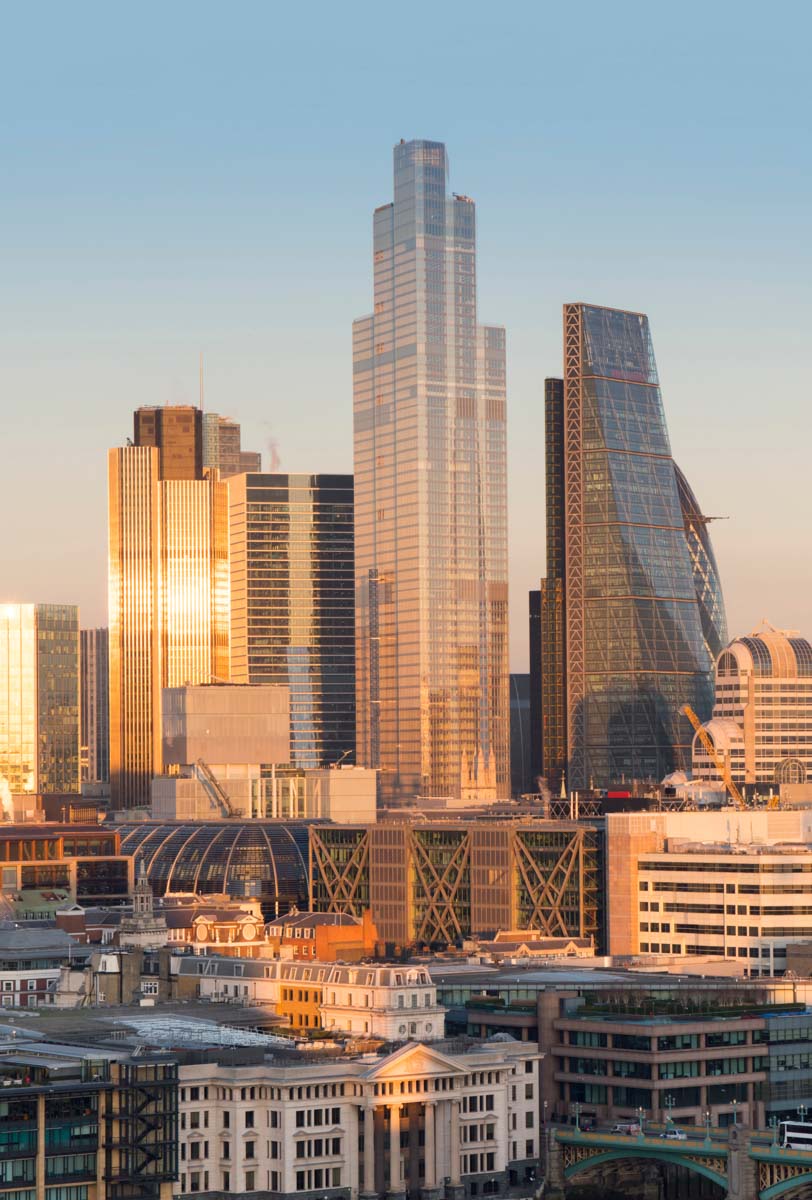
278m, 2020, PLP Architecture
The great slab at the centre of the cluster, the tallest building in the City and the second tallest in the UK. It is also the building that took twelve years to arrive.
Construction started in 2008 on a 288m twisting tower called the Pinnacle, stopped in 2012 at seven storeys when the money ran out, and sat as the Stump for years. What got built instead is blunter, shorter and vastly larger: 195,000 square metres of floorspace.
The viewing gallery it promised did arrive. Horizon 22 opened on Level 58 in 2023, it is free, and it is the highest free viewing platform in London. Book a timed ticket online. Lifts take 41 seconds.
8 Bishopsgate
204m, 2023, WilkinsonEyre
The newest of the big City towers and the one most 2023 guides missed. Three stacked glass boxes, each set back from the one below, which is why it reads as a staircase from the river.
Its Lookout gallery on Level 50 is free, like Horizon 22 next door, and considerably less busy because fewer people know it is there. It also opens later: until 9pm on Mondays and Fridays.
The two free galleries are a hundred metres apart. Do the Lookout first for the view of 22 Bishopsgate, then go up 22 Bishopsgate for the view of everything else.
110 Bishopsgate, still called Salesforce Tower
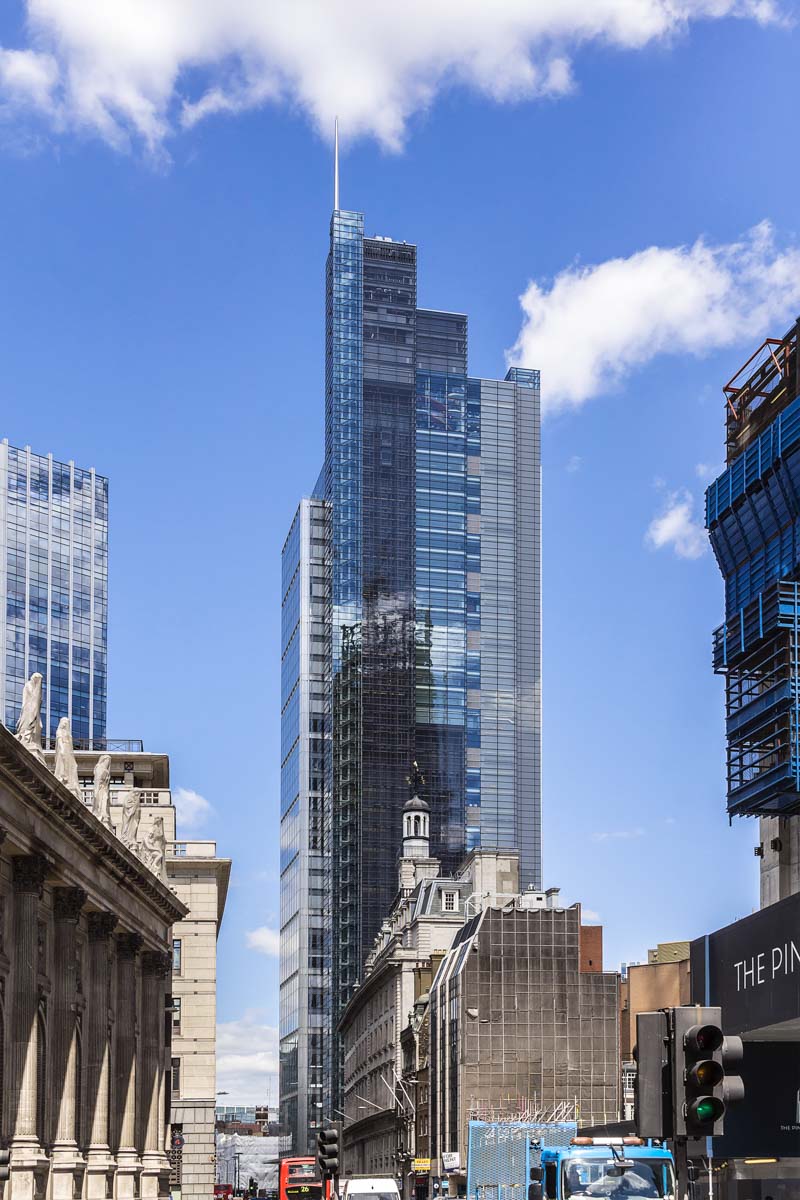
230m, 2011, Kohn Pedersen Fox
Built as the Heron Tower, renamed Salesforce Tower in 2014 as a planning compromise, and officially just 110 Bishopsgate. Nobody uses the official name.
It is the most accessible tall building in the City, because Duck & Waffle on the 40th floor is open 24 hours and SUSHISAMBA below it has two outdoor terraces. A 4am plate of waffle looking down at the Gherkin is a genuine London experience.
At street level there is a 70,000-litre aquarium holding around 1,200 fish, the largest private aquarium in Britain. Divers clean it during working hours. More late-night London.
40 Leadenhall Street, the Gotham building
155m, 2024, Make Architects
A vast stepped mega-block of 890,000 square feet that arrived in 2024 and immediately picked up a nickname for looking like something out of a Batman film. It is the bulkiest thing in the cluster by some way.
It is not a tower so much as eight buildings of different heights bolted together, which is how it got planning permission on a site wrapped around a listed pub and a church.
No public viewing deck, but there is ground-floor retail and the scale of it from Leadenhall Street is worth a look.
1 Leadenhall
158m, 2025, Make Architects
Finished in 2025 and the quietest good news on this list: its free public rooftop terrace opened in May 2026, along with a winter garden on Level 2.
The terrace looks directly down on the Victorian ironwork of Leadenhall Market, which is a view nobody had before. It is a much more intimate perspective than the big galleries, because you are low enough to see streets rather than a map.
Free, and far less known than Horizon 22 or the Lookout. Go now, before it is.
St Paul’s Cathedral

111m, 1711, Sir Christopher Wren
The tallest building in London for 253 years, from 1710 until the Post Office Tower went up in 1963, and still the reason half the City’s towers are shaped the way they are. Thirteen protected sightlines radiate out from it across the City and beyond.
Wren was commissioned after the Great Fire of 1666 and the cathedral was not declared complete until 1711, by which point he was 79 and being carried up the scaffolding in a basket.
Nelson, Wellington, Churchill and Thatcher all had their funerals here. More Wren buildings in London.
South of the river
The Shard

309.6m, 2012, Renzo Piano
The tallest building in the UK, and the tallest in western Europe when it topped out. Renzo Piano says he took the form from the spires and masts in Canaletto’s paintings of the Thames.
The name came from its opponents. English Heritage called the proposal a shard of glass through the heart of historic London, the developers liked it, and it became the official name.
The View from the Shard on floors 68 to 72 cut its prices in July 2025 to compete with the free galleries in the City, so expect somewhere from £22 to £32 depending on when you go. The open-air Skydeck on 72 is the part worth paying for, and it is a two-minute walk from London Bridge station.
110 The Queen’s Walk, the old City Hall
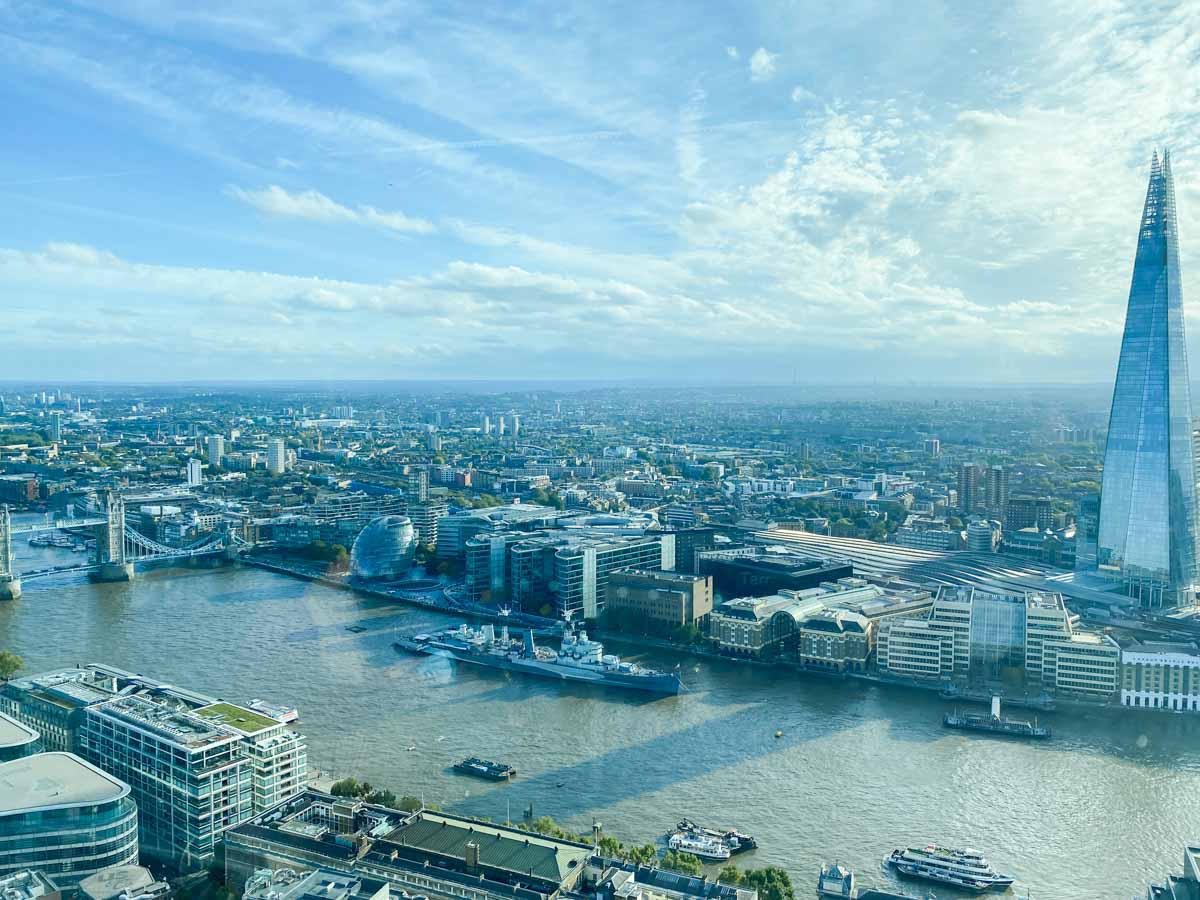
45m, 2002, Foster + Partners
The leaning glass helmet next to Tower Bridge, and the entry that has changed most since we last wrote this. The Greater London Authority left in December 2021 for the former Crystal building in the Royal Docks, taking the ninth-floor public viewing room with it.
The building has been empty of tenants since. In July 2026 Mace began a £150m retrofit designed by Gensler that will replace the facade, extend the floorplates and, extraordinarily, straighten the lean the whole thing was famous for.
The Scoop, the sunken open-air amphitheatre beside it, is closed for refurbishment and ran no programme at all in 2026. If you have it filed as a free summer cinema, take it off the list for now.
Tate Modern

99m chimney, 1963 as Bankside Power Station, Sir Giles Gilbert Scott
A power station that heated Fleet Street’s printing presses until 1981, converted by Herzog & de Meuron and opened as a gallery in 2000. The single brick chimney was deliberately built lower than St Paul’s dome across the river.
Giles Gilbert Scott also designed Battersea Power Station and the K2 telephone box, which is a remarkable run for one architect. His grandfather designed the Midland Grand at St Pancras.
The Blavatnik Building’s Level 10 viewing terrace is free and reopened in September 2023 after the long privacy case with the flats opposite, though the south side is now taped off. Open daily, and still the best free view of St Paul’s.
Battersea Power Station

113m chimneys, 1929-1955, Sir Giles Gilbert Scott
Four white chimneys, Grade II* listed, and the most recognisable silhouette in south London. It is really two power stations built three decades apart, which is why the Art Deco detailing inside differs from one half to the other.
It was decommissioned in 1983 and sat derelict for nearly forty years while proposals for a theme park and a football stadium came and went. It reopened to the public in October 2022 and has taken more than 40 million visitors since, remaking Battersea around it.
The Chimney Lift, formerly branded Lift 109, takes you up inside the north-west chimney for a 360-degree view. Tickets start at around £16 online and cost more on the day. The Pink Floyd pig on the 1977 Animals cover was flown here and escaped into Heathrow’s flight path.
Strata SE1, the Razor
148m, 2010, BFLS
Elephant and Castle’s contribution, nicknamed the Razor for the shape and the Lipstick by Boris Johnson. It won the Carbuncle Cup in 2010 for the worst new building in Britain, which the residents have never quite lived down.
The three wind turbines at the top were meant to supply eight per cent of the building’s power. They ran sporadically in 2010, were switched off after residents complained about noise and vibration, and have been effectively mothballed ever since. A Southwark planning chair called them a white elephant in 2022.
It remains the easiest building to identify on the whole south London skyline, which is worth something.
One Nine Elms
199m and 160m, 2024, Kohn Pedersen Fox
Two towers by Vauxhall that reached practical completion in June 2024 and changed the shape of the south-west skyline more than anything since the Shard.
The taller City Tower runs to 58 storeys; the River Tower to 42. The Park Hyatt London River Thames occupies part of it.
They are the reason the view west from Westminster Bridge no longer ends where it used to.
Westminster and the west
The Palace of Westminster

96m Elizabeth Tower, 1870, Charles Barry and Augustus Pugin
The most photographed roofline in the country. Elizabeth Tower, which holds the bell called Big Ben, finished a five-year restoration in 2022 and the bongs have been back on the hour ever since. More Big Ben facts here.
The medieval palace burned down in 1834, and the replacement took three decades. Barry died in 1860 and Pugin, who drew nearly all the Gothic detail, died in 1852 at 40. Neither saw it finished.
Westminster Hall, with its 1393 hammerbeam roof, survived both the fire and the Blitz and is the oldest thing in Westminster by four centuries. How to visit.
The London Eye
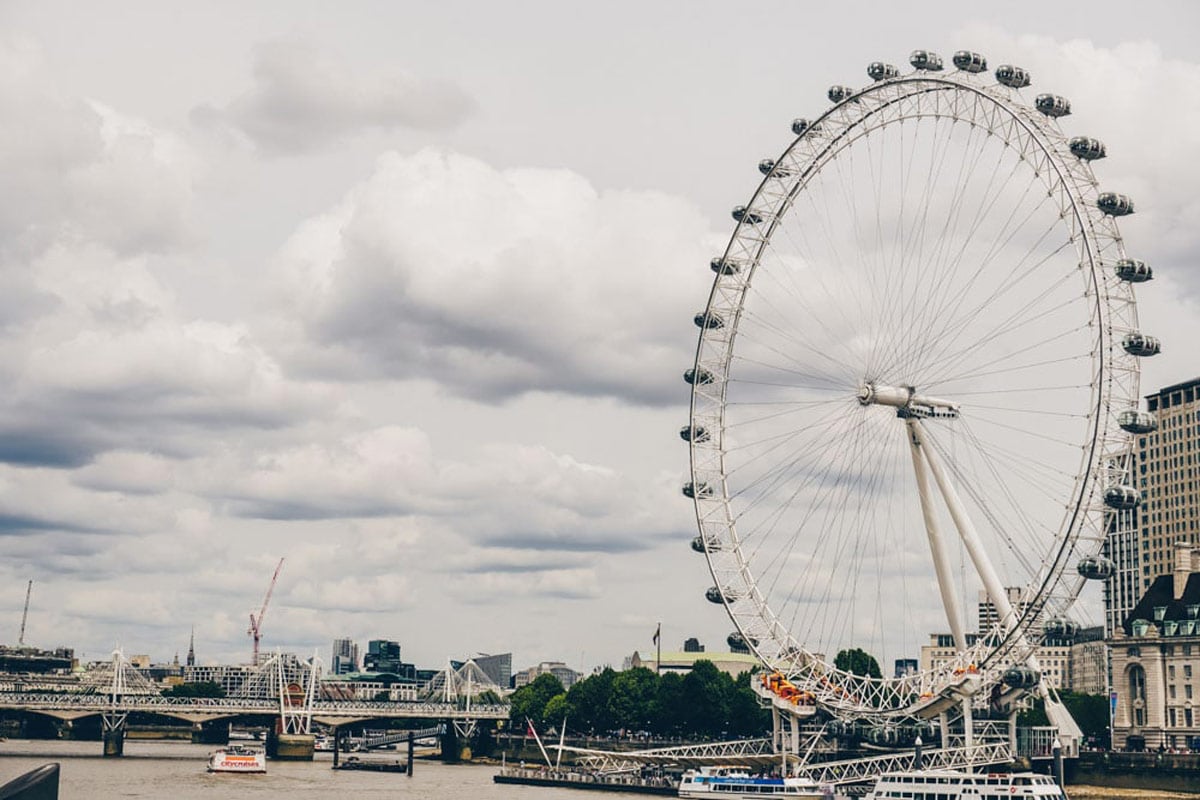
135m, 2000, Marks Barfield
Not a building, and we are including it anyway, because no skyline shot of London has ever left it out. It has had four corporate sponsors over the years and currently has none, so it is just the London Eye again.
David Marks and Julia Barfield designed it for a newspaper competition to mark the millennium, which nobody ended up winning. It missed the millennium itself: safety checks kept passengers off until March 2000.
Standard tickets are £29 online against £39 on the door, so book. More London Eye facts.
BT Tower
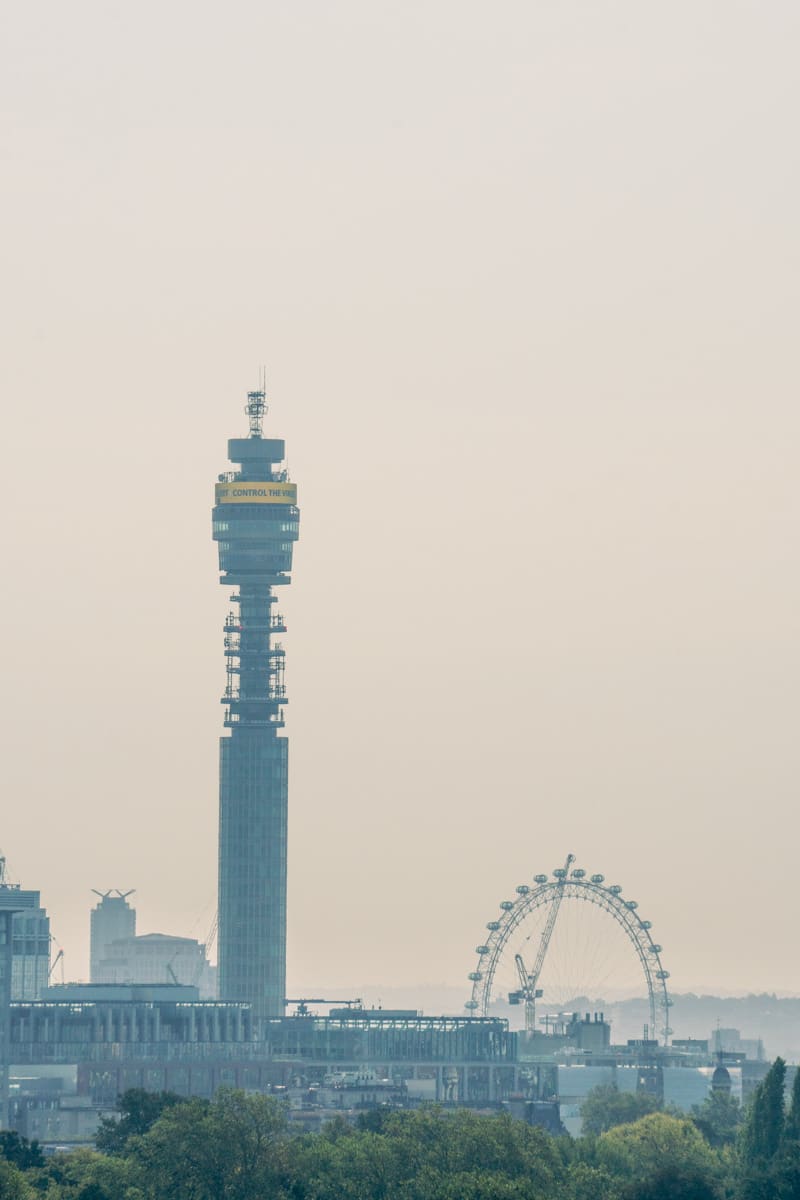
189m including the aerials, 1964, Eric Bedford
Grade II listed, the tallest building in the UK from 1964 until the NatWest Tower overtook it in 1980, and the thing that fixes Fitzrovia on every skyline photograph. For its first seventeen years it had a revolving restaurant on the 34th floor that completed a rotation every 23 minutes.
It closed to the public in 1981 after a bomb attack, and it has stayed closed ever since, joining Aldwych station on the list of London places you cannot get into. The 360-degree LED information band around the top went on in 2009.
BT sold the tower to MCR Hotels for £275m in February 2024, and Orms have designed a conversion that brings back a revolving observation deck and adds a rooftop pool. A planning application went to Camden in September 2026, construction is not due to start until 2029 and the hotel is not expected before 2033. Do not hold your breath.
Canary Wharf and the east
One Canada Square

235m, 1991, César Pelli
The pyramid with the blinking aircraft light, and for fourteen years the tallest building in the country. Pelli clad it in stainless steel as a nod to British industry and took the proportions from the Elizabeth Tower.
It was designed taller and lost floors to comply with air traffic rules for City Airport. Prince Charles said on completion that he would personally go mad if he had to work in a place like that.
The pyramid is hollow and contains the beacon, which flashes 57 times a minute. Our Canary Wharf guide.
Landmark Pinnacle
233m, 2020, Squire and Partners
The tall thin one on the Isle of Dogs that now out-tops One Canada Square by a couple of metres, and one of the tallest residential buildings in Europe.
Eight hundred and twenty-two flats plus 162 serviced apartments, with residents’ gardens on the 27th and 75th floors. The 75th-floor lounge is the highest residential space in western Europe.
You cannot get in unless you live there or know someone who does, which is the Isle of Dogs in a sentence.
And the one that is about to change everything
One London, formerly 1 Undershaft
309.6m, consented, due 2033
Renamed One London in June 2026, and consented at exactly 309.6 metres, which makes it joint-tallest in the UK alongside the Shard to the centimetre. That is not a coincidence: the City’s sightline rules cap it there.
To build it, St Helen’s Tower, the 118m block that has stood on the site since the 1960s, is being demolished right now in what is being billed as the largest skyscraper demolition in London’s history. Construction starts in 2028.
The part worth knowing: the plans include a free public viewing gallery on Level 73 run by the London Museum, a free publicly accessible podium garden at around 42 metres with a glass floor, and the highest bar in London on Level 71. If it is delivered as consented, it will be the highest free view in the country.
Where to actually see all this
You do not have to pay to look at any of it. The free options, in order of height: Horizon 22 on Level 58 of 22 Bishopsgate, the Lookout on Level 50 of 8 Bishopsgate, the Sky Garden in the Walkie Talkie, the new 1 Leadenhall rooftop terrace, and Tate Modern’s Level 10. All need a free timed booking except Tate.
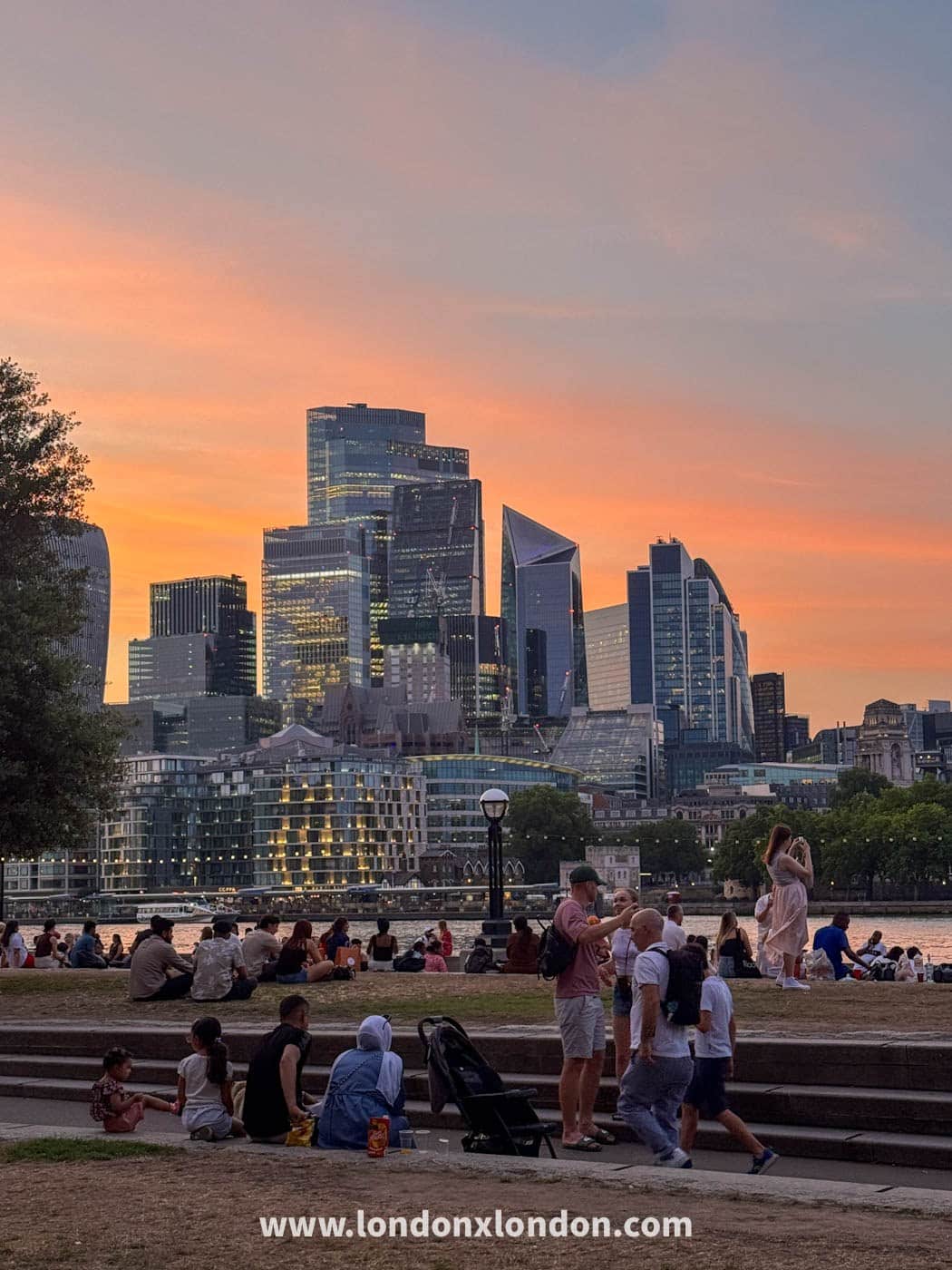
From the ground, the best angles are Potters Fields by Tower Bridge at sunset, the south end of Waterloo Bridge, Primrose Hill, Greenwich Park and the Parliament Hill viewpoint on Hampstead Heath, which is protected by law precisely so this view survives.
- Paid: the View from the Shard (from around £22), the Chimney Lift at Battersea (from around £16), the London Eye (£29 online)
- With a drink: Duck & Waffle and SUSHISAMBA at 110 Bishopsgate, and the best rooftop bars in London
- On foot: our London walking routes take in most of the cluster from street level
- Ticking off the landmarks: our guide to sightseeing in London, and further out: our guide to the best views in London has the full list of viewpoints
The London x London Take: The skyline changed more between 2023 and now than in the decade before it, and almost none of the guides have caught up. The three things worth doing: go up 8 Bishopsgate rather than 22 Bishopsgate, because the Lookout is free, quieter and has the better view of the cluster itself. Get to 1 Leadenhall’s rooftop terrace while it is still a secret. And go and look at the old City Hall before Mace finishes with it, because the lean that made it famous is being engineered out and in two years nobody will believe it was ever there. For the buildings themselves, the Cheesegrater remains the best of the modern lot: every angle on it is the result of an argument about St Paul’s, and once you know that you can read the whole City from a single sloped wall.
More architecture in our guides to brutalist London, Christopher Wren buildings and the new developments coming next.