Discover London’s villages, the havens of tranquillity tucked away in the heart of the big city.
It’s commonly said that London is as much a series of villages strung together as it is a city, and that’s a saying that’s probably truer than most people realise. Many areas of the capital began life as sleepy villages and were then swallowed up by urban sprawl.
Other parts of London, like Dulwich and a special corner of Marylebone, retain the word village in their name. The definition for us, though, is somewhere you can go and feel the bustle of the city melt away, a spot for a bit of tranquillity and the feeling of a hamlet in the countryside.
There are a few spots you can go for this. We’ve written all about them in our guide. Read on to discover London’s charming villages.
All the best villages in London
Hampstead
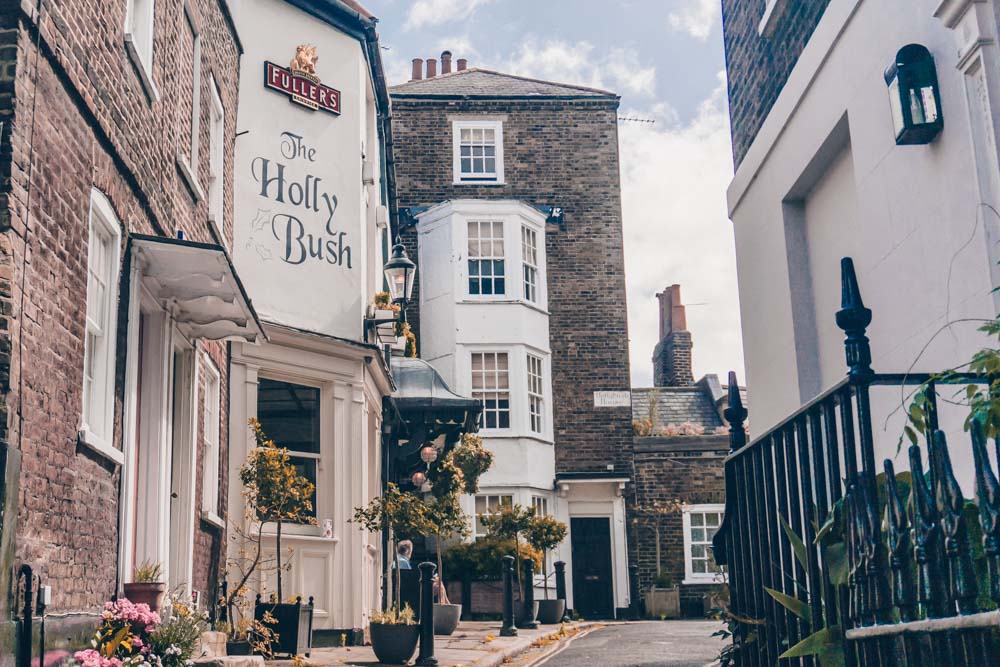
Top of our list for London villages is Hampstead. Wander off the main drag in this beautiful part of town and you’ll find yourself in a peaceful sprawl of cottages and sleepy streets, with some lovely independent stores, restaurants and cafes to explore.
Then of course there’s Hampstead Heath, one of London’s biggest green spaces and one we’ve walked across many a time. Don’t miss the chance to explore the Pergola Gardens either, or 2 Willow Road, architect Ernö Goldfinger’s modernist masterpiece.
Goldfinger isn’t the only notable name linked to the area. Intellectuals and artists have flocked to Hampstead’s calm environs over the years, Sigmund Freud among them, he lived out the last year of his life at 20 Maresfield Gardens after fleeing Nazi-occupied Vienna, and completed his final book, Moses and Monotheism, in the house. It’s now the Freud Museum, his study and library largely untouched, and well worth a visit while you’re there.
Highgate
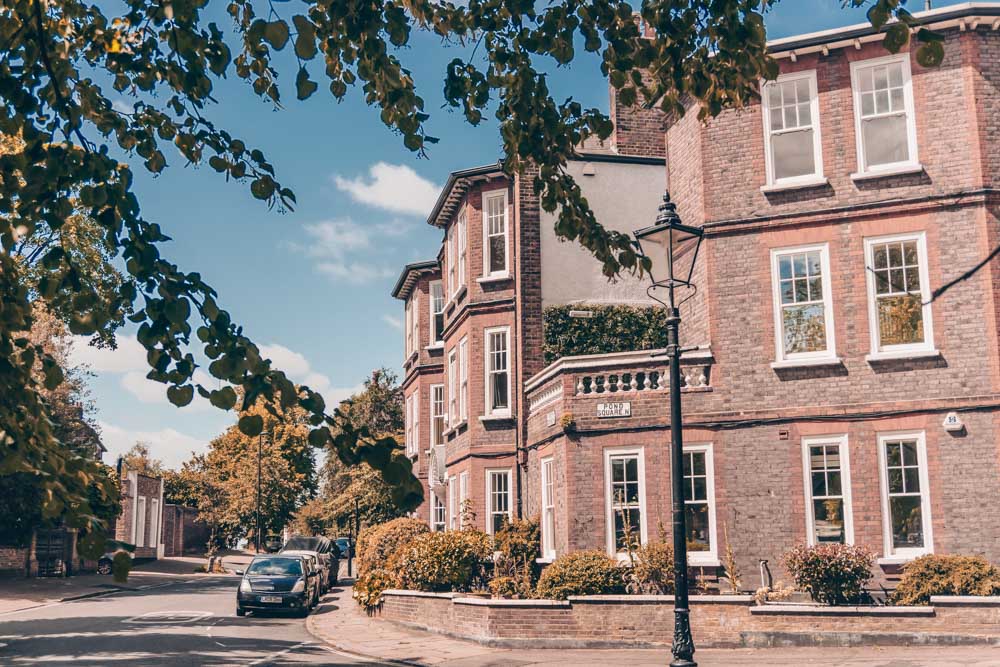
Slightly to the north east of Hampstead sits Highgate, another part of London that still retains its village history in spite of having long been swallowed up by the city’s urban sprawl.
You may know of Highgate from its cemetery, one of London’s Magnificent Seven, built during the Victorian era when the city had to find new solutions to overcrowding of both the living and the dead. That talk of the dead doesn’t in any way reflect how lovely the cemetery and the surrounding streets are to explore, the neo-gothic fantasy that is Holly Village in particular, a cluster of ornate Victorian cottages tucked away behind the cemetery walls that most visitors to Highgate never even know exists.
Dulwich Village
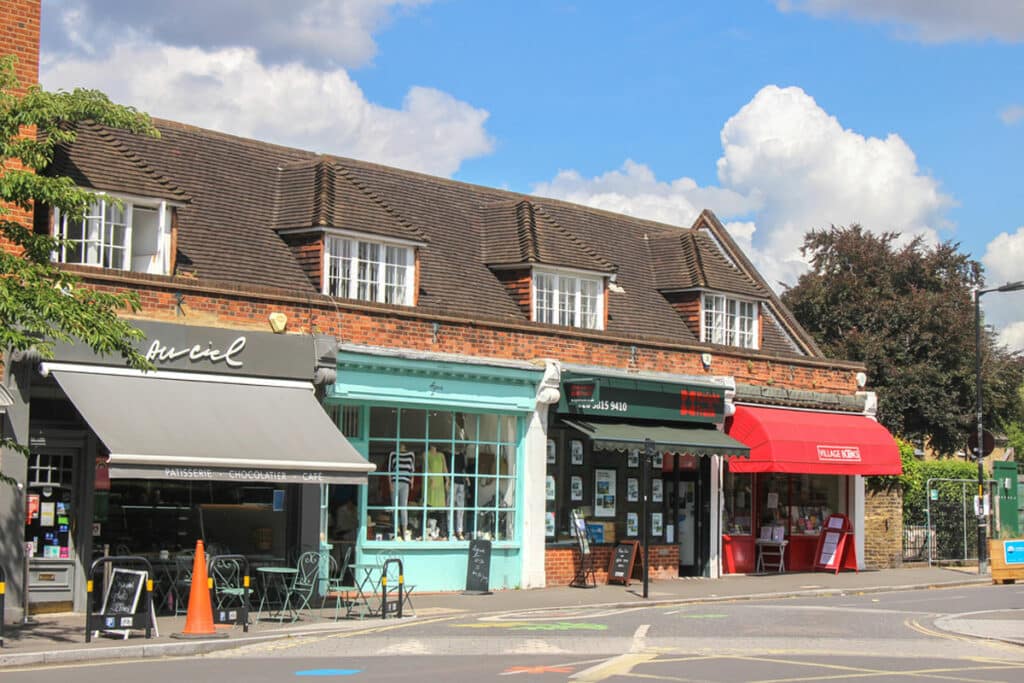
Perhaps the most liveable London village is Dulwich. Now something of a haven for London’s young professional class fleeing the busier scenes in Peckham and Brixton, the area hasn’t lost its village charm, in fact it’s entirely part of the attraction.
The area is probably best known for the high-achieving college that shares its name, but we like Dulwich best for its small streets, charming architecture and selection of good local pubs. A trip wouldn’t be complete without dropping into the Dulwich Picture Gallery, Britain’s oldest purpose-built public art gallery, where you can see exhibitions from some of art history’s great masters alongside a genuinely excellent programme of contemporary shows.
Greenwich
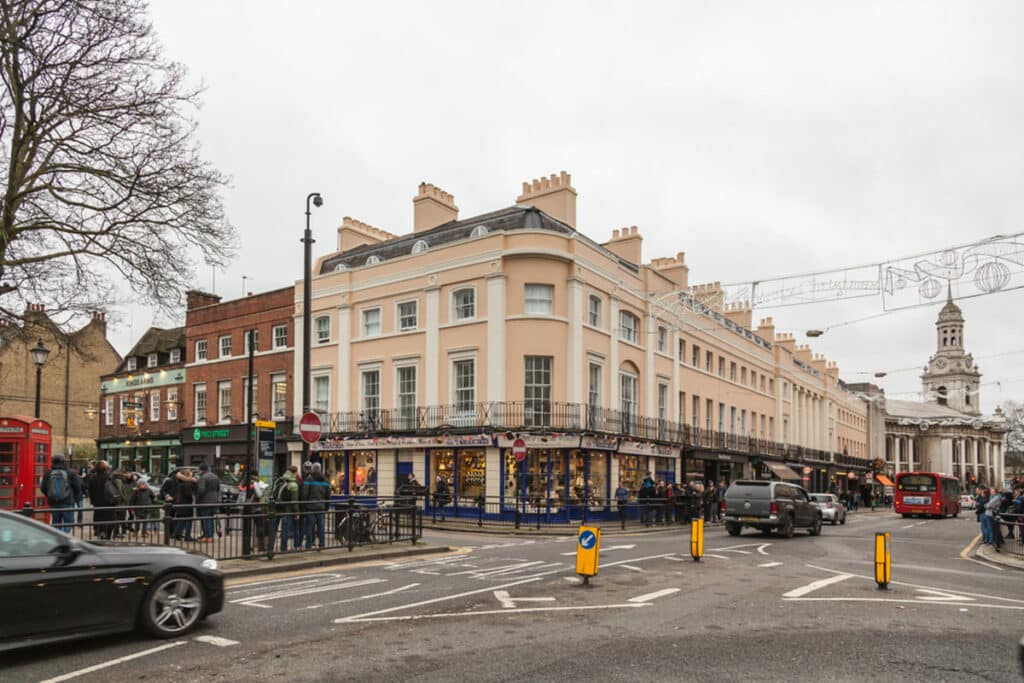
Greenwich has plenty to offer anyone looking for a touch of the quiet life inside the big city. The area has a distinct feel, and in parts you could be fooled into thinking you aren’t actually in London at all.
Any trip should begin with a walk along the riverfront, once an important area for shipping and the navy, that history remains in the Old Royal Naval College, worth a stroll in its own right. Explore the quiet streets, grab a coffee or some lunch in Greenwich, and make your way up to the Royal Observatory for one of the best views of London you can find.
Chiswick
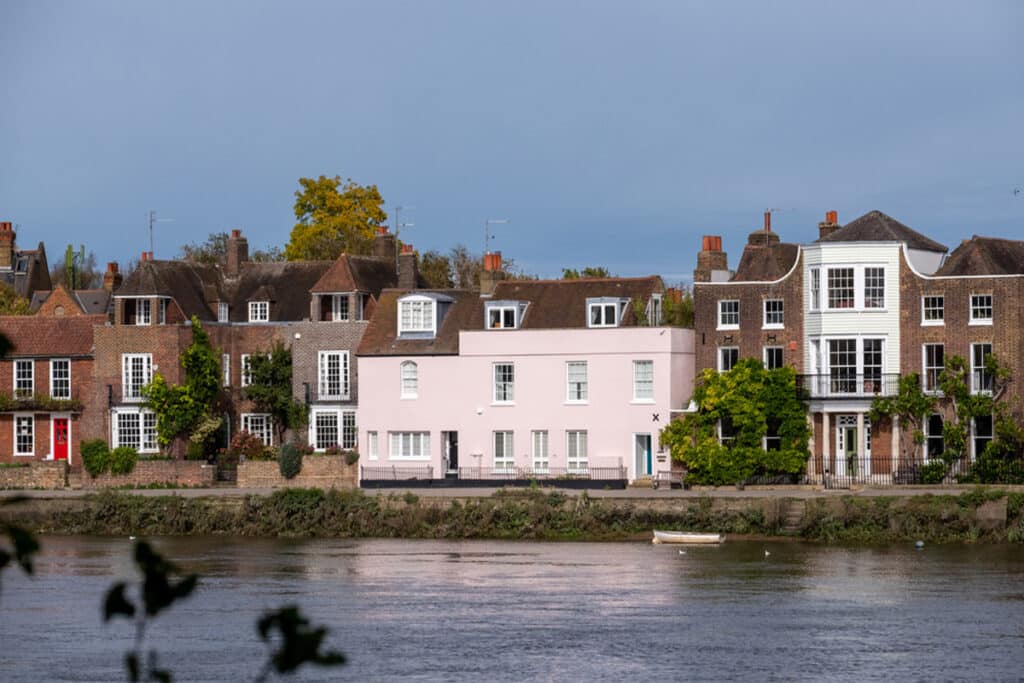
Chiswick was once a sleepy village miles from London, a refuge for thinkers and artists, William Hogarth among them. Today it’s well and truly part of London, though still a leafy suburb with gorgeous houses and quaint pubs.
Arguably the most delightful part of Chiswick is along the waterfront. Here you’ll find a section of the Thames Path, and if you follow it, plenty of good pubs. The Bell and Crown is one of the finest, an 18th-century boozer on Strand-on-the-Green with proper old-school vibes, and The Black Lion, a little further along towards Hammersmith, is another good stop on the same riverside walk.
The streets near these pubs are a particularly nice place to wander, a mix of quaint and impressive housing, weaving back and forth from the river, simply divine.
Marylebone Village
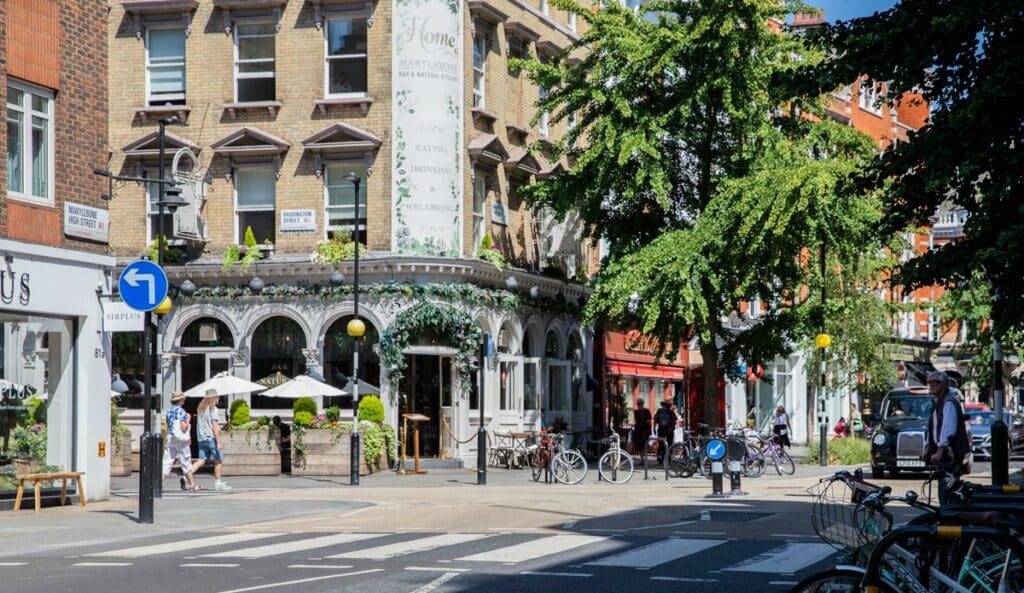
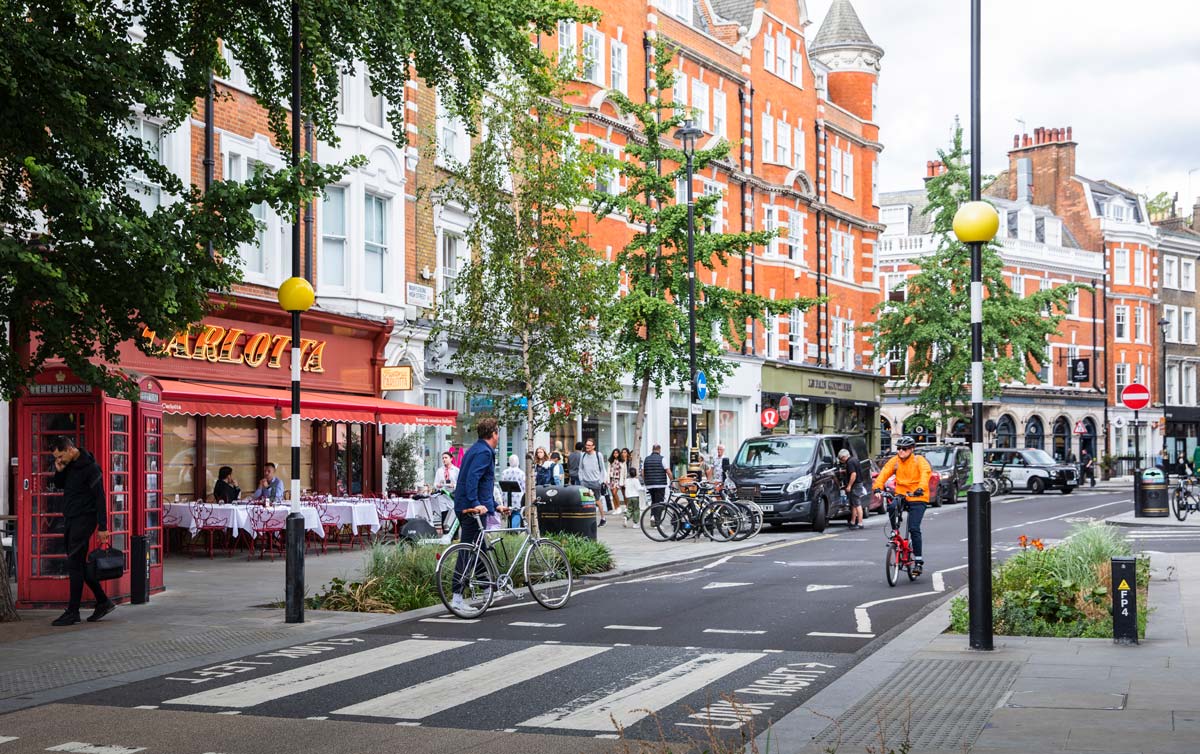
You may be surprised to see a neighbourhood so close to the centre described as a village, but we’re not talking about Marylebone in general here, more a specific part of it.
That part is known as Marylebone Village, a small area of shops and businesses that manages to feel as quiet and tranquil as somewhere out in the countryside, despite sitting minutes from Oxford Street. The ultimate companion to all this tranquillity would have to be a book, specifically one picked up from Daunt Books, the original branch and one of our favourite independent bookstores in London, housed in a genuinely beautiful 1912 building with long oak galleries and William Morris prints.
Chesham
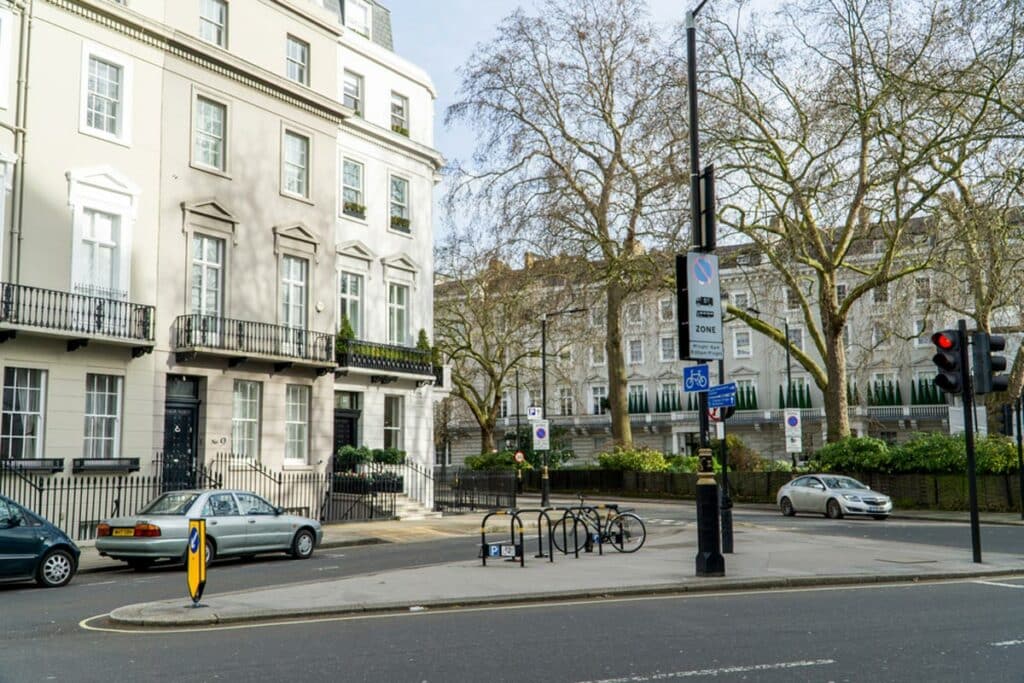
If you’re willing to make the trip out to the end of the Metropolitan line, you’ll find a charming spot in Chesham. The little red-brick village has quaint, distinctly English character, and best of all, some peaceful countryside walks nearby.
One of the best is the Chess Valley Walk, following a river through several smaller villages back towards London. Follow it as long as you like, and hop back on the Underground a few stops closer to home when you’re done.
Barnes
Tucked into a bend of the Thames in southwest London, Barnes genuinely feels like a village that’s forgotten it’s inside the M25, a village green, a duck pond, and streets of handsome townhouses that could pass for a much smaller town entirely.
The Red Lion, a proper Fuller’s pub with a big beer garden, is the obvious anchor for an afternoon here, home to an annual Great Sausage Roll Off if your timing’s right. Barnes also backs onto the London Wetland Centre, a genuinely excellent nature reserve for a slower afternoon if the pub alone isn’t enough of a change of pace.
Wimbledon Village
Not to be confused with Wimbledon proper, Wimbledon Village sits up the hill from the tennis and the shopping centre, a genuinely different, older feel entirely, all boutiques, antique shops and 17th-century pubs.
The Rose and Crown, dating back to the 1600s, sits right on the high street and is as good a place as any to start, walking distance from the All England Club without a hint of the crowds that descend each summer. Wimbledon Common, one of London’s largest, is right on the doorstep too, worth combining with a visit if you’ve got the time.
The London x London Take: Marylebone Village is the easiest to reach on a whim, but Holly Village in Highgate is the one most Londoners genuinely don’t know exists, and that’s exactly why it’s worth the detour.
Practical tips for exploring the best London villages
- As always with London, the thing that might get in the way of you enjoying these places is other people. If you can, try to visit before midday or on a weekday for the quietest village vibes.
- The nearest London village to the city centre is Marylebone Village. The other places you may have to travel a fair way to get to.
- People actually live in many of these places, so while it’s fine to snap some pictures or pose in front of that cute house, do remember to be respectful.