The Barbican Conservatory closes for three years in January and will not reopen until 2030. Kew’s Palm House shuts in 2027 for a four-year rebuild. Hampton Court gives its gardens away free four weekends a year and almost nobody turns up. Three of the gardens on this list are on a clock, and this is the autumn to use it.
London has more garden than it lets on. Not parks, which are a different thing, but gardens: walled, planted, deliberate, usually behind something and often free.
These are the twenty-eight worth crossing town for, grouped by what they actually are, with the current prices, the opening days that catch people out, and the one week of the year each of them is at its best.
For woodland rather than borders, our guide to Epping Forest walks takes in 50,000 ancient pollards and thirteen waymarked trails.
Kenwood sits at the top of Hampstead Heath, and our guide to restaurants in Hampstead covers the Brew House and thirteen others.
Quick answers
What is the best garden in London? The Sunken Garden at Kensington Palace in early July, and it is free without a palace ticket. For a whole afternoon, Fulham Palace: 13 acres, a walled garden, and it opens at 7am.
Which are free? Most of them. Kyoto Garden, Isabella Plantation, Queen Mary’s Gardens, Postman’s Park, St Dunstan in the East, the Rookery, the Hill Garden and Pergola, Myddelton House, the Phoenix Garden, Victoria Embankment, Vauxhall, St John’s Lodge, Fulham Palace and the Queen Elizabeth Hall roof.
Which needs booking? The Barbican Conservatory, which now runs on free timed tickets released at 9.30am each day. Hampton Court and Buckingham Palace need tickets. Nothing else on this list does.
What is closing? The Barbican Conservatory from early 2027 until 2030. Kew’s Palm House from 2027 for four to five years, and the Waterlily House is already shut. Buckingham Palace’s garden season ends on 27 September.
Which is best in winter? Myddelton House in February for the snowdrops, or the Chiswick House conservatory for the camellias, which is the only thing in London genuinely worth a February trip.
The big ones
Kew Gardens
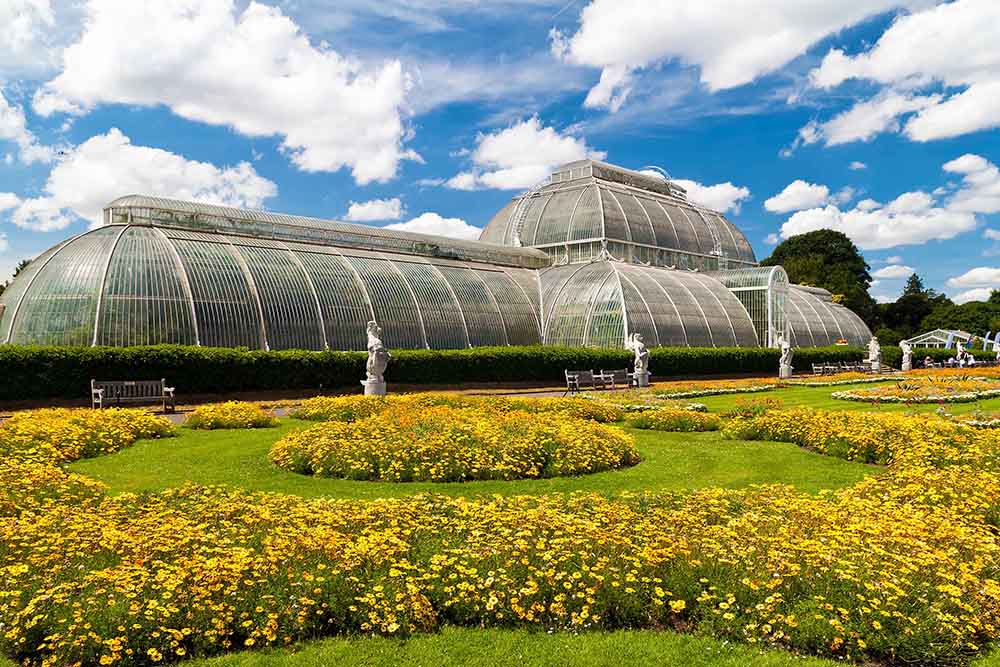
Three hundred acres, the largest collection of living plants anywhere in the world, and two of the greatest Victorian glasshouses ever built. It is a UNESCO site and it earns it.
Go before 2027 and go for the Palm House. It closes then for a £60 million rebuild that will take four to five years, and the Waterlily House next to it is already shut until 2027. Whatever else you do at Kew, stand inside the Palm House while you still can.
The other thing to know is the £10 Tuesday, running from 8 September to 29 December 2026, which is less than half the standard fare. Failing that, entry drops to £10 after 4pm any day.
Where: Kew, Richmond TW9 3AB. £25 online, £28 at the gate at peak. Daily 10am to 7pm, last entry 6pm. There is more of this corner of the city in our guide to west London.
Chelsea Physic Garden
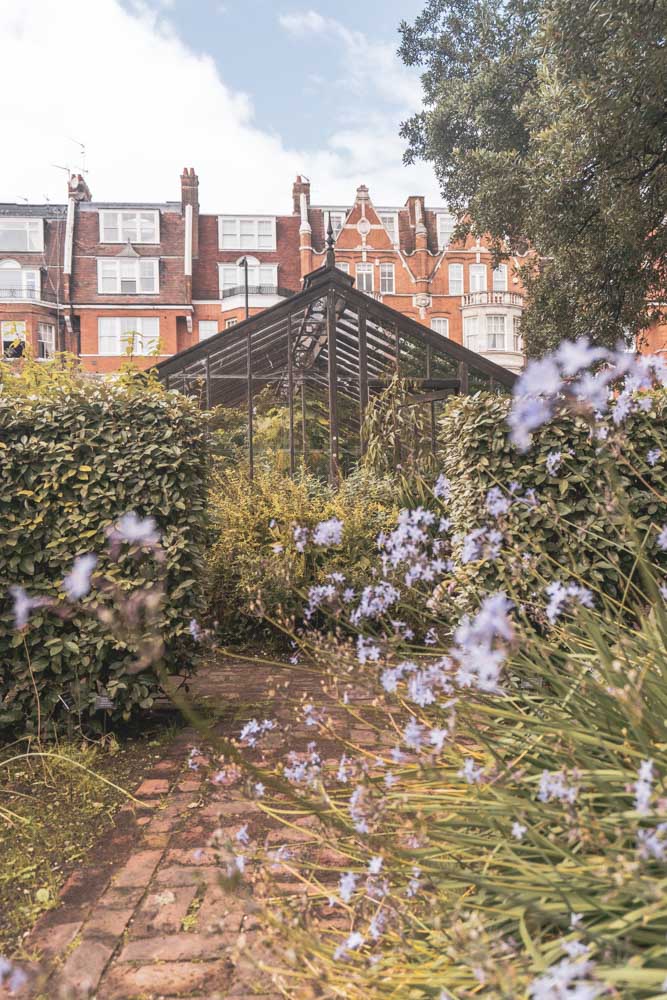
Founded in 1673 by the Society of Apothecaries so that trainees could learn to identify the plants they were prescribing, and still four walled acres between Royal Hospital Road and the river. The walls and the river give it the warmest microclimate in London, which is why there are pomegranates and a grapefruit fruiting outdoors in SW3.
Come in autumn rather than high summer, and find the olive tree — the largest growing outdoors in Britain. It fruits, in Chelsea, which tells you everything about what those four walls do.
The thing that catches everyone: it is closed on Saturdays.
Where: 66 Royal Hospital Road, SW3 4HS. £15, or £13.50 without the voluntary donation. Sunday to Friday 11am to 5pm. We have a longer piece on Chelsea Physic Garden, and the streets around it in our King’s Road guide.
Isabella Plantation
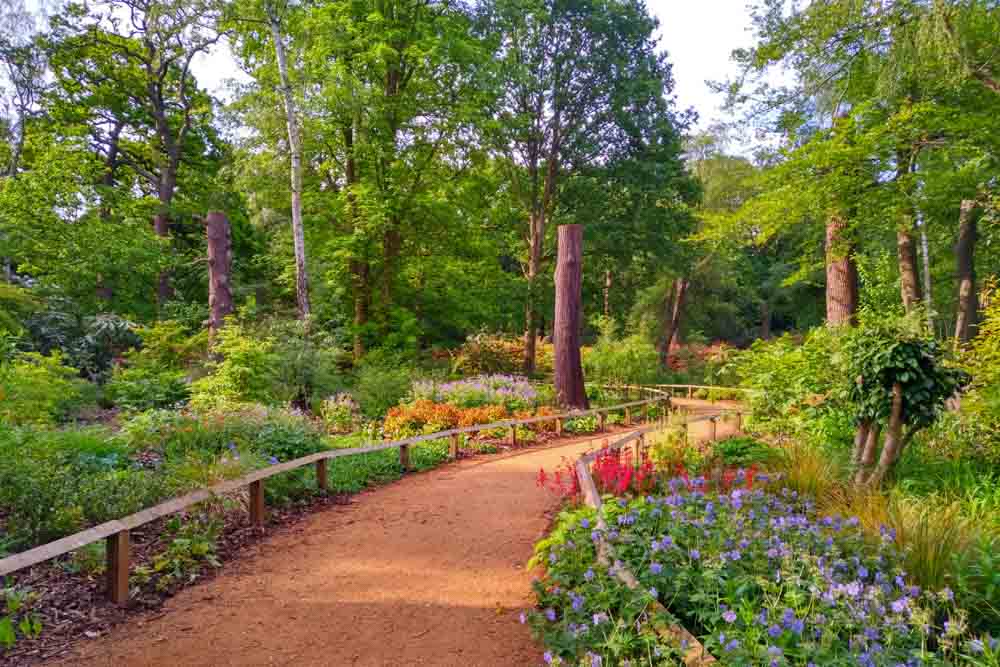
Forty acres of woodland garden inside Richmond Park, planted through with evergreen azaleas, rhododendrons and camellias, with streams and ponds running through the middle of it. It was laid out from the 1950s and it is one of the few places in London that genuinely stops people mid-sentence.
Late April to early May, no argument, and walk the stream rather than the main path. The azaleas along the water are the reason the place exists and the two weeks they are out are worth planning a whole day around.
There is a free minibus from March to November if the walk in from the gates is a problem, and motorised wheelchairs can be borrowed on weekdays with five days’ notice.
Where: Richmond Park, TW10 5HS. Free, open year-round. The rest of the park is in our Richmond Park guide.
Queen Mary’s Gardens
The largest rose collection in London, 85 beds of it, inside the Inner Circle at Regent’s Park. There are around twelve thousand plants and it is laid out on a scale that no private garden could manage.
Early June is the week. Get there before ten in the morning, because by lunchtime in rose season the paths between the beds are single file.
Where: Inner Circle, Regent’s Park, NW1 4NR. Free. Park gates 5am to 8pm. No dogs in the gardens. More green space in our London parks guide.
Sky Garden
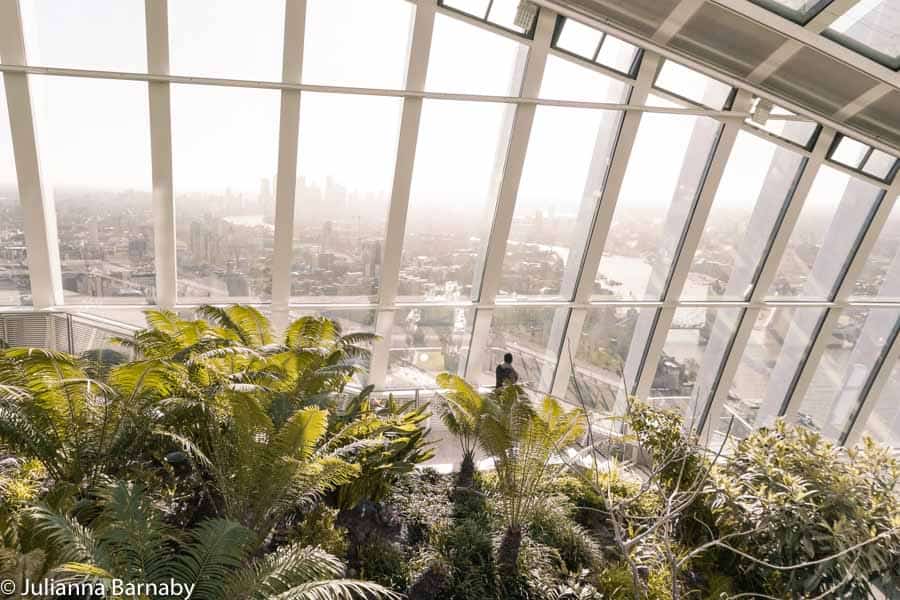
Three storeys of planting on top of the Walkie Talkie, thirty-five floors up, with the whole city through the glass. It is more atrium than garden if you are strict about it, and it is still the most extraordinary room on this list.
Go up for breakfast rather than fighting the ticket lottery. Free timed tickets are released three weeks ahead and go instantly, but there is now an early-morning door ticket at £11.50 that includes a hot drink, and at eight in the morning you will have the south terrace to yourself. The evening walk-in is £15.50 with a drink and a DJ, which is a different and much busier proposition.
Where: 20 Fenchurch Street, EC3M 8AF. Free with a booked ticket; £11.50 early walk-in, from £15.50 evenings. We have the full practicalities in our Sky Garden guide.
Secret gardens, and the ones behind something
Kyoto Garden, Holland Park
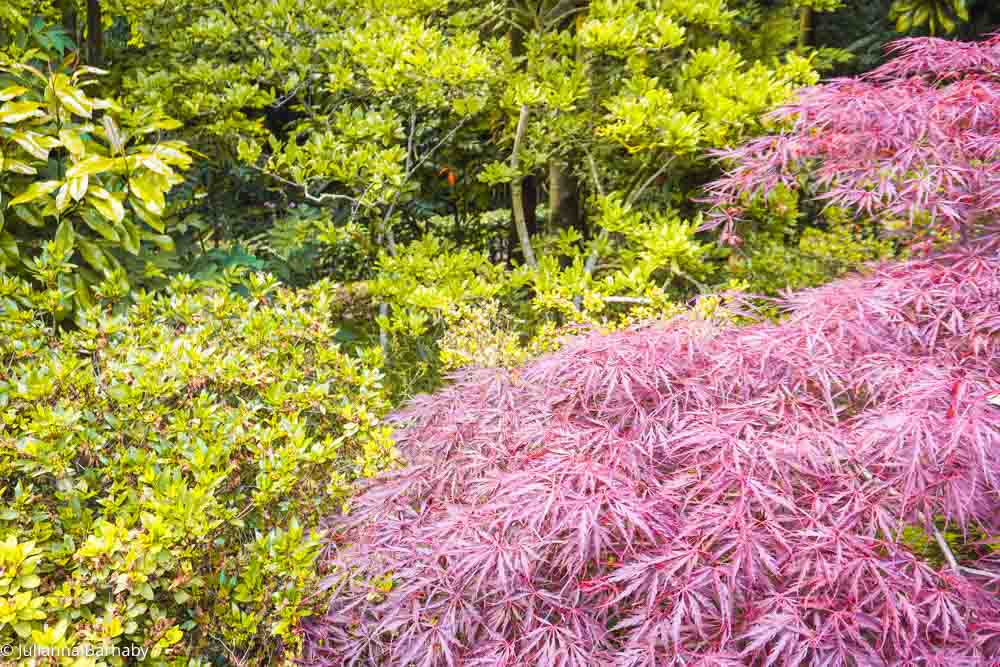
A Japanese garden given to London by the Chamber of Commerce of Kyoto in 1991: a tiered waterfall, a koi pond, stone lanterns and Japanese maples, with peacocks wandering through it because this is Holland Park.
Mid-November for the acers, and get there at eight. The colour is the whole point and the garden is small enough that four other people with cameras ruin it. By ten on a November Saturday there is a queue for the waterfall bridge.
While you are there, walk two hundred metres to the Fukushima Garden, its 2012 sibling, given after the tsunami and almost completely ignored.
Where: Holland Park, W8 6LU. Free. Park open 7.30am to dusk. No dogs. There is a longer read on the Kyoto Garden.
Barbican Conservatory
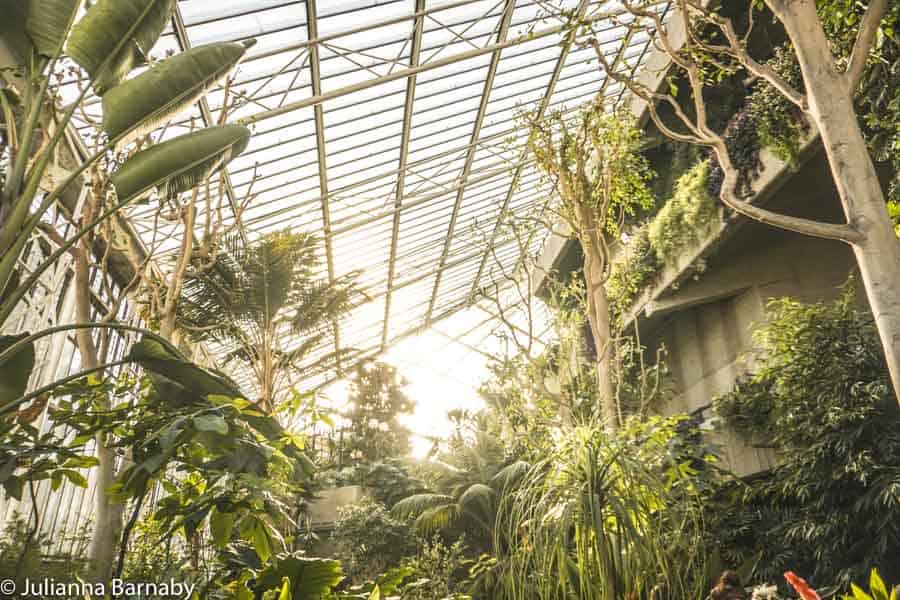
Two thousand species of tropical plant growing over the fly tower of the Barbican theatre, with terrapins and koi in the ponds and vines coming down through the concrete. It is the second largest conservatory in London after Kew and most people who use the Barbican weekly have never been in.
Go this autumn. It closes in early 2027 and does not reopen until 2030 as part of the centre’s £231 million renewal. The upside, when it comes back, is that it will finally open daily rather than on scattered Sundays.
Free timed tickets are released at 9.30am each day with a waiting list behind them, and the Conservatory is shut on any date not listed. There are also plant adoption events before the closure, rehoming more than two thousand cuttings.
Where: Barbican Centre, Silk Street, EC2Y 8DS. Free, timed ticket essential. Listed dates only. We wrote up the Conservatory in detail, and covered the plant giveaway before it shuts.
St Dunstan in the East
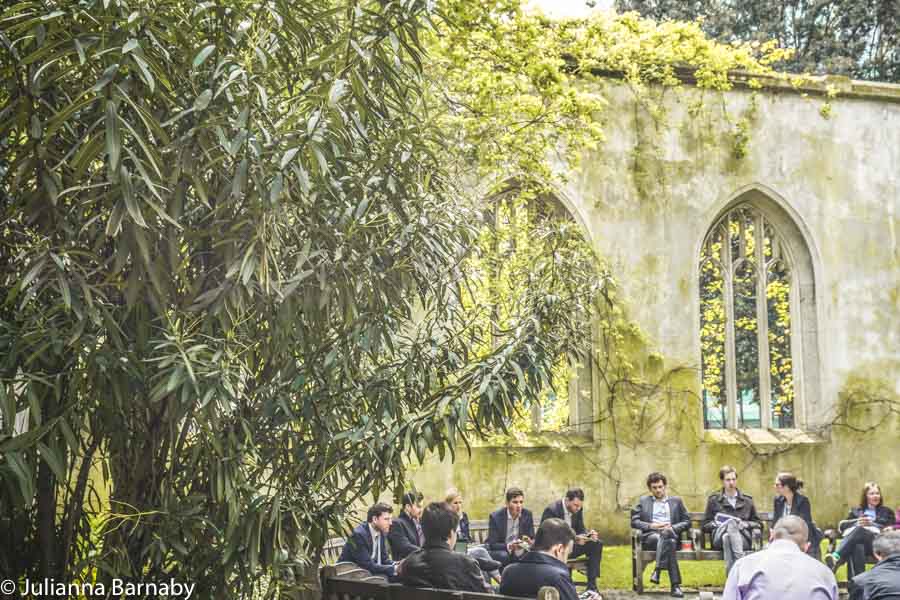
A Wren church bombed in 1941, left as a shell, and planted as a public garden in 1971. Virginia creeper through the window tracery, a fig where the nave was, and the tower still standing over it.
Go at eight in the morning or at six in the evening. Between noon and two every bench is taken by someone from the City with a sandwich, which is lovely for them and useless for you.
Where: St Dunstan’s Hill, EC3R 5DD. Free, open daily. The whole story is in our St Dunstan in the East piece.
The Rookery, Streatham Common
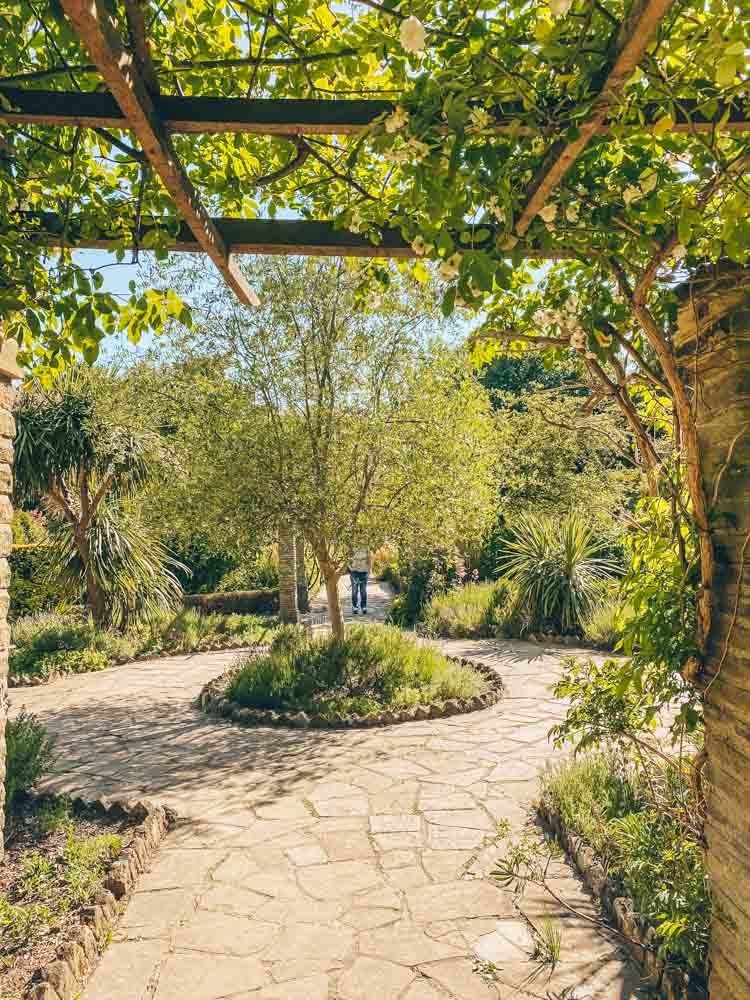
A walled Edwardian garden at the top of Streatham Common, laid out around the mineral spring that briefly made Streatham a spa town. There is a rock garden, an orchard and a white garden.
June, for the White Garden. It is the only white garden in a London public park, and it was planted roughly thirty years before Vita Sackville-West did hers at Sissinghurst, which almost nobody knows.
It closes half an hour before dusk and earlier in bad weather, so it is not an evening garden.
Where: Streatham Common North, SW16 3BX. Free, daily. We have a piece on the Rookery and more of the area in our Streatham guide.
Postman’s Park
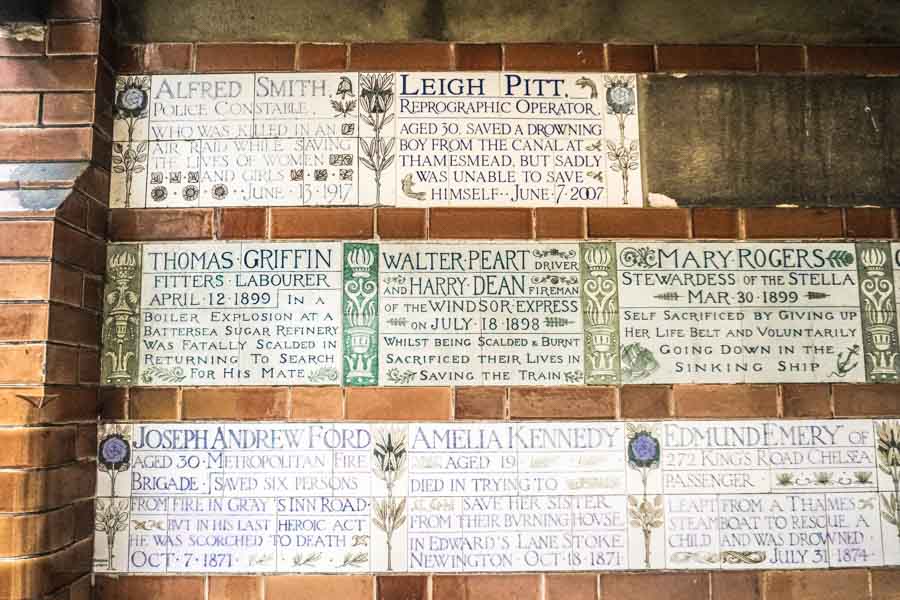
A small City garden behind St Botolph’s, and the setting for the Watts Memorial to Heroic Self Sacrifice: a loggia of glazed tablets commemorating ordinary people who died saving someone else. Fifty-four of them, each with the story in a few lines.
Read the Alice Ayres tablet and then sit down for ten minutes. It is a five-minute garden and a much longer one if you actually read the wall, which is what it is for.
Where: St Martin’s Le Grand, EC1A 4AS. Free, daylight hours. There is a longer read on Postman’s Park and the Watts Memorial.
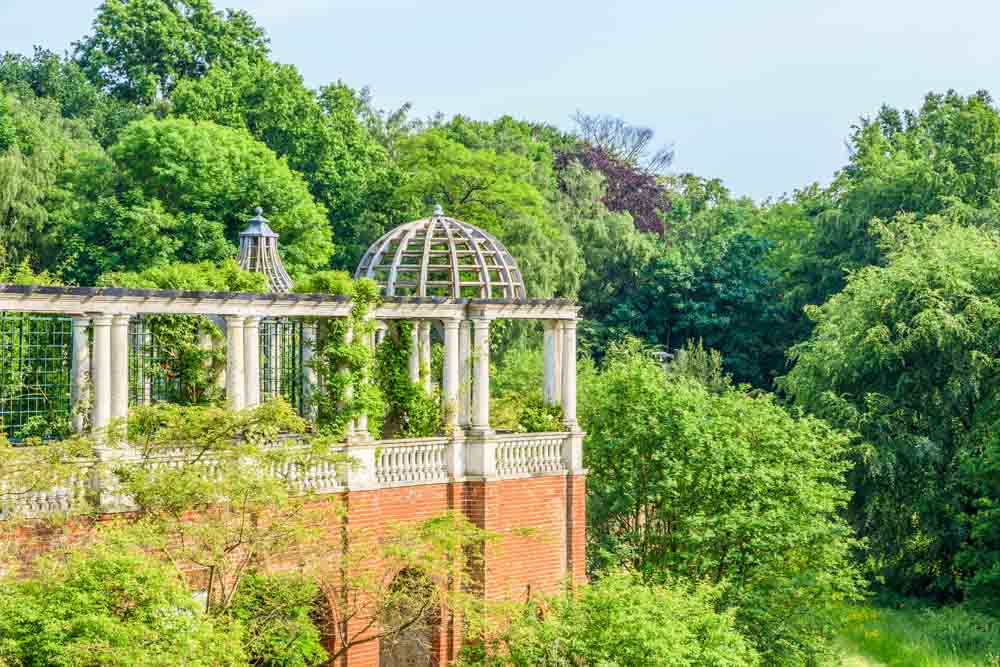
The Hill Garden and Pergola
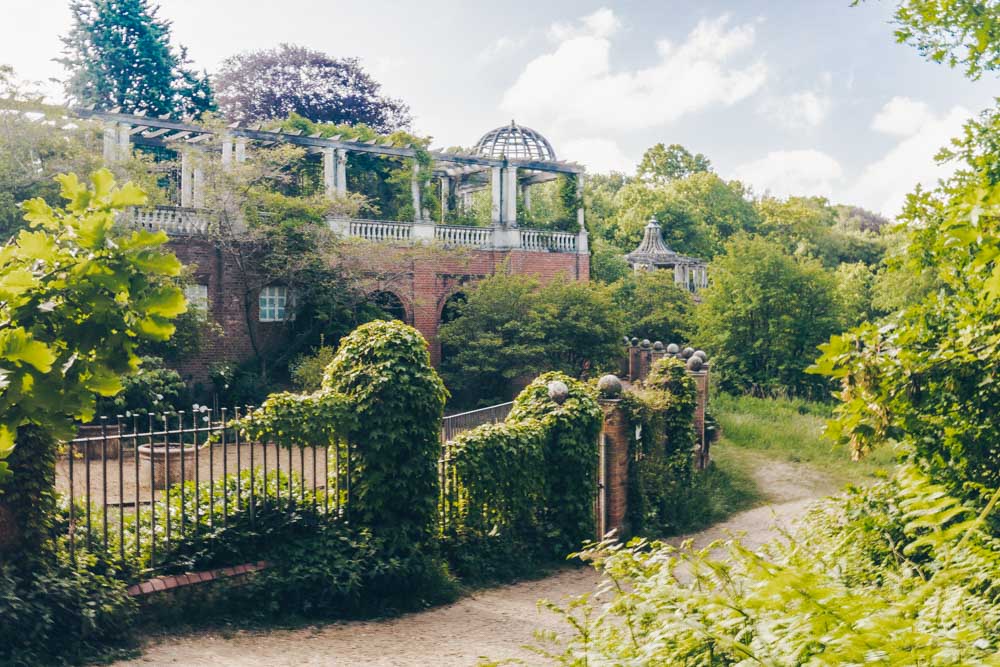
An 800-foot raised Edwardian walkway on the Golders Green edge of Hampstead Heath, built by Lord Leverhulme for garden parties using spoil excavated from the Northern line. It is half-collapsed, entirely overgrown and much better for it.
Late June for the wisteria and the roses on the raised walk, on a weekday morning. It went onto the Heritage at Risk register in November 2025 and there is scaffolding on part of it now, with sections fenced. The open half is still worth the walk from Golders Green.
It also closes at short notice in high wind, so check before you make a special trip.
Where: Inverforth Close, NW3 7EX. Free, daily. We walked it properly for our Hill Garden and Pergola guide.
Myddelton House Gardens
E. A. Bowles’s own garden in Enfield, kept more or less as he made it, with a Victorian glasshouse running four climate zones and an alpine meadow.
February, for the snowdrops. Bowles was one of the great snowdrop collectors and this is the best February garden within the M25, at a point in the year when nothing else on this list is worth the journey. The rock garden restoration is underway, so expect some fencing.
Where: Bulls Cross, Enfield, EN2 9HG. Free, £3 to park. Daily 10am to 4pm. No dogs.
The Phoenix Garden
A community wildlife garden behind the Phoenix Theatre, thirty seconds off Charing Cross Road, on the site of a wartime bomb crater and then a car park. There is a frog pond in the middle of the West End.
Come on a weekday at lunchtime and bring the sandwich you were going to eat in Soho Square. It is the quietest bench in central London and the difference between the two is about four hundred metres.
Where: 21 Stacey Street, WC2H 8DG. Free, dawn to dusk, seven days.
The Queen Elizabeth Hall Roof Garden
A wildflower roof on top of the Queen Elizabeth Hall, planted originally with the Eden Project and now carrying more than two hundred native species, with a bar in the middle of it and the river below.
It reopened on 1 April 2026 after being shut, so go now while nobody has noticed. Summer evening, step-free from Level 2 of the Royal Festival Hall, and it closes in bad weather.
Where: Southbank Centre, Belvedere Road, SE1 8XX. Free. Tuesday 4pm to dusk, Wednesday to Sunday noon to dusk, closed Mondays.
The Walled Garden, Brockwell Park
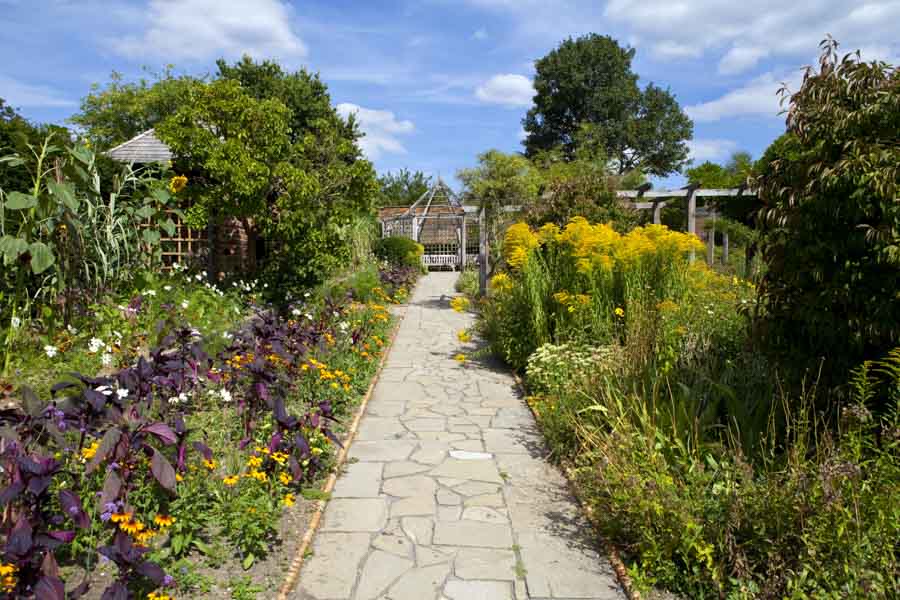
The old kitchen garden of Brockwell Hall, walled, formally planted, and completely hidden from the rest of a park that a lot of south London walks through every day.
June, and find the mulberry. There is a black mulberry inside the walls that is around two hundred years old, and it fruits. The park hosts festivals through the summer but the walled garden is not a festival site, so it stays quiet when the rest of the park does not.
Where: Brockwell Park, SE24 9BJ. Free. Park 7.30am to fifteen minutes before sunset.
St John’s Lodge Garden
A private garden attached to a Regent’s Park villa, opened to the public in 1928 and laid out as a series of outdoor rooms, with a rose garden around a statue of Hylas being pulled into the water.
The entrance is the point: an unmarked covered arbour walk off the Inner Circle with no sign on it. Thousands of people walk past it every summer weekend on the way to Queen Mary’s Gardens. Go in late June, and go through the arbour.
Where: Inner Circle, Regent’s Park, NW1 4NR. Free. Park gates 5am to 8pm. No dogs.
Rembrandt Gardens
A small garden on the Pool of Little Venice, renamed in 1975 to mark Westminster’s twinning with Amsterdam, who sent the bulbs.
Spring, for the tulips the Dutch gave it, and take the bench facing the water. Then walk the towpath towards Camden, which is the actual reason to come to Little Venice.
Where: Warwick Avenue, W9 2PF. Free, daylight hours. More of the canal in our Little Venice guide.
Victoria Embankment Gardens
A long strip of garden on land reclaimed when Bazalgette embanked the Thames, which is why the 1626 York Watergate now stands a hundred metres from the water it was built to open onto.
Come in summer for the tropical border and a deckchair at a bandstand concert. Find the York Watergate first though: standing at it and looking at how far the river now is tells you more about Victorian London than any museum label.
Where: Victoria Embankment, WC2N 6NS. Free, from 8am daily.
Vauxhall Pleasure Gardens
What is left of the eighteenth century’s great pleasure gardens, where Londoners came for supper boxes, fireworks and orchestras from 1661 until 1859. It is now a well-kept public park with a city farm on the edge of it and a new wildlife area.
Come for the history rather than the horticulture, and go in spring for the bulb meadow. It is open 24 hours, which nothing else here is.
Where: Off Kennington Lane, SE11 5HL. Free, always open. The rest of the area is in our Vauxhall guide.
Coombe Wood
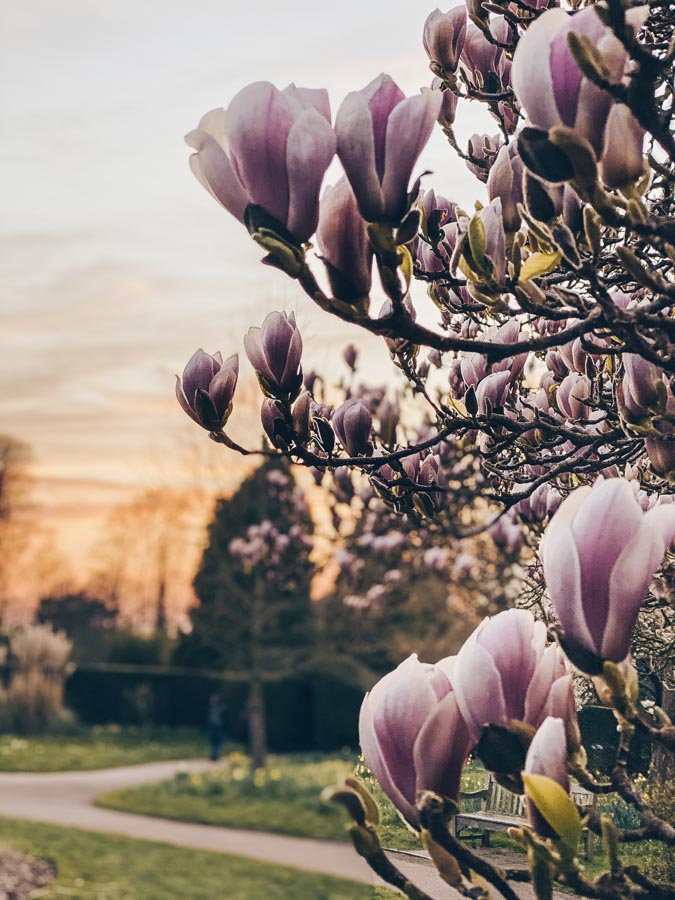
A late-Victorian plantsman’s garden in Croydon, laid out with material collected on Ernest Wilson’s expeditions to China, with a Japanese-influenced water garden and a good tea room in the coach house.
May, for the rhododendrons and azaleas. Be honest with yourself about the state of it: maintenance has visibly slipped since the council’s budget problems and it is not the garden it was five years ago. It is still free, still remarkable in May, and the tram drops you at Lloyd Park.
Where: Conduit Lane, Croydon CR0 5RQ. Free. Cafe 9am to 5pm daily. No dogs.
Palace and stately home gardens
Hampton Court Palace
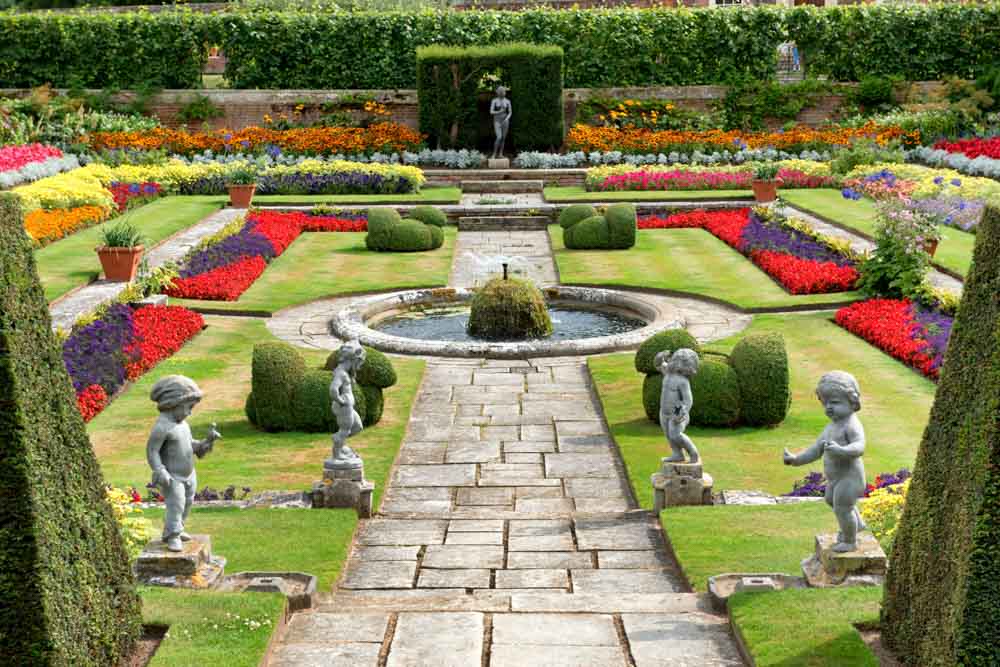
Sixty acres running down to the Thames: the Privy Garden restored to its 1702 planting, the Great Vine, the maze, the Wilderness and the longest herbaceous border in the country.
Come on one of the free gardens-only days and skip the palace entirely. They run 12 to 13 September, 10 to 11 October, 21 to 22 November and 26 December 2026, no ticket needed, and hardly anyone knows they exist. Any other day the gardens come bundled with a £29 palace ticket.
If you do pay, the palace is closed on Mondays and Tuesdays, which catches people out constantly.
Where: East Molesey KT8 9AU. Gardens free on the days above, otherwise £29 off-peak with the palace. Wednesday to Sunday, 10am to 5.30pm. It also heads our guide to west London.
Kensington Palace and the Sunken Garden
A formal Edwardian sunken garden with a lily pond, tiered planting and a paved alcove to look at it from, laid out in 1908 and now more or less the most photographed piece of horticulture in London.
The Sunken Garden is free and you do not need a palace ticket for it. Go in late June or July when the tiers are fully planted and stand in the alcove at the north end rather than pressing against the railings with everyone else.
If you were coming for the palace as well: the Queen’s State Apartments are closed until spring 2027. Palace admission also drops from £24.70 to £19.00 on 11 November, so there is a case for waiting.
Where: Kensington Gardens, W8 4PX. Sunken Garden free, 10am to 5.45pm. Palace £24.70. There is plenty more nearby in our Kensington guide.
Fulham Palace
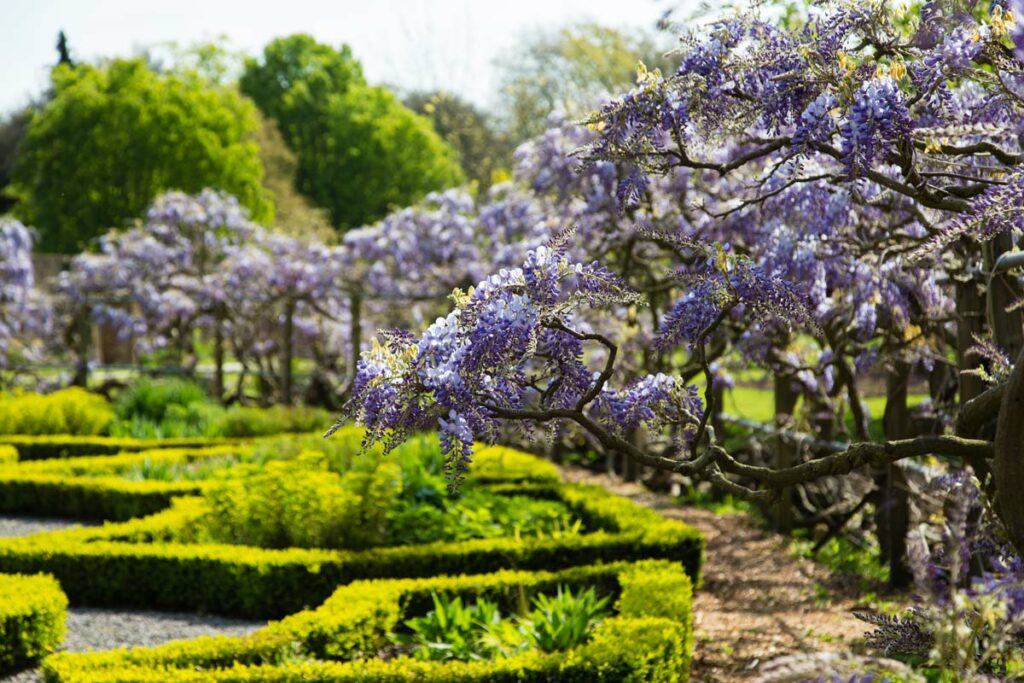
The Bishop of London’s country house for eight hundred years, with thirteen acres of botanic garden and a restored walled garden, glasshouses and vinery behind it. All of it free.
The botanic garden opens at 7am, which is the best fact on this page. Go at seven on a summer morning and you will have thirteen acres beside the Thames entirely to yourself. The walled garden opens later, at 10.15am.
Where: Bishop’s Avenue, SW6 6EA. Free. Botanic garden 7am to 6pm, walled garden 10.15am to 4.15pm. We have the full history in our Fulham Palace piece.
Syon House
Capability Brown’s landscape wrapped around the last surviving ducal residence in Greater London, with Charles Fowler’s 1826 Great Conservatory at the centre of it, which is the building that inspired the Crystal Palace.
Buy the gardens and conservatory ticket at £7 rather than the full house ticket at £16.50. The conservatory is what you came for, it is the best-value entry on this entire list, and the house is only open on a guided tour on Mondays and Tuesdays anyway.
The season ends on 31 October and it only opens Sunday, Monday, Tuesday and bank holidays.
Where: Syon Park, Brentford TW8 8JF. £7 gardens online, £16.50 with the house. March to October, Sunday to Tuesday, 10.30am to 3.30pm.
Ham House
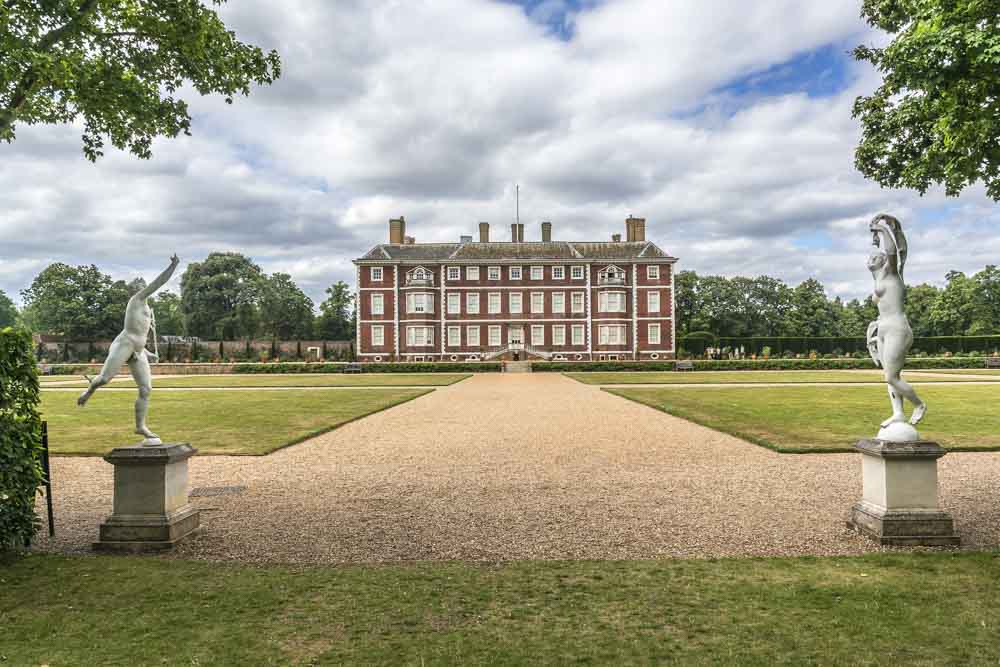
A seventeenth-century garden that survived almost unaltered, which is genuinely rare: the Cherry Garden with its lavender parterre and box hedging, the Wilderness laid out in compartments, and a kitchen garden still growing period varieties.
Come for the garden and treat the house as optional. Summer, for the lavender in the Cherry Garden, and the walk along the Thames path from Richmond is half the pleasure of getting there.
Where: Ham Street, Richmond TW10 7RS. £18 house and garden. Garden 10am to 5pm.
Fenton House
A 1686 merchant’s house on the top of Hampstead with a walled garden behind it: sunken rose garden, formal terraces, a kitchen garden and a 300-year-old orchard of heritage apples and pears.
Take the garden-only ticket at £8.50 and go in September for the orchard. They press the apples, and standing in a 300-year-old orchard with all of London below you is a strange and very good twenty minutes.
It only opens Friday, Sunday and bank holiday Mondays, and it shuts entirely from November to February. Pre-booking was dropped for 2026, so you can now just turn up.
Where: Hampstead Grove, NW3 6SP. £8.50 garden only, £14 with the house. Friday, Sunday and bank holidays, 11am to 4pm.
Eltham Palace
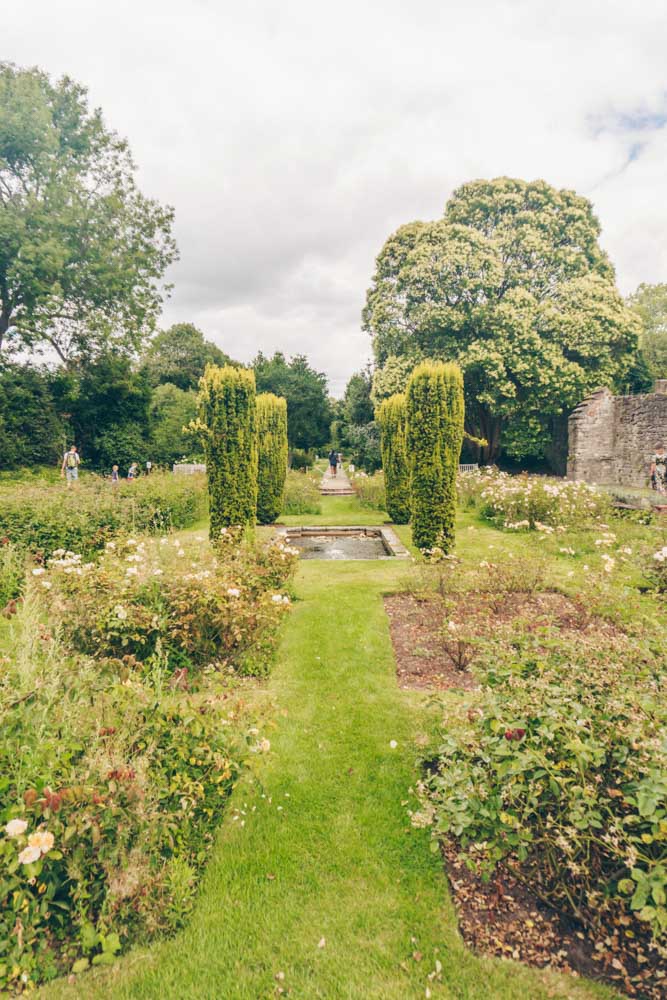
Nineteen acres around a medieval royal palace that the Courtaulds bought in 1933 and bolted an art deco mansion onto: a moat you can walk the whole way round, a rock garden, a sunken rose garden and a 1930s planting scheme largely restored.
Book online by midnight the night before and save about fifteen per cent — £15.00 rather than £18.60 on the door. Cross the fifteenth-century moat bridge first and come at the art deco half from the medieval side, which is the order the building was actually built in.
One practical thing: the lift is out of service, so the upper floors are stairs only.
Where: Court Yard, SE9 5QE. From £15.00 online. Daily 10am to 5pm to 25 October, reduced in winter. There is a longer read on Eltham Palace.
Buckingham Palace garden
Thirty-nine acres behind the palace, with a three-acre lake, more than 350 wildflower species, 200 trees and the Waterloo Vase sitting in the middle of it.
Go before 27 September, when the season ends, and know that the garden-only ticket no longer exists. The garden now comes with the State Rooms at £33 in advance, or £48 for the version that includes the 45-minute guided garden walk, which is the one worth having. September availability thins out on Tuesdays and Wednesdays.
Where: Buckingham Palace, SW1A 1AA. £33 advance with the State Rooms. To 27 September 2026.
Five more nobody puts on these lists
Crossrail Place Roof Garden, Canary Wharf. Free, covered, and split along the Greenwich meridian with the planting on each side matching the hemisphere it sits in. The only garden here that works in the rain.
The Garden at 120, Fenchurch Street. Free, no ticket, no airport-style security, and a better view of the Gherkin than the Gherkin has of itself. The obvious answer when the Sky Garden tickets have gone.
Chumleigh Gardens, Burgess Park. A set of walled almshouse gardens laid out as Islamic, Caribbean, Mediterranean, English and Oriental gardens. Nothing else in London does this.
Culpeper Community Garden, Islington. The physic garden idea done as a community project, named for the seventeenth-century herbalist, with 46 tenanted plots and a herb bed anyone can walk into.
Chiswick House conservatory. The oldest camellia collection under glass in the western world, peaking in February. The one entry here worth a special trip in the dead of winter.
The London x London Take
If you do one thing off this list, make it Fulham Palace at seven in the morning: thirteen free acres by the river with nobody in them. If you do two, add the Barbican Conservatory before January, because it will be 2030 before you get another chance.
The pattern worth noticing is that the free ones are better than the paid ones here, which is not true of most categories in this city. The Sunken Garden beats the palace it belongs to. The Rookery’s white garden predates Sissinghurst. St Dunstan is a bombed church with a fig tree in it and it costs nothing. The money on this list buys you scale, at Kew and Hampton Court, and very little else.
More green space in our guides to London’s best parks, the botanical gardens and the best walks in London.