Rain is not what ruins a trip to London. Footwear is – and almost nobody packs for the amount of walking this city quietly demands. What to pack for London, what to leave at home, and the four bits of admin to sort before you get on the plane.
Most London packing lists are a list of clothes, which is not useful, because you know what clothes are. This one is about what this city specifically does to a visitor: the walking, the layering, the tube in August, the paperwork that did not exist five years ago, and the two or three occasions when London will genuinely turn you away at the door. If you are still planning the trip itself, start with our five-day itinerary or where to stay.
Sort these four things before you pack anything

A UK ETA, if you are not British or Irish
This is the big change since the last time we wrote this guide, and the thing most visitors still do not know about. Almost everyone who previously came to the UK without a visa now needs an Electronic Travel Authorisation before they travel. Americans, Canadians and Australians have needed one since January 2025; EU and other European visitors since April 2025.
It costs £20, it is valid for two years or until your passport expires, and it lets you come and go as often as you like for stays of up to six months. Applications usually come back within minutes through the UK ETA app, but the Home Office asks for at least three working days, so do it when you book rather than the night before.
British and Irish citizens do not need one, nor does anyone who already holds a visa or UK residence permission.
A contactless card or phone, and not an Oyster
Do not buy an Oyster card. It costs £10.50 that you will not get back, and contactless bank cards and phones get exactly the same fares and exactly the same daily and weekly caps. A single in Zone 1 is £3.10 at peak, £3.00 off-peak, and the daily cap for Zones 1 and 2 is £8.90.
The one exception is if your bank charges a fee on every foreign transaction, in which case thirty individual taps will cost you more than one Oyster top-up. Check before you decide.
- Touch in and out on the tube, Elizabeth line, Overground, DLR and national rail. On buses and trams, touch in only
- Use the same card or device for the whole journey. In with your phone and out with the plastic and you will be charged two incomplete journeys
- Keep your cards apart at the gate. A wallet with two contactless cards in it will read whichever it feels like
- The Heathrow Express is not in the cap. It is a separate premium ticket and the classic visitor trap. The Elizabeth line goes to the same place, takes fifteen minutes longer and counts towards your daily cap
- Apple Pay Express Mode works on TfL, so you can tap without unlocking, and it keeps working for up to five hours after your battery hits Power Reserve
Travel insurance, and a GHIC or EHIC if you have one
A&E and GP consultations are free to anyone in the UK regardless of nationality or paperwork. Beyond that, overseas visitors are billed at 150 per cent of the NHS tariff, which adds up quickly.
EU and Swiss visitors can use a valid EHIC for medically necessary treatment, including for pre-existing conditions. What it does not cover is getting you home, and a medical repatriation flight is the genuinely expensive bit. The government’s own guidance says the card is not an alternative to travel insurance. Pack both.
A plug adapter, type G
Three rectangular pins, 230 volts, 50 hertz. Phone and laptop chargers are almost always dual voltage and will be fine with a simple adapter. Anything from a 110V country with a motor or a heating element in it, hairdryers and straighteners above all, needs a converter rather than an adapter or it will die loudly in your hotel bathroom.
Shoes, because this is the bit people get wrong

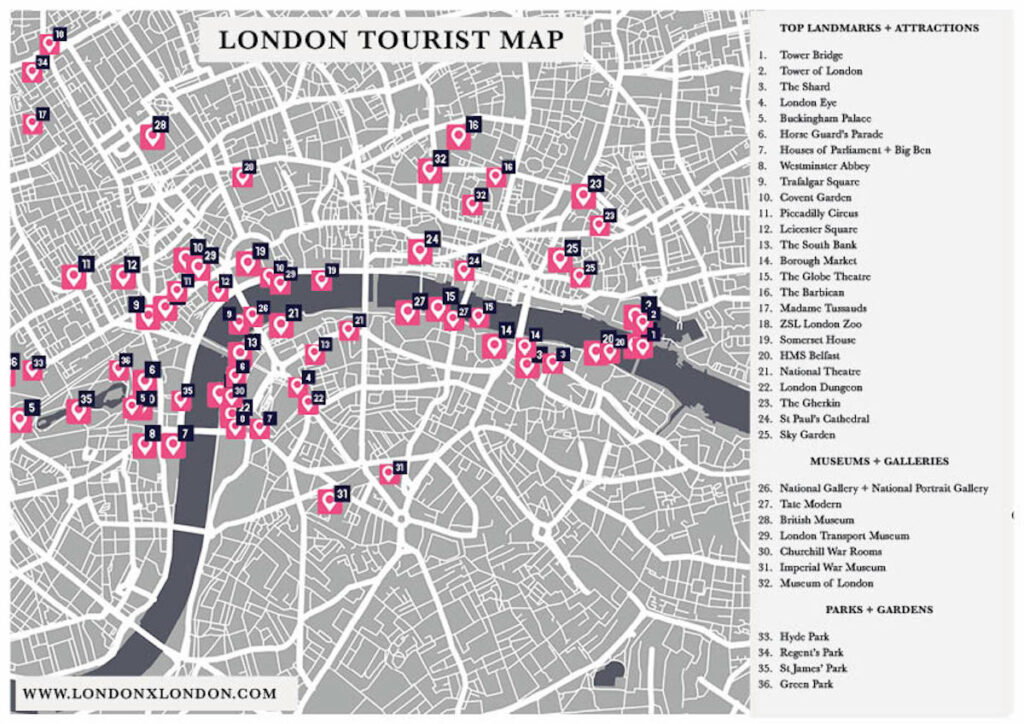
You will walk further here than you plan to. London’s tube map is famously not to scale, and the classic mistake is taking the Piccadilly line one stop from Covent Garden to Leicester Square, which is a 260-metre walk on the surface. Most visitors end up doing fifteen to twenty thousand steps a day without meaning to, and more if you are working through one of our self-guided walks.
Pack one pair of properly broken-in walking shoes or trainers you have already worn for a full day, and one pair that will get you into a restaurant. That is it. The third pair you are considering will stay in the suitcase.
Pavements here are uneven granite, York stone and cobbles in patches, and they are wet more often than they are dry. Leather soles are a bad idea in November. Our sister site has a longer breakdown of what makes a good walking sandal if you want the detail.
Layers, and the coat question

London weather is not extreme, it is indecisive. The Met Office thirty-year averages put summer highs at 23 degrees and winter lows at just under 3, which means the city spends most of the year somewhere in the middle and frequently visits both ends of a range in one afternoon.
The practical answer is three light layers rather than one heavy one: a t-shirt or shirt, a cardigan or light knit, and something windproof over the top. Pubs, restaurants and the tube are all heated aggressively in winter and air-conditioned unevenly in summer, so you will be taking things off and putting them back on all day. A coat with pockets deep enough to stuff a scarf into is worth more than a beautiful one.
For winter specifically: a proper coat, thermals if you feel the cold, gloves, a hat and a scarf. London’s cold is damp rather than sharp, which makes 5 degrees here feel worse than 5 degrees somewhere dry.
The umbrella argument
London gets rain on around 110 days a year, but rarely for long – the showers here are short, frequent and easy to wait out in a pub. That is roughly one day in three, and it is almost always light. The reputation comes from frequency, not volume: it rains here more often than in Rome and considerably less, in total, than in Miami.
Which means a small umbrella that lives in your bag is correct, and a large golf umbrella is not. London pavements are narrow and crowded, and a big umbrella makes you the most disliked person on Oxford Street. A hooded waterproof is honestly better than either, because the rain here is usually accompanied by enough wind to invert anything with spokes.
If you are here in a genuinely wet week, our guide to London in the rain has what to do with the day.
Season by season
Spring, March to May
Average high 15 degrees, low 6, and rain on about eight days a month. The most changeable season here: genuinely warm afternoons and genuinely cold mornings, sometimes in the same week.
Pack a water-resistant jacket, ankle boots rather than sandals, and do not put the knitwear away. Our seasonal guides if you want a sense of what is on.
Summer, June to August

Average high 23, low 13, and it is drier than you would expect, with rain on about eight days a month and July one of the two driest months in the calendar. It also occasionally does 33 degrees for four days, and the city is not built for it.
- Nothing you cannot walk in. Heat plus fifteen thousand steps plus unforgiving pavements is how blisters happen
- Chub rub tights or cycling shorts under dresses, which is the single most useful thing on this list for anyone who has spent a July day regretting not having them
- A light jacket anyway. Evenings drop ten degrees and riverside anywhere is colder than it looks
- A refillable bottle. There are free public fountains across the city and most cafes will fill one
Autumn, September to November

Average high 16, low 9, and the wettest stretch of the year by frequency, with rain on about ten days a month and November close to eleven. It is also the best-looking season in London and the one the parks are made for.
A jacket you can layer, comfortable boots, and something for your head. More on what to do with it in our autumn guide.
Winter, December to February
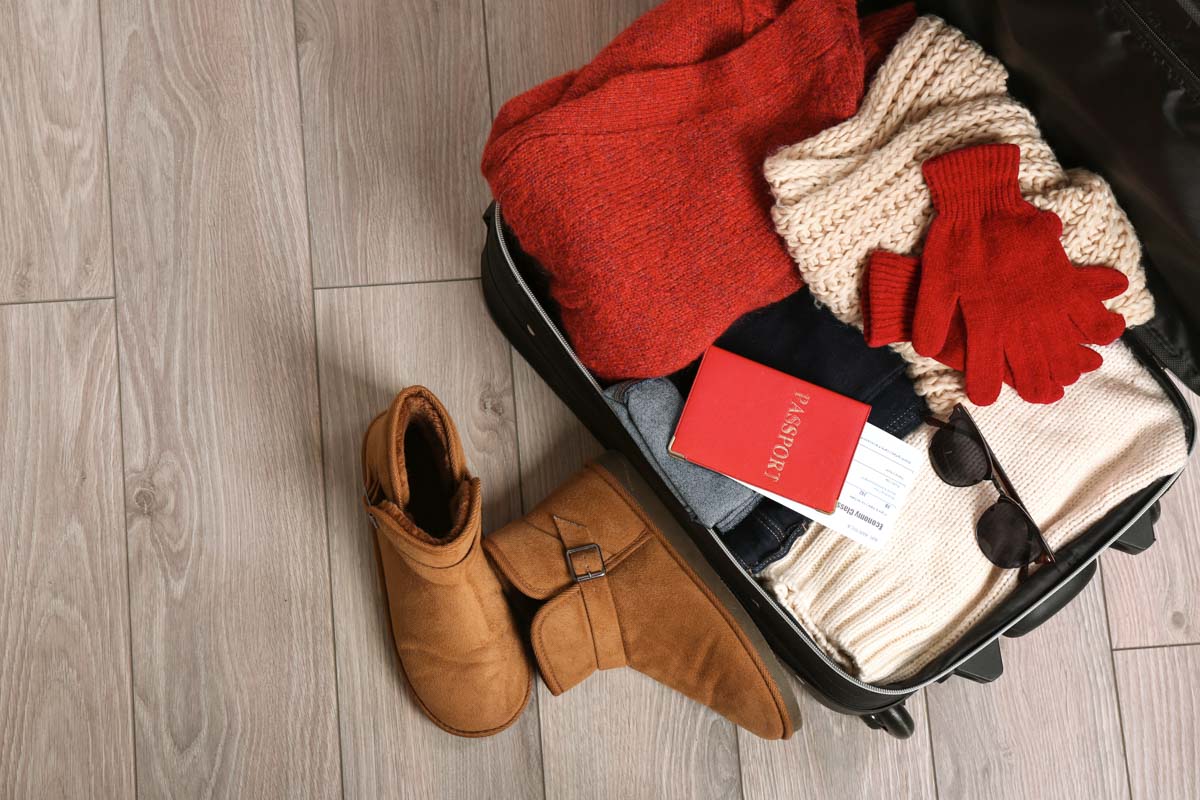
Average high 9, low 3, and rain on about eleven days a month. Snow is rare and usually gone by lunchtime. What you are actually packing for is damp, wind and darkness: it is dark by half past three in December.
A proper coat, thermals, waterproof boots with grip, gloves, hat, scarf, and heavy-duty moisturiser and lip balm, because the combination of cold outside and blasting central heating inside will strip your skin. Our winter guide and December have the rest.
One thing to know about the tube in summer
Four lines have air conditioning: the Circle, District, Hammersmith & City and Metropolitan, all of which run near the surface. So do the Elizabeth line, the DLR and the Overground.
The deep lines do not. The Central, Piccadilly, Bakerloo, Northern, Victoria, Jubilee and Waterloo & City have no air conditioning at all, and on a hot day the Central line routinely runs hotter than the legal limit for transporting livestock. New air-conditioned trains for the Piccadilly line have been ordered and are in testing, but as of September 2026 not one is carrying passengers, and they are not expected in service before the end of the year at the earliest.
The practical upshot: if you land at Heathrow in July, take the Elizabeth line rather than the Piccadilly. It is cooler, it is faster, and it counts towards the same daily cap.
Electronics worth the suitcase space
- A UK eSIM, installed before you fly and live when you land. The resellers all run on EE, Three or Vodafone, so the coverage is identical to a local SIM without the airport kiosk queue. EU visitors should check their own roaming terms first, because post-Brexit UK roaming is no longer automatically free but many plans still make it cheaper than buying anything
- A power bank. Navigation, contactless and photographs will drain a phone by four in the afternoon, and your phone is also your train ticket
- Noise-cancelling headphones, which earn their place on the tube more than on the plane
- A camera, if you use one. Spare battery, spare card. Cold weather halves battery life
- An e-reader for the commute-length journeys, which are longer than the map suggests
What to leave at home
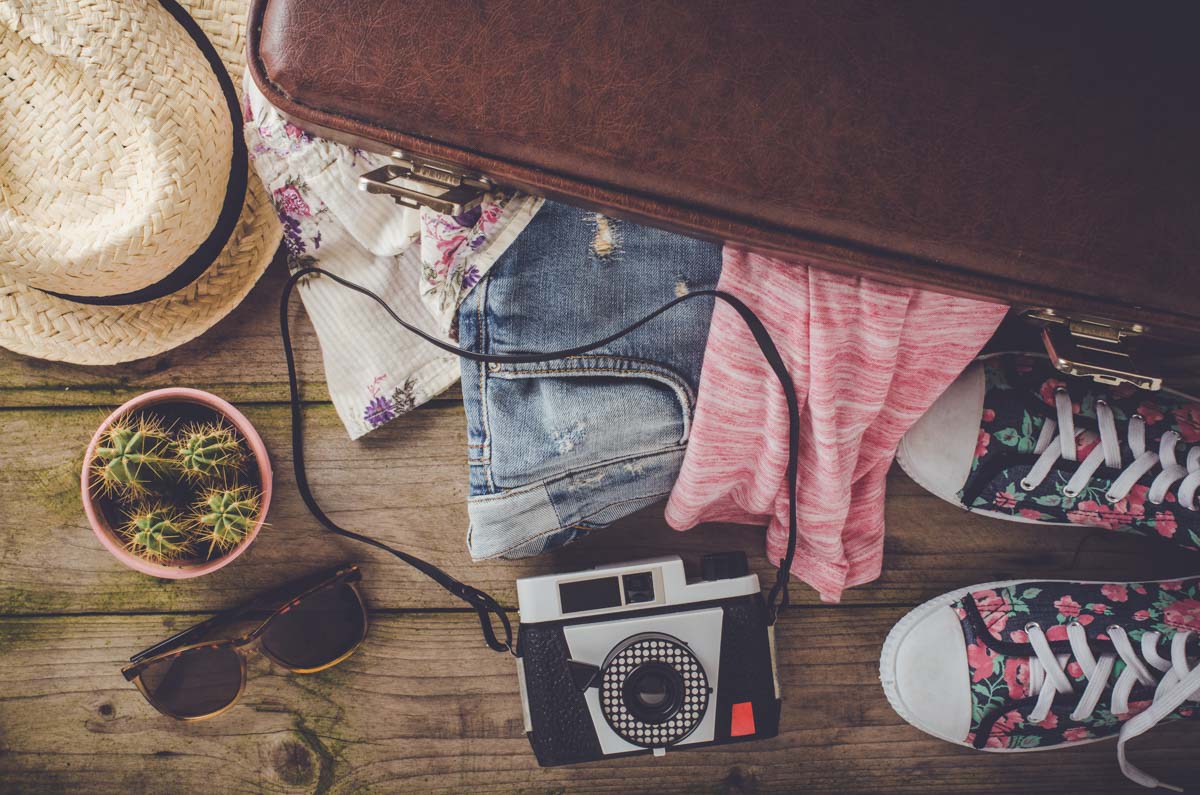
Toiletries, mostly. There is a Boots or a Superdrug within ten minutes of anywhere you will be staying, and a full-size shampoo is the least efficient thing you can put in a suitcase. Bring what you cannot replace and buy the rest here.
Also leave: a hairdryer, which every hotel has; a travel towel, unless you are hostelling; an umbrella bigger than your forearm; and formalwear you are packing on the off chance. See the dress code section below, which is shorter than you think.
The liquids rule now depends on which airport you use
This changed recently and it is genuinely confusing, because it is no longer one national rule.
- Heathrow and Gatwick: up to 2 litres, and you can leave liquids in your bag
- Stansted, Luton and London City: still 100ml, though you can leave them in the bag
Two traps. Metal, insulated and double-walled bottles have to be emptied and often removed even at the 2-litre airports, because the scanners cannot see through them. And the outbound airport’s rule does not travel with you: two litres of duty-free bought at Heathrow can be confiscated at a 100ml airport on the way back or at a connection.
Does London have a dress code?
Broadly, no. Whether you have one day, two or a week, London is smart casual almost everywhere and considerably less formal than Paris or Milan. You can eat at most of the best restaurants in this city in good jeans and you will not be the worst-dressed person in the room.
The exceptions are narrow and specific. The Ritz requires a jacket and tie for men in the Restaurant and for afternoon tea, and bans jeans and sportswear for everyone, which makes it the one venue in London that will force a tie into your suitcase. Mayfair members’ clubs like Annabel’s ban jeans and trainers after 7pm, though you need a member to get in anyway. The Savoy, despite its reputation, has no formal dress code at all and only bars sportswear and football shirts.
So: pack a tie only if you have booked the Ritz. Otherwise one outfit you would happily wear to a good dinner will cover everything, including the city’s swankier secret bars.
The actual list

Assuming a week, carry-on or a small case, any season.
- Documents: passport, ETA if you need one, travel insurance details, GHIC or EHIC, booking confirmations saved offline
- Money: contactless card and a backup card, plus a list of free things to do for the days you would rather not spend anything. Cash is close to optional here, though a few market stalls and old pubs still prefer it
- Bag: one case plus a day bag that zips shut. A printed or downloaded London tourist map in it is more reliable than signal on the deep lines. Pickpocketing on the tube and around Oxford Street is opportunistic and a zip solves most of it
- Shoes: one walking pair, broken in. One smarter pair
- Clothes: three light layers you can mix, one jacket appropriate to the season, one dinner outfit
- Weather: compact umbrella or a hooded waterproof. Both if it is November
- Tech: type G adapter, power bank, cables, eSIM installed before you fly
- Toiletries: only what you cannot buy here, in whatever size your departure airport allows
- Small stuff: painkillers, plasters for the blisters you will get, sunglasses, a refillable bottle
Packing cubes are worth it if you are taking day trips out of London or moving on elsewhere, and pointless if London is your only stop. Our sister site has more on choosing carry-on luggage.
Once you are here, our London travel tips has the practical stuff, tipping in London covers the etiquette, and quirky and unusual things to do is worth a look if you want the city beyond the obvious.
The London x London Take: The honest version: London asks very little of your suitcase and a great deal of your feet. Spend the money on shoes and nothing else. The two things that will actually change your trip are getting your ETA sorted when you book rather than the week before, and taking the Elizabeth line in from Heathrow instead of the Piccadilly. Everything else on this page is a detail, and the Unusual London book will tell you what to do once you have unpacked. And leave the big umbrella at home, because there is no faster way to be identified as a visitor than taking out a golf umbrella on a crowded pavement in a light drizzle that Londoners are simply ignoring.