Welcome to London x London’s Canary Wharf Guide: your guide to the best bars, restaurants and things to do in this East London neighbourhood.
Canary Wharf sits on the Isle of Dogs, in the London Borough of Tower Hamlets, jutting into a bend of the Thames in east London, with Poplar to the north and Greenwich visible across the river to the south.
Canary Wharf takes its name from a single dock berth, number 32 on the West Wood Quay of the Import Dock, where ships unloaded fruit from the Canary Islands from 1937. Within 60 years, that berth had given its name to one of the most recognisable financial districts in the world. The West India Docks that preceded it were, in 1802, the busiest shipping port on earth. By the 1980s they were derelict, and when the skyscrapers started rising, local residents marched around the island carrying a coffin to symbolise the death of their community.
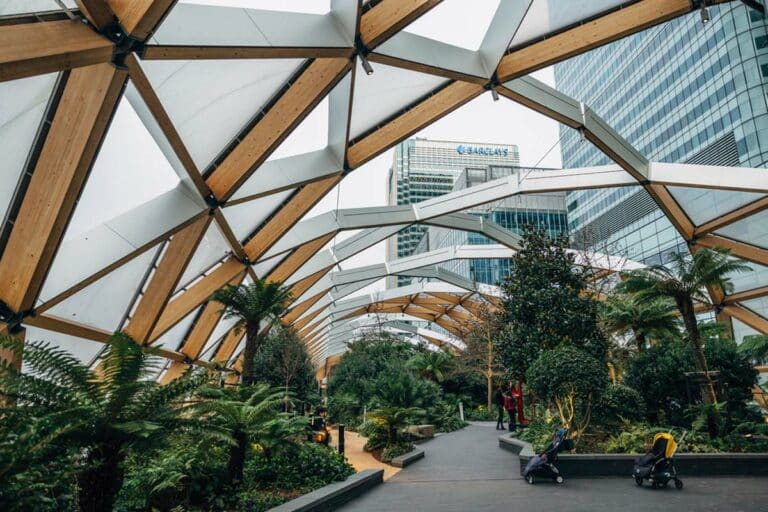
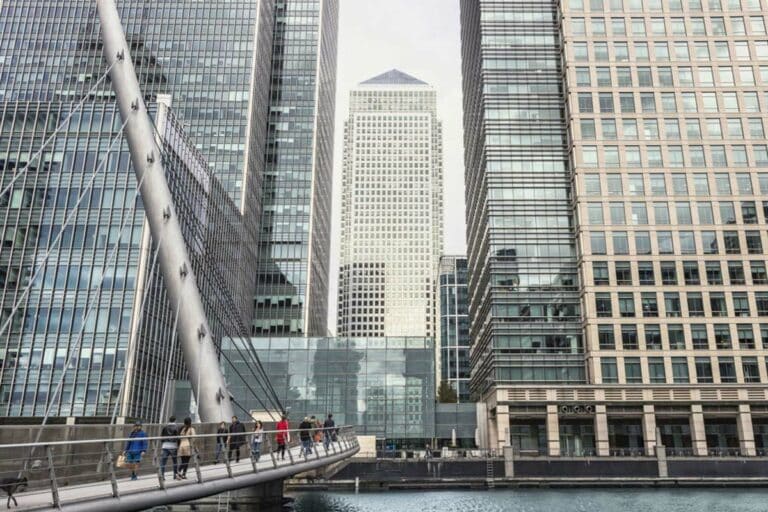
That tension between old East London and the new financial city has never quite resolved itself, and that’s part of what makes Canary Wharf interesting to visit rather than just to work in. The Museum of London Docklands, housed in a Georgian sugar warehouse from 1802, tells the full story. The roof garden above Crossrail Place is one of London’s most unexpectedly beautiful spaces. Seals have been spotted in the North Dock. And the Jubilee line station is large enough to lay One Canada Square down inside it, which says something about the scale of ambition that built this place.
Glass towers, dockland history and surprisingly good waterside walks
River bus: Canary Wharf pier (Thames Clipper services).
Buses: 135, 277, D3, D7, D8.