Welcome to London x London’s London Bridge Guide: your guide to the best bars, restaurants and things to do in this South London neighbourhood.
London Bridge sits on the south bank of the Thames in the London Borough of Southwark, sandwiched between Bankside and Bermondsey with Borough Market at its centre and the Shard rising above the station.
London’s most historically significant neighbourhood manages to be simultaneously one of its oldest and one of its most contemporary. Which is quite a trick.
Most people walk across London Bridge without giving it much thought. It’s a fairly unassuming concrete box girder, opened in 1973, and it doesn’t invite lingering. This is a shame, because the bridge it replaced had 300 houses on top of it, including a chapel, a palace and, for several centuries, a rotating display of severed heads on spikes. The heads were dipped in tar to preserve them against the weather, which tells you everything you need to know about the medieval approach to urban beautification.
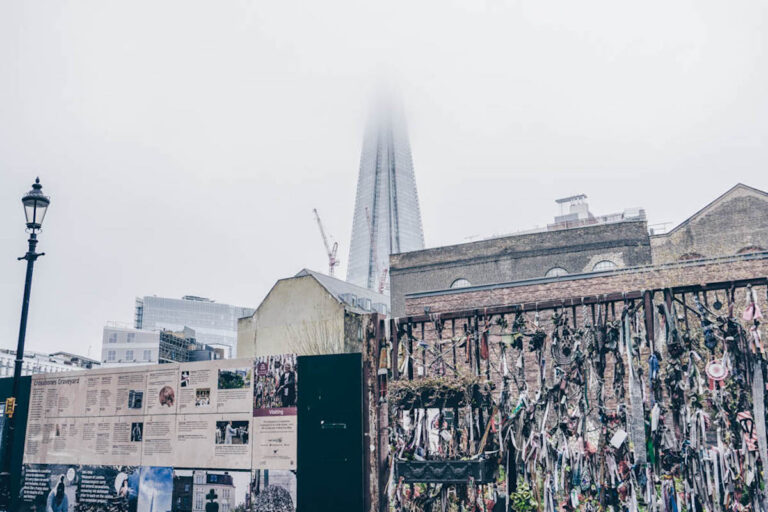
The area around the bridge has been the commercial heartbeat of London since the Romans built the first crossing here around 43 AD, making it the oldest neighbourhood in the city and, arguably, the place where London itself began. Everything spread outward from this point. Borough Market has been trading on roughly the same site since 1014, which makes it not just London’s oldest food market but one of the oldest in Britain. The Shard, which now dominates the skyline at 310 metres, opened in 2012 and made this stretch of the South Bank the most recognisable in London’s modern skyline. Borough’s particular genius is that both of these facts feel entirely compatible.
T.S. Eliot used London Bridge in The Waste Land to compare the shuffling morning commuters to the hell-bound souls of Dante’s Inferno. Given the state of the 8.47 to London Bridge on a Monday, this remains extremely accurate.
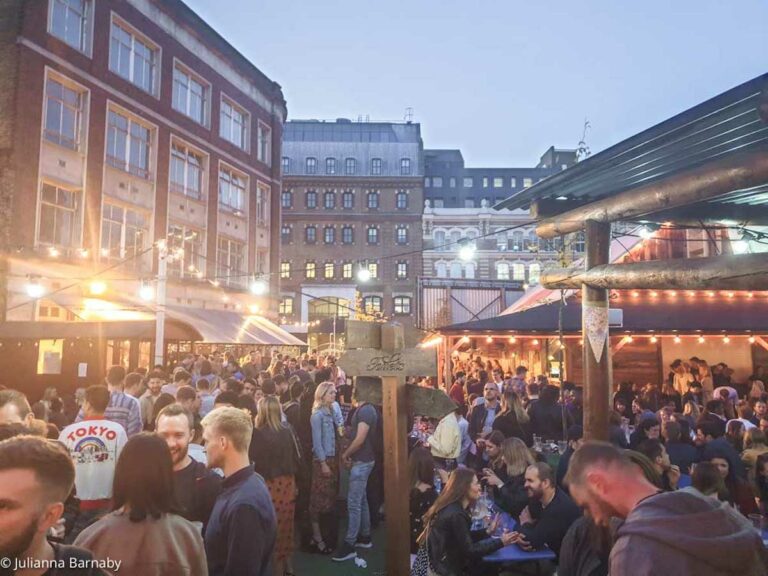
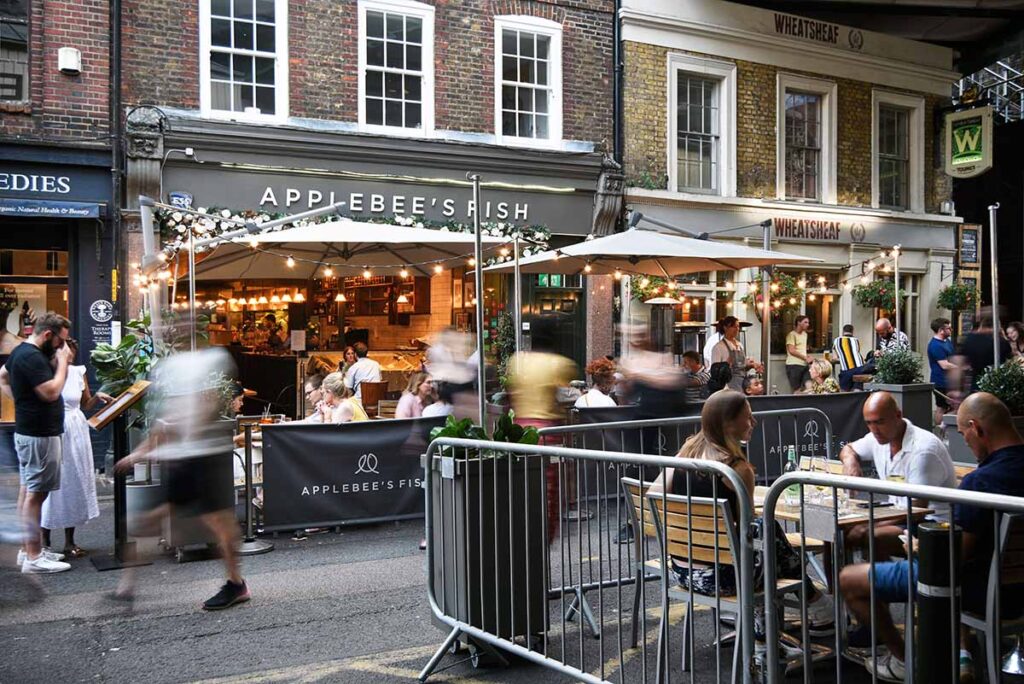
The neighbourhood today is less a single place than a collection of very distinct ones stacked on top of each other. Bermondsey Street, running south from the railway arches, is one of the best eating and drinking streets in London: independent, genuinely good, and still slightly under the radar compared to the crowds at Borough Market. Maltby Street Market, tucked under the railway arches on Saturday and Sunday mornings, is where a lot of the Borough traders started out and where the more interesting ones still go. The White Cube gallery sits on Bermondsey Street and is one of the major contemporary art venues in the city. Southwark Cathedral, squeezed between the market and the railway, is one of the oldest Gothic buildings in London and almost entirely ignored by the people walking past it on the way to buy a scotch egg.
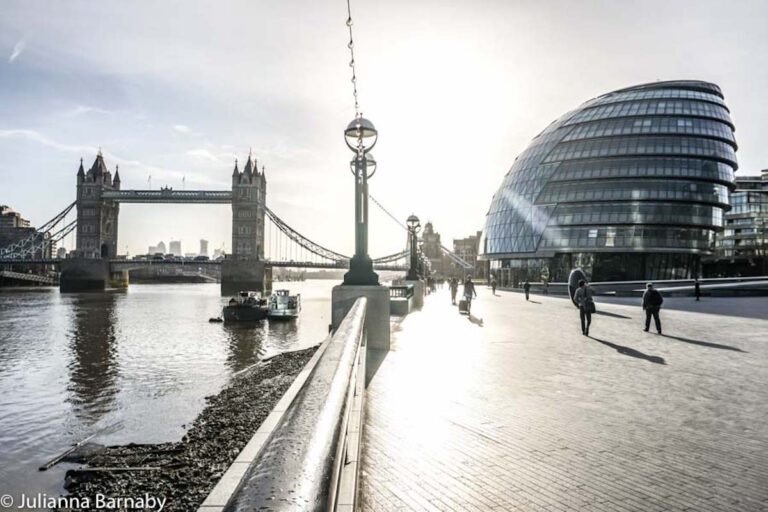
The riverside between London Bridge and Tower Bridge is among the most satisfying walks in the city: HMS Belfast, Hay’s Galleria, the views back towards the City and across to Tower Bridge. Do it on a weekday morning when the tourist numbers are lower and the light on the river is at its best.