Once purely a City of London overspill, Farringdon now packs in historic churches, an old wholesale market and some of the best-kept pubs in town.
We’ll be honest: for years we thought of Farringdon as somewhere you changed trains, not somewhere you lingered. Then we actually started walking it, rather than tunnelling straight through, and realised our mistake.
Wedged between the City and Clerkenwell, Farringdon has one of the odder mixes of history in London: a 900-year-old priory church, a meat market that’s traded on the same spot since medieval times, a museum full of pickled body parts, and a nightclub that’s outlasted most of the venues that used to sneer at it.
It rewards slow walking more than most places nearby, so give yourself an afternoon and don’t rush it. Here’s what we’d put on the list.
The best things to do in Farringdon
Find the Watts Memorial in Postman’s Park
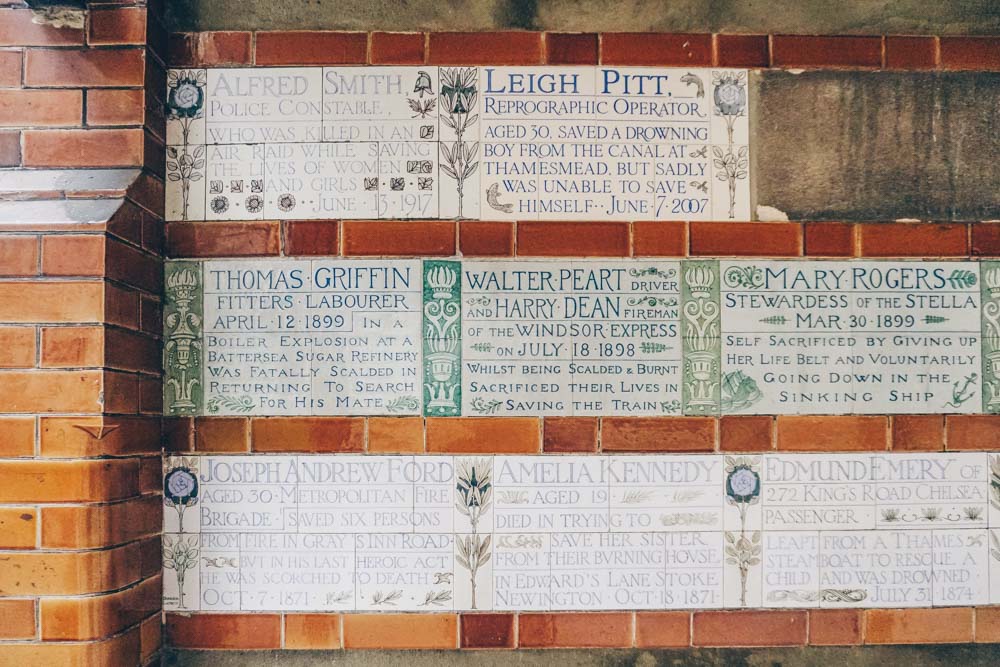
Postman’s Park is a small green space hemmed in by high-rises, easy to walk straight past. Don’t. Head to the back wall and you’ll find the Watts Memorial to Heroic Self Sacrifice, 54 ceramic plaques commemorating 62 ordinary Londoners who died trying to save someone else’s life.
The artist George Frederick Watts campaigned for years to get it built, and it finally opened in 1900 for Queen Victoria’s Jubilee with just four plaques in place. Each one is a tiny, devastating short story: Sarah Smith, the first name on the wall, died in 1863 trying to put out flames on a friend; Alice Ayres died saving her employer’s children from a burning house; Henry Bristow was only eight when he caught fire himself saving his sister. It’s a genuinely moving few minutes, and one of London’s better free things to do if you’re in the area anyway. Film buffs might recognise it too, it’s where Closer opens.
Step inside St Bartholomew the Great
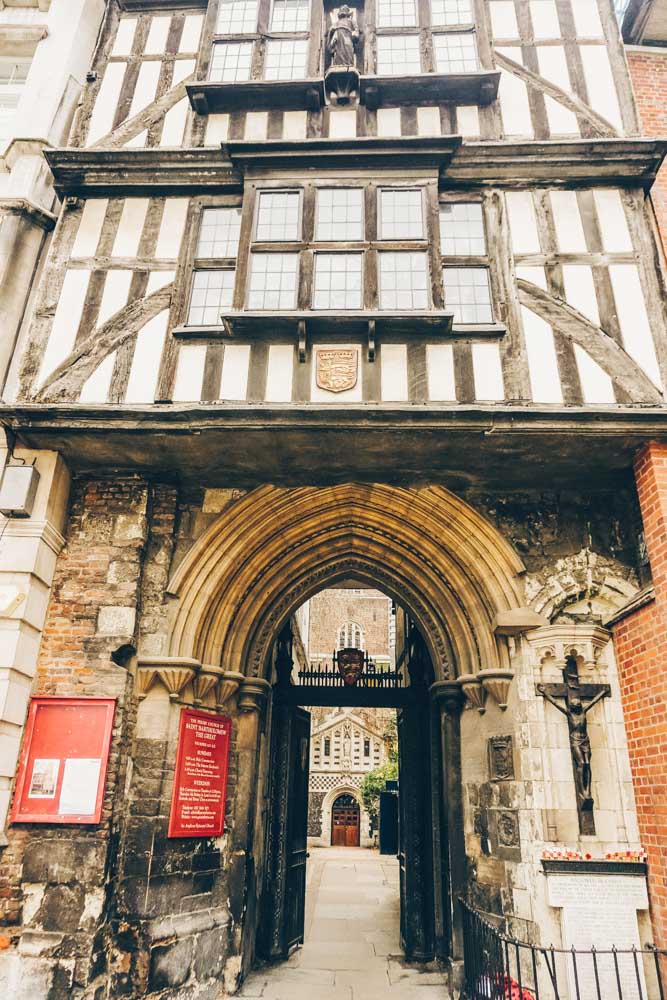
St Bartholomew the Great is, in our book, one of the most beautiful church interiors in London, and one that comparatively few visitors ever find, despite ranking among the oldest buildings in London. It was founded in 1123 as an Augustinian priory, though most of what’s standing dates from the 15th and 16th centuries, with a fair bit of Victorian restoration layered on top.
The oriel window and those solid Romanesque pillars have made it a favourite with location scouts too, it’s popped up in Four Weddings and a Funeral and Shakespeare in Love, among others. There’s a small entry fee for visitors outside service times, worth every penny.
Watch the early hours at Smithfield Market
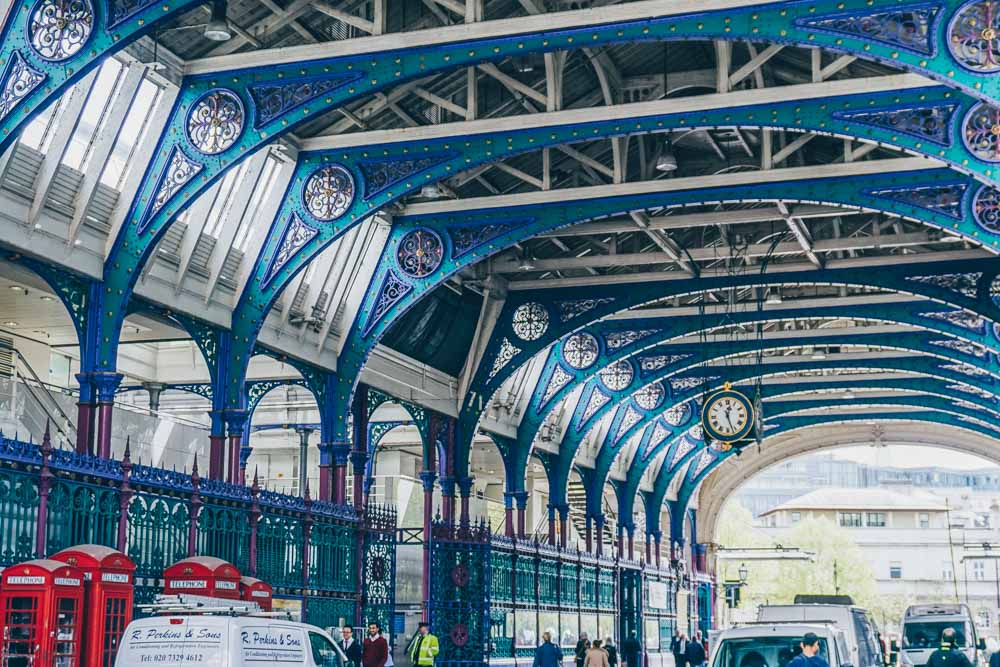
Smithfield Market, officially London Central Markets, is the last wholesale market left in central London, and about as close as you’ll get to a living link with the medieval city that grew up around it. The current cast-iron structure dates to 1868, and its soaring arches and painted ironwork are worth a look at any hour.
See it properly, though, and you go before dawn, when traders are still working and the surrounding pubs keep licensing hours built around them rather than office workers. Wholesale trading is due to relocate out of the City in the coming years as part of a wider market shake-up, so this is one to see sooner rather than later.
Wander the grounds of the Charterhouse
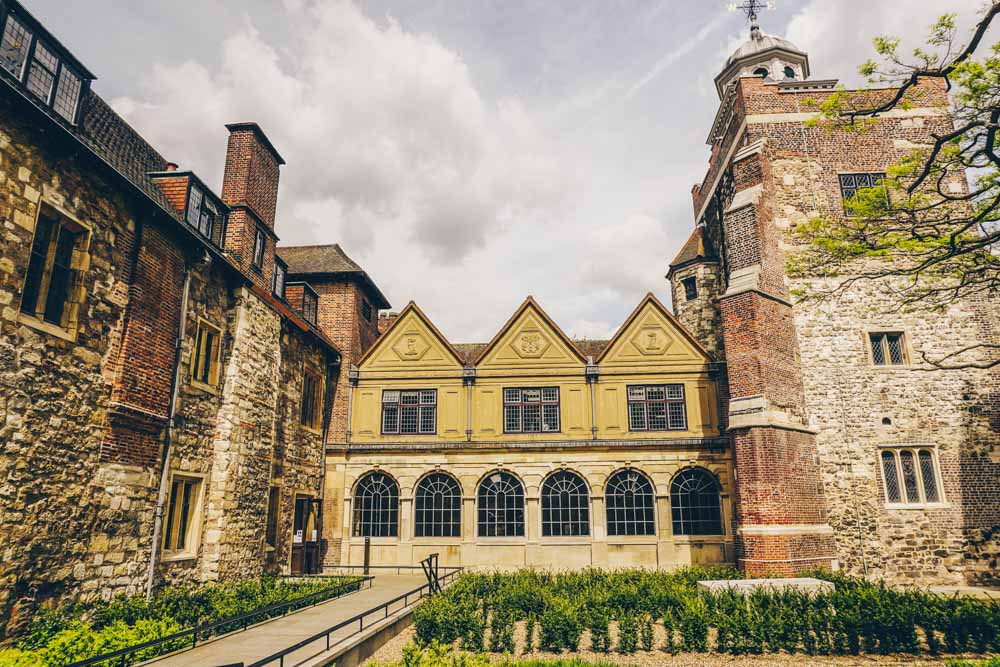
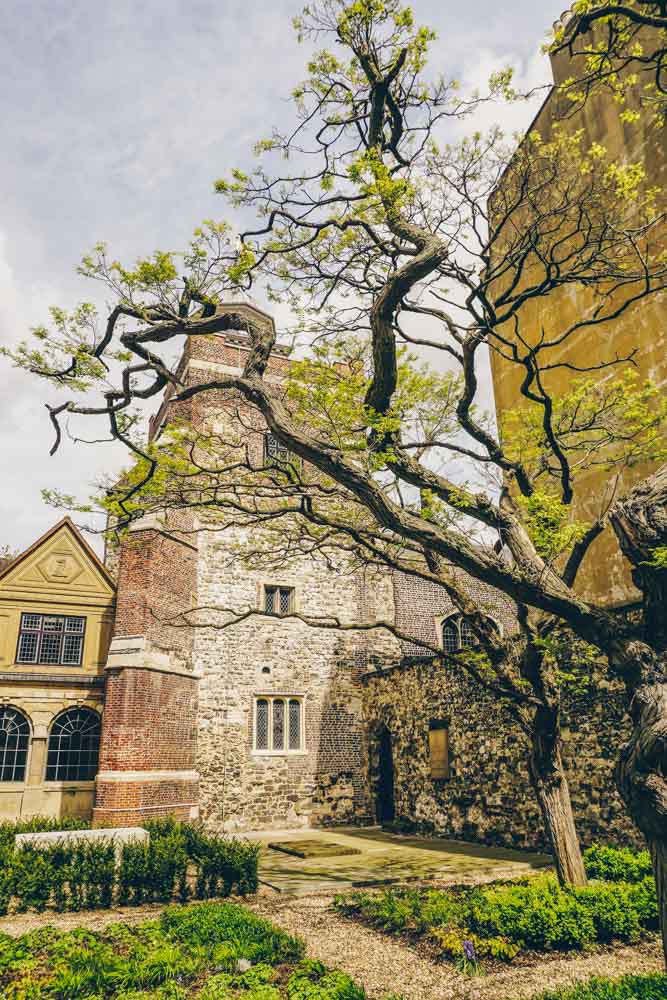
The Charterhouse only opened its doors to the public in 2017, which explains why so few Londoners have been. It’s been a Carthusian monastery, a Tudor mansion, a school and, for the last few centuries, an almshouse for older people, and the small on-site museum tells that whole layered story well, including archaeological finds turned up during the Crossrail dig next door.
Leave time to sit in the English country garden afterwards. It’s an odd, lovely thing to find tucked behind Charterhouse Square.
Brave the cabinets at Barts Pathology Museum
The airy Victorian atrium at Barts Pathology Museum looks almost genteel at first glance, three galleried floors of glass-fronted cabinets. Then you clock what’s inside them: pickled organs, diseased specimens and rows of skulls, part of a teaching collection that’s been amassed since the 1800s.
It’s run by Queen Mary University of London and isn’t a conventional museum you can just turn up to, it opens for occasional public events and talks, on subjects as grim as funerary cannibalism and the history of syphilis. Worth knowing: check its opening days before you make the trip, as it’s closed to casual visitors most of the time.
Spot the Golden Boy of Pye Corner
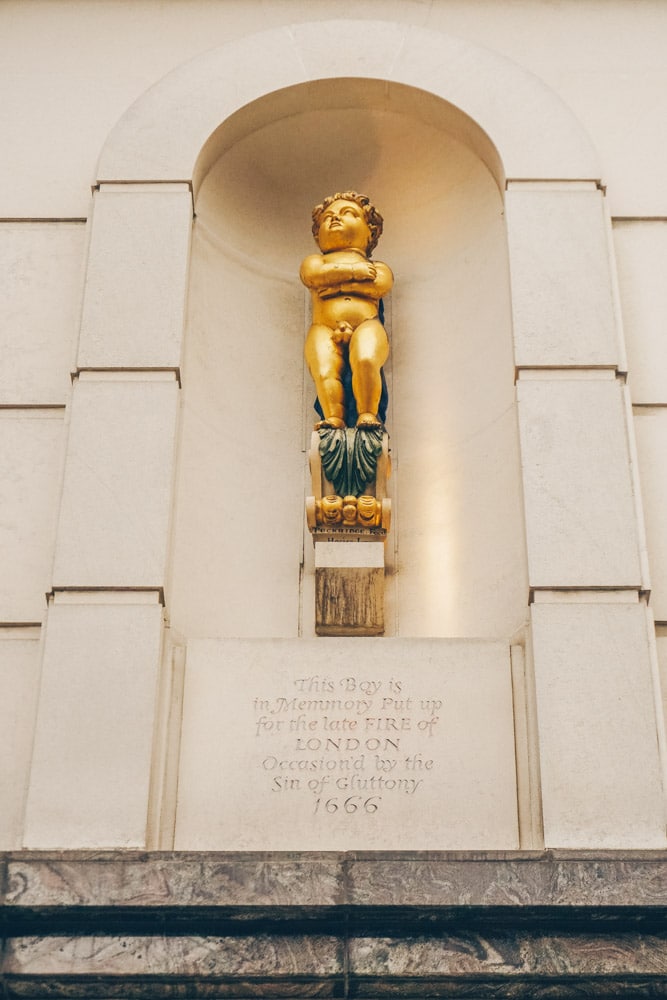
Easy to walk straight past if you’re not looking up, the Golden Boy of Pye Corner is a small gilded cherub, arms crossed, perched above eye level on the corner of Cock Lane and Giltspur Street. He marks the spot where the Great Fire of London finally burned itself out in 1666.
Nobody established how the fire actually started for years, an innocent Frenchman was wrongly executed after falsely confessing, Catholics were blamed as part of an imagined plot, and an astrologer only narrowly talked his way out of a death sentence. Blame eventually settled on a bakery on Pudding Lane and, rather unfairly, on the sin of gluttony generally, hence the inscription at the Golden Boy’s feet: “This Boy is in Memory Put up for the late FIRE of LONDON Occasion’d by the Sin of Gluttony.” One of our favourite bits of weird London trivia.
Take in the Old Bailey
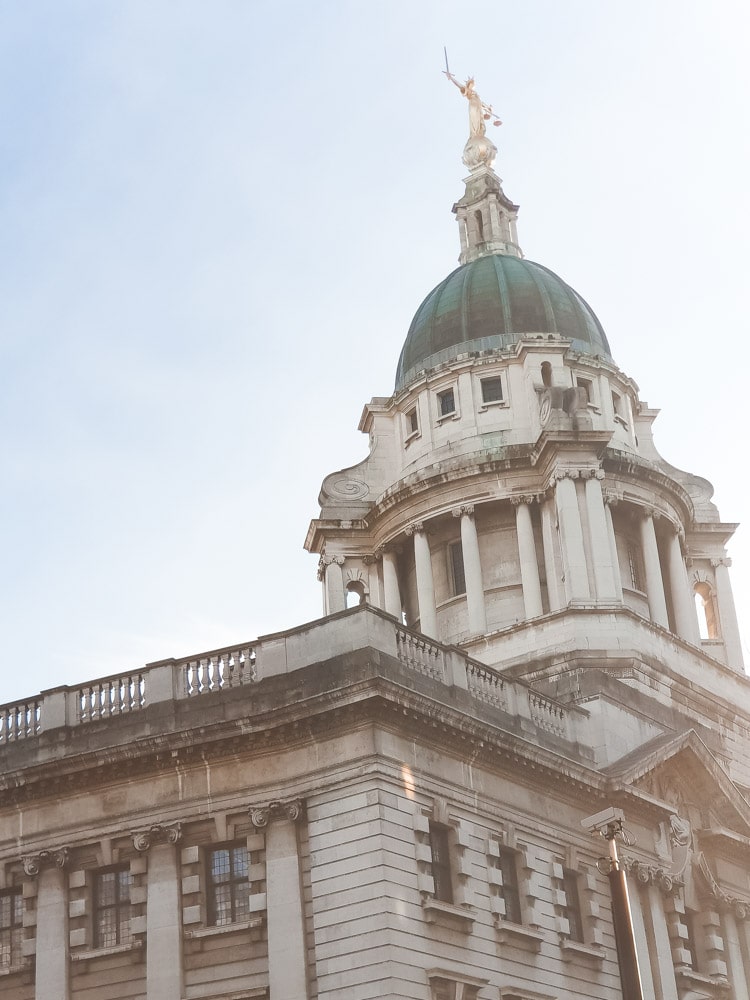
London’s Central Criminal Court has heard more than its fair share of notorious cases across its 19 courtrooms, from the Kray twins to historical trials of Oscar Wilde and Lord Haw-Haw. It sits on the site of the old Newgate Prison and its execution ground, which feels grimly appropriate.
Public galleries are open for anyone wanting to watch a trial in progress, free of charge, though there’s no photography, no bags, and a genuinely strict security process, so build in time.
Learn the story of St John’s Gate
St John’s Gate has a properly rich history for somewhere so few people know about, most of it told through the Museum of the Order of St John, a quiet, easily overlooked museum on site. It traces the story of the Order of St John, which began caring for pilgrims in 11th-century Jerusalem and eventually grew into the modern St John Ambulance.
There are literary connections too, Samuel Johnson worked there and Charles Dickens visited regularly. Exhibits include a bronze cannon gifted by Henry VIII, and guided tours take in a 12th-century crypt beneath the old priory church, one of the oldest structures still standing in London.
Shop and eat at Leather Lane Market
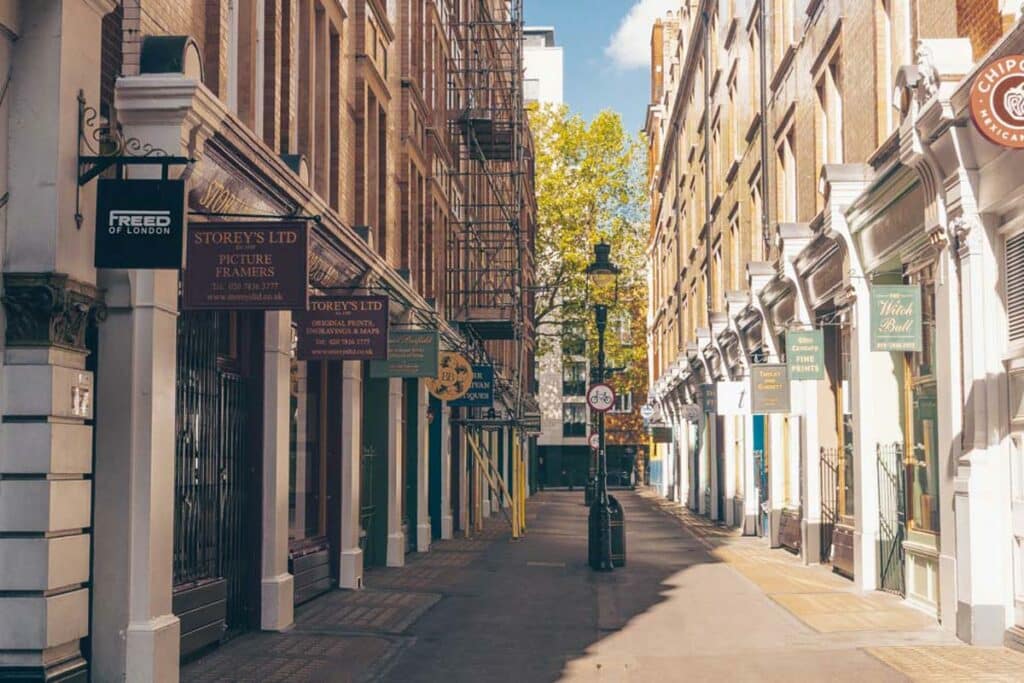
Technically just over the border into Hatton Garden, Leather Lane Market is still one of the few proper street markets left this close to the City. The leather trade that gave it its name is long gone, replaced by an eclectic mix of everyday stalls, a handful of independent sellers and genuinely good street food.
It’s unpretentious in a way a lot of central London markets aren’t any more, worth timing a lunch around if you’re passing on a weekday.
Grab lunch at Cowcross Yards
A couple of minutes from Farringdon station, Cowcross Yards is the area’s street food market, recently revamped and reopened. The line-up rotates weekly and runs lunchtimes on Wednesdays and Thursdays, taking in wood-fired pizza, falafel, Turkish-style sandwiches and Ethiopian stews depending on the week.
It’s a decent barometer of how much Farringdon’s food scene has grown up around the market and station in the last few years, one we’ve tracked in more depth in our full Farringdon and Clerkenwell restaurant guide.
Eat nose-to-tail at St John
When Fergus Henderson and Trevor Gulliver opened St John in 1994, this stretch of Smithfield was considerably rougher round the edges, and hardly anyone in London was using the phrase “nose-to-tail eating”. The restaurant genuinely helped reshape the city’s food scene, and more than three decades on, it’s still one of the best places to eat in this part of London.
The bone marrow on toast is the dish it’s famous for, and rightly so, but the whole menu changes daily and rewards going with an open mind rather than an order in your head already.
Squeeze into the Jerusalem Tavern
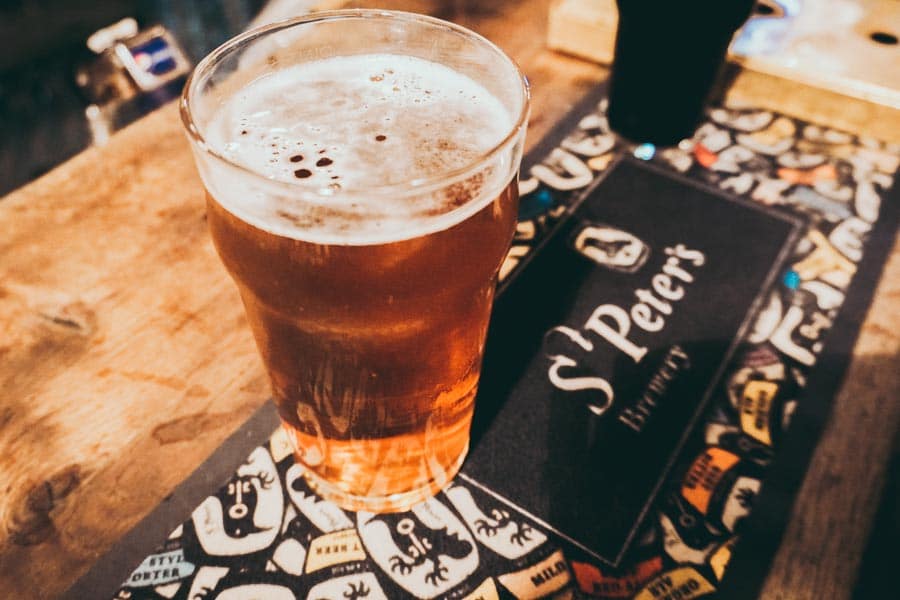
Farringdon has a surprising number of old-looking pubs tucked among its streets, and the Jerusalem Tavern is usually named the best of them. The building dates back to the 1700s, though the pub itself has only occupied it since the 1990s, run by Suffolk’s St Peter’s Brewery, whose wide range of real ales has picked up awards over the years. Seats are minuscule in number, so if you can’t grab one of the handful of tables inside, there’s standing room out front.
If you’re doing a proper pub crawl of the area, we’ve rounded up more of the best pubs in Farringdon and Clerkenwell too.
Dance until dawn at Fabric
Fabric is one of the last of London’s great superclubs, the kind of venue that used to sit at the absolute heart of the city’s late-night scene. It had its licence controversially revoked in 2016 following two drug-related deaths, reopened a few months later after a legal challenge, and has held onto its reputation ever since.
The Bodysonic dancefloor, rigged with transducers that let you feel the bass as much as hear it, is still the reason serious clubbers make the trip. Weekend line-ups lean heavily electronic and techno, check listings before you go as door policy and queues can both be unforgiving.
Catch live music with dinner at The Piano Works
The Piano Works pairs decent food with live music played to the crowd’s requests, singalong energy rather than background noise. A two-course pre-theatre set with a glass of something bubbly is good value if you’re on a schedule, though the à la carte menu, ham hock terrine and steaks included, is worth lingering over if there’s no rush.
Bring song requests for the in-house band and don’t expect a quiet night.
Rally at Bounce Ping Pong
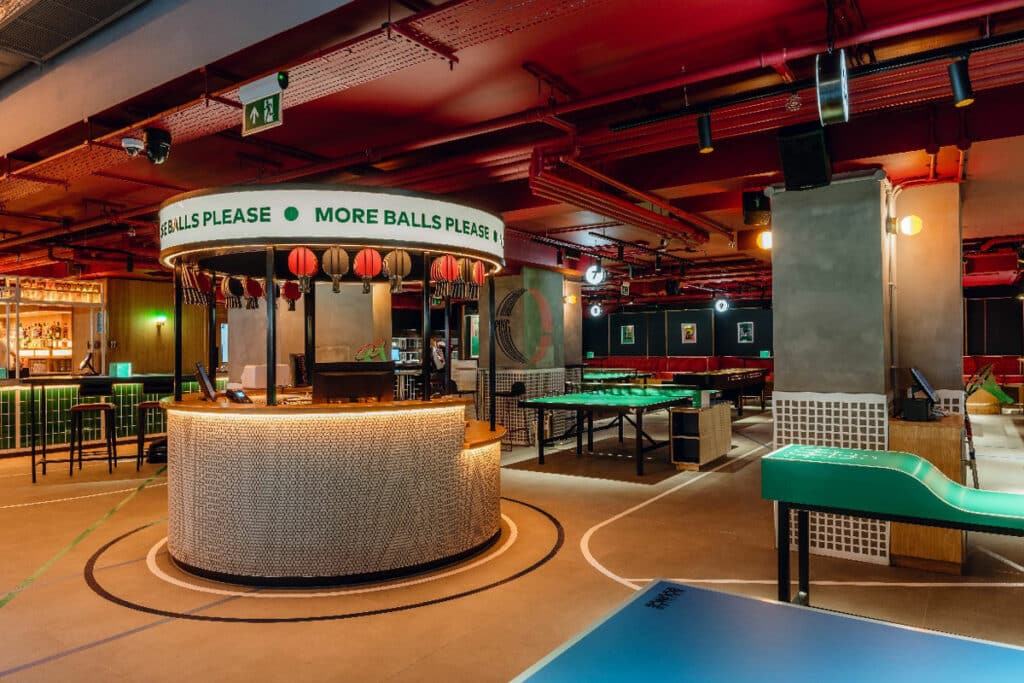
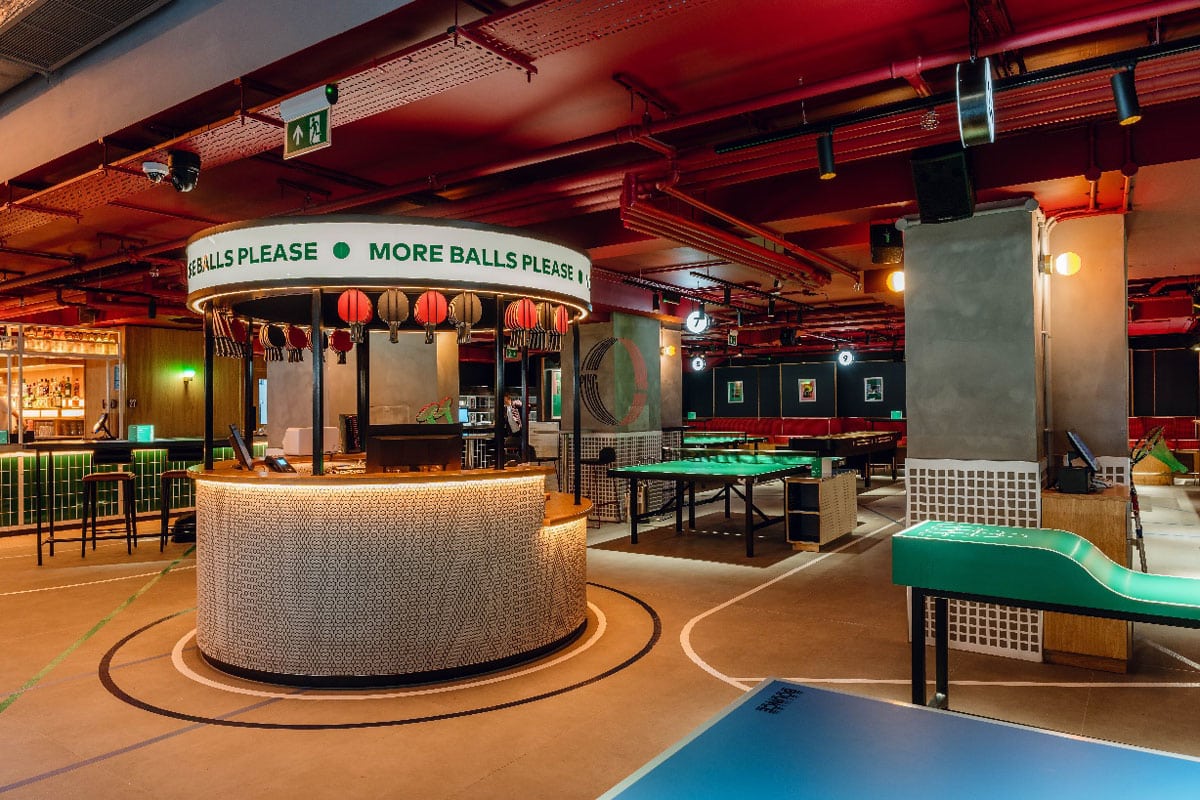
Bounce Ping Pong is a solid bet for a competitive night out, whether that’s with friends, colleagues or on a date, tucked underground not far from Farringdon station. Tables are booked by the hour, and there’s food, drink and screens showing live sport alongside the games. A private room is also available for parties and bottomless brunches, if you’d rather make an event of it.
Make your own pasta at the Pasta Academy
For a proper hands-on afternoon, the Pasta Academy at Pasta Evangelists teaches you how to make pasta from scratch using nothing more than flour, egg and water. Sessions are led by Italian chefs and cover everything from linguine to ravioli, and, crucially, come with unlimited prosecco while you work.
It’s a good rainy-afternoon booking, and you get to eat your homework at the end.