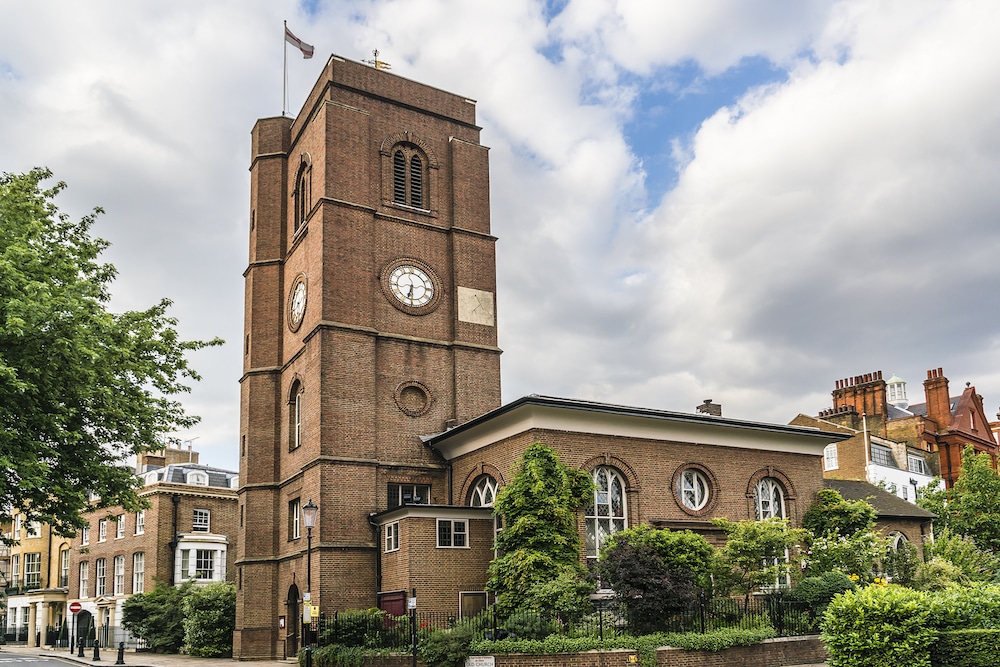
Chelsea’s iconic Cheyne Walk stretches along the River Thames and has long attracted the rich and famous to the area’s impressive mansions.
Although Cheyne Walk takes its name from William Cheyne, Viscount Newhaven, who owned Chelsea Manor until 1712, the first address officially built on the road belonged to none other than Henry VIII. The infamous king lived here on and off with some of his many wives, including Anne of Cleves, for many years.
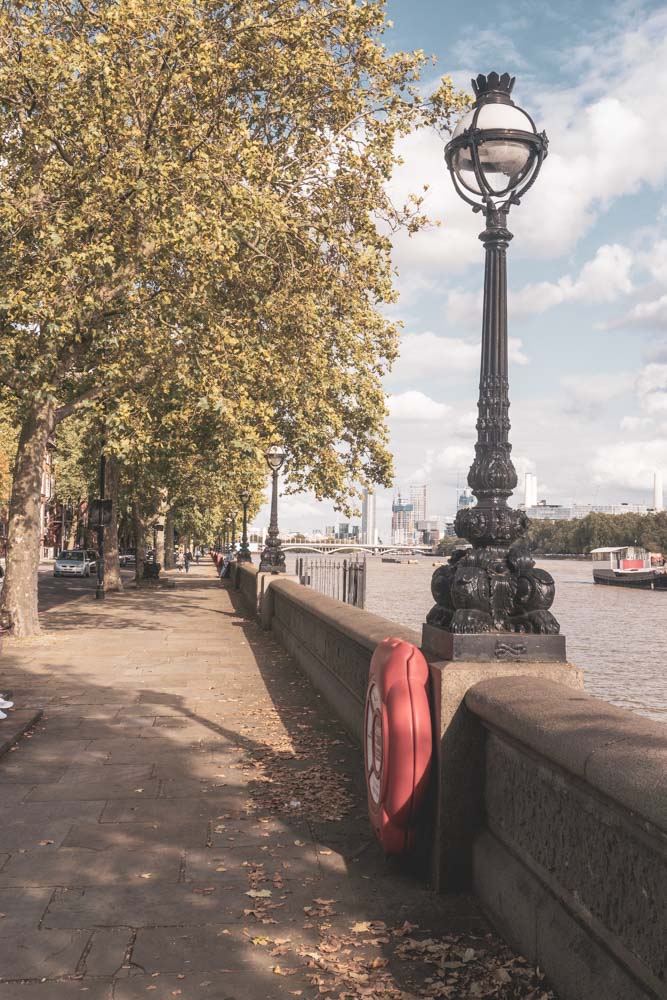
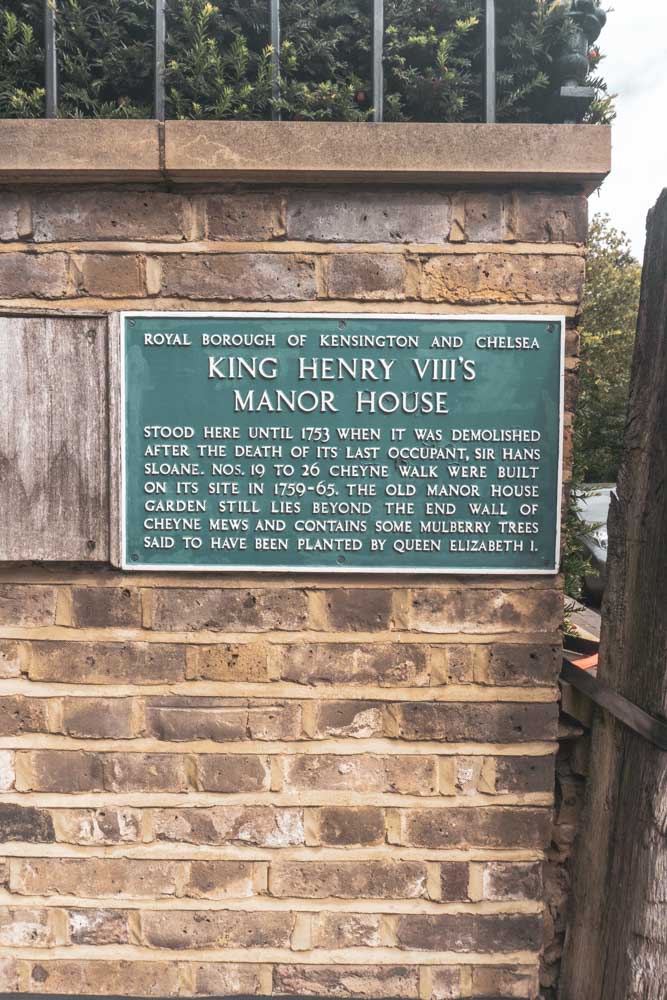
The majority of the houses were built during the 18th century and, at the time, would have actually overlooked the River Thames. That was until Chelsea Embankment was constructed decades later, though some say this enhanced the view.
Luckily, you don’t need to be rich or famous to peruse the road today. Take your time hunting for the blue plaques that highlight previous high-profile Cheyne Walk residents, George Eliot, Ian Fleming and Mick Jagger among them.
Ready to explore Cheyne Walk?
Famous stops along Cheyne Walk
4 Cheyne Walk
George Eliot, whose real name was actually Mary Ann Evans, was a famous Victorian writer and poet known for her works Middlemarch and The Mill on the Floss.
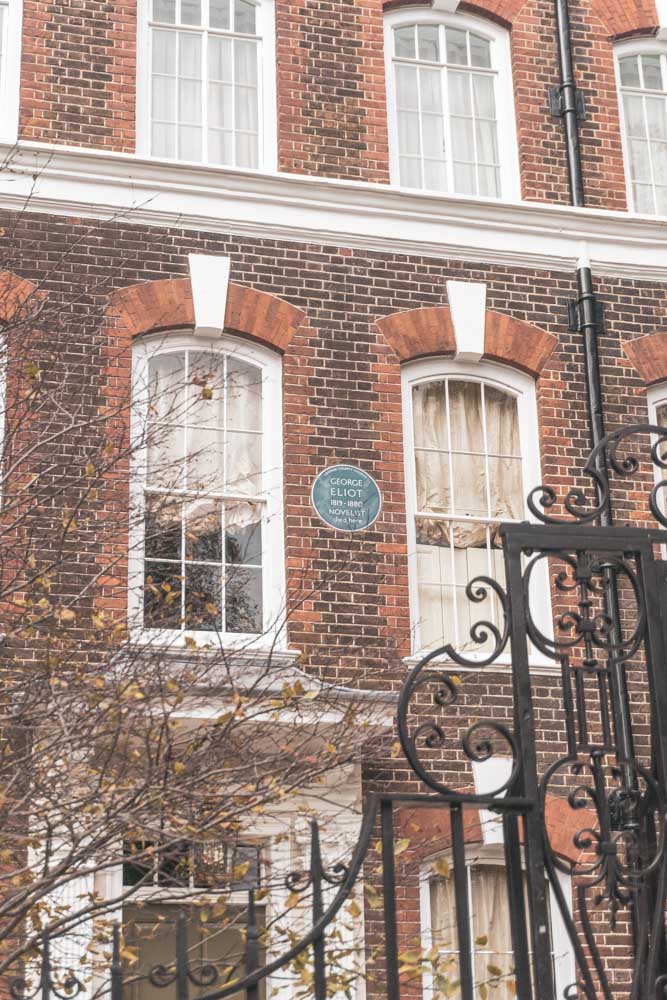
She moved into number 4 Cheyne Walk in 1880, though she only managed to live there for a few weeks before she died as the result of a kidney infection.
6 Cheyne Walk
One of the street’s more unusual residents was an Italian doctor named Domenichetti.
Number 6 is one of the larger plots on Cheyne Walk, and Domenichetti decided it was the perfect place to open a medicinal bath house, where he would claim to cure people of a wide range of illnesses. Despite thousands flocking to the bath house between 1765 and 1782, very few saw even a slight improvement in their condition, leading many residents to believe Domenichetti was, in fact, a massive fraud.
16 Cheyne Walk
This house is famous for being the rather zany abode of artist Dante Gabriel Rossetti for 20 years from 1862.
He moved to Cheyne Walk just after his wife overdosed on laudanum and died. After this, his behaviour was anything but normal, reports of him eating six eggs and half a dozen kidneys for breakfast, as well as obsessively collecting antique furniture, were common. It’s widely believed Rossetti kept kangaroos, wombats and armadillos inside his home, though how he managed to get a kangaroo on the Tube, we’ll never know.
19 Carlyle Mansions
Writer’s Block, as this address is affectionately nicknamed, has housed an unusually dense run of literary residents over the decades. T.S. Eliot lived here for years, and Henry James died in a flat in the building in 1916, a novelist’s row if ever there was one.
48 Cheyne Walk
One of the most famous residents to grace Cheyne Walk was perhaps Mick Jagger of the Rolling Stones. He was said to have purchased the house in 1968 for a cool £50,000 and lived there with Marianne Faithfull, with whom he had a whirlwind romance.
Jagger sold the property in the 1970s, though he’s reportedly since returned to Cheyne Walk after purchasing Isambard Kingdom Brunel’s former home nearby.
91-101 Cheyne Walk (Lindsey House)
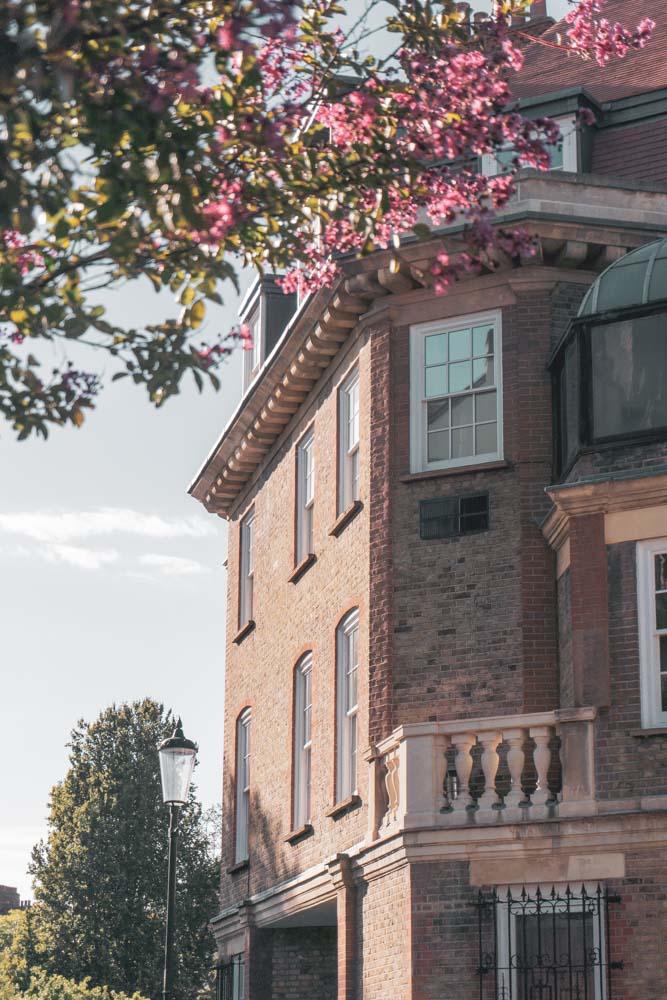
Today, the Grade II listed Lindsey House encompasses the properties of 91 to 101 Cheyne Walk. The building is owned by the National Trust, although it’s tenanted, so it’s not open to the general public.
Still, the history of the house makes it well worth a peek from outside, famous residents have included painter John Martin between 1849 and 1853, as well as James Whistler for 12 years from 1866.
103 Cheyne Walk
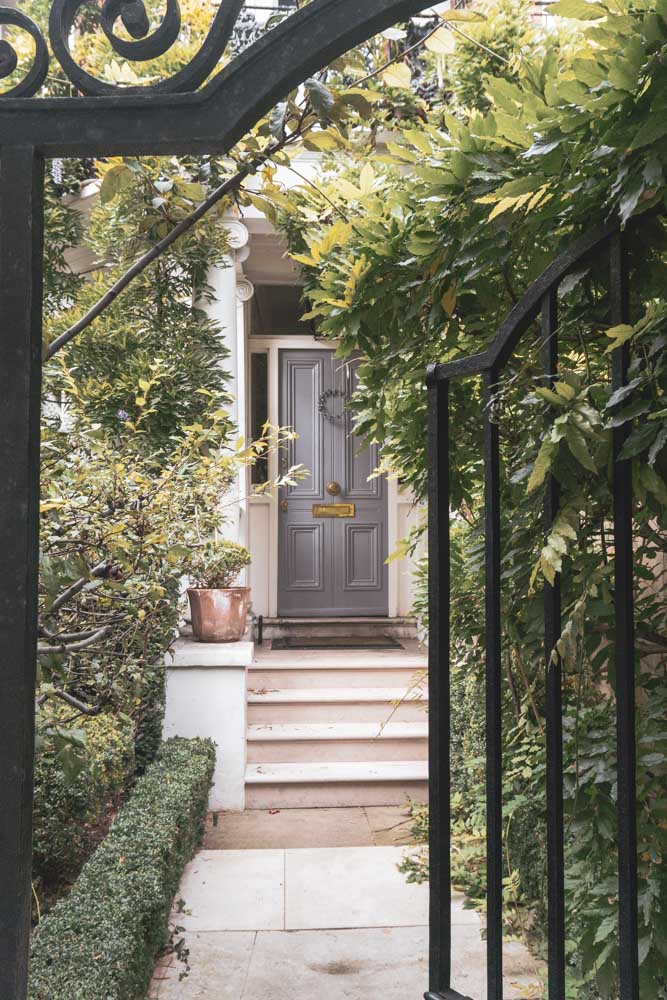
Another Rolling Stone, Ronnie Wood, bought number 103 in 2008 for a whopping £7.25 million. He never actually lived here in the end, and sold the home a few years later.
104 Cheyne Walk
The ultra-sophisticated 104 Cheyne Walk belonged to historian and poet Hilaire Belloc between 1900 and 1905. Originally born in France, Belloc became one of the most successful English writers of the early 20th century.
The house also carries a plaque dedicated to Walter Greaves, the British painter believed to have lived at number 104 in the second half of the 1800s.
122 Cheyne Walk
James Bond author Ian Fleming was another superstar resident, briefly living in a smaller flat on Cheyne Walk before moving to number 122. Cheyne Walk’s literary connections don’t end there either, painter J.M.W. Turner also lived out his final years nearby on the Chelsea Embankment under a pseudonym, and remained a regular at the Cross Keys, a few streets away (more on that below).
Giro’s grave
Not a residence, but worth knowing about all the same. A short walk from Cheyne Walk, in the front garden of the former German Embassy on Carlton House Terrace, sits the grave of Giro, a terrier belonging to Leopold von Hoesch, Germany’s ambassador to Britain in the early 1930s and later a Nazi Party representative. Giro died in 1934 after chewing through a live electrical cable, and his memorial remains the only one in Britain dedicated to a pet owned by a Nazi official, a strange, small footnote in the area’s history.
Restaurants and bars near Cheyne Walk
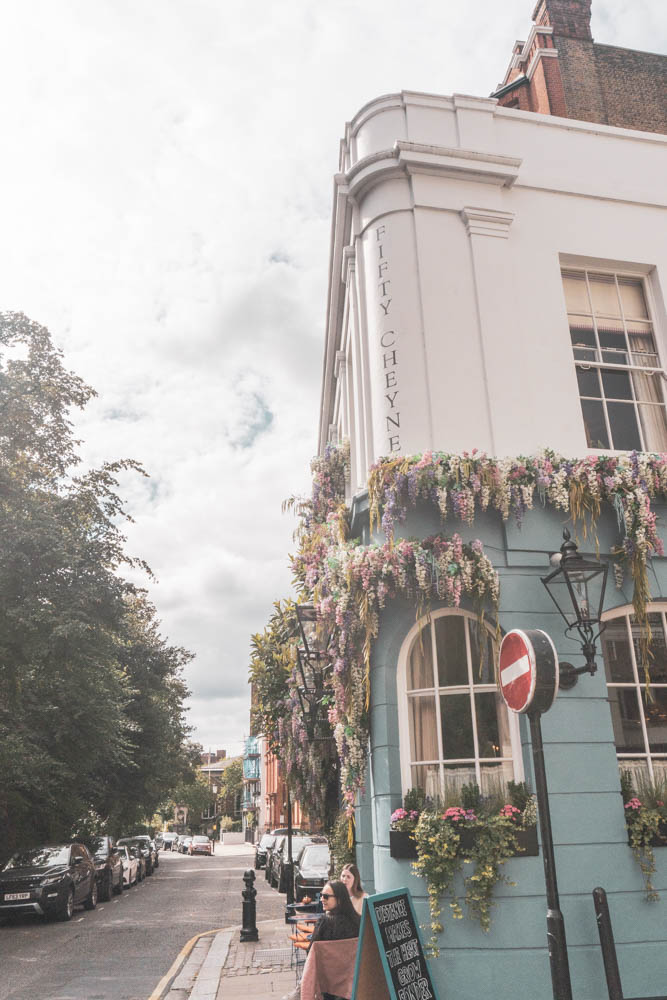
No. Fifty Cheyne
Perched on the corner of the grandiose road, No. Fifty Cheyne is a quintessentially British restaurant, with each dining space reflecting a different aspect of the UK.
The building itself has history worth knowing too, it was originally The King’s Head and Eight Bells, a Grade II listed pub and one of Dylan Thomas’s regular Chelsea haunts, before its later life as Cheyne Walk Brasserie and now its current restaurant.
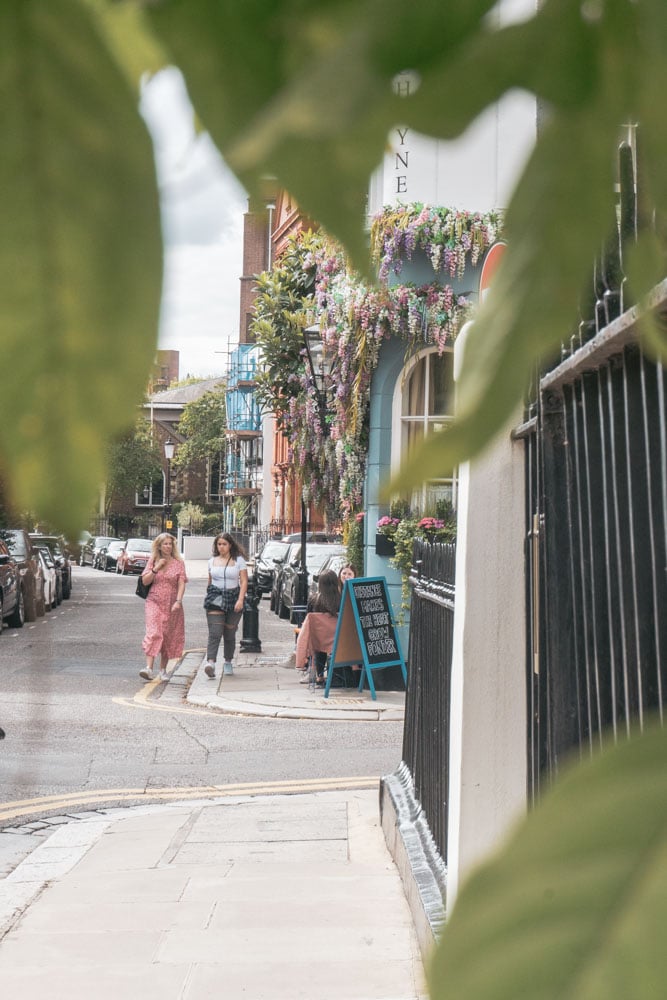
Upstairs is a royally red bar, with pictures of Winston Churchill and gold accents completing the theming. The main restaurant area below is reminiscent of a posh country club, rich greens and warm leathers providing the perfect atmosphere for classic European dishes, the Herdwick lamb rump with dauphinoise and the stuffed courgette flower with goat’s cheese and walnut crumble are particularly impressive, and the Chateaubriand to share for Sunday lunch is not to be sniffed at.
Finish off with an indulgent sticky toffee pudding with clotted cream, then spend the afternoon walking it off as you hunt for blue plaques. Perfection.
The Cross Keys
A five-minute walk from Cheyne Walk, the Cross Keys is Chelsea’s oldest pub, and its history is genuinely worth knowing before you go.
Built in 1708 on Lawrence Street, its past patrons reportedly include J.M.W. Turner, Whistler, Sargent, Agatha Christie, Dylan Thomas, Bob Marley and the Rolling Stones. It closed in 2012 and stood empty long enough to be taken over by squatters, before a local campaign against a residential redevelopment scheme helped save it. The pub reopened in 2015 under new owners, restored with original 18th-century panelling and its wood-burning fire intact.
The seasonal menu changes daily, expect locally sourced meats and fish alongside a delicious chickpea falafel, courgette and red pepper tagine with pomegranates for vegetarians. While you’re here, order a white peach bellini for a little fizz with dinner.
The Phene
The Phene is a bustling clubhouse venue with a pub and multiple bars, plus a beautiful pub garden covered in twinkling lights.
The pub itself has had its own brush with history, in 2012 a previous owner applied for planning permission to turn it into a £15 million private house, before it was saved from closure the following year and acquired by The City Pub Company. It’s named after the Victorian architect John Samuel Phene, whose own house nearby was reportedly one of the strangest in London before it was demolished.
Michelin-trained chef Sidy Kounta is head chef here, serving up seasonal dishes with modern takes on traditional food. The drinks menu is extensive, wines, beers, champagne and cocktails to sip as you take in the surroundings, the inside-outside seating making for a perfect special occasion setting, or just a midday retreat after exploring Cheyne Walk.
The London x London Take: the eight numbered addresses are worth a slow wander for the blue plaques alone, but the Cross Keys is the one genuine surprise on this list, most people walk past assuming it’s just a nice-looking Chelsea gastropub, not Chelsea’s oldest pub with a real story of being saved from demolition behind it.
Practical tips and map for visiting Cheyne Walk
- Cheyne Walk sits pretty much dead centre between Fulham Broadway and Sloane Square Tube stations, so take your pick, though Sloane Square makes for a prettier walk.
- You won’t be able to enter the houses on Cheyne Walk since people really do live here, but take your time scoping out the blue plaques, most houses have at least one.