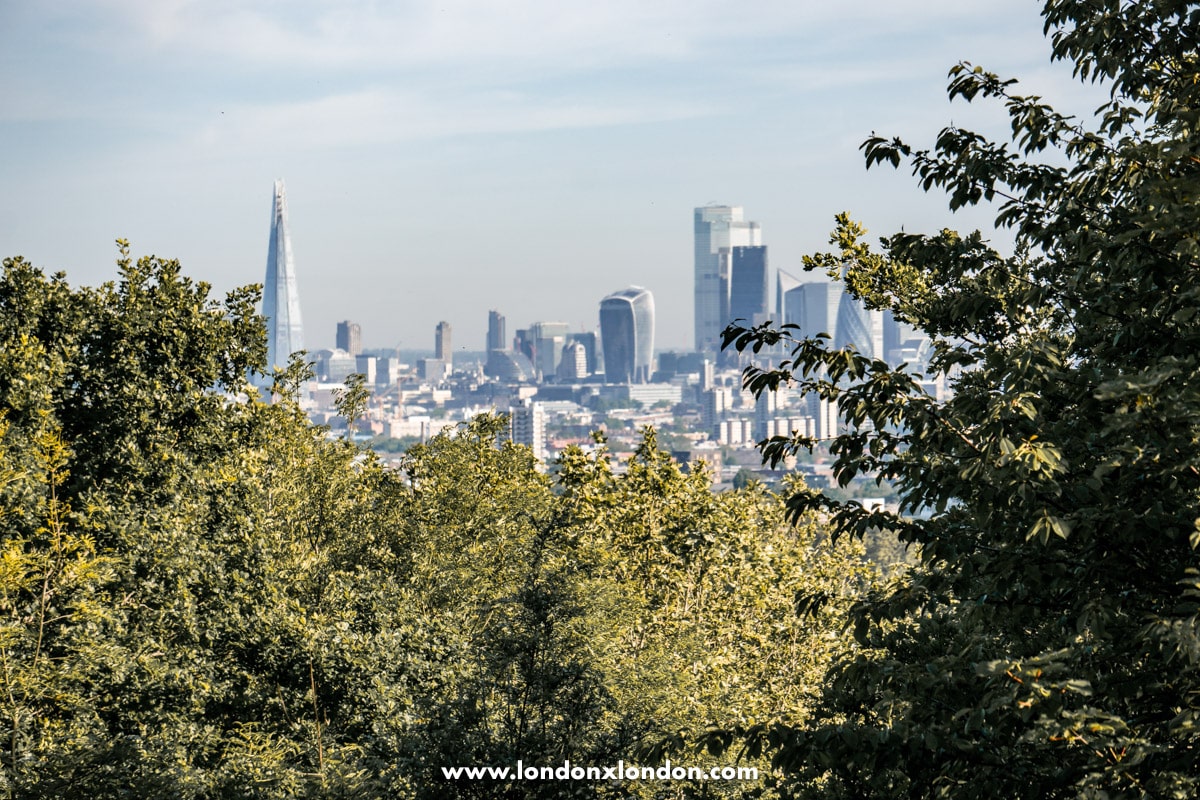
Tucked away in leafy Honor Oak Park, One Tree Hill is a proper find. Come here for some of the best views of the city and some rather curious tales about that tree.
We have a confession to make.
Until recently, we’d been labouring under the misunderstanding that any reference to One Tree Hill was to that shoddy TV programme you couldn’t escape from a few years ago, it was only when we were researching a piece on the best views in London that we came across this, far more interesting One Tree Hill.
Intrigued, we started to read more, and finally went to visit.
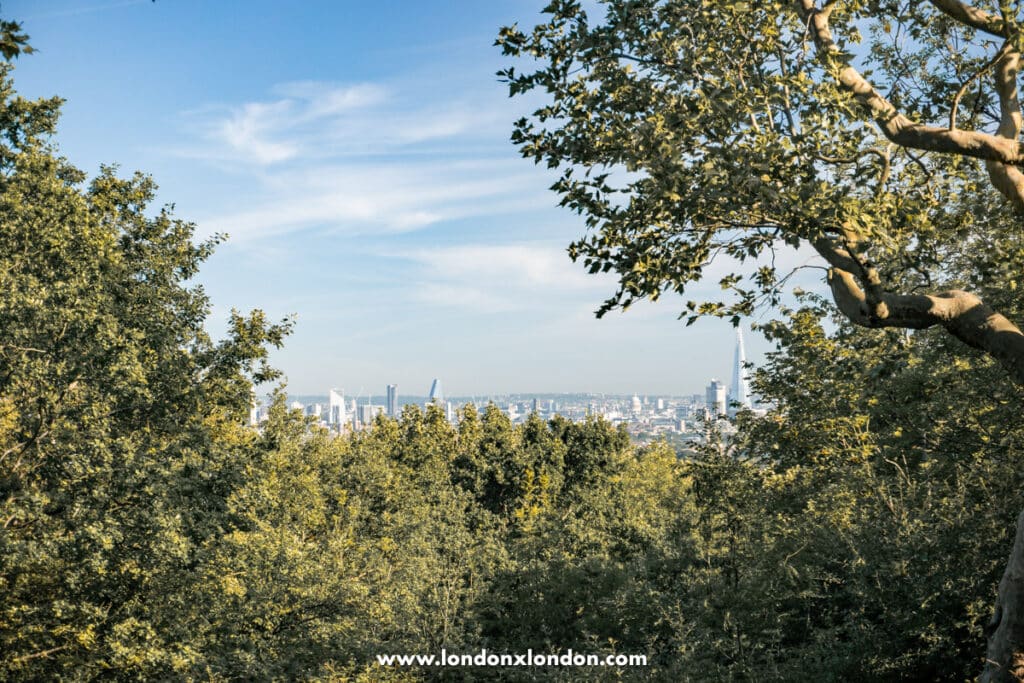
It’s a beautiful spot, the panorama of London’s contemporary skyline framed by leafy trees really does make it one of the best views of the city. Did we also mention there are a number of other historical sites within the park, each with their own story to tell?
Highlights of your visit to One Tree Hill
The view
Is this the best viewing point in London? It’s a close contender, that’s for sure.
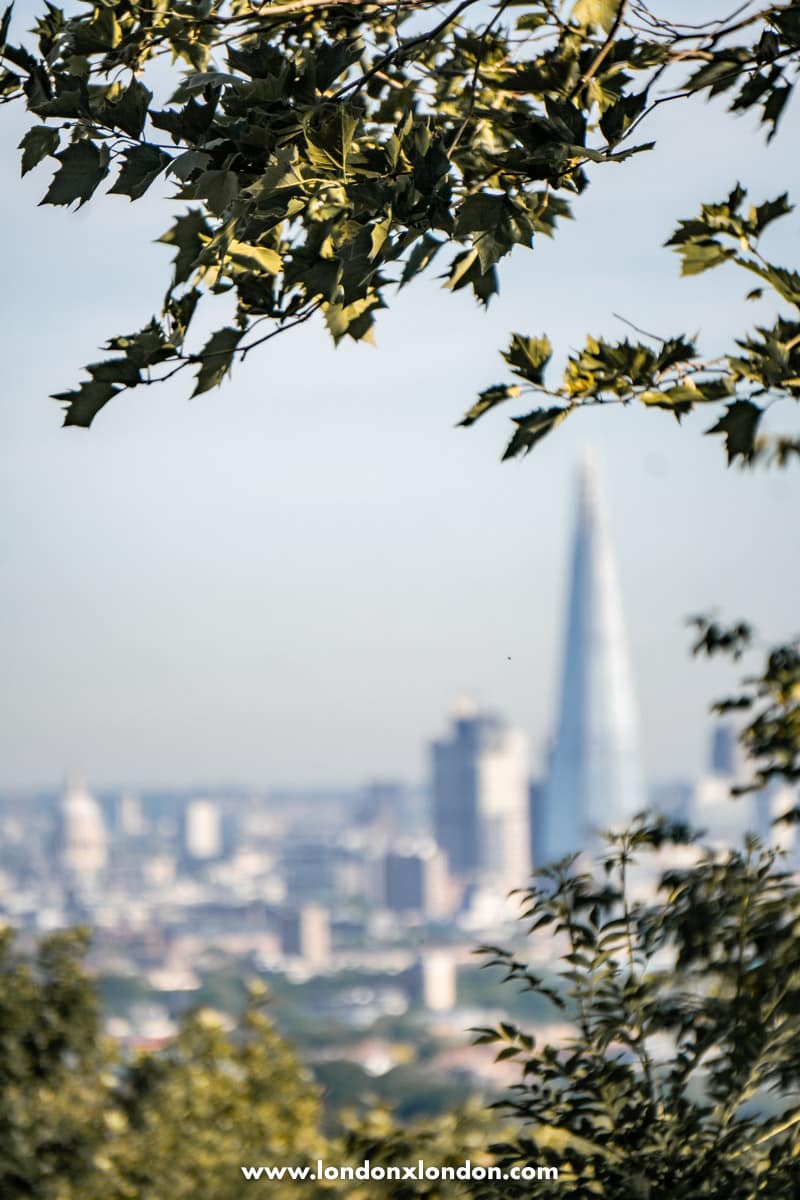
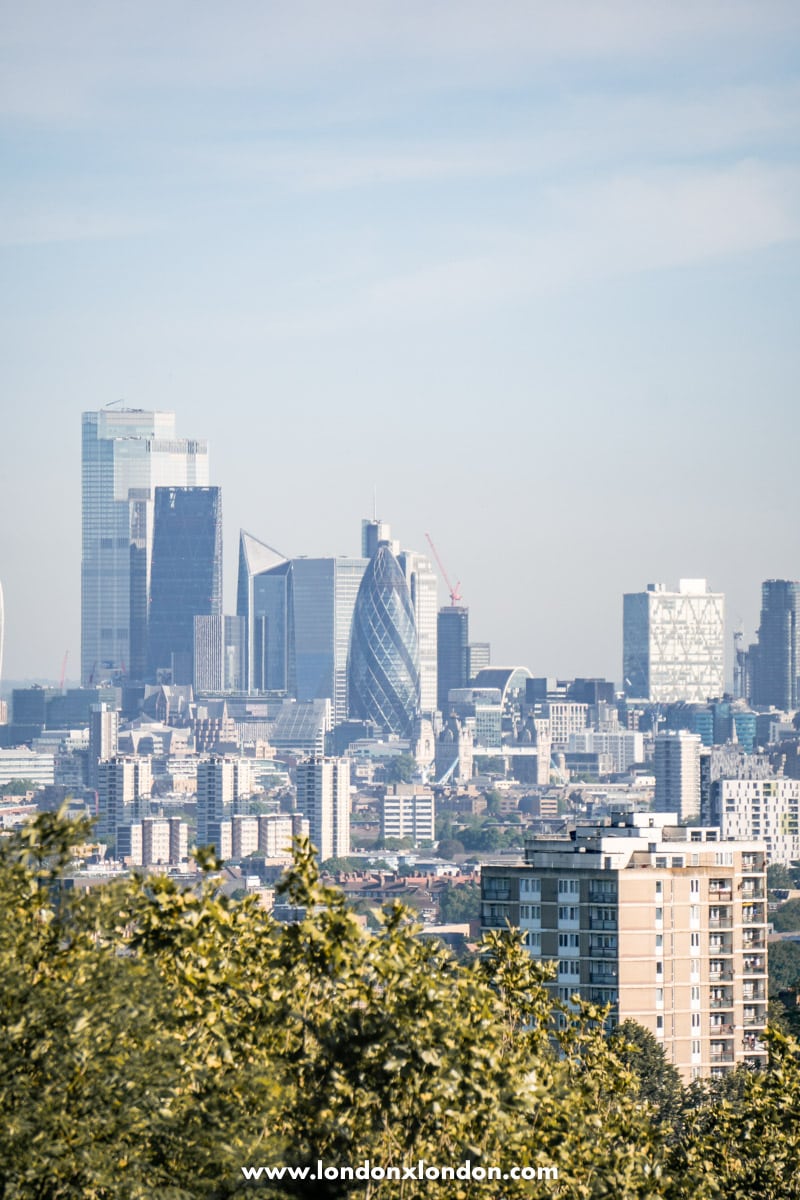
Not that many people know about One Tree Hill. That meant there were only a smattering of people when we visited, most of them more concerned with walking their dog or recovering from the arduous run to the top of the hill than soaking in the view.
And what a view.
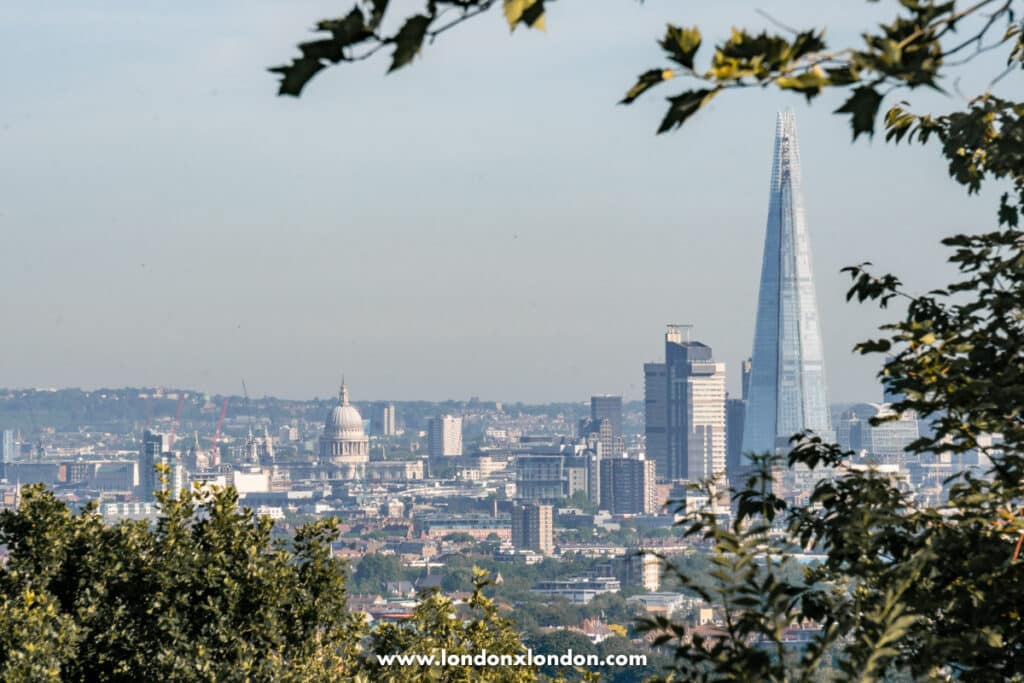
Sorry to diss spots like Hampstead Heath and Primrose Hill in the North, but this is way better, it just is.
Framed by the canopy of the trees below and to the sides, it feels like a real-life trompe l’oeil, as if someone’s painted the scenery, thinking as much about the presentation and the composition, then hung it up for all of us to appreciate.
You can see pretty much all the highlights of the London skyline, The Shard, of course, and the cluster of the Walkie Talkie, Cheese Grater and Heron Tower in the City. St Paul’s, for centuries the tallest building in London, is there, and you can pick out the London Eye, BT Tower and plenty besides.
Move position and Canary Wharf reveals itself, providing yet more to look at.
The Oak of Honour
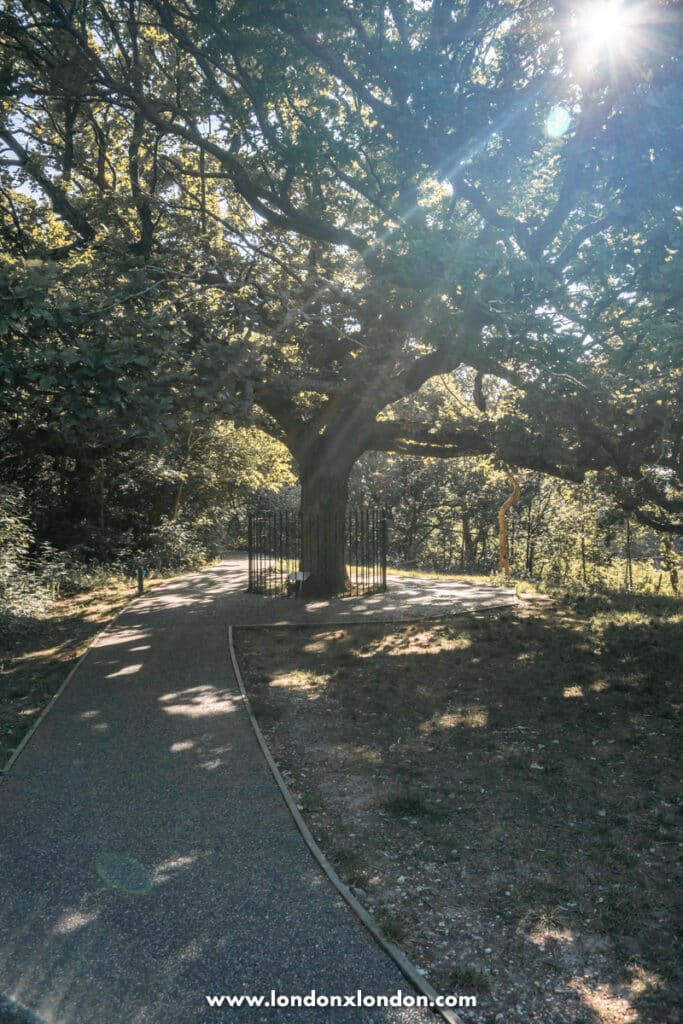
Despite the name, One Tree Hill is filled with plenty of trees, it’s a wood after all, but there’s only one that counts. The Oak of Honour.
The Oak of Honour marks the boundary of the ancient Honour of Gloucester from Norman times. This oak, important because of its positioning at the top of the summit, was deemed so consequential that it gave the area, Honor Oak Park, its name.
Elizabeth I was said to have rested and picnicked under the oak in 1602, the tree you see today is the third successive one from that oak, and was planted in 1905.
The bandstand and beacon
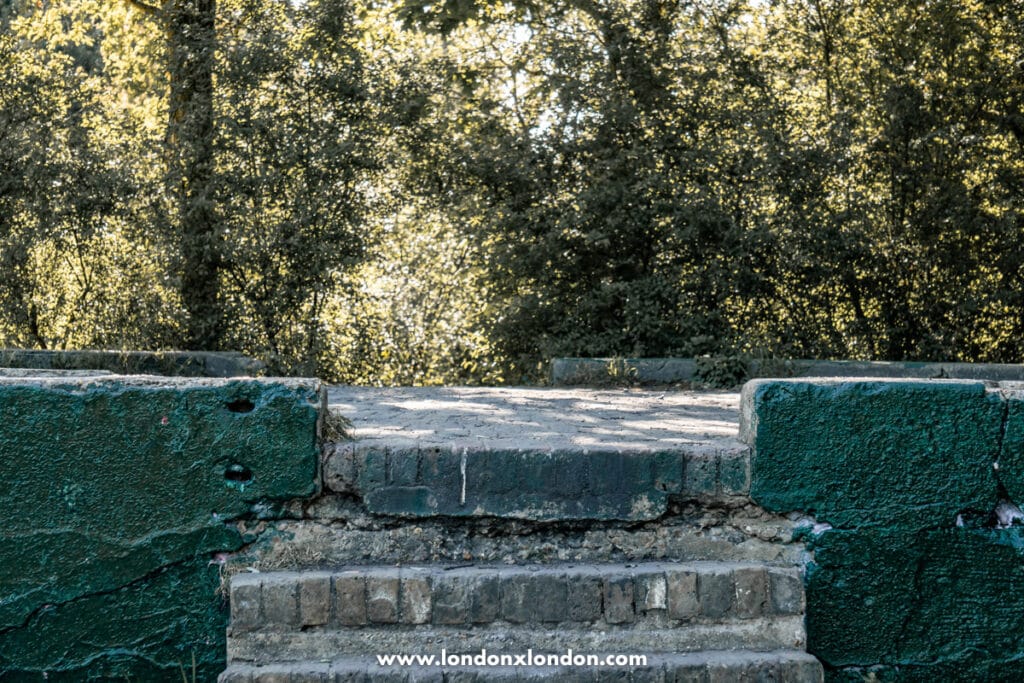
At the summit of the hill, you’ll find an octagonal viewing platform. Handy as it is for making the most of the view, it was built in WWI to mount a gun for countering Zeppelin attacks. By most accounts it never actually brought one down, though it reportedly did manage to damage some tram equipment in nearby Peckham Rye.
That gun was replaced by a Seat of Peace after the war, now also gone, after which it became known as the Bandstand. Today, it’s just the concrete base left, well situated for you to clamber up onto and take in the views.
There’s also a tall beacon next to the Bandstand. It was built to mark George V’s Silver Jubilee in 1935, and has been lit for several major national occasions since, including the Queen’s coronation in 1953, her Silver and Golden Jubilees, and the Millennium.
The ecology
Being a woodland, there’s plenty for enthusiasts of nature to enjoy up here too. The best part comes in the form of the varied trees that muddle rather nicely with the name One Tree Hill.
That’s because on this hill you’ll actually find a genuinely diverse range of trees. Most of what you’ll find are species of ash and sycamore, alongside many wild cherry trees.
Perhaps the most interesting trees you’ll find here, other than the Oak of Honour itself, are the London planes. That might not come as much of a surprise seeing as we’re in London, but it’s more the story of how they got there that’s interesting.
The London planes were planted when the area was cultivated into a park in the early 20th century. That park has since overgrown and become the woodland of One Tree Hill today. The trees put there by people nearly 100 years ago have become part of the natural ecology of the place. Since 2007, the whole hill has been formally designated a Local Nature Reserve.
A brief history of One Tree Hill
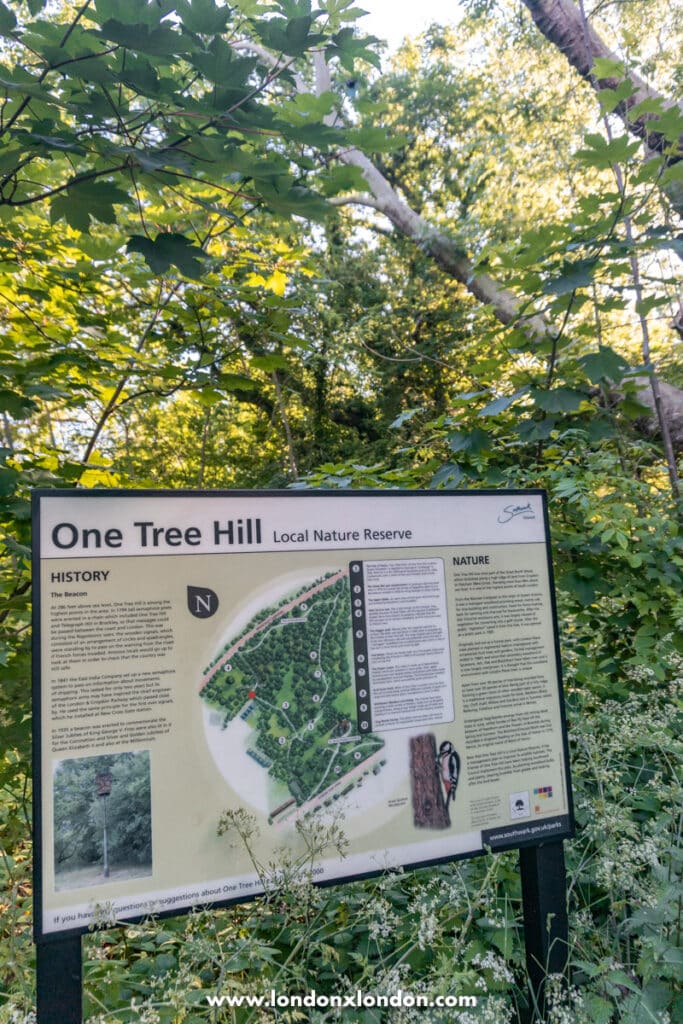
Much of One Tree Hill’s history is unknown, or rather unproven, but we do know that it once formed part of the Great North Wood, which stretched from Deptford to South Norwood. What we call One Tree Hill today was owned by the Abbots of Bermondsey until Henry VIII dissolved the monasteries and it became the property of the Crown.
Other parts of the park’s history are less clear.
There’s the tale of Roman troops watching Boudicca’s army from the summit, their early warning enabling them to defeat the attack, a claim most historians treat with real scepticism.
Another riddle holds that highwaymen used the hill as a lookout for potential victims, among them Dick Turpin.
Then there’s the Elizabeth I story we referred to in the Oak of Honour section. The story comes up in several sources, although most were written over a century after the supposed event.
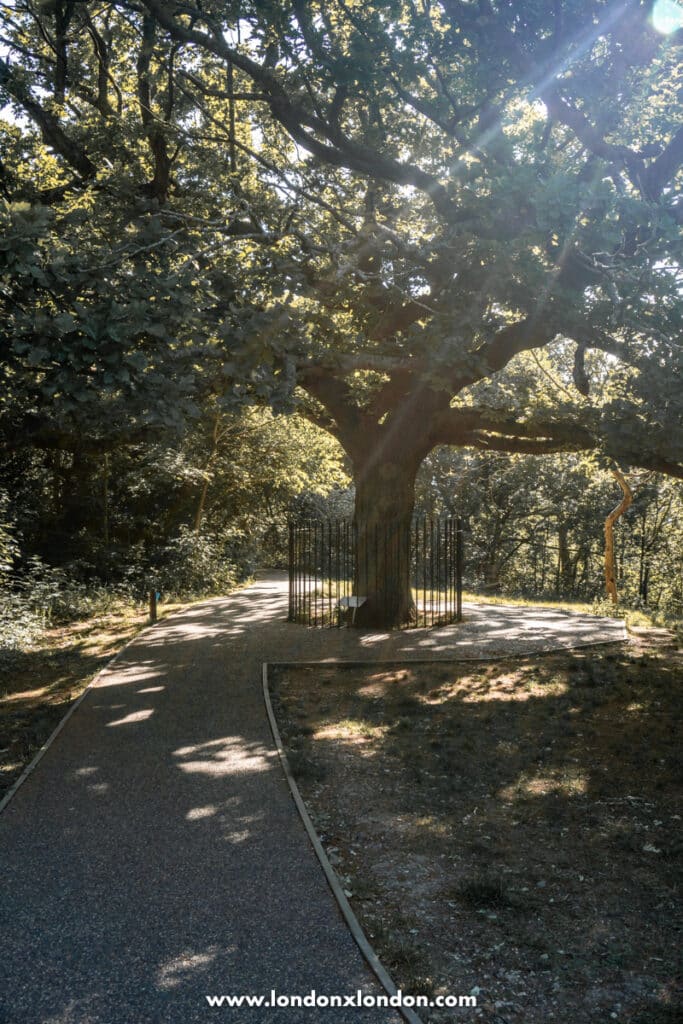
The original tree was replaced by another, which was struck by lightning. It’s now the third tree you’ll find, surrounded by a hexagonal railing and with a small plaque retelling the Elizabeth story.
Later, by the 18th century, One Tree Hill was used as a beacon point in the Napoleonic Wars, warning of a possible French invasion. During the same period, a semaphore relay station was built atop the hill, part of a wider system used to signal the arrival of ships in the Channel.
People had long been used to accessing the hill freely, using it as a shortcut at their leisure. There was considerable discontent when it was enclosed by a fence in 1896 at the behest of the Honor Oak & Forest Hill Golf Club, which had rented the land.
The disgruntlement erupted into mass protests in 1897, with thousands gathering to tear down the fences, and the creation of the Enclosure of Honor Hill Protest Committee, which negotiated with local councils until Camberwell Borough Council formally acquired the land for public use under the LCC’s General Powers Act of 1904, reopening the park in 1905.
That was largely it for a century. The 20th century was largely uneventful for One Tree Hill, aside from its use as a gun base for shooting down Zeppelins in WWI. In the year 2000, a £5,000 Millennium Grant from Southwark Council enabled the tree canopy to be lowered so visitors could see the views once more, and in 2005 a new path was laid along the park’s north boundary with support from the Friends of One Tree Hill, a local group formed in 1994.
The London x London Take: Come for the view, which genuinely rivals anywhere else in London, but don’t rush straight back down, the Oak of Honour, the old gun platform and the beacon are all worth five minutes each, and between them they tell a stranger story than most people would guess from a park this size.
Practical information and tips
Address: 69 Honor Oak Rise, London SE23 3RA
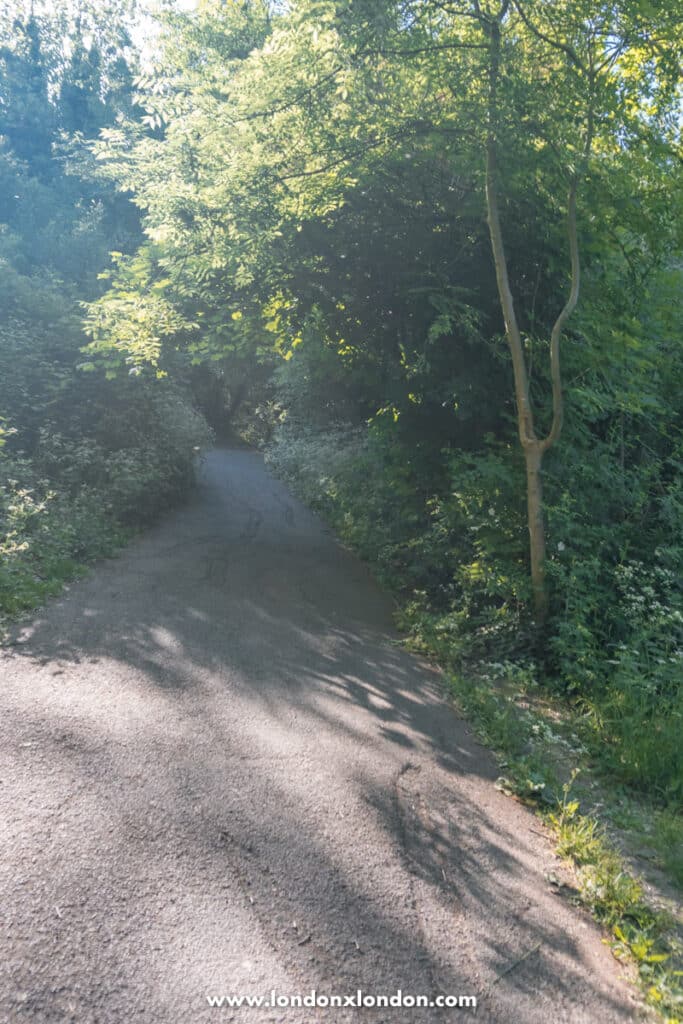
Getting there: The nearest station is Honor Oak Park, and it’s also accessible by local bus. It’s on the Green Chain Walk too, a network of walking routes covering over 50 miles through South London’s greenest spaces.
Opening hours: One Tree Hill is open 24/7.
- If you want to make the most of this incredible view, go early in the morning. Not only does the morning light make London look especially beautiful, but there will be fewer people there to disrupt your enjoyment.
- The busiest time at One Tree Hill is usually around midday.
More Hidden London guides
- Exploring London’s Hidden Gems
- The Secret London Park that Used to Be a Spa
- These Weird Dinosaurs Have a Very Weird History
- The South London Cemetery That’s Turned into a Nature Reserve