A hilltop village on the edge of Hampstead Heath, Highgate mixes a famous cemetery with old pubs, blue plaques and genuinely good green space.
We’ve always thought Highgate feels like a village that got quietly absorbed into London rather than one that ever really joined in. It sits up on a ridge above Kentish Town and Archway, with Hampstead just over the Heath to the west and Muswell Hill at the other end of the old railway line to the east, and the whole place still runs at its own unhurried pace.
Long a haunt of the bohemian intelligentsia, don’t let the sleepy aspect fool you: there’s a genuinely famous cemetery here, one of London’s best patches of ancient woodland, a duelling ground hidden in a Georgian estate, and a bat roost tucked into a disused railway tunnel. Georgian and Victorian houses line streets that barely feel like London at all, which is exactly why generations of writers, actors and musicians have quietly moved in.
Ready to explore? Here’s what we’d put on the list.
The best things to do in Highgate
Wander Highgate Cemetery’s Gothic pathways
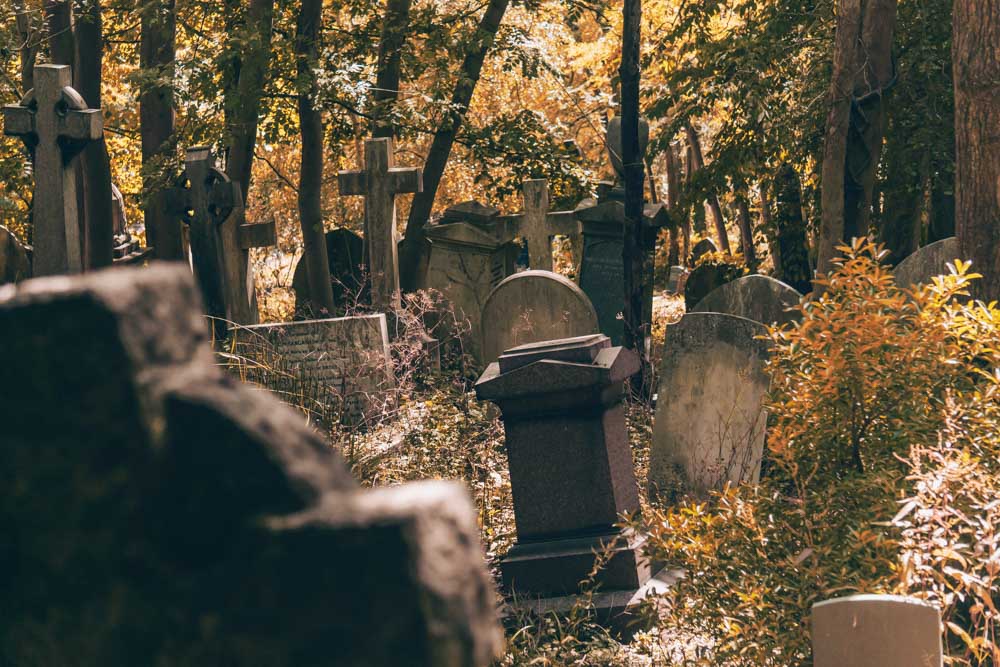
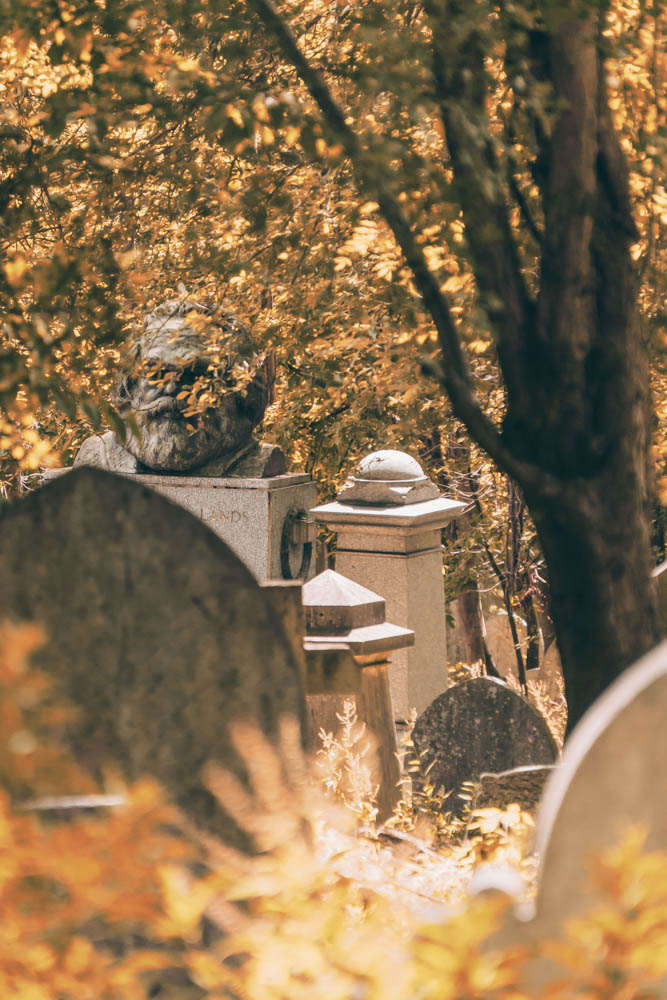
Arguably London’s most famous graveyard, Highgate Cemetery is the best known of the Magnificent Seven cemeteries built around the edges of Victorian London (others include Nunhead and Kensal Green). It opened in 1839, starting with the West Cemetery, followed by the East Cemetery extension in 1860. Its fame partly comes from who’s buried there, Karl Marx, George Eliot, Michael Faraday and Christina Rossetti among them, and partly from the rambling Victorian Gothic stonework and winding, tree-shaded paths.
We’ve written a longer guide to visiting Highgate Cemetery if you want the detail, but the short version is this: the East Cemetery, where Marx and Eliot lie, is open to self-guided visitors during opening hours, while the more atmospheric West Cemetery, home to the Egyptian Avenue and the Circle of Lebanon, is only accessible on a guided tour. Worth knowing: tickets for both sell out, especially at weekends, so book ahead rather than turning up on spec.
Escape into ancient Highgate Wood
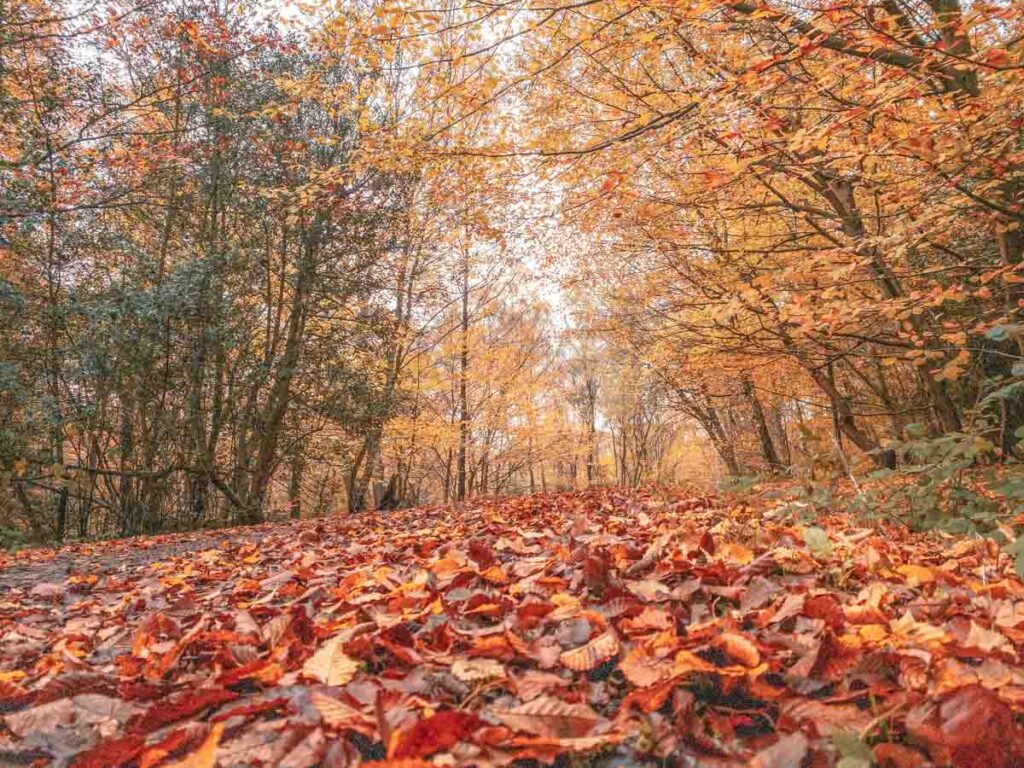
Overshadowed by nearby Hampstead Heath, Highgate Wood is one of the nicer green spaces in north London, a stretch of ancient woodland recorded as far back as the Domesday Book and now looked after, like the Heath itself, by the City of London Corporation. It runs from the gates by Highgate station towards Muswell Hill and looks good at any time of year, especially during bluebell season near the Cranley Gate entrance.
Gawp at the turrets of Holly Village
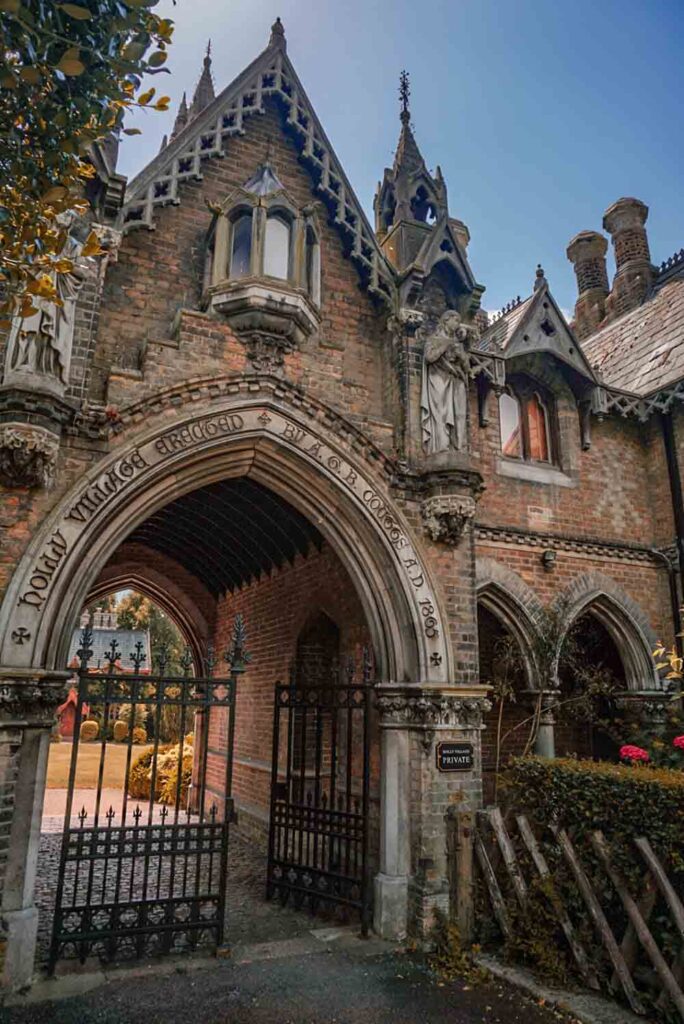
The elaborate Neo-Gothic buildings of Holly Village are hard to walk past without stopping to look. This village within a village was built in 1865 for Angela Burdett-Coutts, in Victorian times reputedly the second richest woman in Britain, and no expense was spared on the flamboyant, gingerbread-house design. The interior isn’t open to visitors, all eight houses are still privately occupied, but the exterior alone is worth the detour off Swains Lane.
Roam the wilds of Hampstead Heath
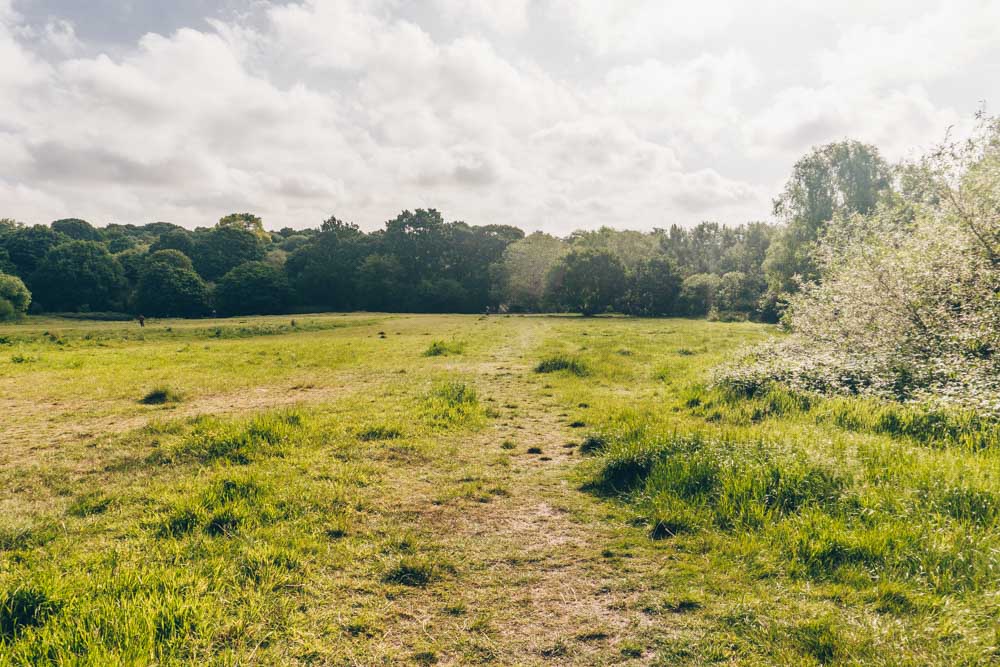
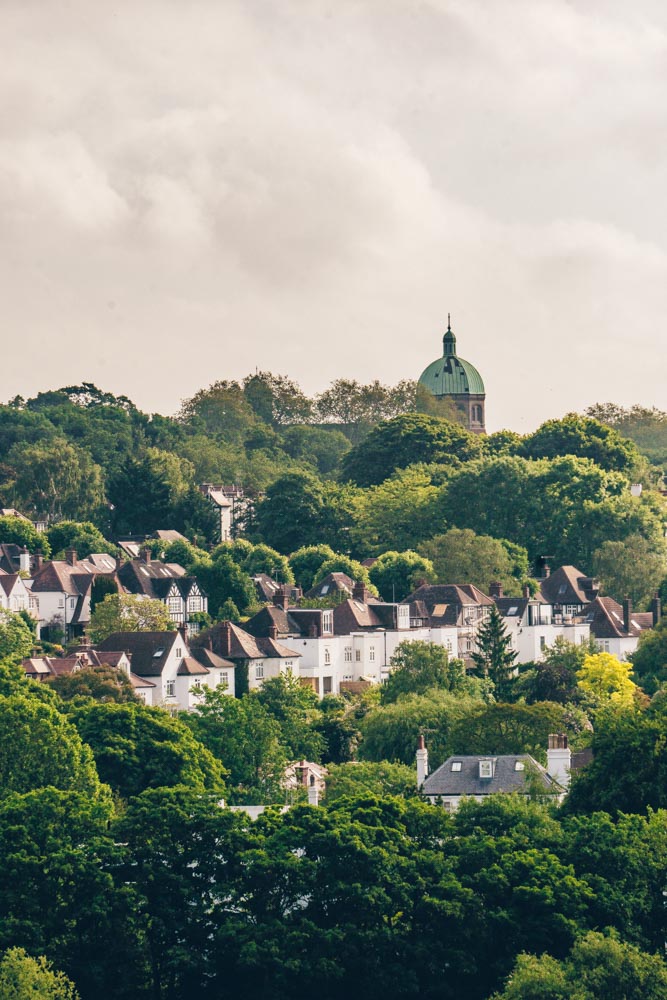
Hampstead Heath is a genuine stretch of countryside that London gradually grew up around, rolling muddy lanes, copses and heathland rather than the usual manicured city park, and all 790 acres of it are free and open around the clock. Despite the name, a good chunk of it skirts Highgate, including Kenwood, the Highgate Men’s Bathing Pond and the Kenwood Ladies’ Pond, both open year-round for wild swimming. Parliament Hill, within the Heath, has some of the best skyline views in the city.
We’ve mapped out our favourite routes across the Heath if you want to see more of it than most people ever bother to.
Catch a talk at the Highgate Literary and Scientific Institution
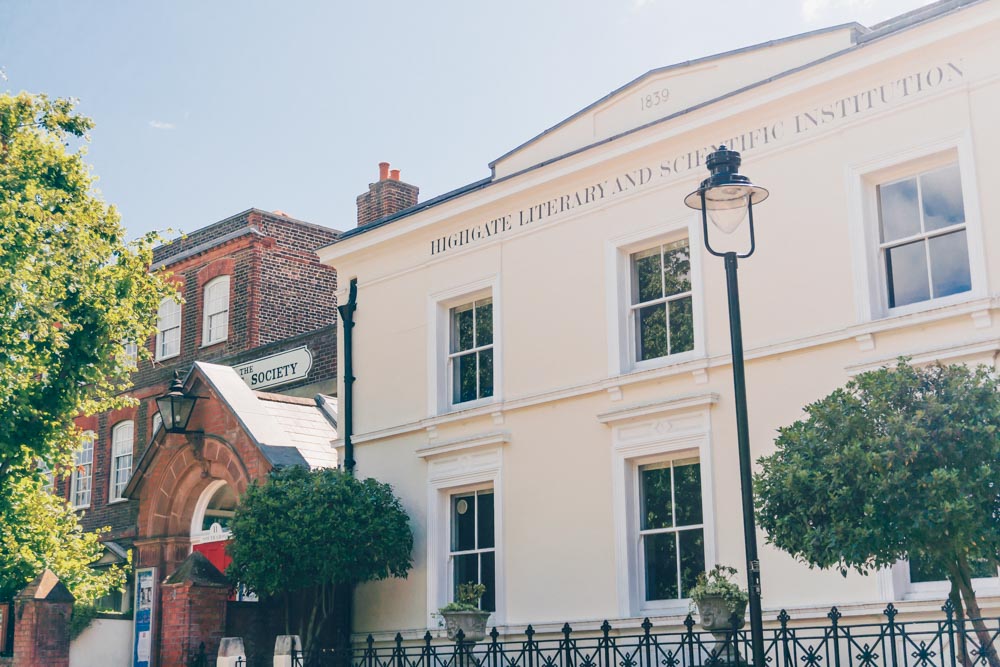
Established in 1839 to help the wider public keep up with the changes brought by the Industrial Revolution, the Highgate Literary and Scientific Institution still runs a busy programme of talks, films, lectures and music, alongside an extensive members’ library of more than 25,000 books. Non-members can book onto individual events and use the reference library without joining.
Go hunting for Highgate’s blue plaques
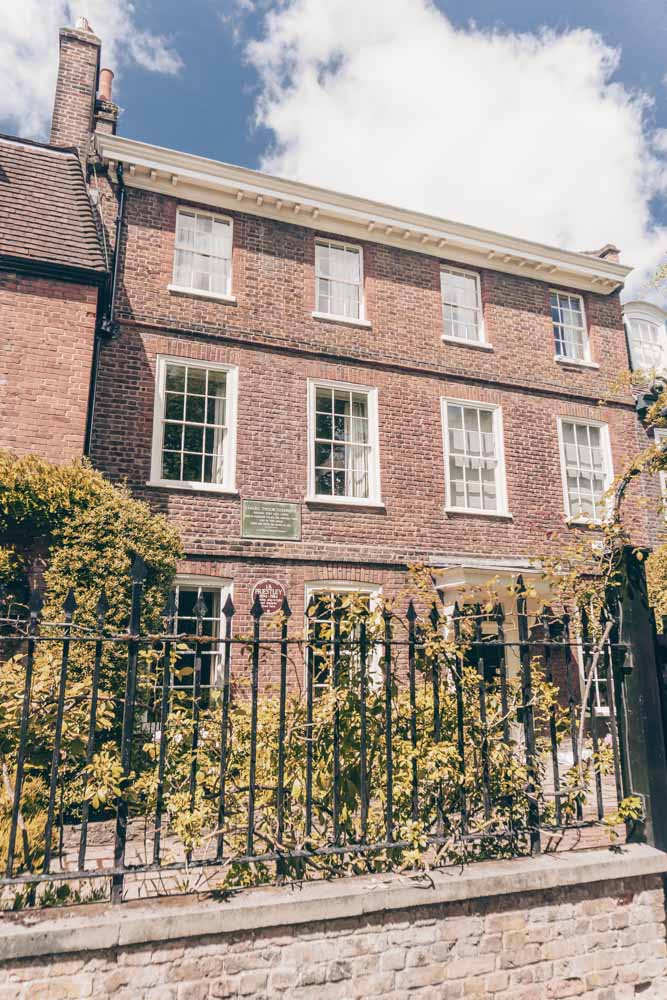
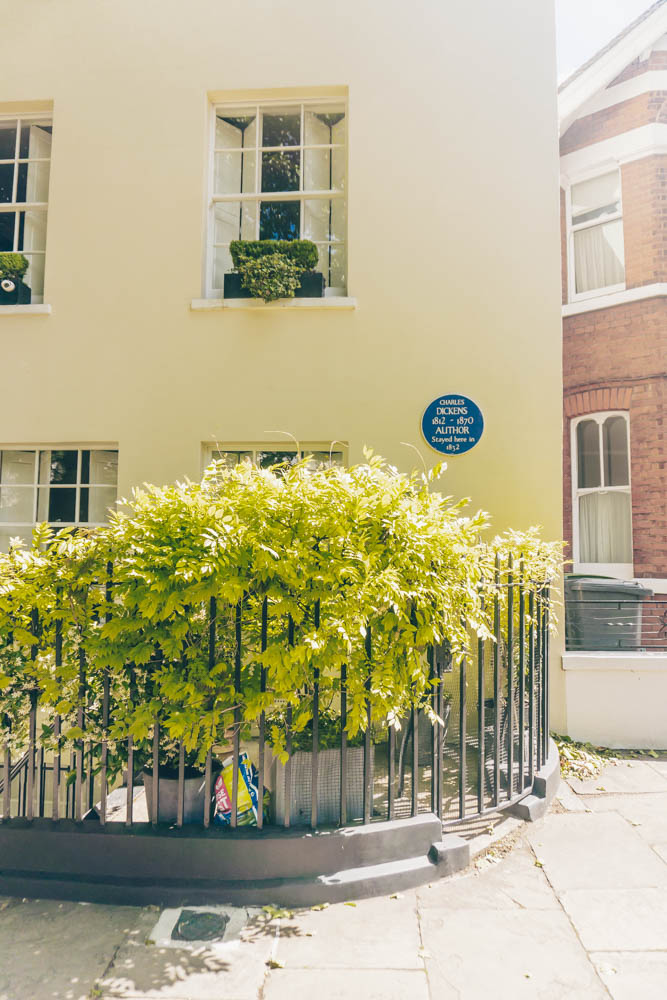
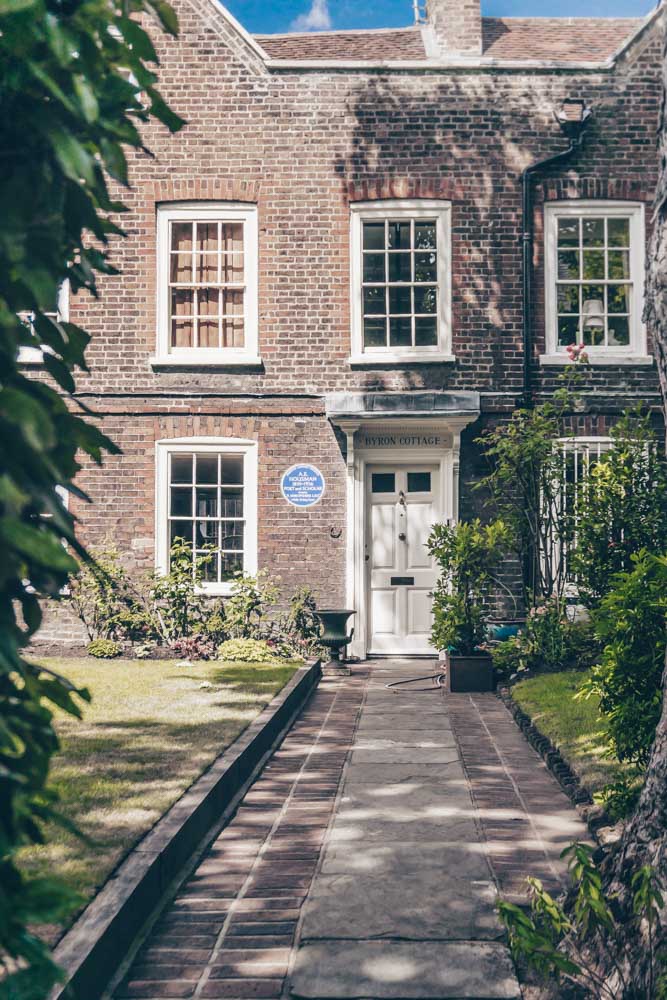
Highgate’s roll call of famous residents, past and present, shows up in the blue plaques dotted around the area. Poet Samuel Taylor Coleridge lived at Moreton House and then 3 The Grove as a guest of Dr James Gillman from 1816 until his death in 1832; playwright JB Priestley also lived at 3 The Grove. Poet John Betjeman lived at 31 Highgate West Hill as a child, Charles Dickens stayed briefly at 92 North Hill, and poet A.E. Housman lived at 17 North Hill.
Hunting them out makes for a good excuse to wander streets you’d otherwise walk straight past.
See a Rembrandt for free at Kenwood House
The handsome Georgian exterior of Kenwood House sits neatly within Hampstead Heath. Run by English Heritage and free to enter, it holds an art collection that includes Rembrandt, Vermeer, Gainsborough and Cézanne, alongside extensive gardens, woods and grounds, including a duelling ground exactly 40 paces wide hidden in a small woodland clearing.
Hint: the Brew House Café on site opens from 8am daily, useful to know if you’ve walked up from Highgate early and need coffee before the house itself opens.
Picnic in Waterlow Park
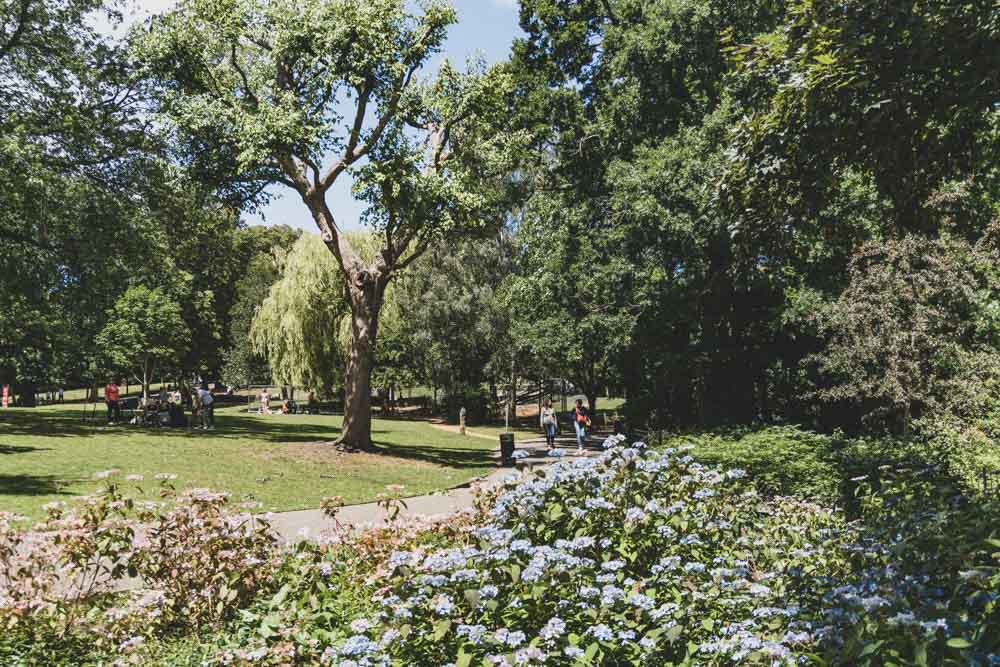
The 29 acres of Waterlow Park were donated to the public by Sir Sidney Waterlow as “a garden for the gardenless”, and it has remained one ever since, a mix of formal gardens, open lawn and water features. Lauderdale House, a Tudor-era arts and education centre, sits at its centre. If Highgate Cemetery tickets are sold out, the park’s edge gives a glimpse of Karl Marx’s grave through the trees next door.
Rub the cat on the Whittington Stone
This small stone statue, topped with a bronze cat, marks the spot where Dick Whittington, leaving London at the start of a trip out of the city, is said to have heard the Bow Bells chime “turn again Whittington, thrice Lord Mayor of London.” He turned back, and went on to serve as Lord Mayor four times between 1397 and 1420. The stone itself, at the bottom of Highgate Hill, was erected in 1821, with the cat added rather later, in 1964.
Follow the old railway line on the Parkland Walk
Starting just behind The Boogaloo, the Parkland Walk is one of the better walks in London, tracing the route of a former railway line that once ran between Finsbury Park and Alexandra Palace via Highgate. It’s a proper nature reserve now rather than just a cut-through, with old platforms, bridges and tunnel mouths still visible along the route. It’s also possible to continue in the other direction from Highgate towards Muswell Hill.
Browse the shelves at Highgate Bookshop
Highgate’s high street hasn’t entirely escaped chain stores, so the independent Highgate Bookshop is a welcome constant. Expect a solid mix of fiction and non-fiction, with knowledgeable staff on hand if you need a recommendation rather than an algorithm.
Step into Tudor history at Lauderdale House
Set within Waterlow Park, Lauderdale House is a Tudor building dating to 1582, built by supporters of Elizabeth I. Its history includes hosting Arbella Stuart, a cousin of James I, for six days as she travelled to London as a prisoner, and later housing John Maitland, a key figure of the English Civil War. According to local legend, Charles II’s mistress Nell Gwynne once used the house to pressure the king by dangling their son out of a top-floor window.
The house became a hospital in the late 19th century and today is free to enter, hosting exhibitions, classes, kids’ activities and concerts.
Furniture-hunt at Gonnermann
Walk up the slope from Highgate station towards Shepherds Hill and, on the corner by the traffic lights, you’ll find Gonnermann. This treasure trove of 20th-century furniture and lighting is stocked with pieces that look pulled from a Mike Leigh film or a 1970s bachelor pad, a good mix of British and Scandinavian homeware from the mid-century onward.
Watch for bats over the old railway tunnels
The disused platforms and tunnels of the old Highgate station, now part of the Parkland Walk, are home to one of London’s more significant bat roosts. Eight species have been recorded here and in nearby Highgate Wood, including the common and soprano pipistrelle, Natterer’s, Daubenton’s and the brown long-eared bat.
Wandering around at dusk may bring a sighting. Worth knowing: it’s best not to go looking with a torch or try to disturb them, the tunnels are protected precisely because the roost is so significant.
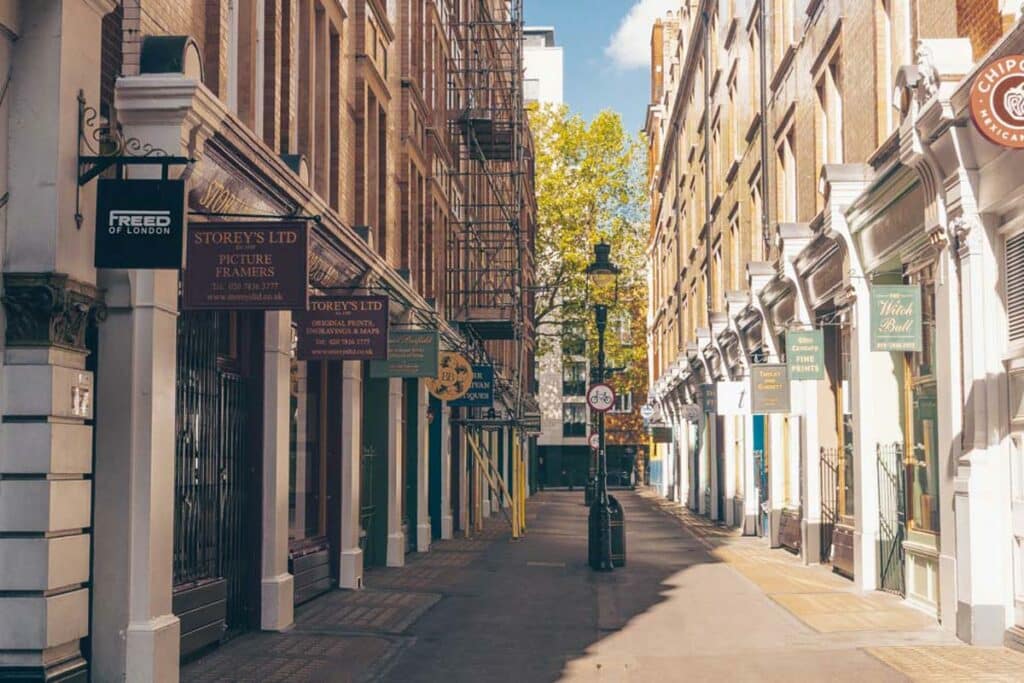
Shop Highgate High Street
Highgate High Street does what a good suburban high street should, favouring independent shops, boutiques and coffee spots over the usual chains. Look out for a butcher, a baker, a florist and a stationery shop, plus Souvenir, a charming spot stacked with figurines, tea towels, tote bags and soft animal cushions.
Catch a gig at The Boogaloo
A long-running music venue and a genuinely good pub, The Boogaloo is worth a visit for a gig or a quiz night, and holds a bit of history as the spot where The Libertines once reunited. It runs its own radio station and hosts live music and events most nights of the week, including board games, quizzes, a poetry and film club and DJs at the weekend. It’s also known for some of the better burgers and wings in north London.
Pull up a stool at The Duke’s Head
Highgate has plenty of good pubs, and The Duke’s Head is one of them, a multiple Time Out Love London award winner with a rotating range of beers from independent breweries and a food menu that changes with whichever street food operator is currently in residence. The interior is filled with retro film posters, musician photos and old beer and cigarette adverts.
Eat proper Italian at Fabrizio
Fabrizio is a highlight of Highgate’s dining scene thanks to its straightforward, well-executed Italian cooking on Highgate Hill. Traditionally made pizzas, antipasti, risotto and hearty secondi are the focus, with an emphasis on doing the simple things properly rather than chasing trends.
Catch a show at The Gatehouse
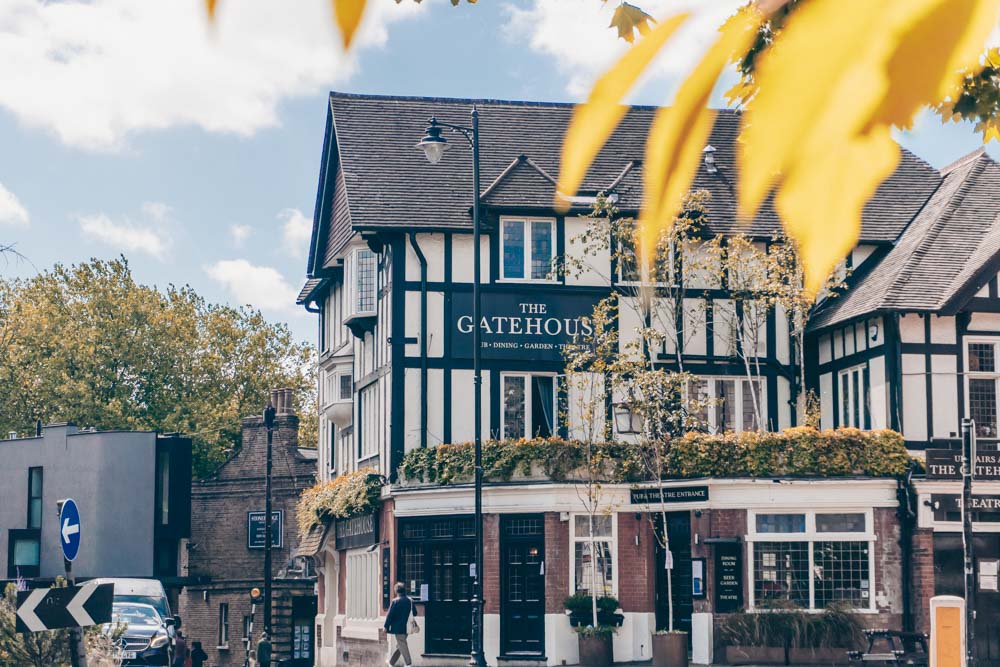
Another of Highgate’s better pubs, The Gatehouse occupies a genuinely historic spot, with a pub said to have stood here since 1337, once sitting beside the tollgate for the Bishop of London’s route into the city. It’s also served as a courtroom and meeting house over the years, and once straddled the boundary between the old counties of Middlesex and London, a fact that reportedly caused problems for prisoners trying to escape across the line.
Upstairs is home to one of London’s better-known fringe theatres, Upstairs at The Gatehouse, worth checking the listings for before or after a pint downstairs.