Welcome to London x London’s Belgravia Guide: your guide to the best bars, restaurants and things to do in this Central London neighbourhood.
Belgravia lies in the City of Westminster, sitting between Knightsbridge, Hyde Park Corner, Pimlico and Chelsea, just south of Buckingham Palace.
Before Belgravia was the most expensive postcode in London it was a swamp. Then it was a no-man’s-land of market gardens, highwaymen and duelling grounds known as the Five Fields, where in 1728 a man was found by the Bloody Bridge with half his face removed. The bridge stood roughly where Sloane Square is now. It is quite the origin story for a neighbourhood of white stucco terraces and embassy flags.
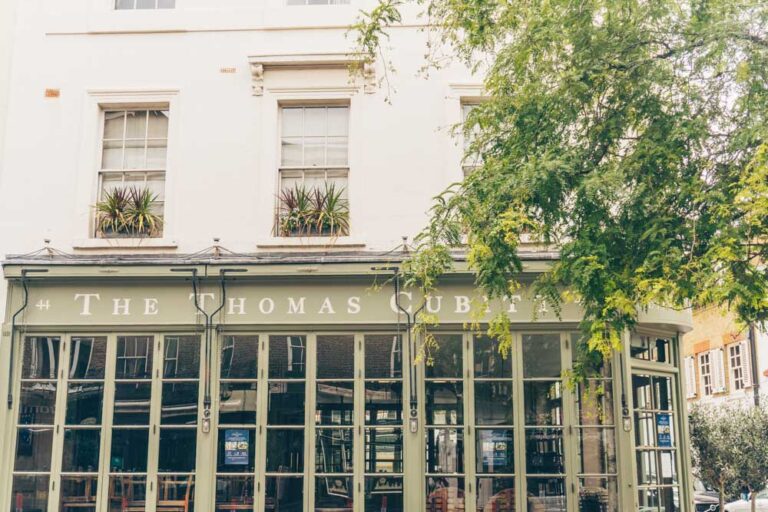
The transformation happened fast. In 1826 Richard Grosvenor, the 2nd Marquess of Westminster, commissioned Thomas Cubitt to drain the marshland and build an estate for the aristocrats and courtiers who wanted to live near the newly royal Buckingham Palace. Within two decades, Belgravia was the most fashionable address in London. It has never really stopped being that, though the embassies that now line Belgrave Square and the quietly extraordinary restaurants on Elizabeth Street have given it a life beyond old money.
Mozart lodged on Ebury Street as a child, Mary Shelley died on Chester Square, and the word “pantechnicon” entered the English language via a warehouse on Motcomb Street whose horse-drawn removal vans became so ubiquitous that their name stuck. Worth knowing.
Old money, white stucco and some of London's best quiet streets
National Rail: Victoria.
Buses: 11, 19, 22, 137, 170, 360.