Chinatown stands out, a vibrant, distinct part of London’s West End, beloved by locals and tourists alike. Planning a visit? Here’s what you need to know.
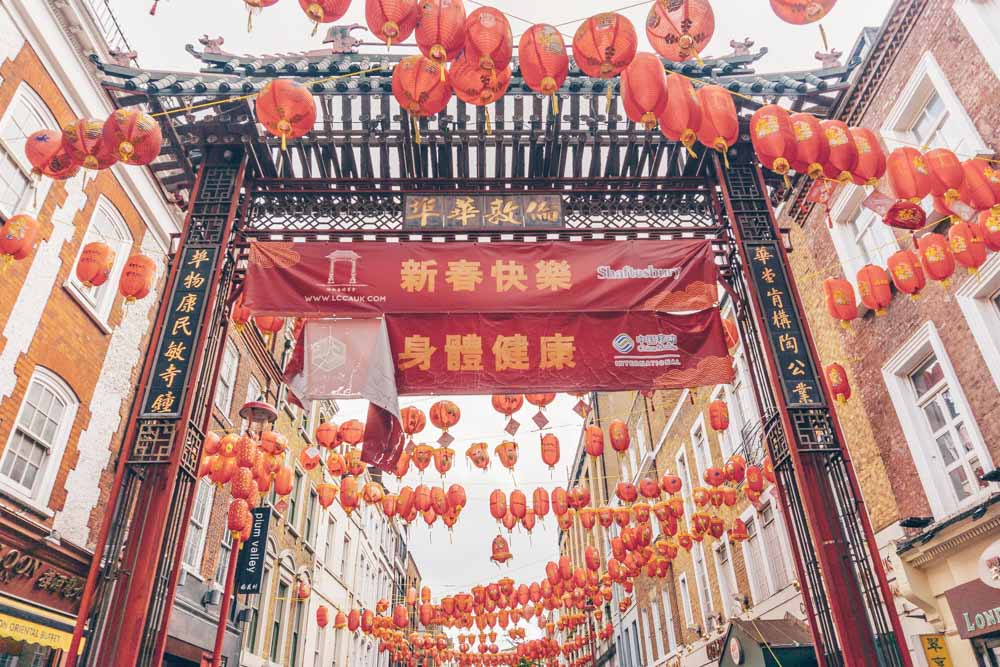
Chinatown sits right in the centre of London’s West End, a distinct melange of paper lanterns, shops, restaurants and cafes, bounded by four gates that mark your passage into somewhere unlike anywhere else in the city.
Stellar food, a genuinely beautiful setting, and quirky finds round every corner. What’s not to love?
Unmissable things to do
From modest beginnings, Chinatown has grown into one of the most vibrant, dynamic corners of London. Don’t skip these while you’re there.
The four gates
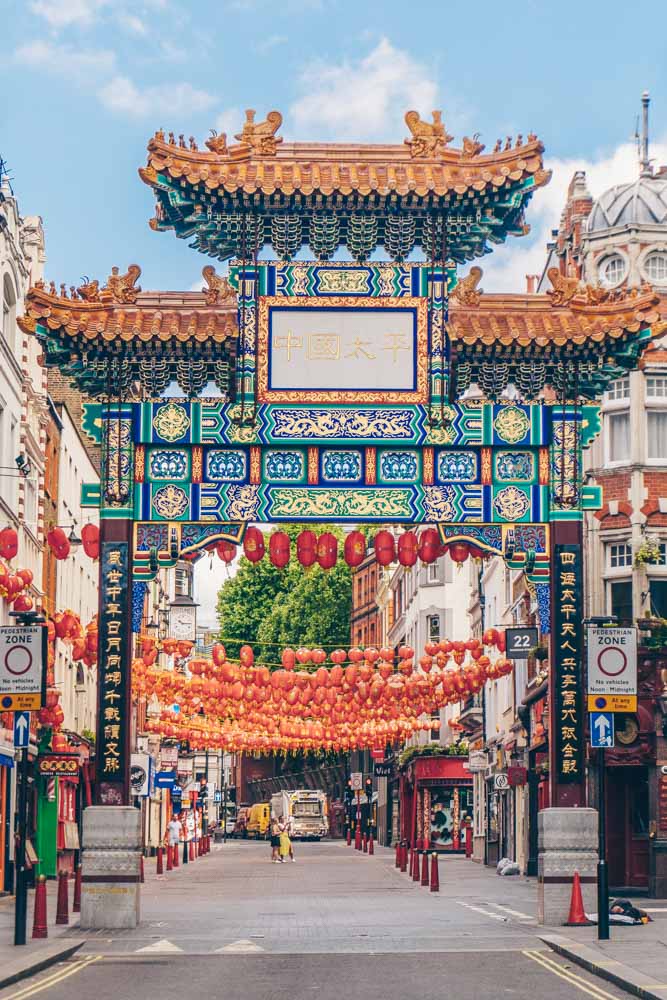
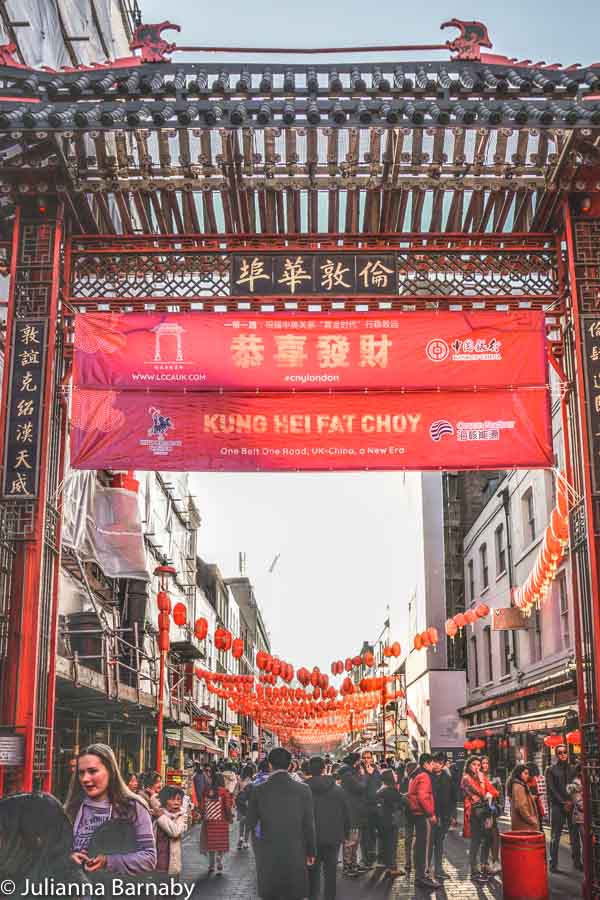
The four gates mark Chinatown’s boundaries, ornate, imposing and impossible to miss, welcoming you into this frantic little hub.
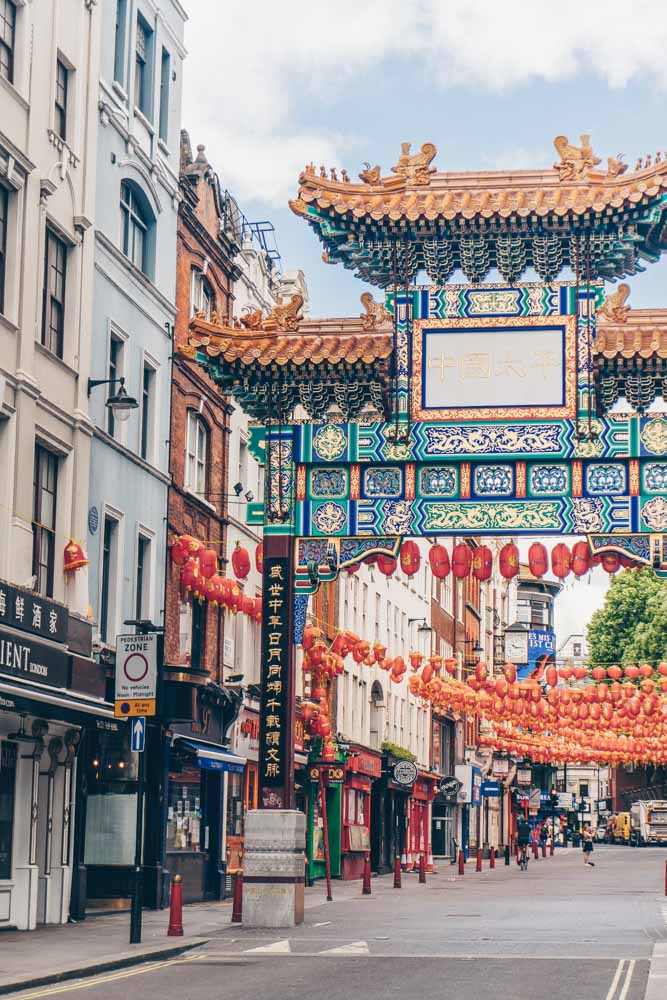
Each is designed in a different style, and all are beautiful, but the newest, the so-called fourth gate on Wardour Street, added in 2016, is the most striking of the lot. Its design pays homage to the Qing dynasty, intricately decorated in dramatic blues and greens, and it’s the largest Chinese gate in the UK.
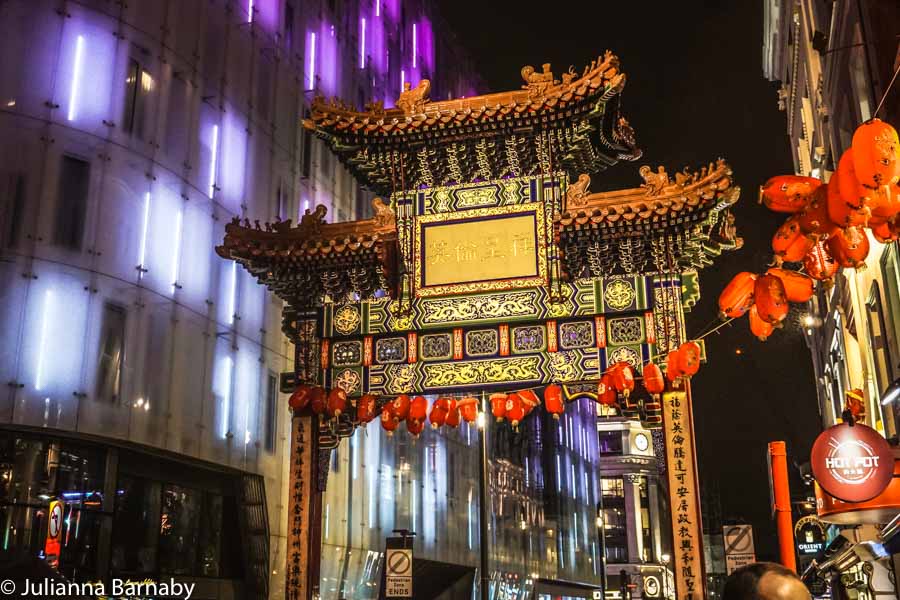
The three other gates, found along Gerrard Street, are a little less grand but just as lovely. Despite looking centuries old, they were actually built in the 1980s.
Shop for traditional goods
Shopping in Chinatown is quite the experience, take it from us. You’re never entirely sure what you’ll come away with, and that’s half the fun.
Bakeries sell scrumptious treats, boutiques hawk all kinds of interesting trinkets and wares, and there’s genuine variety on every street. Ornate paper lanterns and maneki-neko, the waving-paw lucky cat, are among the most loved souvenirs, and it’s also the place to stock up on authentic Asian spices and sauces for your own kitchen. You might not cook quite like the chefs working away in Chinatown’s restaurant windows, but you won’t go far wrong starting with the right ingredients.
Celebrate Chinese New Year
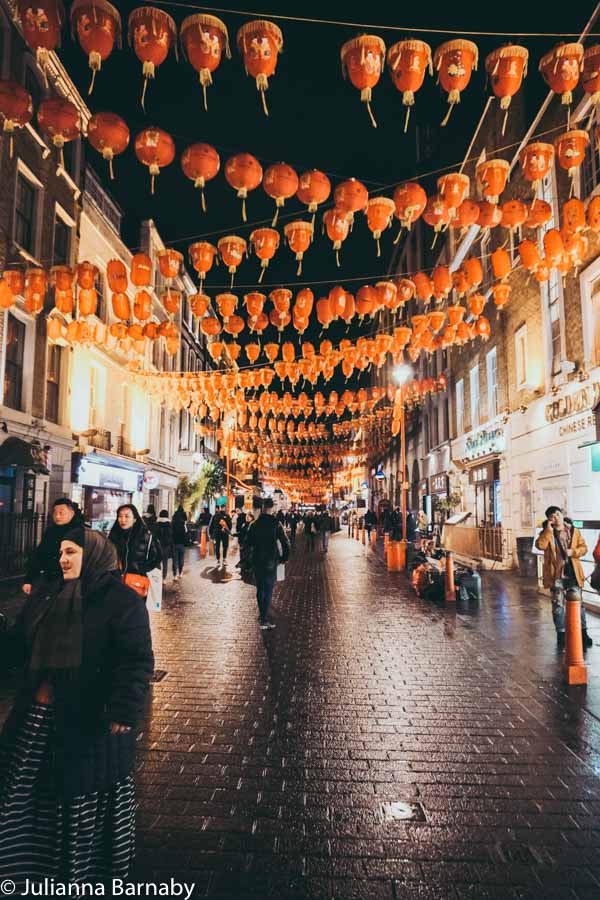
There’s never a bad time to visit Chinatown, but it’s a genuine spectacle during Chinese New Year. The entire area erupts into colour, costumes, food, music and dancing, all of it.
Chinese New Year follows the lunar calendar, so the date shifts each year, usually falling in late January or February, worth checking the exact date well in advance. It’s an incredible mix of Chinese tradition and London energy, a dragon dance winding through the streets, a proper lantern festival, nothing else in the city looks quite like it.
Find the 1888 mural in Horse and Dolphin Yard
Tucked just off the main streets in Horse and Dolphin Yard is a genuinely striking piece of history most visitors walk straight past, an outdoor mural dating back to 1888, spanning an impressive eight metres by five. It’s one of Chinatown’s more overlooked landmarks, worth the short detour if you’re after something a little different from the lanterns and gates.
Karaoke at Plum Valley
Karaoke is a proper East Asian tradition, and one of Chinatown’s most popular activities, with plenty of venues staying open into the early hours. Plum Valley has some of the fanciest booths in London.
It’s also a genuinely good place to eat, serving delectable dim sum in a sleek, stylish setting. But if we’re honest, the karaoke booths are the real draw, think a private nightclub with neon lights, a full dining table and a screen loaded with everything from Chinese pop to K-pop and Western hits. Warm up those vocal cords.
Catch a film at the Prince Charles Cinema
We’re aware this isn’t particularly Chinese, or even Asian, but The Prince Charles, one of London’s best cinemas, belongs here anyway, because you genuinely can’t beat stepping out of a good film and straight into the neon glow of Chinatown at night.
The programme leans on old classics, mixed in with new releases the team deem worthy of their screens, plus regular marathon nights and singalongs if you want to get properly stuck in. Our tip: catch something by Wong Kar Wai, Chungking Express or In the Mood for Love both come round regularly, then head down the street for a bowl of noodles and about as close to a Hong-Kong-in-London evening as you’ll find.
The best things to eat and drink
It’s simply criminal to leave Chinatown without eating your way through it, street food snacks, petite desserts, the works. Here are some of the best things to eat and drink in Chinatown, Soho.
Bubble tea
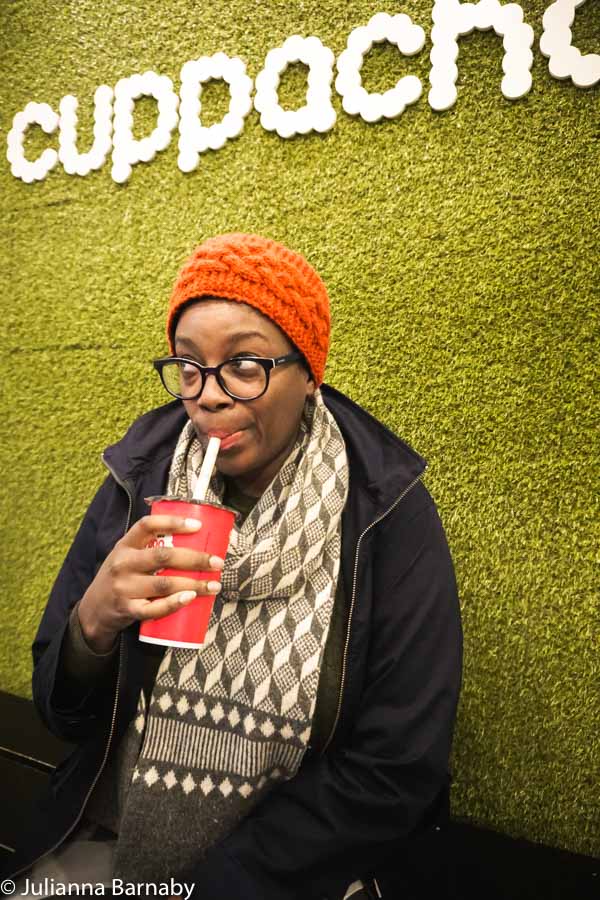
Is it a drink? A snack? A bit of both? Whatever bubble tea actually is, it’s taken the world, Chinatown included, by storm.
Traditionally a Taiwanese drink made from tea and powdered milk with flavoured jelly balls at the bottom, you’ll find plenty of innovative twists across Chinatown. We particularly love Cuppacha and their Taro milk bubble tea with tapioca pearls, chewy and filling in a way that takes some getting used to, but is well worth trying. Happy Lemon and Chatime are both solid go-tos too.
Roast duck at Four Seasons
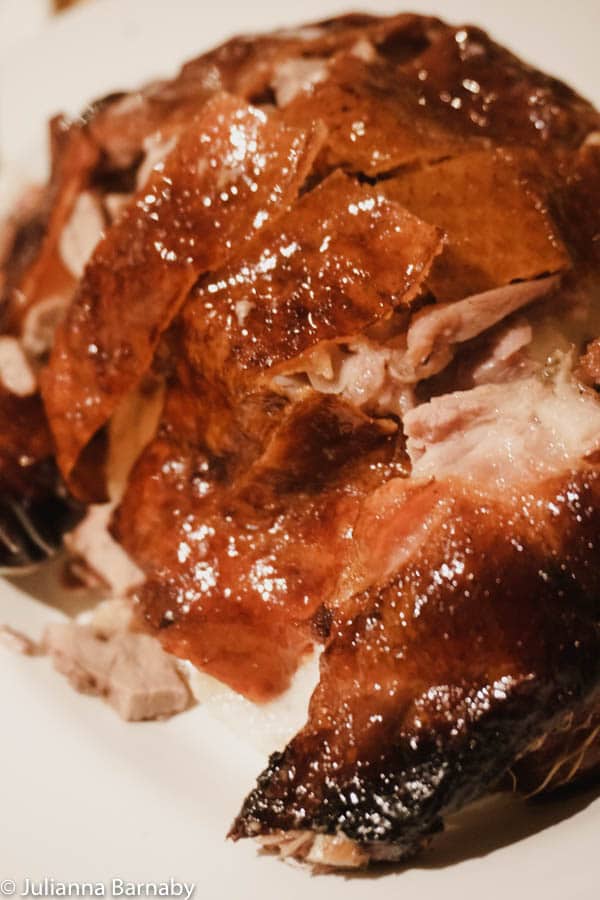
If you like duck, Four Seasons is the place. If you don’t, this might just be the dish that changes your mind.
It’s routinely rated among the best roast duck in the UK, the recipe distinctly Pan-Chinese, though the ducks themselves actually come from Ireland. Crispy skin, melt-in-the-mouth meat underneath, exactly the combination that’s made this such a firm Chinatown favourite for an evening feast.
Dim sum at Royal China Chinatown
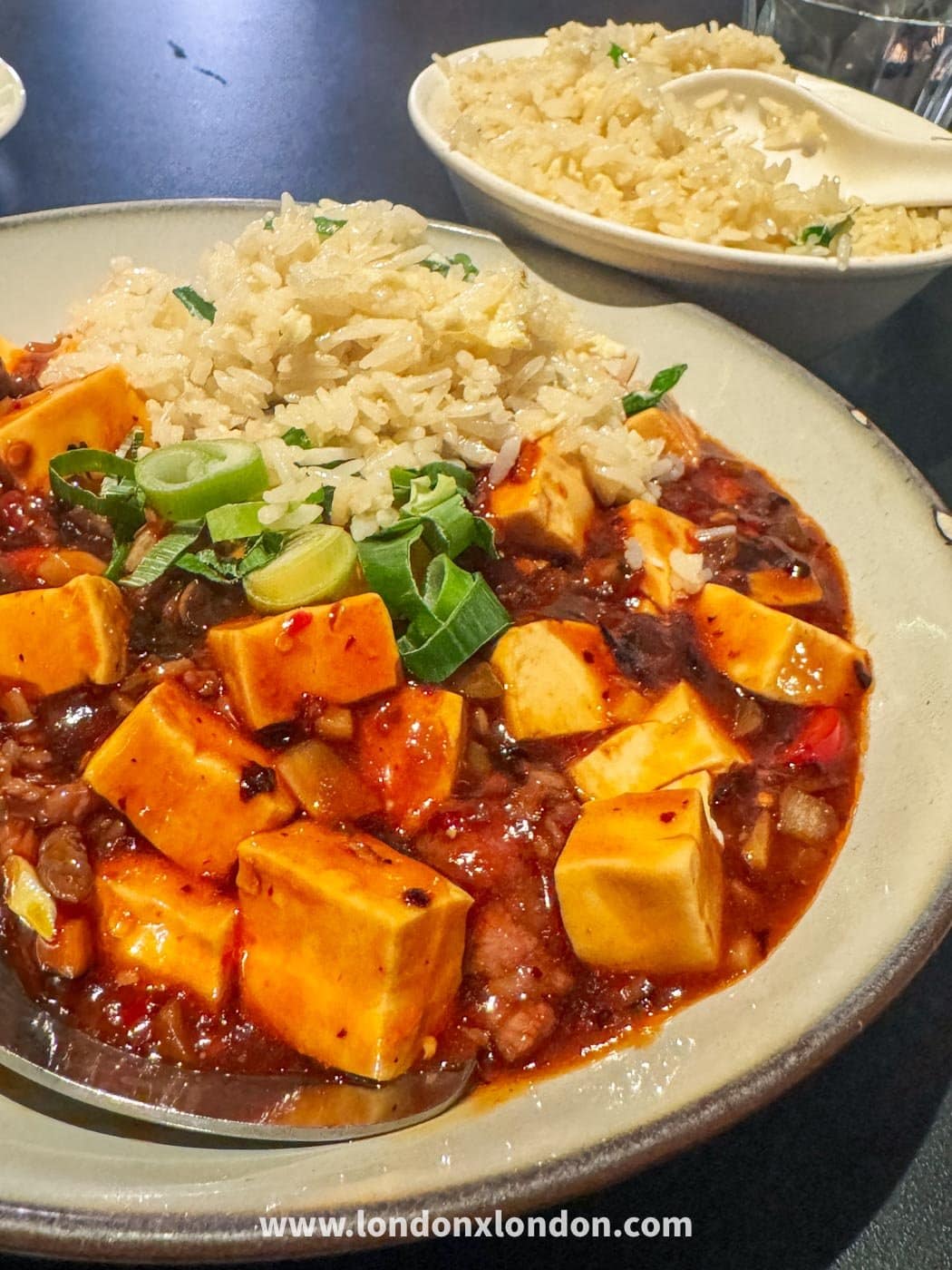
Part of the well-regarded Royal China Group, Royal China Chinatown sits right on Gerrard Street and is one of the more reliable dim sum spots in the area, handmade dumplings, a proper Cantonese banquet feel, round tables built for sharing.
We’d point you specifically toward their mapo tofu, silky tofu in a rich, fiery sauce, genuinely one of the better versions we’ve had in the area, and a good way into the menu if you’re eating with a group and want something a little spicier alongside the classics.
Cocktails at the Experimental Cocktail Club
Londoners love a good speakeasy, and the Experimental Cocktail Club is no exception. Hidden behind an unmarked door on Gerrard Street, you climb the stairs into a three-floor warren filled with genuinely skilled mixologists, and plenty of people more than willing to pay tribute to that skill one cocktail at a time.
The menu is adventurous, the cocktails close to perfection. Highly recommended, and it’s still very much open, tucked in at 13A Gerrard Street, so don’t let a battered-looking door put you off.
Hand-pulled noodles at Noodle Inn
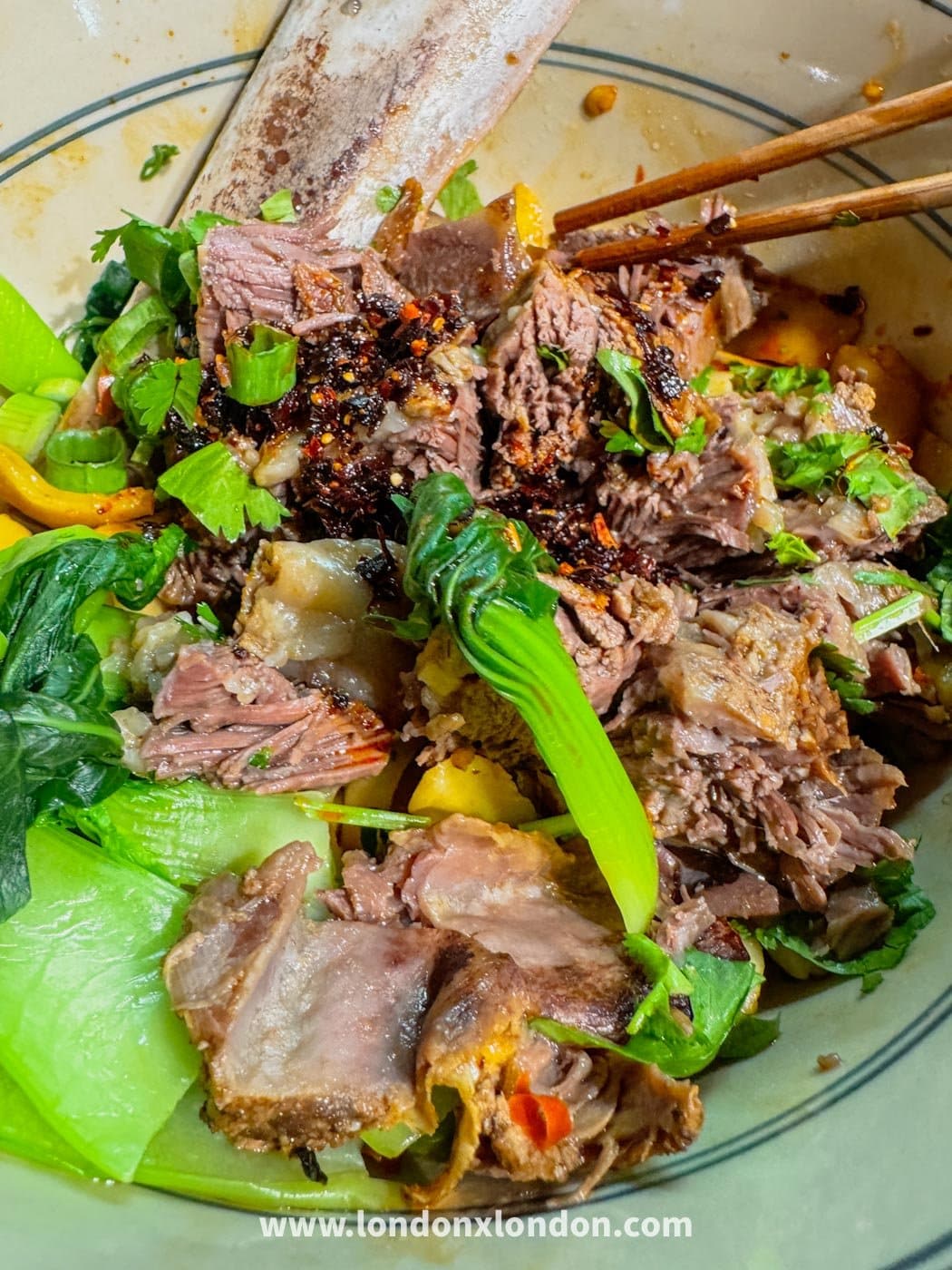
A quick note before this one: Noodle Inn’s original, most talked-about branch actually sits just outside Chinatown’s four gates, on Old Compton Street in Soho, rather than technically within them. We’re including it anyway, because it’s close enough to be part of the same evening out, and because it’s genuinely one of the best things to eat within a few minutes’ walk of Chinatown right now.
Chefs pull the noodles by hand right in front of you, Xi’an-style biang biang noodles stretched, smacked and dropped straight into the pot, plus a genuinely good range of dumplings. Go for the noodles drenched in chilli oil with braised beef, rich, numbing and exactly the kind of dish worth queuing for, and there usually is one. Arrive early evening if you want to avoid the worst of it.
Old-school Cantonese at Wong Kei
If Chinatown has an institution in the truest sense, it’s Wong Kei, a proper old-school Cantonese canteen on Wardour Street that’s been doing exactly what it does for decades, cash only, no frills, a menu longer than you’d expect and prices that still feel like a genuine bargain for the area. It’s the kind of place regulars go back to for years, sweet and sour pork, char siu and rice, or a big bowl of wonton soup, all reliably good.
Hot pot at Baozi Inn
We love Sichuan food, powerful, spicy flavours, and a real sense of occasion built into the way it’s eaten. Hot pot is a good example, a bowl of boiling stock placed on the table, various ingredients skewered and cooked right there, best enjoyed as a group.
The hot pot at Baozi Inn is a genuinely unusual one, alongside the classic vegetables and meats, you can go for hot dog, kelp or pig intestine if you’re feeling adventurous. As adventurous, or as unadventurous, as you like, the choice is entirely yours.
Malaysian at Rasa Sayang
Despite the name and decorations, Chinatown is genuinely multicultural, with plenty of different cuisines represented alongside the Chinese restaurants. Rasa Sayang is one of our favourites, Malaysian favourites with a slight Singaporean twist.
It hasn’t invested much in elaborate decor, and it’s not where you’d take a fancy date, but the food is what matters here, and it’s genuinely delicious. Char kway teow and beef rendang are authentic and mouthwatering, and it’s one of the most affordable places to eat in the whole of London, the fried chicken wings alone will set you back less than a single Tube fare.
Taiwanese fried chicken at Ji Chickens
We’d recommend finding a quieter time to visit Ji Chickens, also known as The Chicken Shop, TikTok has well and truly found this one, and the queues have grown to match.
Push through the crowd and you’ll come away with a small bag of some of the best fried chicken in central London, no exaggeration. Whether you go basic, cheesy or spicy is up to you, but the plum chips are worth adding regardless.
Japanese-American fusion at Ichibuns
If you’ve never heard of Ichibuns, we’re about to change your evening. The cuisine blends American and Japanese food, katsu sandos, wagyu burgers (genuinely good enough that we’ve named them among the best burgers in London), and inventive sushi options.
The decor is unapologetically Japanese-inspired, lucky cats and retro packaging on every wall. Head there in the evening to catch it transform into Ichibar, a cool, cosy spot for cocktails right in the centre of the city.
Bubble waffles at Bubble Wrap London
Waffles are good. Waffles filled with ice cream are better, and that’s exactly what Bubble Wrap London does, a classic Hong Kong street food given a proper London twist.
The waffles themselves, filled with pockets of sweet egg batter, are already a genuine treat before you add anything at all. Then Bubble Wrap loads them with ice cream and toppings, banana split, Oreos, peanut butter, exactly the kind of tasty, slightly ridiculous treat you want while wandering Chinatown’s streets.
Cantonese at Cafe TPT
Few things beat the transportative power of dinner in Chinatown, and Cafe TPT is one of the best spots for it, a proper rendition of the kind of cafe you’d find all over Hong Kong.
Go for a bowl of wonton or noodle soup for the full experience, add a couple of sharing dishes if you’re in a group, and wash it all down with milk tea before heading back out to soak up more of the neighbourhood. Cafe TPT also has some of the best prices in all of Chinatown, worth knowing if you’re on a budget.
Speakeasy dim sum at Opium
Look for the nondescript black door tucked between two restaurants, and you’ll find Opium, a speakeasy-style cocktail lounge and dim sum parlour that’s easy to walk straight past if you don’t know it’s there.
It’s a genuinely good combination, cocktails worth lingering over and dim sum that holds its own, in a moody, atmospheric room that feels a world away from the street outside.
Thai at Speedboat Bar
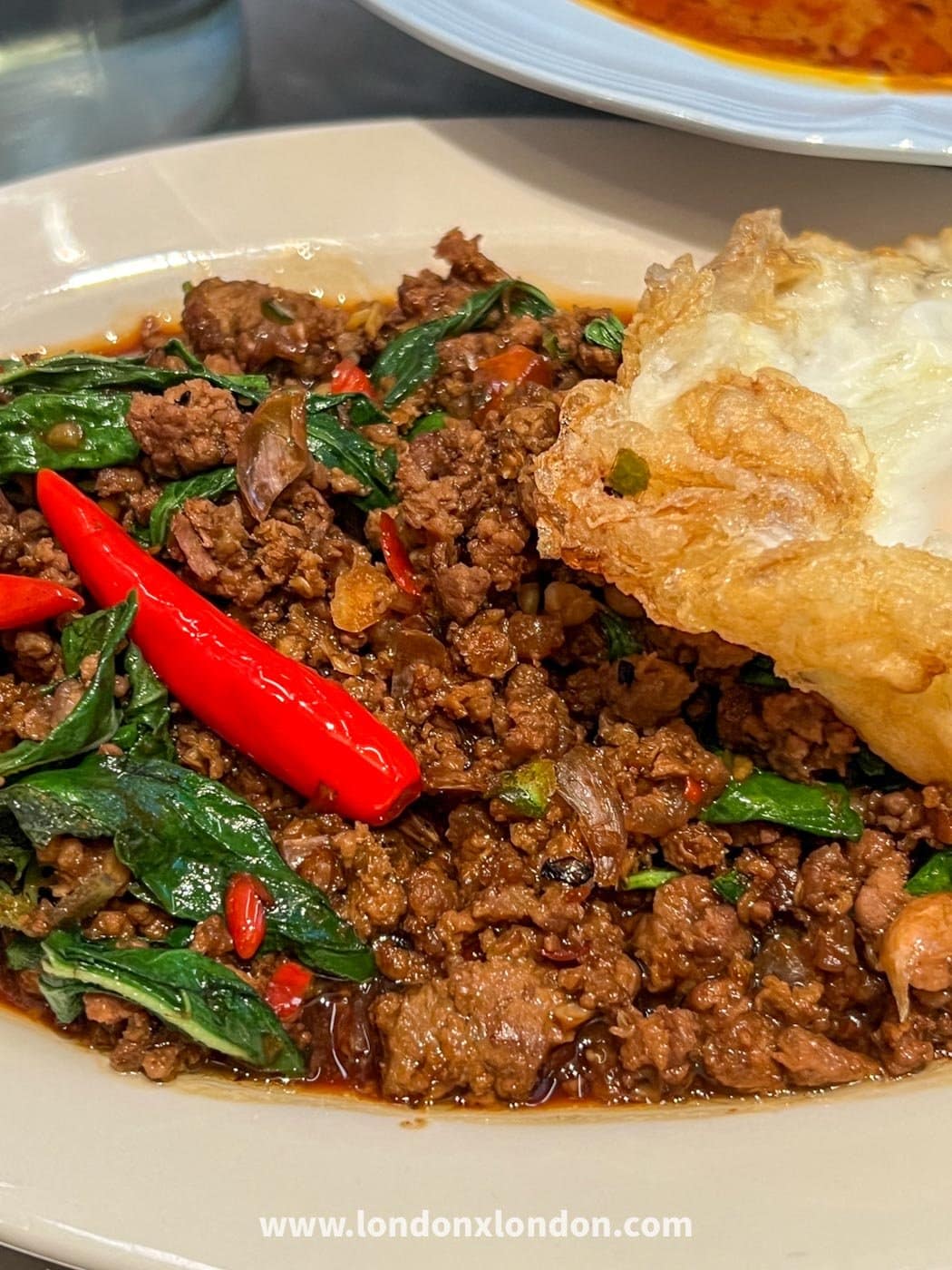
If you want to turn up the spice, head to Speedboat Bar, the Chinatown outpost of chef Luke Farrell’s Thai empire. Farrell keeps things properly traditional rather than pandering to Western tastes, and the cooking is excellent for it, our pad kra pao, minced meat stir-fried with holy basil and topped with a crispy fried egg, is exactly the kind of fiery, comforting dish worth going back for.
Dishes here run hot, and the quality is hard to match anywhere else in London. Speedboat Bar stays open late too, turning into as much a bar on weekend nights as it is a restaurant, with games upstairs, ice-cold beer and a great menu of smaller bites if you’re not after a full meal. Read our full review for exactly what to order.
Baos at Bun House
You’ll spot Bun House by its queue first, often out the door and winding down the street. Don’t be put off, it moves quickly, and the queue itself is a decent sign of how popular this place is.
There’s a small restaurant serving dim sum and tea, but skip it, you’re unlikely to get a seat, and you’re really here for the baozi. About six flavours to mix and match, the classic pork bun is always a hit, and the vegetarian buns are just as good. Pick a few, get them boxed up, and wander the streets of Chinatown eating your way through them. You can’t beat it.
The London x London Take: Chinatown has genuinely diversified over the past few years, it’s no longer just uniform Cantonese menus behind identical laminated signs. Noodle Inn and Wong Kei show the two ends of that story well, one is part of the current wave of regional Chinese specialists reshaping the area, the other’s been quietly doing the same thing brilliantly for decades. Try to hit at least one of each on a proper visit.
A brief history
London’s Chinatown has a long history, though not always in its current Soho location.
The first Chinatown was actually in the East End, in Limehouse, where the earliest Chinese migrants to London arrived and gradually built businesses to serve other migrants and sailors passing through. By the early 1900s, the area was teeming with restaurants, import stores and even opium dens, legal at the time. Other migrant groups, the Maltese in particular, also left their mark, though Chinese influence remained dominant throughout.
Originally, Limehouse’s Chinatown was mostly frequented by migrants looking for a taste of home, but its popularity spread and business boomed, at least for a while. Shipping declined through the mid-1900s, and the Second World War did real damage to both London and Chinatown itself. Many businesses moved on, eventually settling in Soho, alongside new ventures springing up in the same streets.
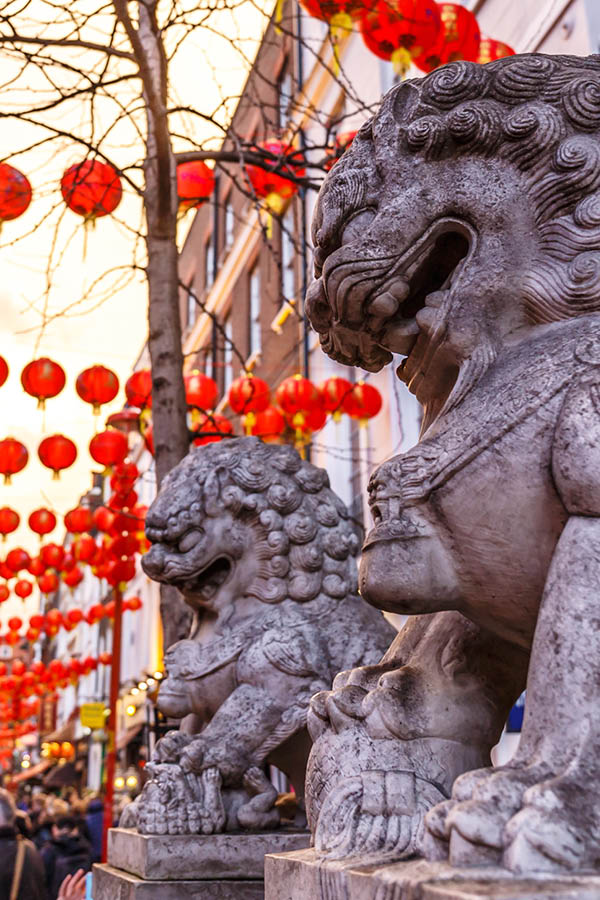
It was through the 1970s and 80s that Chinatown really took on the character we know today, colourful lanterns, stone lions, the distinct look that makes it instantly recognisable.
Where is it?
Chinatown sits at the heart of London’s West End, framed by Shaftesbury Avenue to the north, Charing Cross Road to the east, Leicester Square to the south, and Rupert Street to the west.
It’s a short walk from Soho and from some of London’s biggest attractions, Trafalgar Square, Covent Garden and Piccadilly Circus all included.
Like most of central London, it’s easy to reach on the Underground. The nearest stations are Leicester Square and Piccadilly Circus, both under five minutes’ walk away, and the Swiss glockenspiel in Swiss Court is on the way between the two. And honestly, if you’re wondering whether you’ve found the right place, you’ll know, the ornate gates and colourful lanterns aren’t easy to miss.
Practical information
- Most restaurants and bars here keep genuinely long hours, plenty stay open until at least midnight, and some do a roaring trade until 4am.
- Visiting for Chinese New Year? Public transport schedules shift to keep up with demand, and some of the activities in this guide may be affected too, worth checking ahead if you’re on a tight schedule.
- Chinatown is easy to reach from anywhere in the city on the Tube, so there’s rarely a need to stay right in the neighbourhood itself.