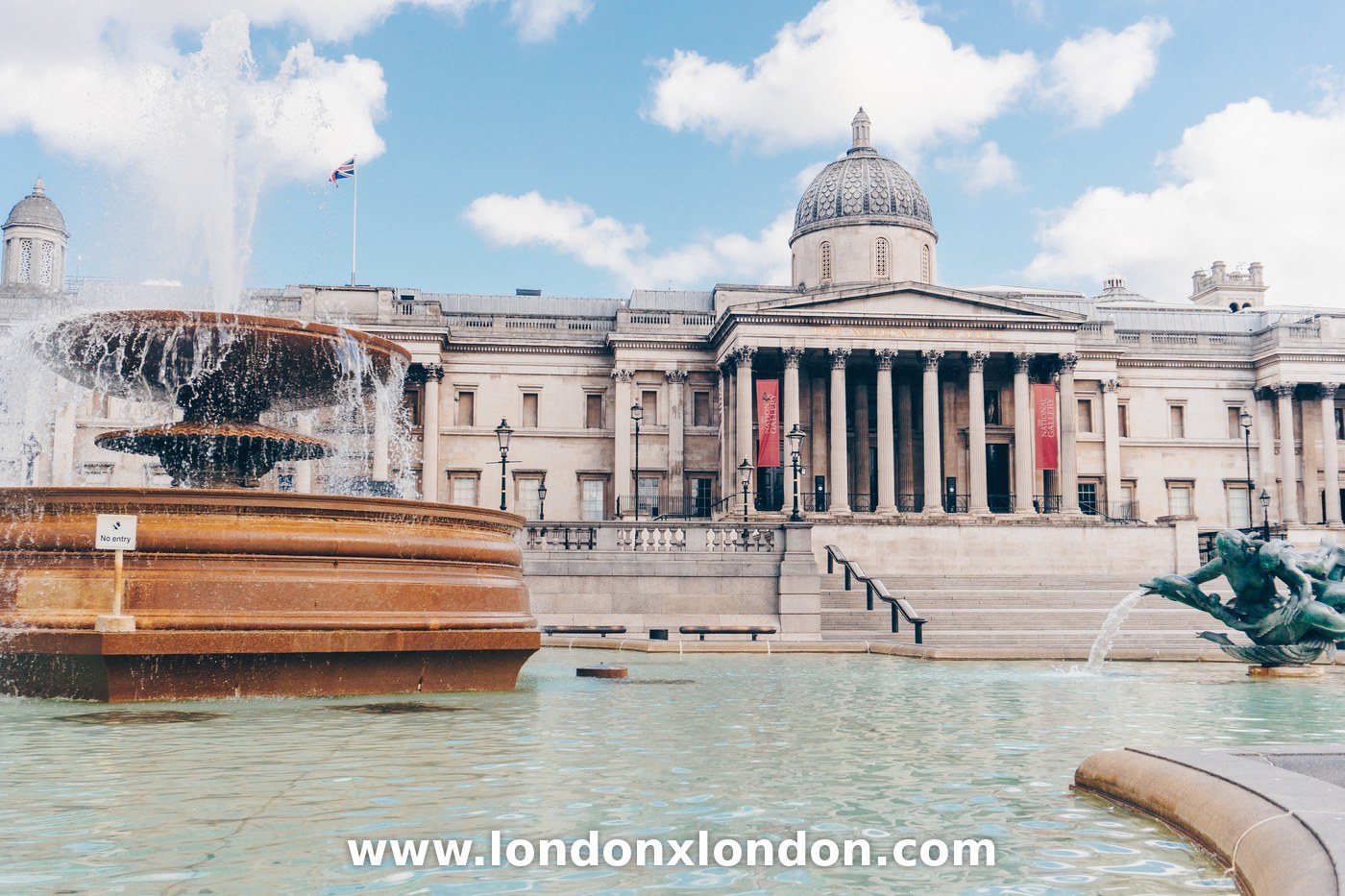
Everyone photographs the lions. Almost nobody looks at the water.
The two fountains in the middle of Trafalgar Square are not decoration and they have nothing to do with Nelson. They are a naval war memorial to two admirals whose supporters spent thirty years arguing about which of them had lost the Battle of Jutland. The architect who designed them had been dead four years by the time they were finished, and the Victorian fountains they replaced are now in Canada.
They commemorate Jellicoe and Beatty
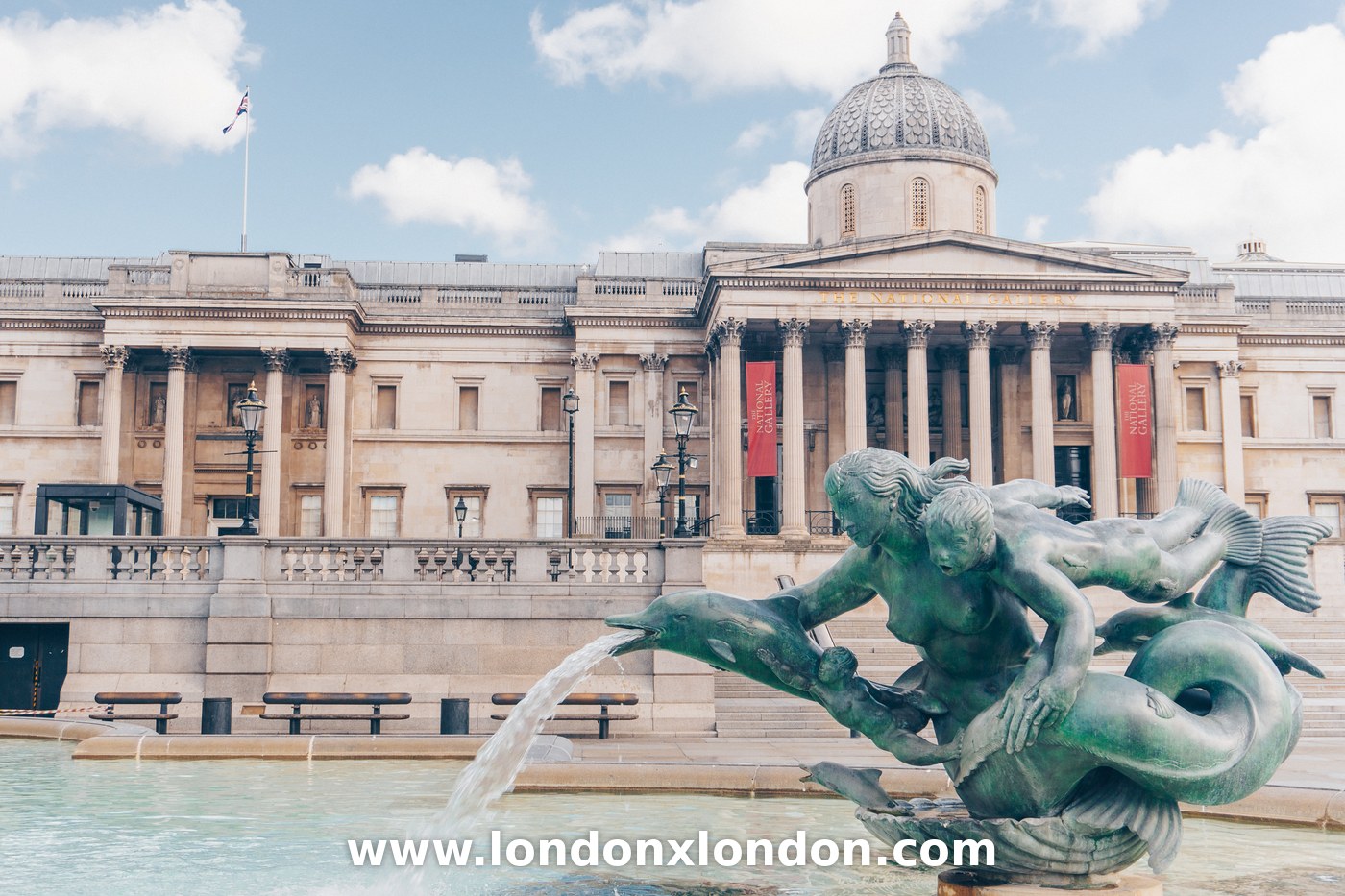
The west basin is a memorial to Admiral of the Fleet Earl Jellicoe, who commanded the Grand Fleet at Jutland in 1916. The east basin is a memorial to Admiral of the Fleet Earl Beatty, who led the battlecruisers that day and took over Jellicoe’s job afterwards. They died within five months of each other in 1935 and 1936, and the scheme was designed to carry them both.
Pairing them was not a neutral act. Jutland ended without the crushing victory the country had been promised, and the blame hardened into two camps: Beatty’s people held that Jellicoe had been too cautious in the pursuit, Jellicoe’s people held that Beatty’s signalling had been a mess. The row ran through the Admiralty, the official histories and the letters pages for decades. Standing the two of them either side of the same square, looking the same way, was about as close to a truce as anyone managed.
The memorial was inaugurated on Trafalgar Day, 21 October 1948.
There are three busts on the north wall, not two
Go up to the low wall below the National Gallery terrace and you will find three bronze heads on plinths, flanked by lions and anchors. Most people assume they are a matching set. They are not.
- Jellicoe, by Sir Charles Wheeler, unveiled on 21 October 1948
- Beatty, by William McMillan, unveiled the same day
- Cunningham, by Franta Belsky, added nineteen years later and unveiled on 2 April 1967
Andrew Cunningham commanded in the Mediterranean in the Second World War and finished as First Sea Lord. He was inserted between the other two long after the memorial was complete, which is why his head reads slightly differently in style. The inscriptions give you nothing to work with either: each is a surname and a pair of dates. JELLICOE 1859-1935. No rank, no ship, no explanation.
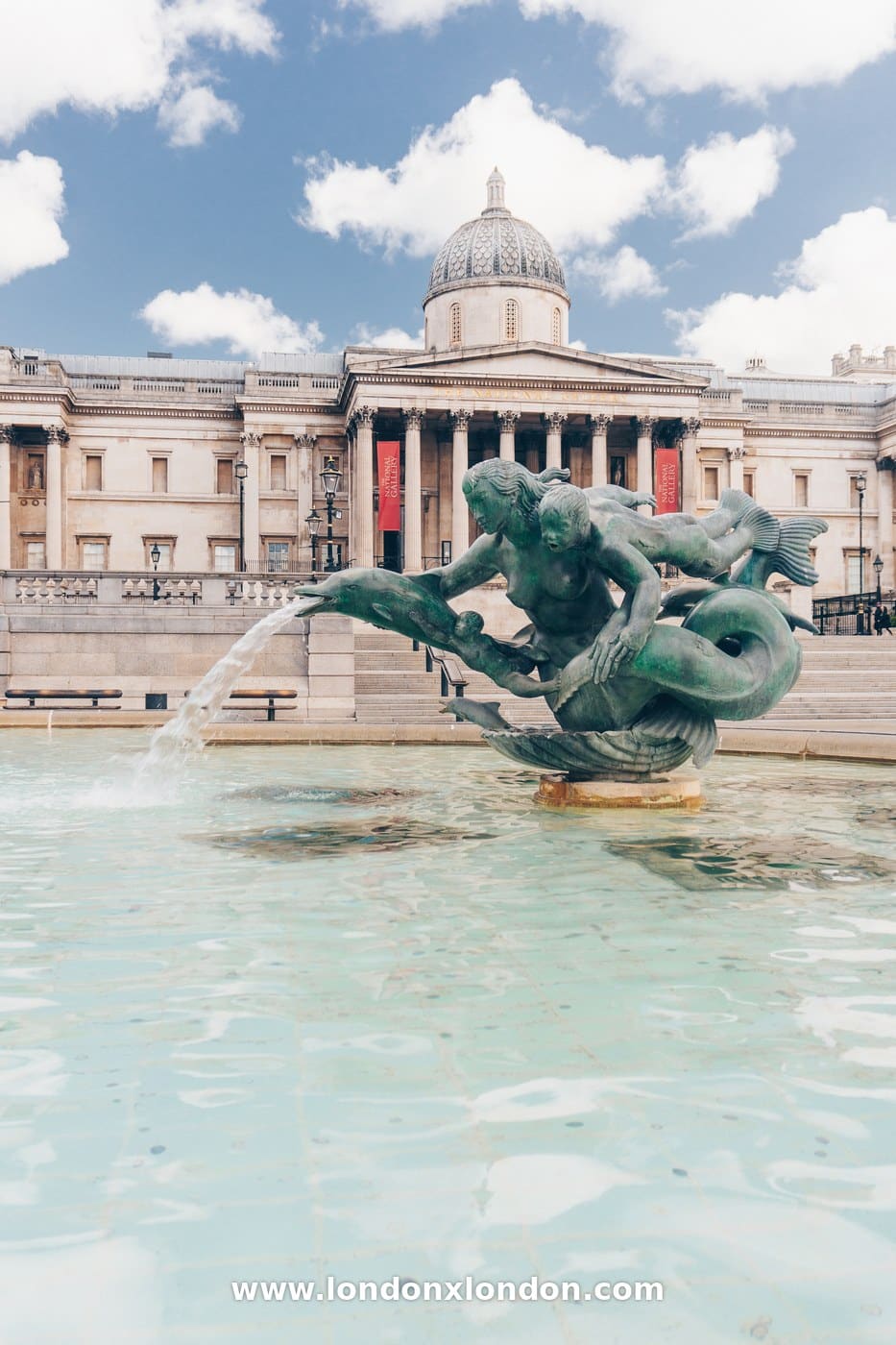
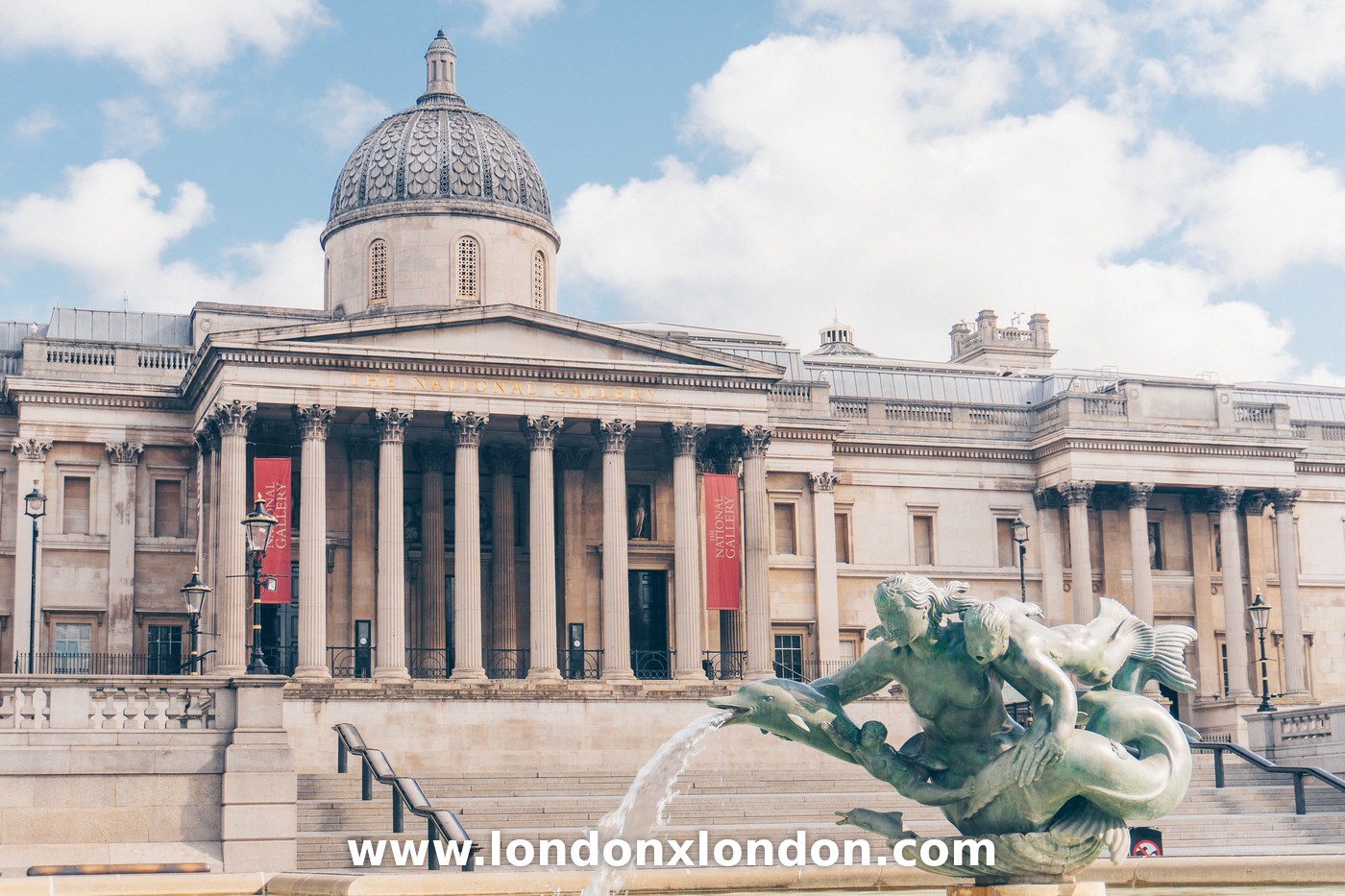
Wheeler also sculpted the bronze mermaids, tritons and dolphins in the Jellicoe basin; McMillan did the ones in Beatty’s. Once you know that, the two fountains stop looking identical, and you can spend a pleasant few minutes working out which sculptor you prefer. We are firmly on Wheeler’s side, for the child clinging to the dolphin’s back.
Lutyens never saw them run
Sir Edwin Lutyens designed the remodelling between 1937 and 1939: the deep vase-shaped centrepieces, the wide basins, the arrangement you are looking at now. The war stopped the work. The bronzes did not go in until 1948, and Lutyens had died on 1 January 1944.
He is all over London once you start looking, but this is the piece with the oddest afterlife. One of the most photographed objects in the country, finished by other hands, four years after its architect’s death.
The Victorian originals are in Canada
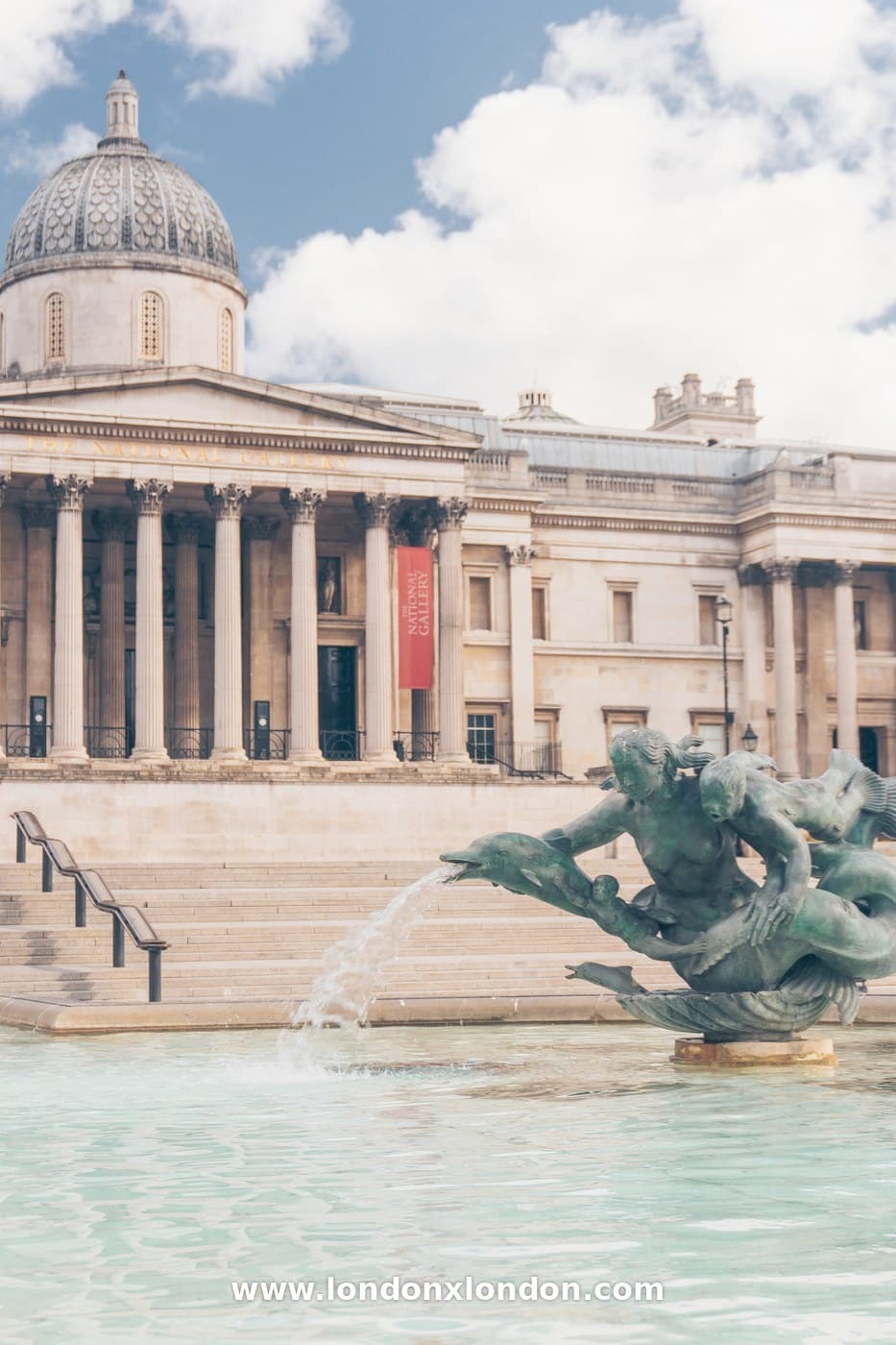
There were never meant to be fountains here at all. They were added to the plans in 1841 at the suggestion of the paving board, for the thoroughly unromantic reason that the new asphalt threw up heat and glare and moving water was thought to take the edge off it. The First Commissioner of Woods and Forests noted with satisfaction that they also swallowed up space a crowd might otherwise have used. Charles Barry’s red granite basins went in around 1845.
When Lutyens’s replacements arrived, the Victorian originals were given away rather than broken up. They were handled through the National Art Collections Fund and had been shipped to Canada by January 1940. One stands in Confederation Park in Ottawa. The other is in the Wascana Centre in Regina, Saskatchewan. A third basin is said to have ended up in an Essex garden, which nobody has ever satisfactorily pinned down.
You will find a sale price for the pair quoted in various places online. They were a gift, and no credible source carries a figure.
The water has its own history
The original supply came from two wells sunk beneath the square, connected by a tunnel that runs under the National Gallery. Quality was not always a strong point. In 1889 the Commons held a short and splendid exchange about what members called the generally foul condition of the water, in which the government’s reply was that what went in was condensed water from the engines and not, it was carefully specified, bilge water.
The modern system recirculates around 100,000 gallons and runs on three pumps. The jets can be pushed to roughly eighty feet. They almost never are, because the spray would land on the traffic and on everyone waiting at the top of Whitehall, so what you see on an ordinary Tuesday is a deliberately restrained version of what the fountains can do. On a still day they get noticeably taller.
You are not allowed to bring a canoe
The square has its own byelaws and they repay a read. Polluting the water carries a fine of up to £200. Separately, in a clause of its own, it is an offence to place any canoe, boat or inflatable object in any fountain. Rules that specific do not get drafted in the abstract.
There is a sadder chapter too. Two women died in a crush in the square on New Year’s Eve 1983, and the response set out in the Commons that December was to board the fountains up and drain them for the night. Crowd management on 31 December has been a planned operation here ever since, which is why the square you see on the news at midnight looks nothing like the free-for-all your parents remember.
Seeing them properly
Come before 9am. The light arrives low from the east, the bronzes are backlit against the National Gallery, and you can get the whole basin without a hundred people in the frame. It is also the only hour when you can hear the water over the traffic.
Stand on the north side by the three busts and look south. You get the lot in one go: three admirals, two fountains, Nelson, and Whitehall running away behind. While you are there, the hidden secrets of the Trafalgar Square lions are worth ten minutes on their own, and whatever is currently on the Fourth Plinth is fifty feet to your left.
- Where: Trafalgar Square, Charing Cross, London WC2N 5DN
- Nearest tube: Charing Cross, on the Northern and Bakerloo lines, two minutes away
- Cost: free, and the square is open around the clock
- Listing: the fountains are Grade II* listed in their own right; the square itself is Grade I on the Register of Parks and Gardens
The London x London Take: Trafalgar Square is the bit of London that Londoners are quickest to dismiss as a tourist trap, which is exactly why the detail in it goes unread. The fountains repay about four minutes of proper attention. Go and find the three names on the north wall, then look hard at the two sets of bronzes and see whether you can tell Wheeler’s from McMillan’s before you check. It is a small thing and it will change how you walk through the square for good. Pair it with the rest of our hidden gems in London if you want to make an afternoon of the area, or work it into one of our self-guided London walks.