It is a low yellow-framed bungalow opposite Wimbledon Common that almost nobody has been inside. Richard and Su Rogers built it for his parents in 1968, worked out most of the Centre Pompidou while they were at it, and the family has now handed it to the National Trust. Renzo Piano calls it a miniature prototype for what the two of them later did in Paris.
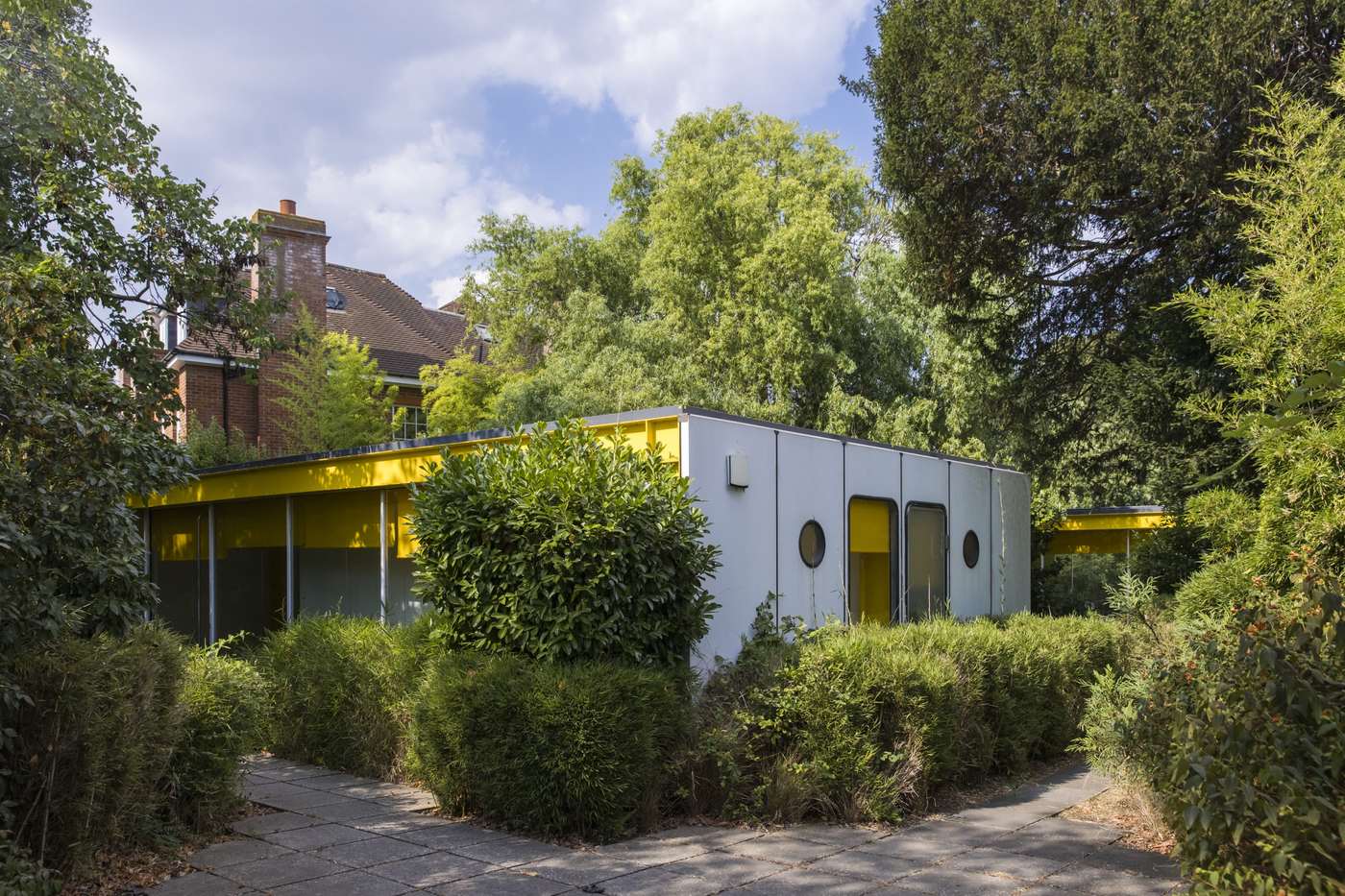
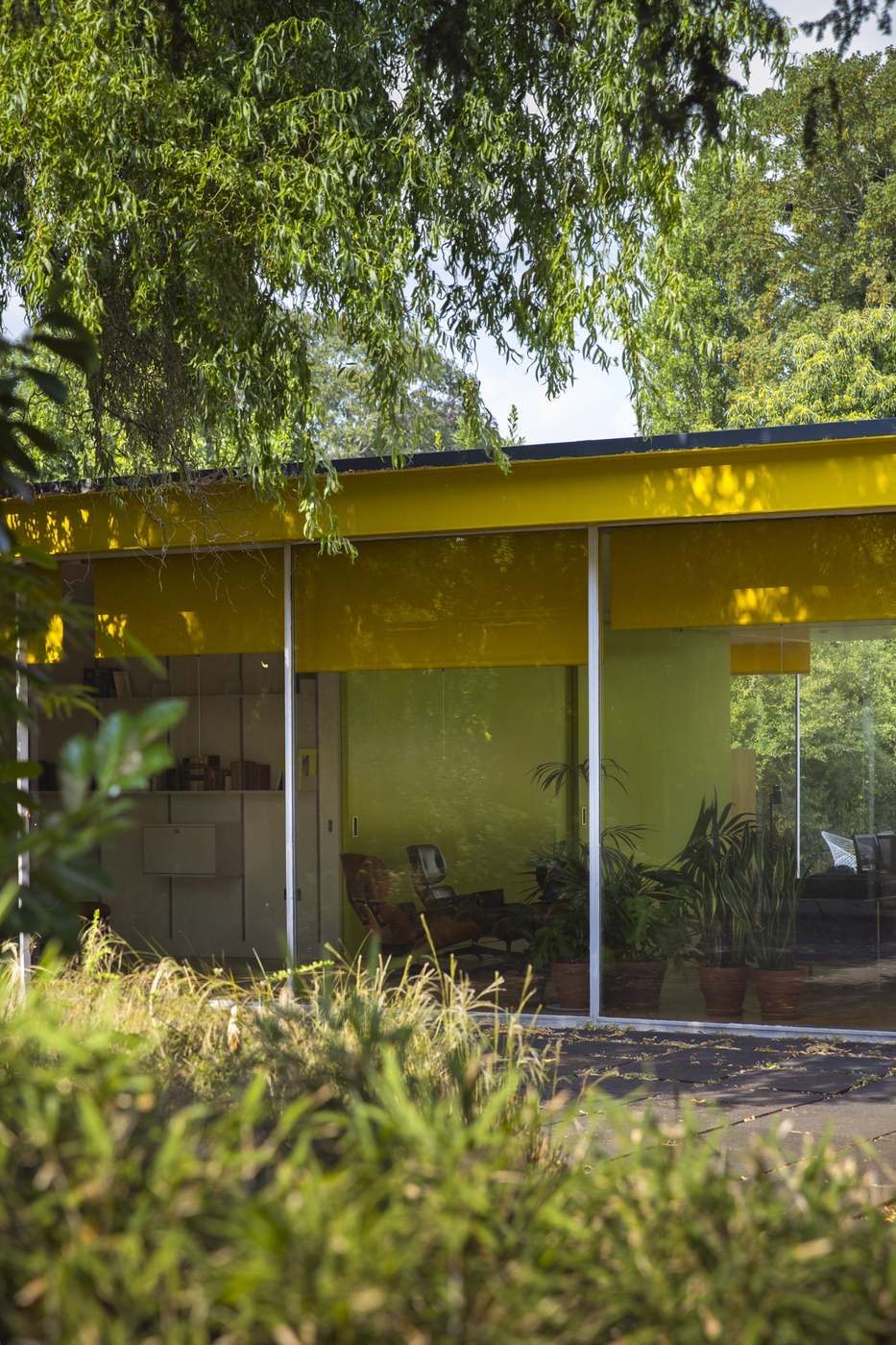
Drive along Parkside and you would take it for a rather good sixties bungalow, if you noticed it at all. Two flat-roofed pavilions set back behind hedging, a run of yellow steelwork, portholes punched into a white panelled wall. It looks like a small thing.
It is not a small thing. 22 Parkside is where a thirty-five-year-old Richard Rogers, working with Su Rogers a year after Team 4 broke up, tested nearly everything he would go on to be famous for. Nine years later he and Piano turned the same ideas inside out on a much larger building in Paris.
A prototype disguised as a house for your mum and dad
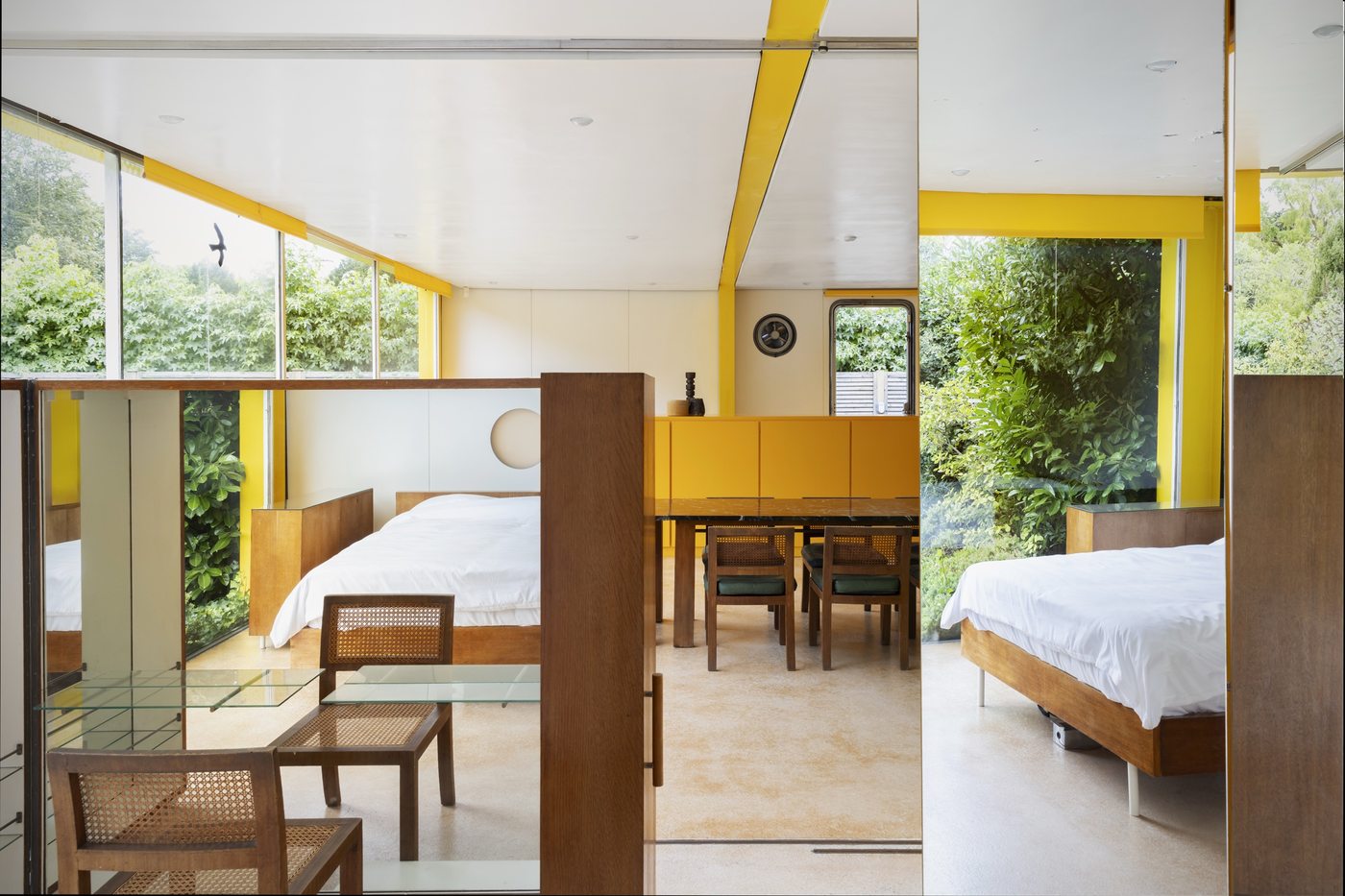
Nino and Dada Rogers were Italian emigres who had left for England in 1938. He was a doctor and wanted a consulting room. She was a potter from Trieste who had been taught English by James Joyce and who loved to cook, and the open-plan kitchen was designed around her, drawn from an Italian upbringing where meals were the point of the household. What they got, along with all that, was a building system.
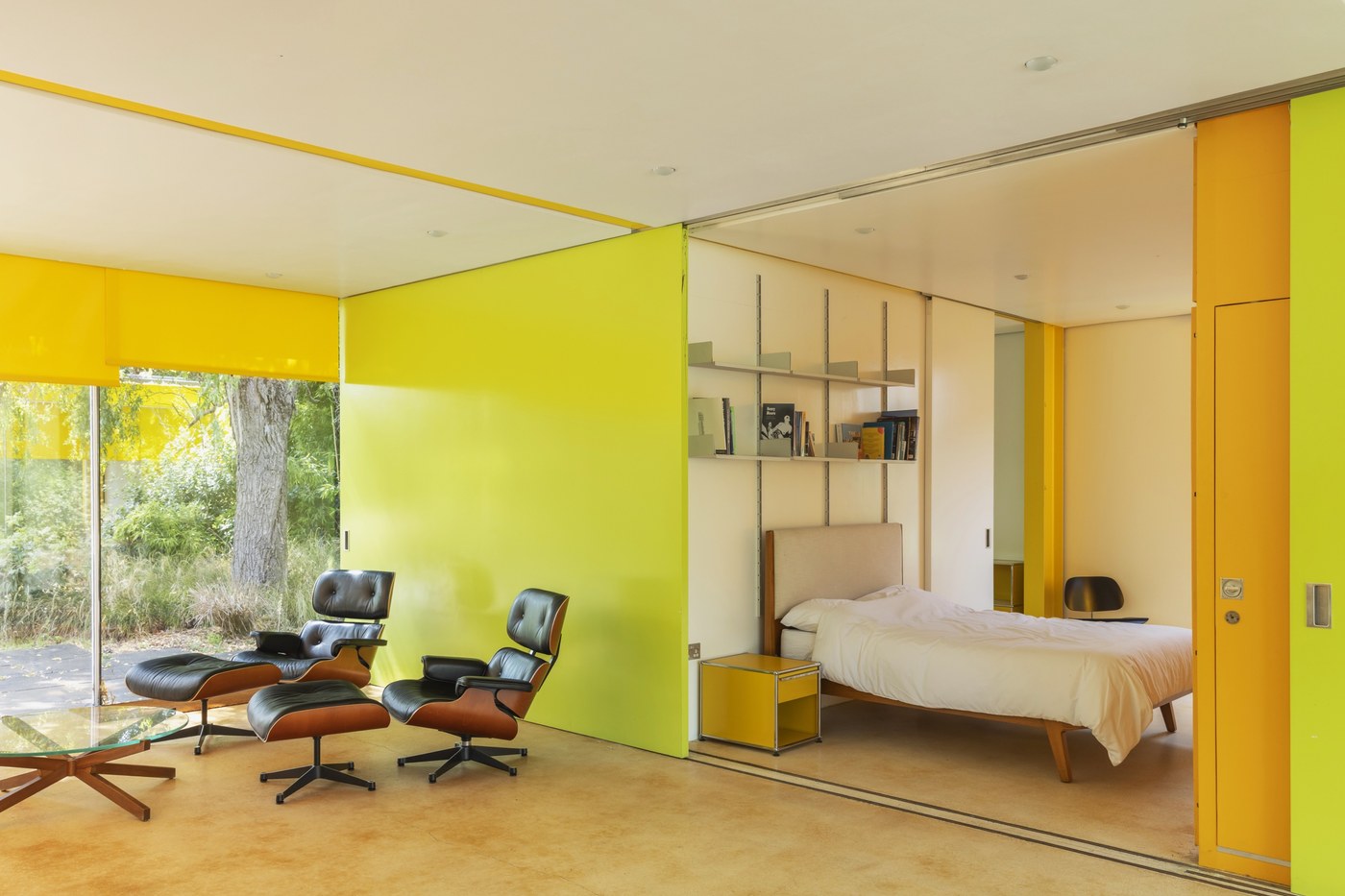
Eight welded clear-span steel portals, painted yellow, carry the whole thing, five over the main house and three over the smaller studio and flat at the front. The walls are prefabricated aluminium sandwich panels of the sort used in cold stores, zipped together with neoprene gaskets. The end walls are floor-to-ceiling glass. Inside there is no structure at all: the rooms are divided by lime green sliding partitions and a freestanding kitchen counter, and the whole plan can be rearranged in an afternoon.
The point was not luxury, it was speed and cost. This was meant to show that a good house could be built quickly out of standard industrial parts. Rogers described it as a transparent tube with solid boundary walls. Historic England, listing it Grade II* in 2013, called it an early executed example of a High-Tech steel-framed house in Britain, which is the drier way of saying the same thing.
The line from Wimbledon to Paris
Exposed standard steel, colour-coded and left on show. Industrialised parts bolted together dry rather than wet-built on site. Services pulled out of the way so the inside can be a column-free space that adapts to whoever is living in it. All of it is here, at the scale of a family home, years before the buildings that made those ideas famous went up.
Piano, who designed the Pompidou with Rogers, is unambiguous about the debt. “There is no doubt that 22 Parkside was one of the most important buildings that Richard created,” he said. “It worked as a miniature prototype for the sort of approach we took in the Centre Pompidou.”
Norman Foster, who had been Rogers’s partner in Team 4 until the year before this was designed, put it differently: “In many ways the building encapsulated the spirit of the 1960s. It was the essence of optimism.”
George Clarke, the architect and broadcaster who is a National Trust ambassador, sets it alongside Mies van der Rohe’s Farnsworth House and Philip Johnson’s Glass House, and calls the acquisition one of the most significant in the Trust’s recent history. Anthony Hunt engineered it and John Young worked on it, both of whom turn up again across the practice’s later work.
Fifty years a family home, five years a Harvard outpost
Three generations of Rogerses lived here. Ab Rogers and his family were in it from 1998. In 2015 the Richard Rogers Charitable Settlement gave the house to Harvard Graduate School of Design, which ran it until 2020 as a base for scholarship and for the Richard Rogers Fellowship, putting six architects a year into the house for three months at a time. Philip Gumuchdjian handled the restoration that took the building back to its original state, with Todd Longstaffe-Gowan on the landscape.
Rogers died in December 2021. The family approached the National Trust about donating the house, again through the charitable settlement, and it now joins Erno Goldfinger’s 2 Willow Road and The Homewood on the Trust’s short list of twentieth-century houses. It is the first of them in a properly urban setting.
“22 Parkside is much more than a family home,” said Ben Rogers, Richard and Su’s son. “As a family, we wanted to ensure that this remarkable house would be protected, cared for and shared with future generations, rather than remaining a private asset.” Ruthie Rogers put it more directly: “Richard regarded public access to culture as one of the great aspirations in life. It filled him with such joy that the public would have access to this house that was once private, a house that was a prototype for what he thought houses could be for all.”
Hilary McGrady, the Trust’s director-general, called it a building “where world-changing ideas were born”. An endowment is already in place, raised from individual donors and from Bloomberg Philanthropies and the Sigrid Rausing Trust, with a public appeal now open on top of it to fund the restoration and the education programme.
When you can actually get in
Here is the part that matters. There is no opening date. The Trust says access will be introduced in stages while it works out what the house should be, with guided visits, school and university partnerships and digital content all under discussion and none of them scheduled.
The one near-term chance was Saturday 12 September, when 22 Parkside opened free for Open House Festival with self-guided hourly slots from 10am to 4pm, hosted with the Wimbledon Society. Those tickets went well before the day.
The better bet, and the one nobody is talking about, comes a week after it. Lloyd’s of London opens on Saturday 19 September for its fortieth anniversary, with hour-long guided tours every fifteen minutes from 10.15am to 4.45pm. That is the building where everything rehearsed in Wimbledon was let off the leash, and seeing the two within a week of each other is the whole argument in one go. Registration closed for visitor details in late August, so check availability before you plan around it.
The London x London Take: There is something very funny about the fact that the Pompidou, a building that put its guts on the outside and horrified half of Paris, was rehearsed in a Wimbledon bungalow built to give a retired doctor somewhere to see patients and his wife somewhere to cook. That is the argument for this house being in public hands rather than private ones. Radical architecture almost never arrives fully formed on a competition board; it gets worked out at small scale, cheaply, for people the architect actually loves, and then someone recognises what they are looking at. The Trust has spent a century collecting the country houses of people who inherited money. Adding the yellow-framed bungalow where British High-Tech was quietly prototyped is a better bit of collecting than another set of state rooms, and we would rather it opened slowly and properly than fast and badly.
Need to know
- What: 22 Parkside, also known as the Rogers House, designed by Richard + Su Rogers and built 1968 to 1970. Grade II* listed
- Where: 22 Parkside, Wimbledon, London SW19 5NA
- Nearest station: Wimbledon, then buses 93 or 493
- Regular opening: None yet. Access will be phased in and no date has been set
- Open House: Saturday 12 September 2026, free, hourly self-guided slots 10am to 4pm, now fully booked
- Lloyd’s Building: Saturday 19 September 2026, free guided tours every 15 minutes, 10.15am to 4.45pm, advance registration required
- More: nationaltrust.org.uk
More of the city’s architecture in our guides to modern architecture in London, brutalist London and the National Trust’s London properties.