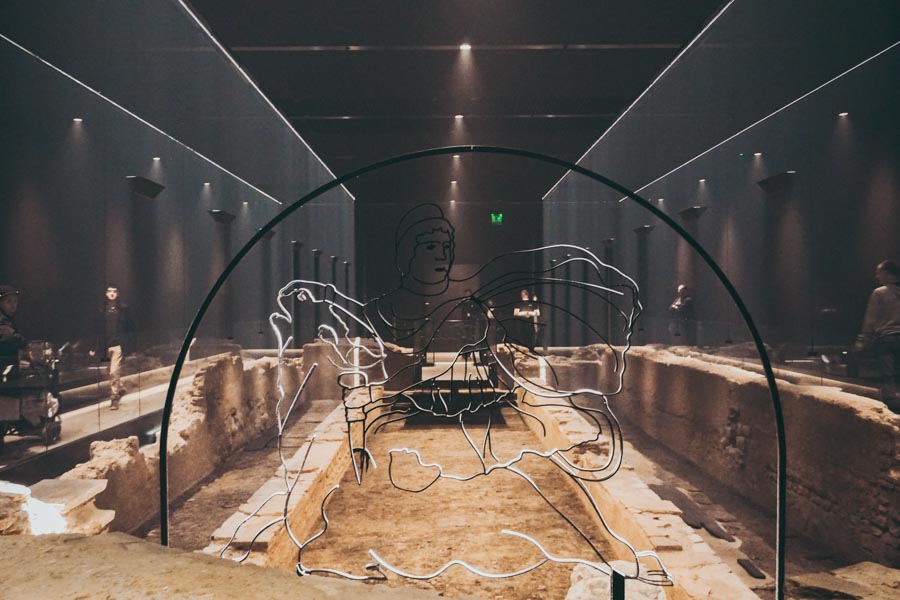
The London Mithraeum is one of the city’s genuine hidden treasures, a Roman temple tucked underneath Bloomberg’s European HQ, and one of London’s most important archaeological sites.
Do you ever come across one of those unusual places in London that you never knew existed? The London Mithraeum is exactly that kind of place. Never would we have guessed there was a Roman temple sitting beneath the shiny new buildings of Bloomberg’s European headquarters. Planning a visit? Here’s what you need to know. It is one of our favourite hidden gems in London.
What is the London Mithraeum
The Temple of Mithras is a reconstructed Roman temple, located under Bloomberg’s European HQ in the City.
Who was Mithras
Experts don’t actually know a huge amount about Mithras, the cult that worshipped him was famously secretive, and only four temples to Mithras have been discovered in the UK to date. According to legend, Mithras was born from a rock in a cave and used his considerable strength to kill a divine bull, nourishing mankind for the rest of eternity. In other words, he was an important figure who gathered a genuine following.
A big mystery
The scene of Mithras killing the bull is known as tauroctony, interpreted by experts as a symbol of fertility and creation. It was such a popular image that worshippers recreated the original cave setting by building their temples underground.
Originally a Persian god, Roman soldiers took up worshipping Mithras through a religion known as the Mysteries of Mithras, a male-only faith shrouded in secrecy. Only those initiated into the cult knew the full extent of its beliefs and practices, worshippers gathered in darkened temples to perform animal sacrifices and drink in his honour. Mithraism was believed to explain how the cosmos came to be, with initiates given special insight into their role within the universe. Keep an eye out for the bull image next time you visit a Roman ruin anywhere in the world, spot one and it’s a fair bet the Mithraism cult was responsible.
The history of the London Mithraeum
The site lies on the course of one of London’s lost rivers, the Walbrook. When the Romans founded Londinium around AD 47, the river marked the city’s outer boundary, though that didn’t last long as the settlement gradually reclaimed land from the water.
The temple was built on that reclaimed land in the 3rd century AD, likely by a skilled group of tradesmen during the height of Mithraism’s popularity, though nobody knows exactly who. When the Romans left Britain, Londinium shifted towards what’s now Covent Garden, and the temple was forgotten, buried under the growing city until its rediscovery in 1954. The site was excavated by W.F. Grimes, then director of the Museum of London, alongside Audrey Williams. They initially hoped they’d found an early Christian church, then realised they’d stumbled onto a Roman treasure beneath the streets of London.
Why the temple is so well preserved
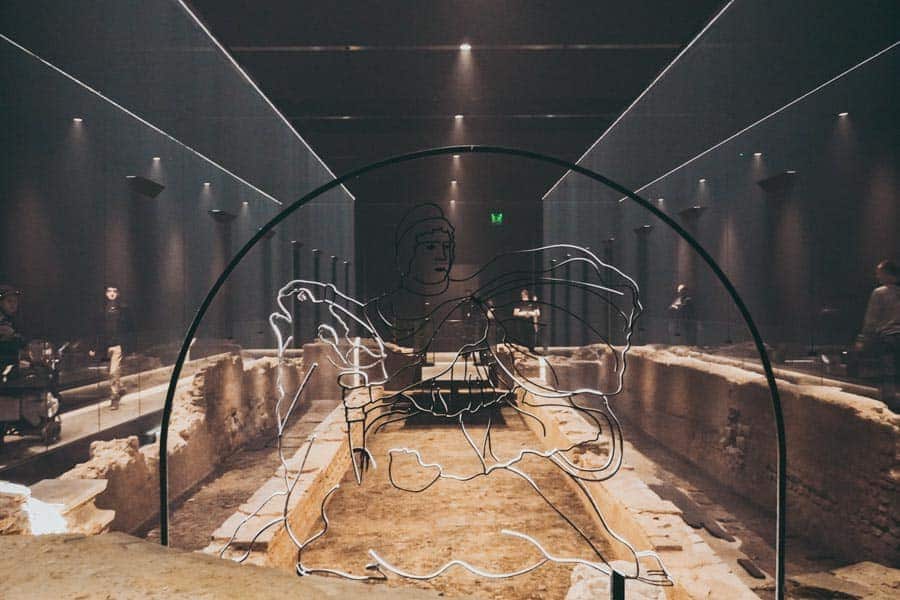
The waterlogged nature of the lost Walbrook river provided ideal conditions for preserving both the temple and the artefacts found alongside it. More Roman artefacts turned up here than at any other archaeological site in the City, a remarkable 14,000, alongside over 50,000 shards of pottery and several tonnes of animal bone. You’ll see plenty of these on your visit.
Because the Mysteries of Mithras were so secretive, reconstructing the temple was a long process of systematic guesswork based on comparable archaeological sites elsewhere. The result is a genuinely immersive experience that offers a real snapshot of Roman Britain, and while nobody alive today witnessed the original, experts are confident this is close to what the temple actually looked like.
Why visit the Mithraeum
How often do you get the chance to visit a Roman temple buried beneath the City of London? Beyond the sheer surrealness of the experience, it’s worth visiting simply to appreciate the craftsmanship behind the reconstruction.
The museum spans three levels, with the temple itself on the lowest. The other levels feature Roman artefacts and information on the cult of Mithras and how the temple was rebuilt. The top level, Bloomberg SPACE, displays contemporary art alongside a selection of the artefacts found on site. Each level takes you further back through London’s history, the current ground level sits nine metres above where the ground stood in Roman times, so you’re genuinely walking back through time with every descending step, and that’s before you even reach the temple.
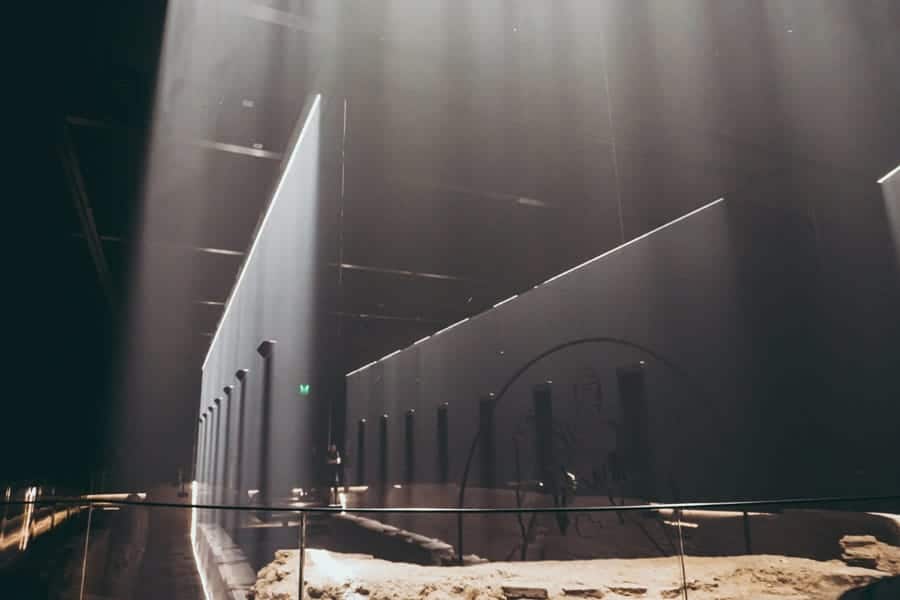
The temple is the single most interesting piece of Roman archaeology in London. The ruins themselves are interesting, but it’s the evocation of what the temple would once have felt like that really brings it to life. Entrance is timed, so visitors experience the full installation together, expect haze, chanting and light projections, unusual and completely compelling rather than gimmicky. The image of Mithras slaying the bull sits at the centre, gradually illuminated by shafts of light as the installation builds. It was created by design studio Local Projects, who also worked on the September 11 Memorial Museum, aiming for a minimalist experience with maximum impact, and genuinely succeeding at it.
Exhibitions
Bloomberg SPACE regularly commissions new work from world-renowned artists responding to the site’s archaeology, worth checking what’s currently on before you visit, since it changes.
The current commission, running from July 2026 into January 2027, is Folkmoot by Anne Ryan, an assembly of sculptures, paintings and reliefs that takes its name from the Old English word for a gathering of people, drawing directly on the site’s layered history of destruction, regeneration and rediscovery.
Other Roman London spots
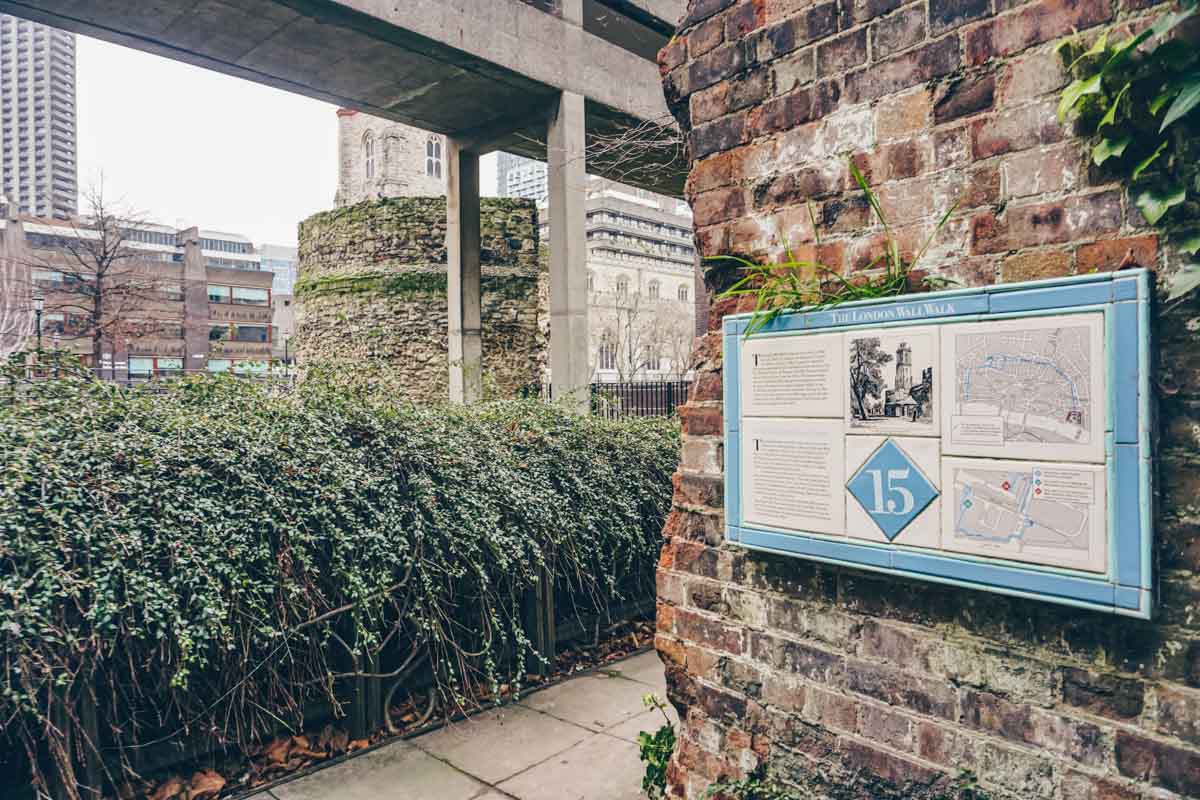
If Roman London is your thing, the London Wall walk takes you around the outskirts of Londinium as it once stood, with plenty of ruins, walls and forts to spot along the way, guided by a series of informative plaques. The Guildhall Art Gallery is worth a visit too, a 1998 reconstruction there uncovered a buried Roman amphitheatre, now on permanent display.
The London x London Take: the timed entry and full sensory installation make this feel like genuine theatre rather than a static museum display, and it’s one of the few places in London where a few minutes of haze, chanting and light actually earn their place rather than feeling like a gimmick. Pair it with the changing Bloomberg SPACE exhibition upstairs, since that’s the part most visitors don’t realise updates regularly, and it’s worth a second visit on that basis alone.
Need to know
- Where: 12 Walbrook, London EC4N 8AA
- Nearest station: Bank (1-minute walk)
- When: Tuesday to Saturday 10am-6pm, Sunday 12-5pm, first Thursday of the month 10am-8pm, closed Mondays and over Christmas and New Year
- Price: Free, timed entry required for the temple
- Booking: Book your timed entry here