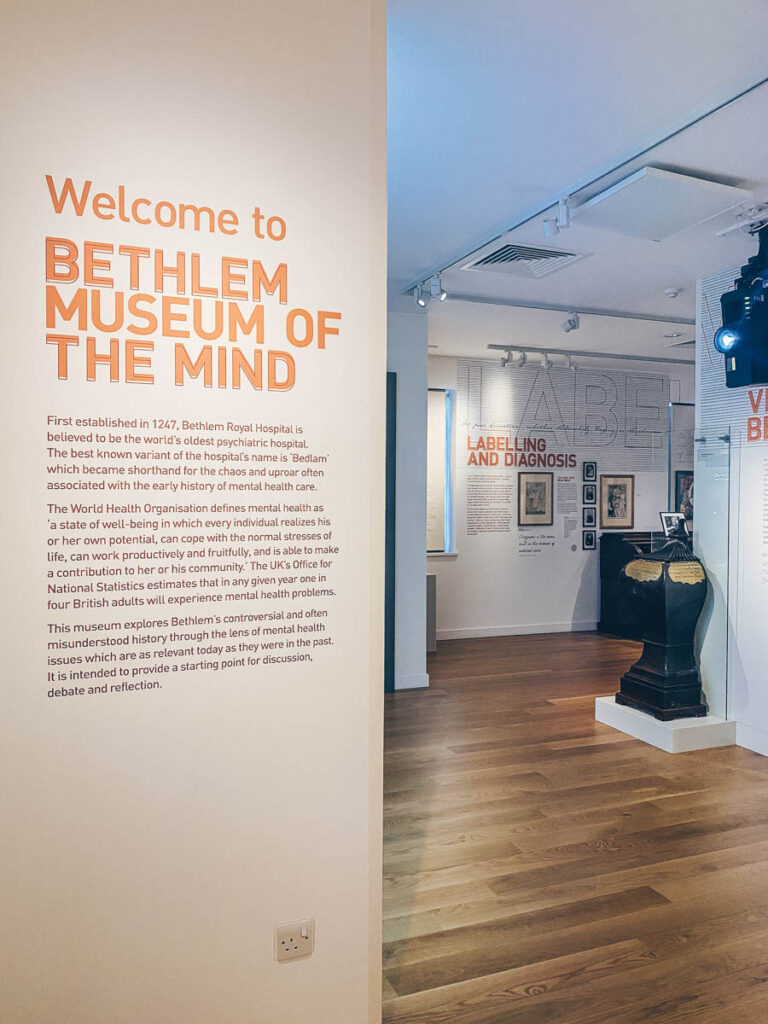
Bethlem Museum of the Mind, housed within Bethlem Royal Hospital in Beckenham, is the only UK museum dedicated to the history of mental illness, home to over 1,000 works of art and free to visit.
Looking to visit one of London’s more unusual spots? Bethlem Museum of the Mind tackles the reality of mental health care in the UK head-on, and draws visitors from all over the globe every year.
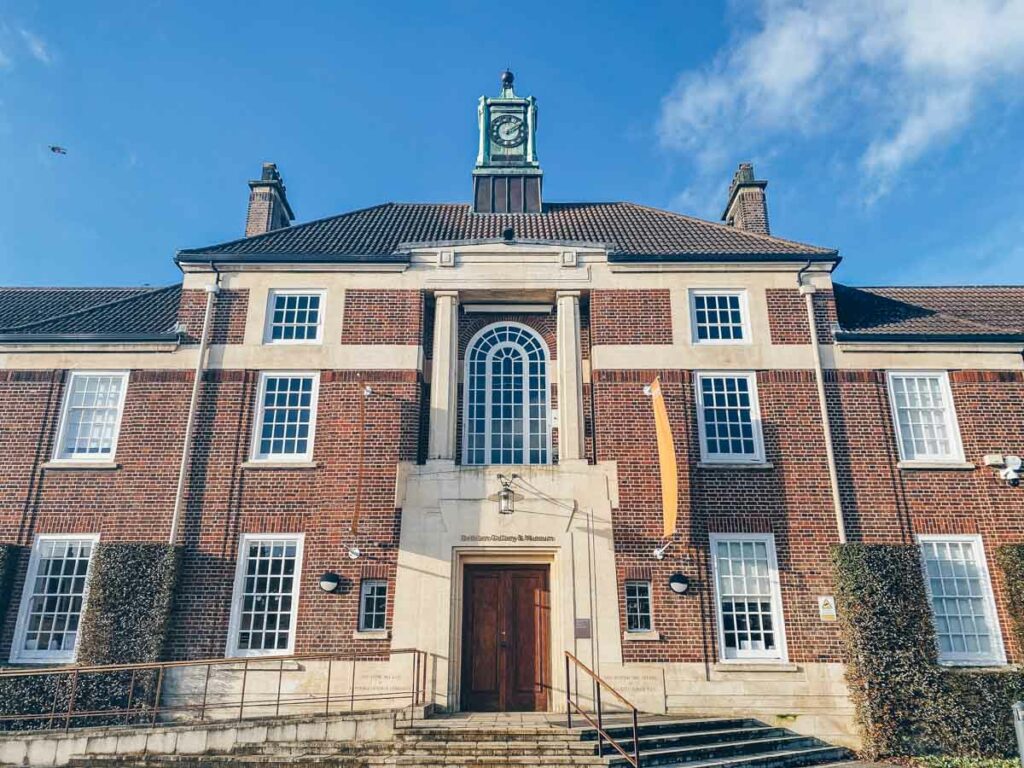
Bethlem Museum, sometimes still referred to as the Bedlam Hospital Museum, stores and displays a wide range of artwork created by those affected by mental illness, including contemporary work by current Bethlem hospital patients. It’s housed in a striking Art Deco building inside the grounds of Bethlem Royal Hospital in Beckenham.
From Bedlam to Bethlem: the hospital’s four homes
Bethlem Royal Hospital was founded in 1247 by Simon FitzMary, an alderman and former sheriff of the City of London, as a priory near Bishopsgate, roughly where Liverpool Street station stands today. It’s first recorded as caring specifically for “insane” patients in 1403, and by 1547, Henry VIII had handed control of the hospital to the City of London Corporation. One of its earliest Masters, in an odd footnote of history, was George Boleyn, brother of Anne Boleyn, who ran Bethlem from 1529 until his execution in 1536, two days before his sister’s.
It’s this original site, and the centuries of grim reputation it built, that corrupted “Bethlem” into “bedlam”, now a byword for chaos everywhere in English.
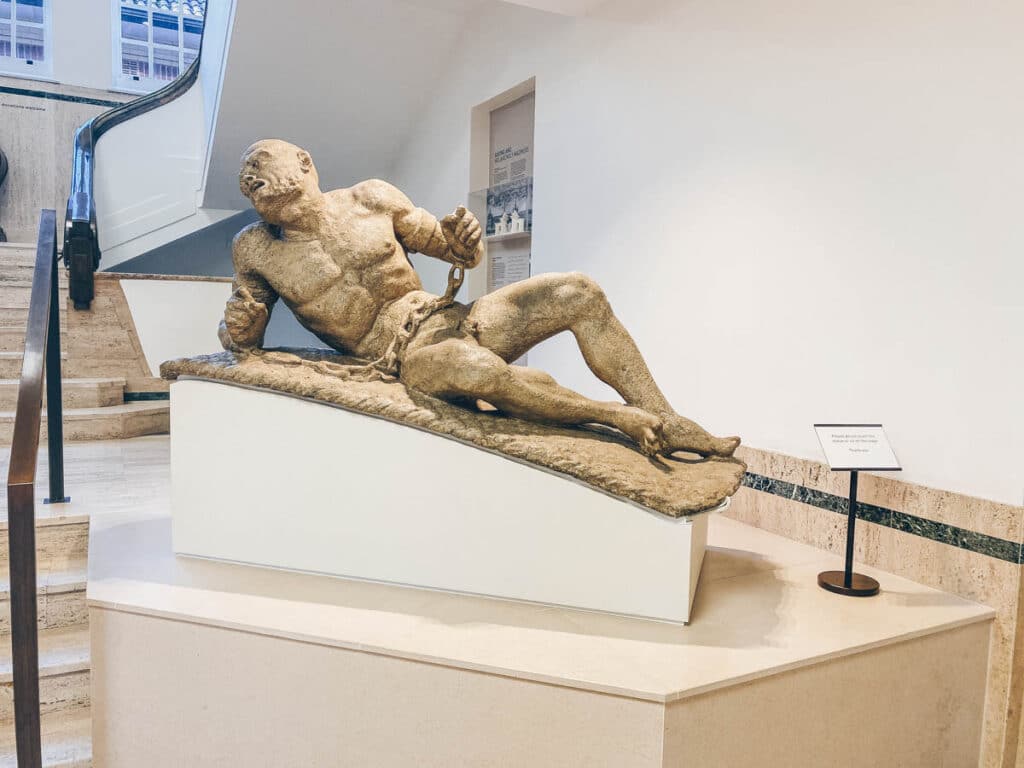
In 1676, the hospital moved to a grand purpose-built home in Moorfields, designed by Robert Hooke, the scientist, and the first custom-built institution of its kind in the country. Crowds came to see it, and its entrance gates featured two stone statues by the Danish sculptor Caius Gabriel Cibber, Raving Madness and Melancholy Madness, likely intended to encourage passers-by to donate. Both statues appear in the final scene of Hogarth’s A Rake’s Progress, painted in 1732-33, a measure of how deeply the building had lodged itself in the public imagination.
By 1815, the Moorfields building was crumbling, and the hospital relocated again, this time to St George’s Fields in Southwark, on the site now occupied by the Imperial War Museum. The move brought smaller wards and, from 1852, a formal policy of non-restraint and moral management, a genuine shift away from the treatments that had defined Bedlam’s old reputation. In 1919, Bethlem opened the UK’s first outpatient clinic for voluntary patients.
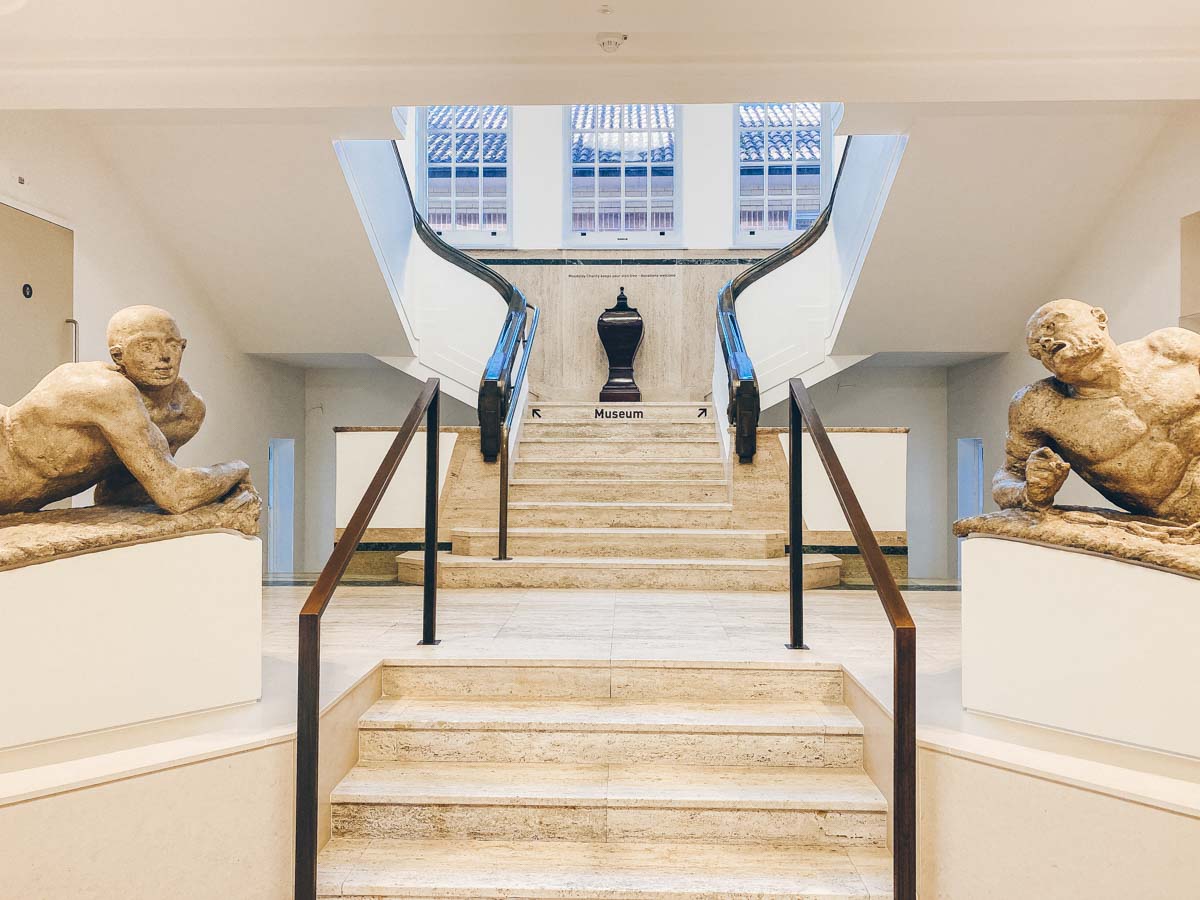
The hospital made its fourth and final move in 1930, to its current 250-acre site at Monks Orchard in Beckenham, this time designed on a villa system, with each ward its own building, kitchen and garden, a deliberate break from the monolithic asylum blocks that came before. The Cibber statues made the journey through all three moves, and now stand inside the museum itself.
The museum’s own story
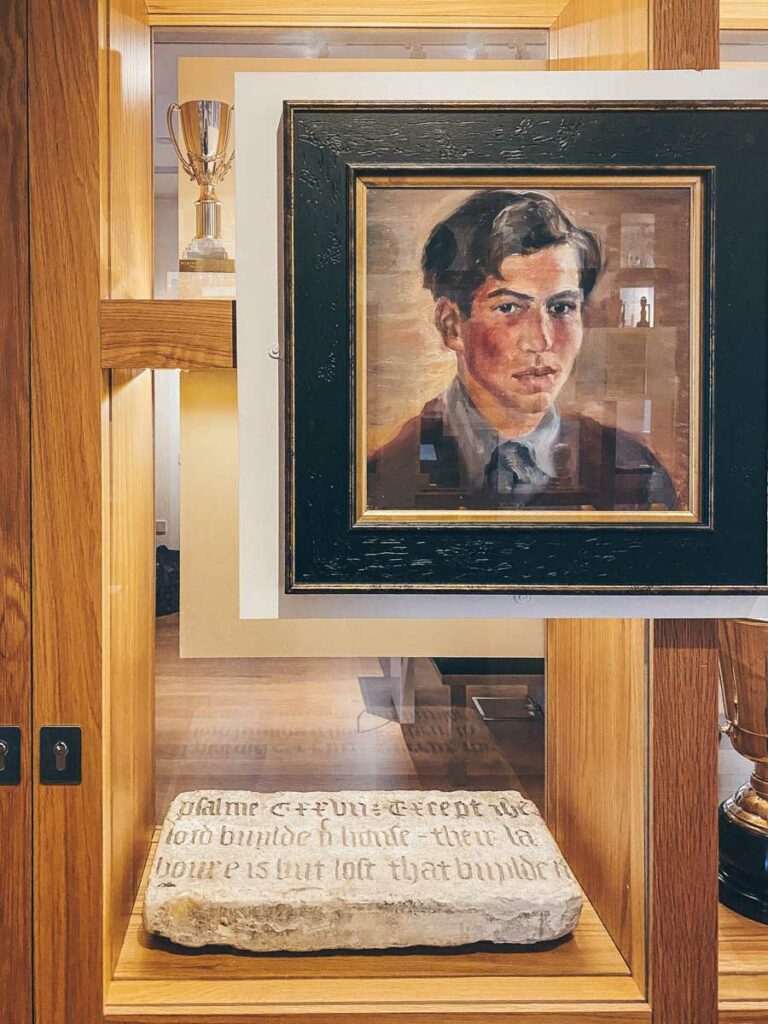
The museum as it exists today is a far more recent addition than the hospital itself. A small museum had operated on site since 1970, but it could only ever display a fraction of the collection. In 2015, that changed: a specially renovated Art Deco building was formally opened by the artist Grayson Perry, with an inaugural exhibition on the paintings of former patient Bryan Charnley. The following year, the new museum was shortlisted for Art Fund’s Museum of the Year, alongside the V&A.
Gems from the permanent collection
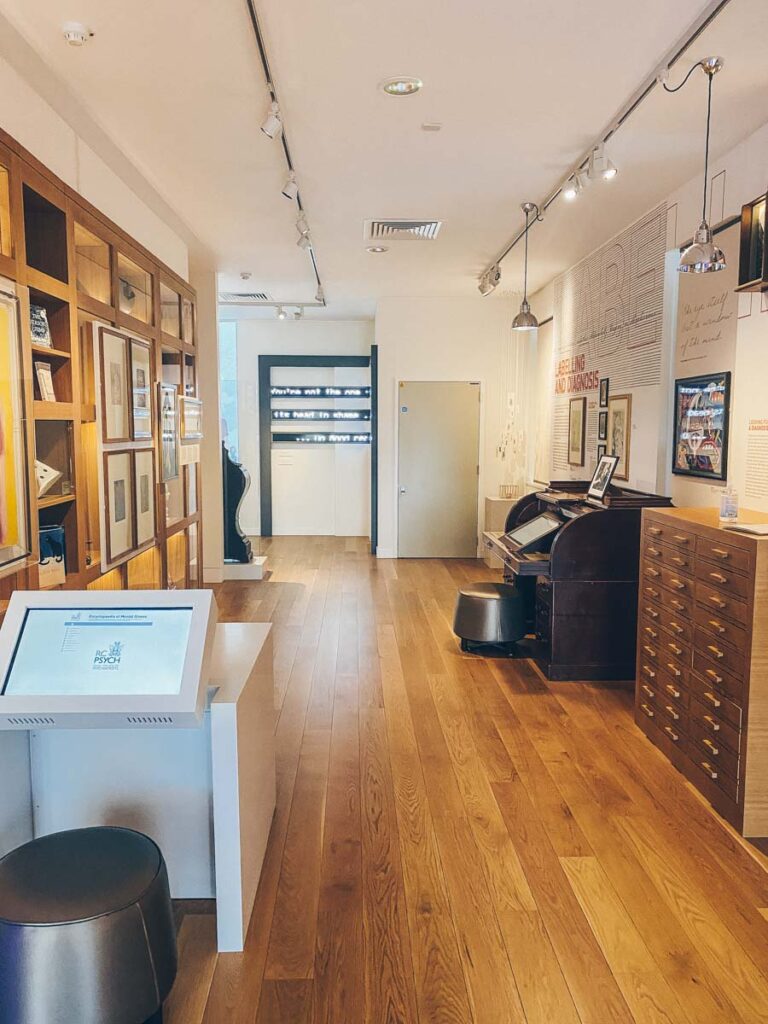
Beyond the Cibber statues, the collection holds work by some genuinely significant names in outsider art. Richard Dadd, trained at the Royal Academy before killing his father in 1843 and spending the rest of his life between Bethlem and Broadmoor, is known for intricate, hallucinatory fairy paintings, some produced in the hospital’s own grounds.
Louis Wain, already an established professional artist before his institutionalisation, kept painting and exhibiting his famous anthropomorphic cats throughout his time as a patient. Jonathan Martin, infamous for setting fire to York Minster in 1829, is represented by his biblical and folkloric scenes, including The Lambton Worm. William Kurelek, a Canadian artist treated at the Maudsley, channelled his own psychological turmoil into his work, and Bryan Charnley’s 1987 self-portraits, painted while he documented his own experience of schizophrenia day by day, remain some of the most direct and unsettling pieces in the building.
Alongside these sits the Guttman-Maclay Collection, gathered by two doctors from artists with a history of mental illness, and a growing body of work by current Bethlem patients, whose art therapy forms a genuine part of their recovery. Together, it’s one of the more remarkable single collections in London, entirely free to see.
Why visit
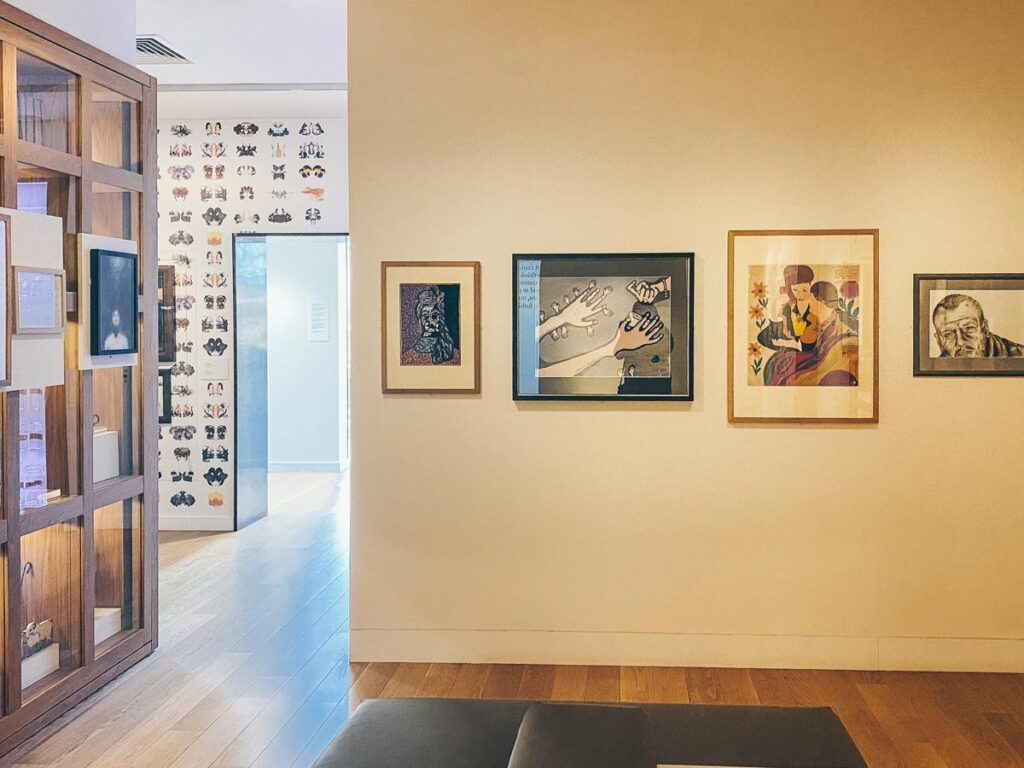
This is no easy walk through the park. The museum is candid about the historical treatment of mental illness, drawing on its collection to illustrate the realities of that history rather than soften it. But it isn’t a gloomy visit either. What comes through, again and again, is how much the people who passed through this institution made, and how much of it still holds up as genuinely significant art, independent of the circumstances it was made in.
The archives
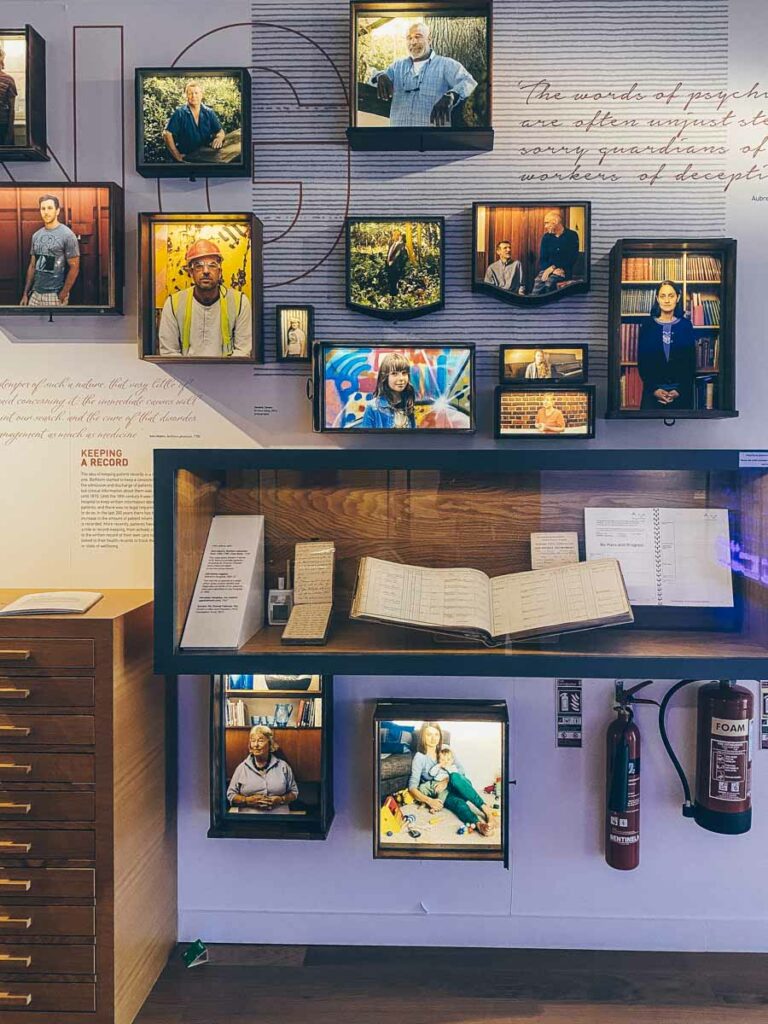
The museum holds extensive archives alongside its artwork, including casebooks, the original method of keeping medical records in Britain, dating back to the 1700s. All records relating to current patients and staff remain strictly confidential, but the historical archives are a genuine resource for researchers into mental health history and for anyone researching family history, staff can help track down records relating to ancestors, and much of the archive has now been digitised.
Be warned that some of this material is difficult reading, both in content and in the language it uses, which doesn’t reflect how mental health is discussed today. Archive access is by appointment.
The London x London Take: Museums built around difficult history can tip into either sanitising it or wallowing in it, and this one does neither. Four house moves, one enduring reputation, and a collection that includes some genuinely major names in outsider art, this is a far deeper story than “small museum in a hospital” suggests. Free, quiet, and completely unlike anything else on a list of London museums, if you have any interest in art, history or mental health, this earns a proper afternoon rather than a quick detour.
Need to Know
- Address: Bethlem Royal Hospital, Monks Orchard Road, Beckenham BR3 3BX
- Opening hours vary; recent listings point to Wednesday to Friday for general admission, with Monday and Tuesday reserved for pre-booked groups, check the museum’s website for the current week before visiting
- Price: Free, donations welcomed
- Getting there: Eden Park station, then a 15 minute walk or the 356 bus; or Bromley South, then the SL5 or 119 bus
- Note: children welcome but must be supervised by an adult at all times