There were once seven community gardens in Covent Garden, built by residents on bomb sites and empty lots. Six are gone. The last one is a half-minute walk from Charing Cross Road, it costs nothing, and it has the only frogs in the West End.
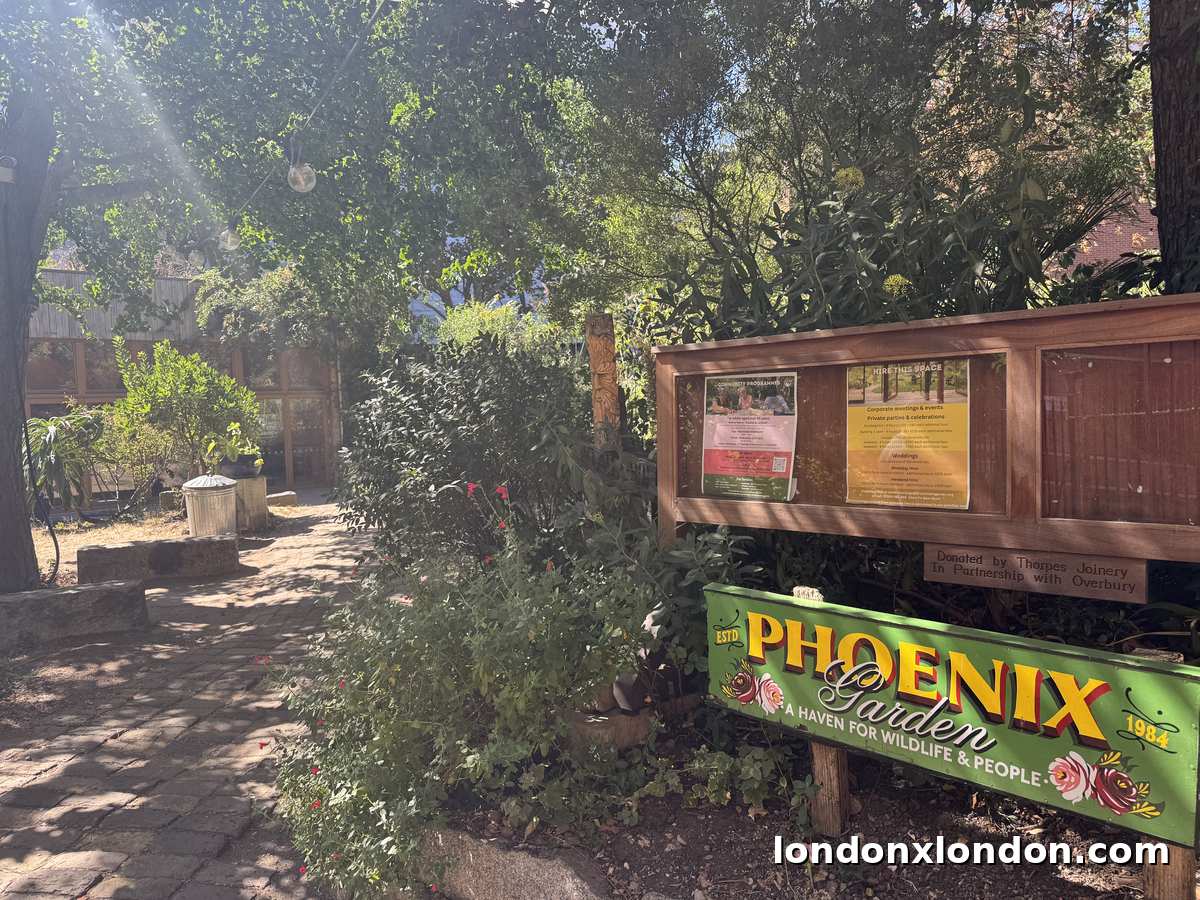
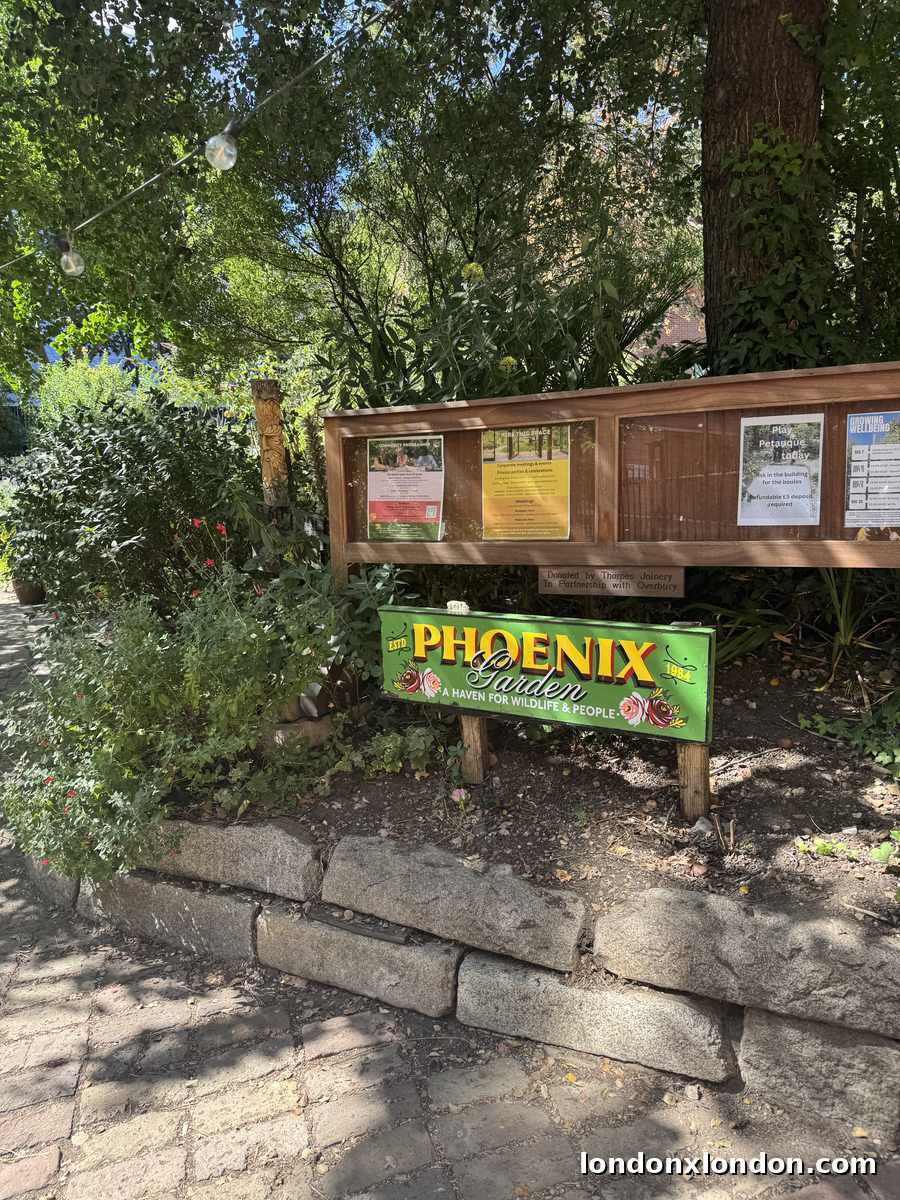
The Phoenix Garden sits behind the Phoenix Theatre, entered off St Giles Passage and Stacey Street, and most people walk past the gate without registering it is there. It is open dawn to dusk, seven days a week, free, and it is the quietest place within five minutes of Shaftesbury Avenue.
Seven gardens, and why only one survived
The site was bombed in 1940. What was left became a car park, which is what a great deal of central London became, and it stayed one until residents took it on. The garden dates from 1984, made by volunteers working under the Covent Garden Open Spaces Association, and it was one of seven.
The others, created on vacant lots through the 1970s and 80s, included a Japanese garden and a water garden. Every one of them has since been built on. This is the only survivor, which is the thing worth holding in your head as you stand in it: you are in the last of something, not the first.
It is a registered charity now, and the position is less precarious than it was. A twenty-year lease was secured in 2015, which is the reason the building that followed was worth building at all.
A bomb site makes for strange planting
The soil is thin and dusty, rainfall is low because the surrounding buildings shelter it, and central London runs several degrees warmer than the suburbs thanks to the urban heat island effect. Any normal garden would call that a problem.
What it produces instead is planting you would expect in the Mediterranean rather than WC2, including giant viper’s bugloss, an echium native to La Palma that can reach four metres. Spring and summer bring the wisteria, lupins, salvias and clematis. It is a garden that works because of its constraints rather than despite them.
The wildlife follows. There are log piles, bug hotels, nesting boxes and a pond that holds the West End’s only frog population, plus dragonflies and damselflies you would otherwise have to go to a proper park to see. The benches carry inscriptions including I like worms and woodlice and 100,000 greenfly = 1 blue tit, the second of which we are still thinking about.
The building at the back
The community building was completed in October 2016, designed by architect Gurmeet Sian of Office Sian and paid for with around £500,000 raised in grants and donations. It replaced thirty years of a crumbling concrete shed with no proper facilities.
It is a serious piece of work rather than a shed with better cladding: a biodiverse brown roof, a rooftop propagation area, rainwater catchment and an air-source heat pump. It won a RIBA London Award in 2021. The garden itself has a European Natur im Garten award from 2016 and a Camden Design Award from 2017.
The building also pays for the garden. Hiring it out for meetings, parties and weddings is how the charity funds the rest, which is worth knowing if you are looking for a central London venue that puts your money somewhere useful.
What you can actually do there
More than sit, which surprises people:
- Pétanque, Tuesday to Saturday. Ask inside the building for the boules, leave a £5 refundable deposit, play on the gravel
- Growing Wellbeing sessions run on Friday afternoons, 2pm to 4pm
- Community programmes for over-65s, plus children’s storytelling and Back to Nature activities across the year
- Volunteering. The garden is kept going by volunteers, some of whom have been at it for decades, and it takes new ones
The London x London Take: the reason to come is not that it is pretty, though it is. It is that this is the last surviving piece of a genuine 1970s and 80s movement in which Londoners simply took the bombed-out gaps in their own neighbourhood and made them into something, and the other six were quietly built over while nobody was watching. Go on a weekday around two, when the theatre crowds have not arrived and the lunch crowd has gone. Ask for the boules. Then put something in the donation box, because a twenty-year lease is not forever and this is a charity holding onto half an acre of the West End with volunteers and goodwill.
Need to know
- Where: The Phoenix Garden, 21 Stacey Street, London WC2H 8DG, entered from St Giles Passage
- When: dawn to dusk, seven days a week
- Price: free
- Nearest stations: Tottenham Court Road and Leicester Square
- Pétanque: Tuesday to Saturday, boules from the building, £5 refundable deposit
- More: thephoenixgarden.org
Nearby, our guide to things to do in Covent Garden covers the rest of the neighbourhood, and London’s best gardens has the ones worth crossing town for.