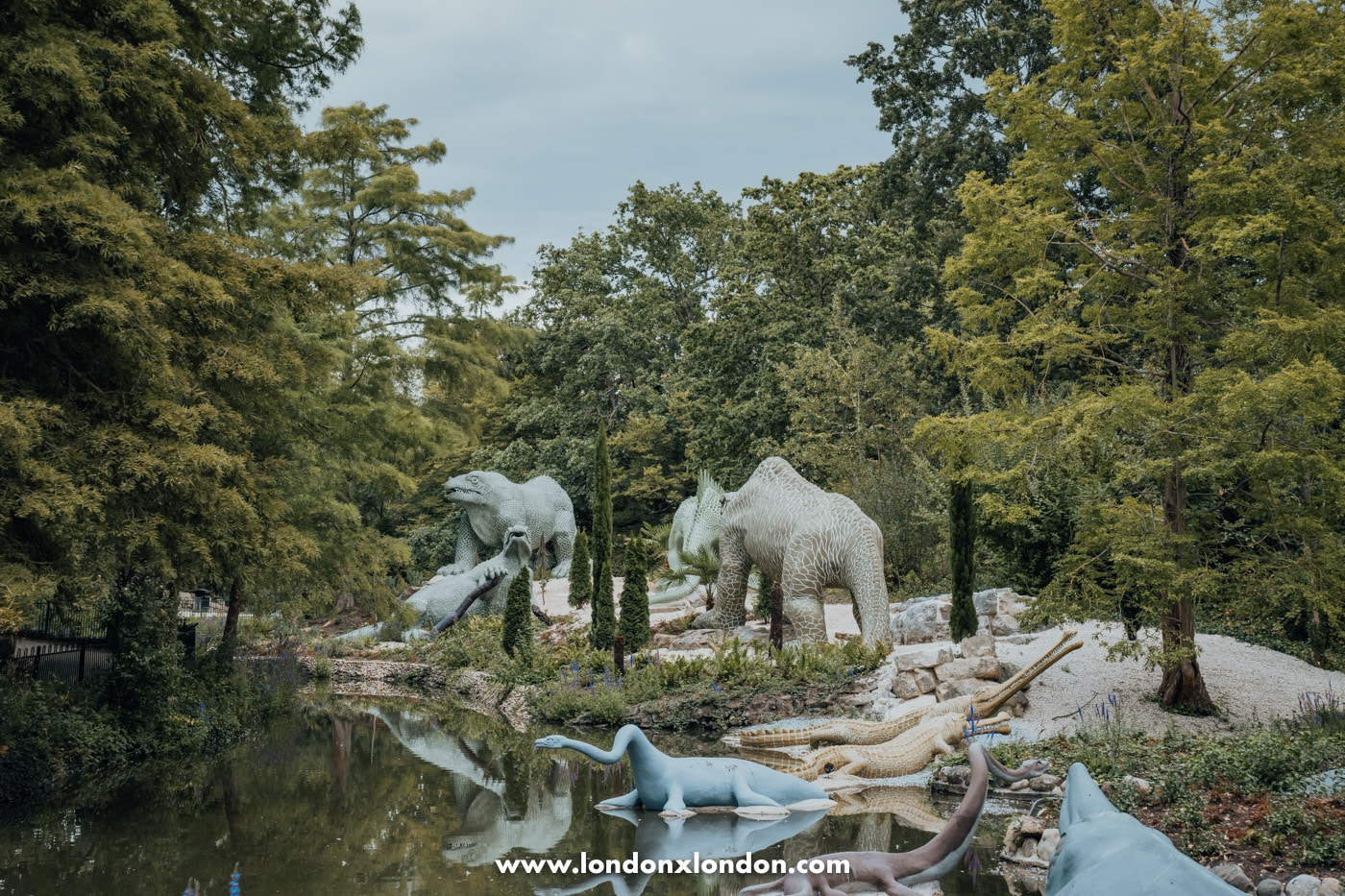
Hidden in the midst of Crystal Palace Park, away from the expansive ruins of the old exhibition, you’ll find one of South London’s most unusual sights, the Crystal Palace dinosaurs.
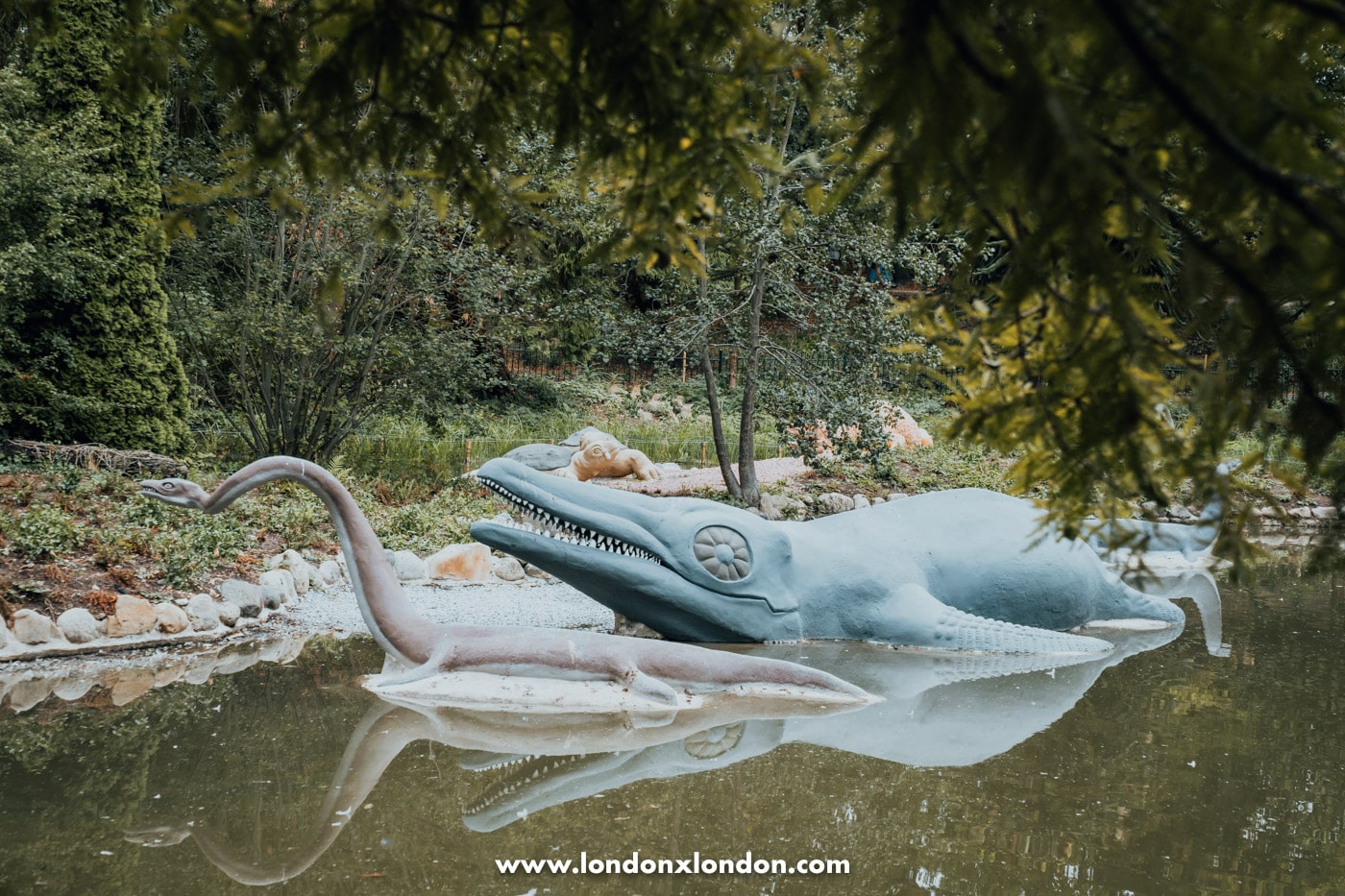
Sporting bulging bodies, they sit placidly, squat-legged and with bulbous features, in various positions around one of the park’s many lakes. Eyes peep from the undergrowth, a reptilian face looms from the swaying branches of a weeping willow, if you don’t come looking for them, you may well think you’re having a particularly strange hallucination. You’re not.
They’ve also just come back from the brink. After years on Historic England’s Heritage at Risk Register, a major restoration completed in July 2026 has brought the sculptures back to something very close to what Victorian visitors actually saw in 1854.
The story behind the Crystal Palace dinosaurs
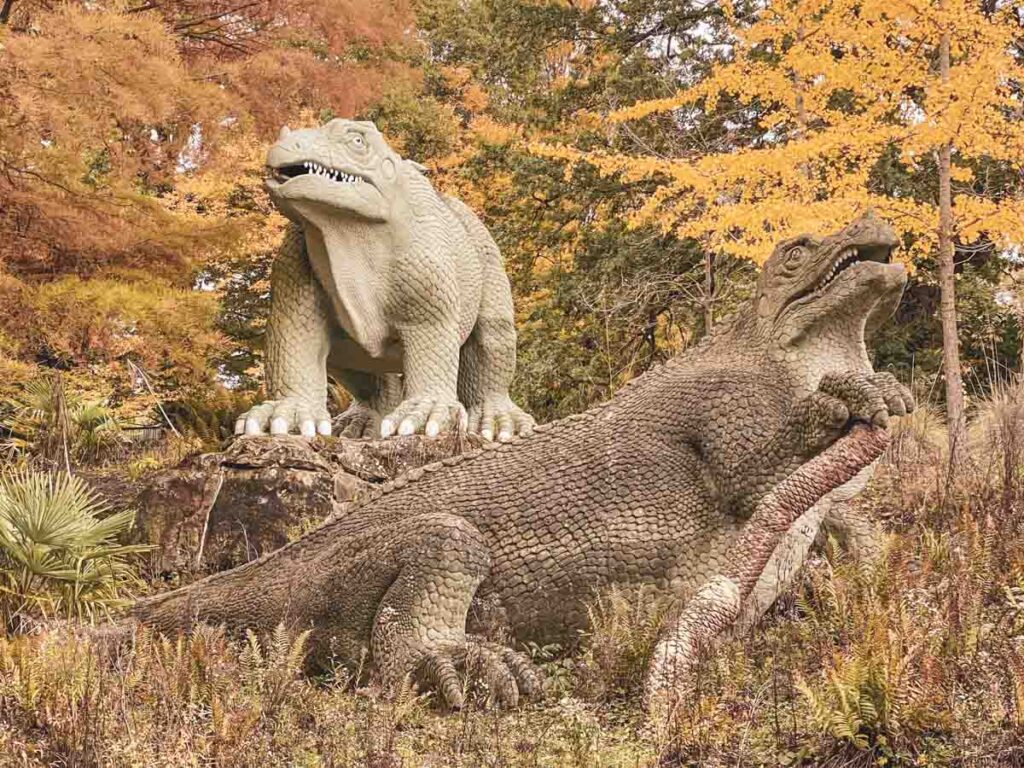
It’s just as eccentric a story as you’d imagine.
To understand it, cast yourself back to Victorian London, a time when science was starting to make serious dents in creationist beliefs and the study of dinosaurs was in its earliest stages. Though the dinosaurs were unveiled in 1854, the work of Benjamin Waterhouse Hawkins, the term “dinosaur” had only been coined 15 years earlier, in 1842. They were so cutting-edge, in fact, that Charles Darwin’s On the Origin of Species hadn’t even been published yet, that came later, in 1859. Furious arguments raged, with strident voices on each side arguing the possibility and impossibility of evolution.
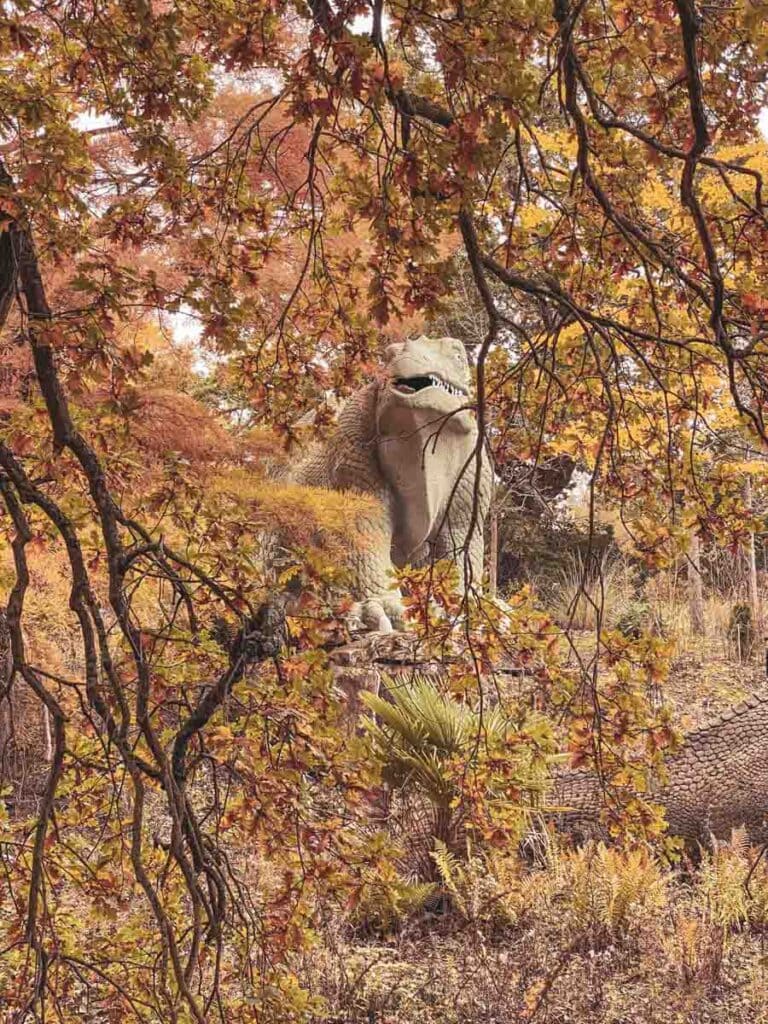
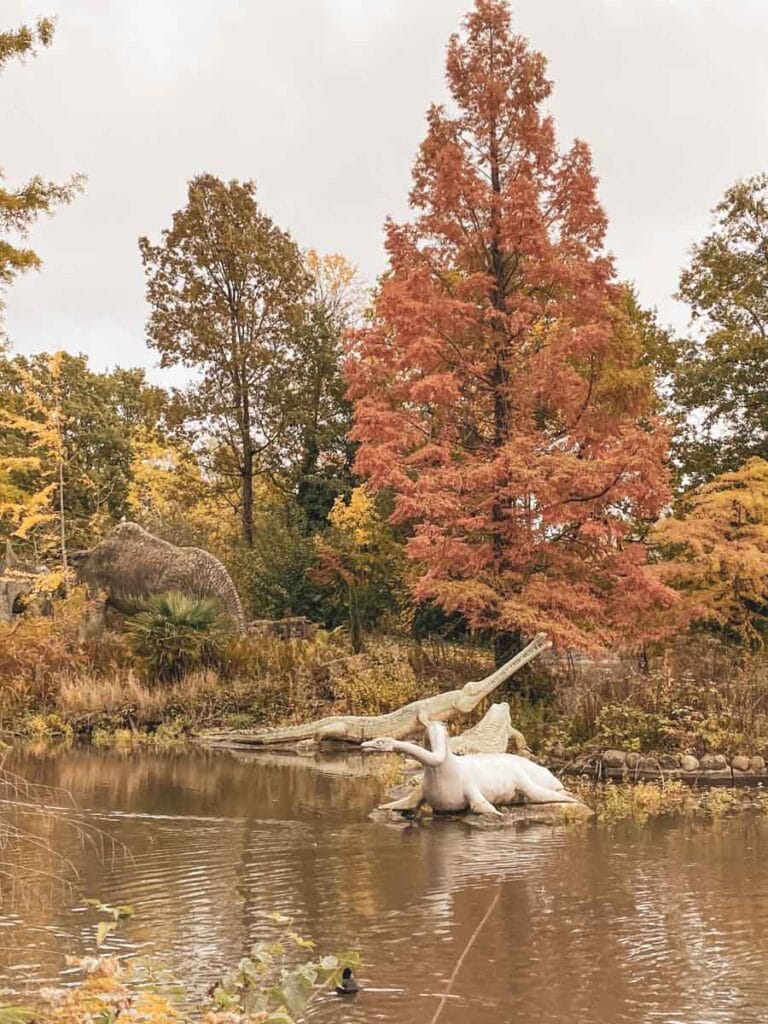
So you can understand how ambitious a project it was to create the first full-scale models of dinosaurs from fossil remains and put them on display in what was intended to be the epicentre of Victorian discovery and enlightenment, Crystal Palace Park. They were meant to educate the public, but unsurprisingly, given the controversy around evolutionary theory, they weren’t universally welcomed.
Saved from the brink: the 2026 restoration
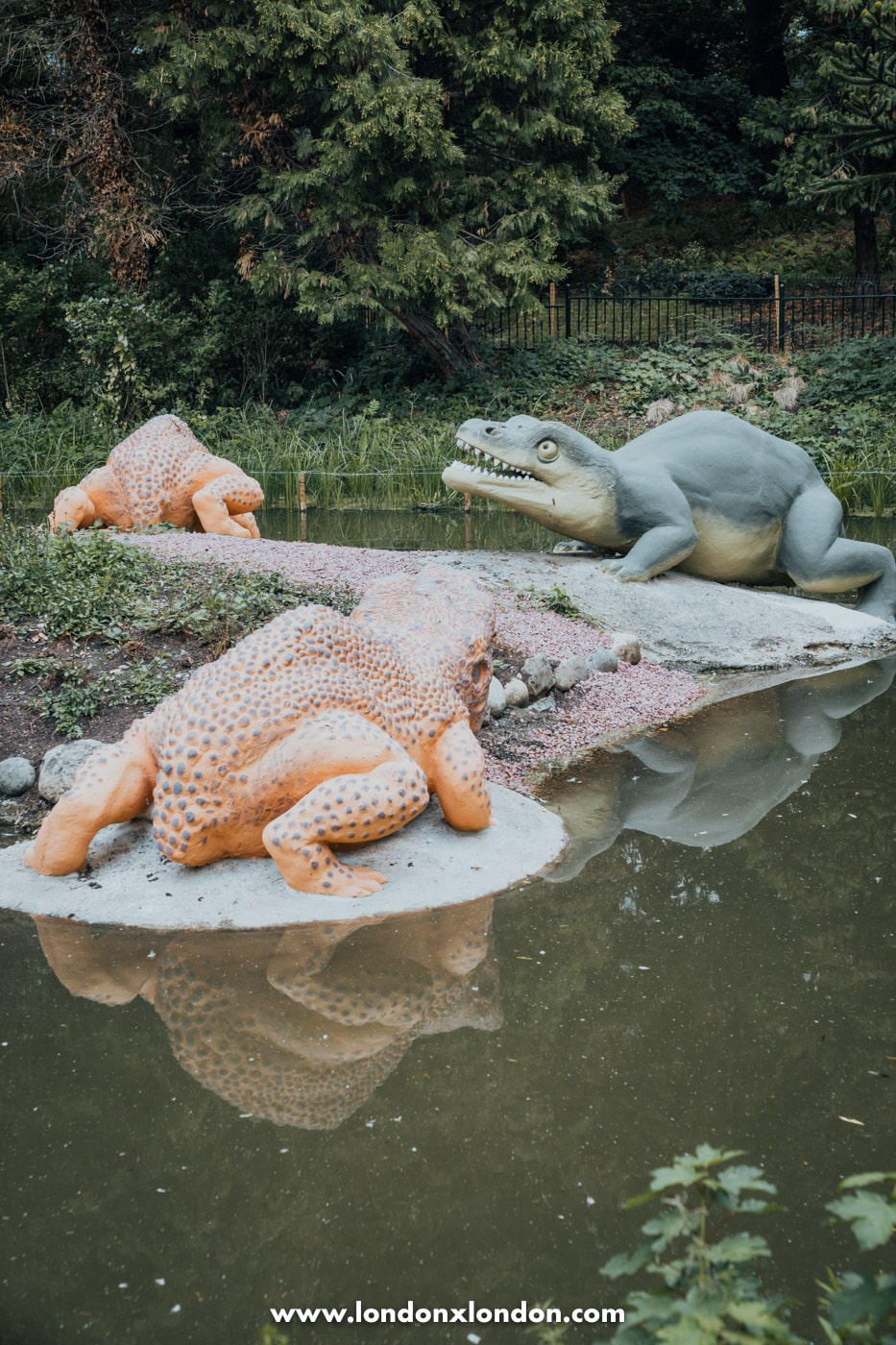
By 2020, cracks had developed across the Grade I listed sculptures and their surrounding Geological Court, serious enough that Historic England placed them on the Heritage at Risk Register. It’s the kind of listing nobody wants to see attached to something this genuinely irreplaceable, the world’s first life-sized sculptures of extinct animals, still standing in the exact spot they were unveiled 172 years ago.
What followed was a £17.75 million restoration, delivered by Bromley Council and the Crystal Palace Park Trust with HTA Design as lead consultant, construction handled by Maylim, and backed by a £5 million grant from the National Lottery Heritage Fund. It’s the largest programme of improvements the park has seen since the original Crystal Palace itself burned down in 1936.
The restoration team used historic paint analysis, specialist cleaning, structural repairs and even 3D printing to repair the sculptures while retaining as much of the original Victorian fabric as possible. The result: the dinosaurs have been repainted in their original colours, meaning their appearance is now as close to what the public saw in 1854 as it’s been in living memory.
On 16 July 2026, the dinosaurs and the Geological Court were officially removed from the Heritage at Risk Register, and the wider park regeneration marked its completion with a full weekend of public celebrations, dino puppets, drumming and free balloon rides among them.
The London x London Take: what makes this restoration genuinely special isn’t just that the cracks have been fixed, it’s that the sculptures are now painted in their actual original 1854 colours, verified through historic paint analysis rather than guesswork. For the first time in most living visitors’ lifetimes, you’re seeing these dinosaurs closer to how the Victorians who queued up to gawp at them actually did.
What you’ll find
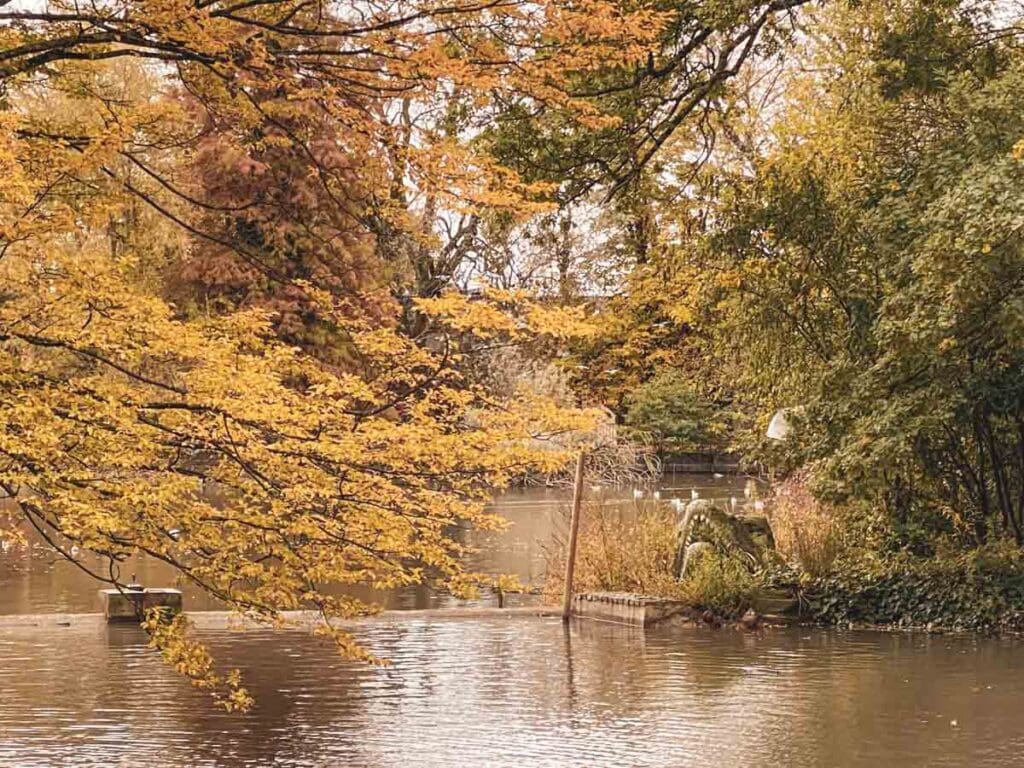
You might have seen pictures of the biggest statues, but there are 30 in total scattered around the tidal lake. They’re broadly arranged in order of geological time period, the oldest species on your right and the most recent on the left if you’re facing the islands.
Hawkins was a natural history illustrator and sculptor, and landscape designer Joseph Paxton created the surroundings in which the dinosaurs still live today, meant to reflect the geology of their natural habitats. His bust has also been returned to its historic spot in the park as part of the restoration.
Compared to contemporary interpretations of dinosaurs, many of the statues look a bit off. It’s not really that the Victorians got it “wrong” so much as they interpreted the fossil evidence they had at the time differently, in some cases genuinely reasonably given what was known.
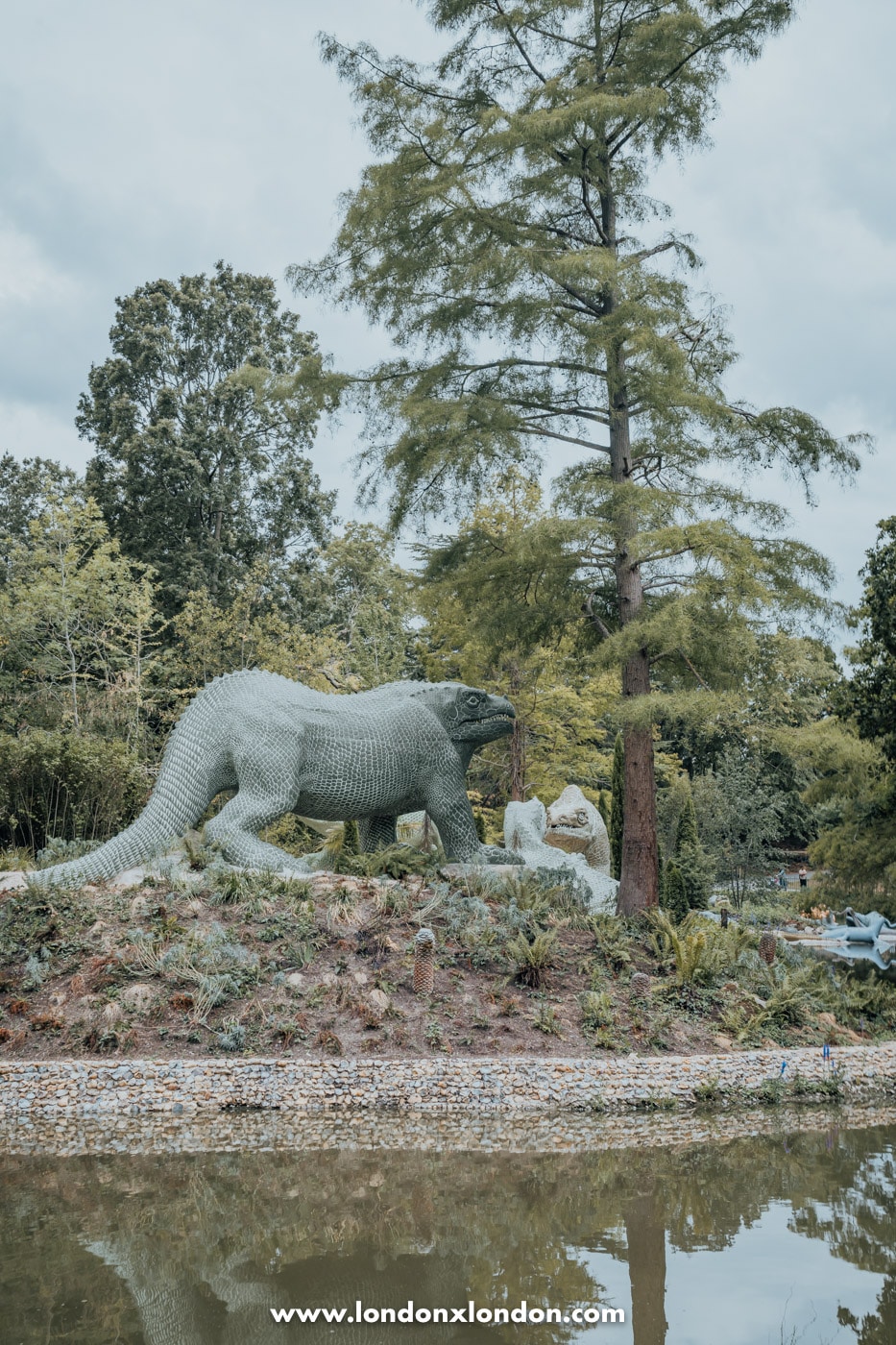
Only four of the statues are dinosaurs in the strictest sense of the word, the Hylaeosaurus, Megalosaurus and the two Iguanodon. All the others are amphibians, pterodactyls, mammals and other creatures, keep your eyes open and you’ll even spot a giant sloth.
The restoration also brought a new dinosaur-themed playground to the park, already proving popular with younger visitors, alongside restored Italian Terraces (the last surviving element of the original Crystal Palace at its original scale), improved paths, lighting and accessibility, including two new fully accessible routes.
Practical information
- Visiting the dinosaurs is free of charge.
- The section of the park with the dinosaurs opens and closes at the same time as the rest of Crystal Palace Park. Timings change seasonally, check here for current opening times.
- Getting there: Crystal Palace Station (Overground) and numerous buses (including the 3, 122, 157, 202, 227, 249, 322, 358, 363, 410, 417, 432 and 450) stop in Crystal Palace.
- There are a number of free car parks in the park, the closest of which is at the Penge entrance off Thicket Road.