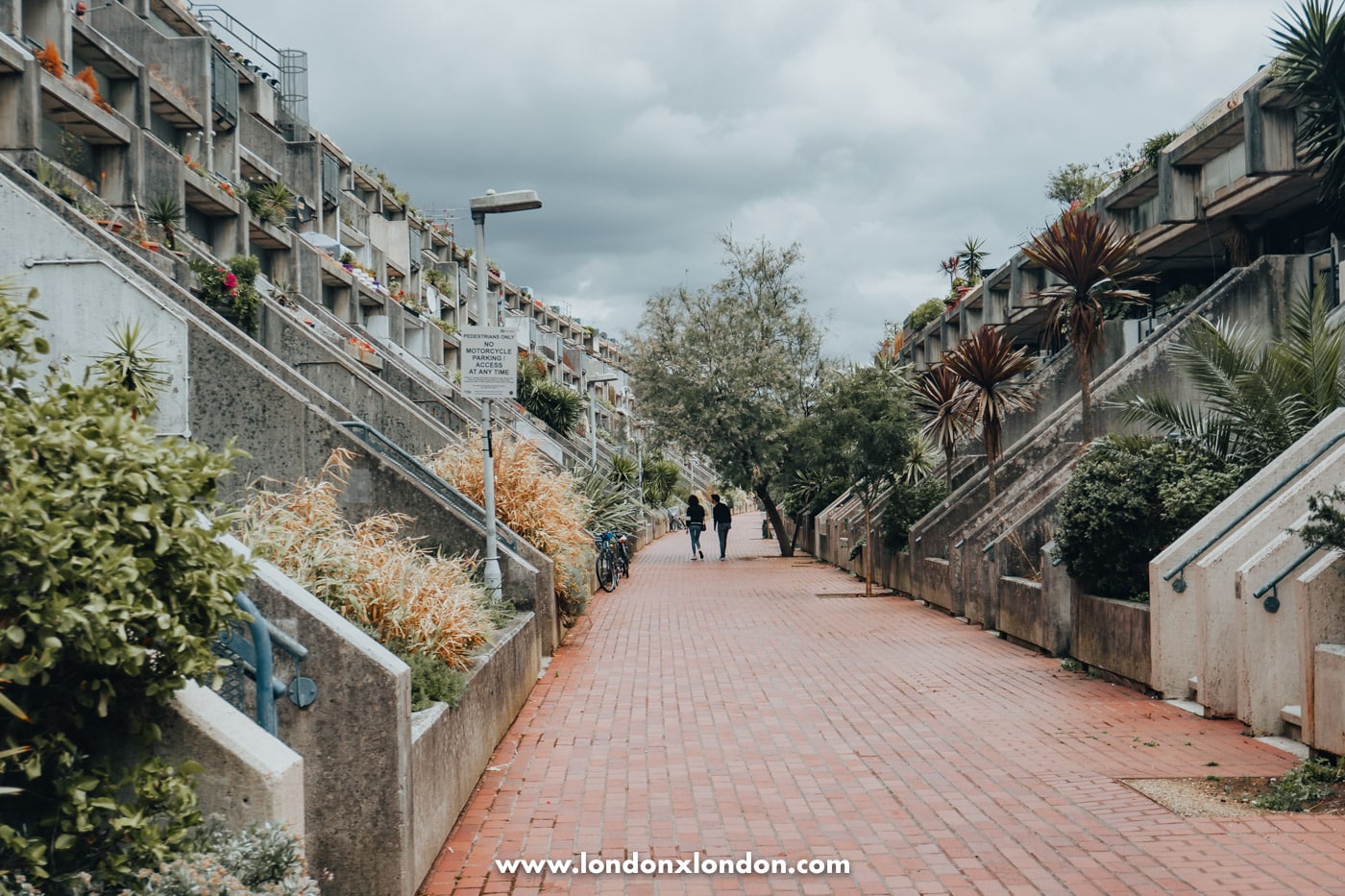
The Alexandra Road Estate (officially the Alexandra & Ainsworth Estate) winds alongside Camden’s railway line, a swooping swish of striking architecture and intricate design that reflects Brutalism’s utopian vision. Its architect died just months after finally receiving the recognition the estate deserved.
It was conceived in an age of hope, when public sector housing wasn’t a bunged-in afterthought of poor doors and cramped rooms, but at the cutting edge of London’s architectural scene.
Though less than a century had passed since the first true social housing had come into existence, Neave Brown’s work at Camden Council gave rise to some of the most inspired designs ever seen in the UK, and played a large role in him being awarded the RIBA Royal Gold Medal, the industry’s highest accolade, in 2017.
We’d wanted to visit Alexandra Road (often called the Rowley Way Estate) for a while, and finally made it as part of our research on London’s Brutalist architecture. It’s a fascinating destination: while its Brutalist design clearly dates the estate in history, the progressive values it displays feel far more advanced than the London we see today.
History of the Alexandra Road Estate
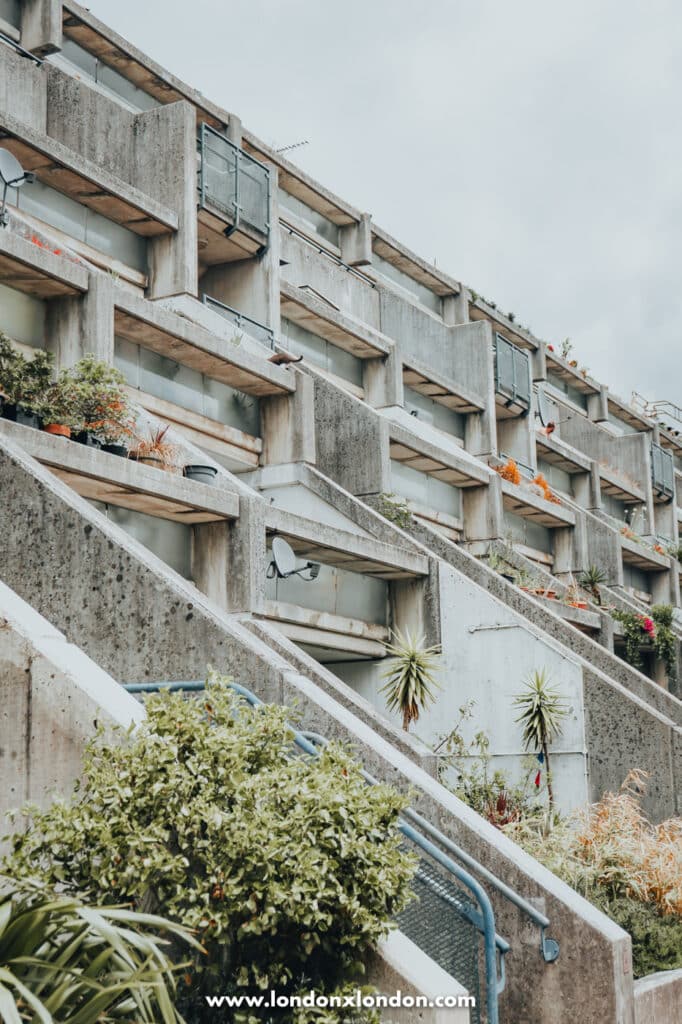
The estate was designed in 1968 by Neave Brown, an American-born architect who moved permanently to London in the 1950s to study at the Architectural Association, and who spent virtually his entire career working in Britain. Brown also designed the Dunboyne Road Estate and Winscombe Street Row Houses in Camden, all of which are listed, in fact every single UK project he ever completed carries listed status.
Camden’s architects’ department, led by Sydney Cook, was young and full of ideas, the council had been formed less than a decade prior and at the time was one of London’s richest and most progressive boroughs.
Rejecting the standardised plans and high-rises that had come to dominate social housing since the Second World War, Brown designed a low-rise, geometrically integrated estate that drew on traditional terraced housing but also a diverse range of influences, including the Royal Crescent in Bath.
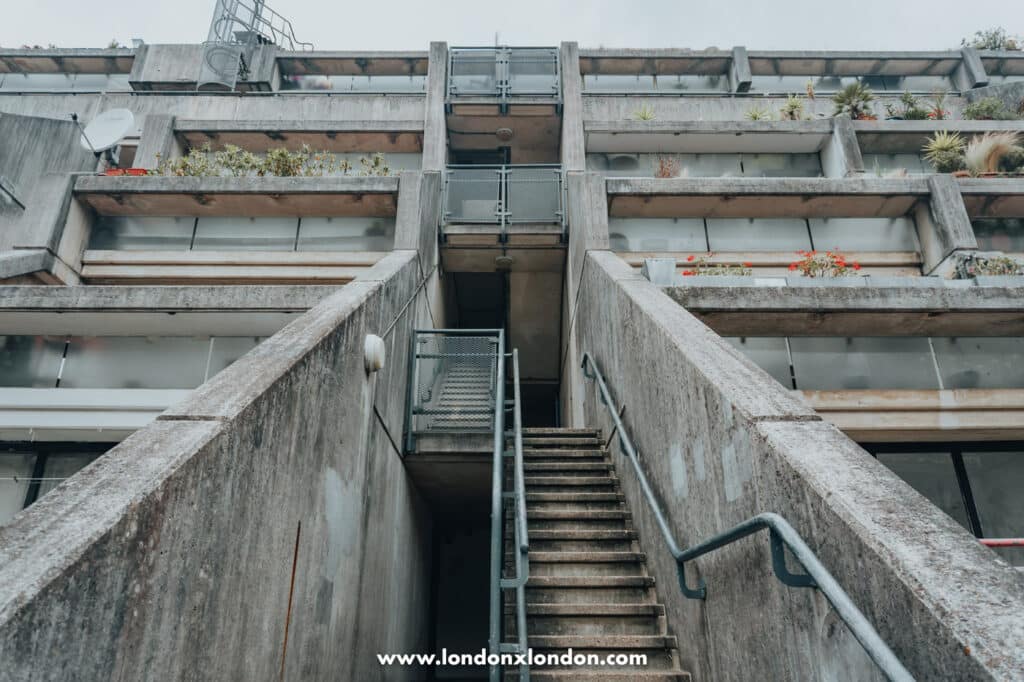
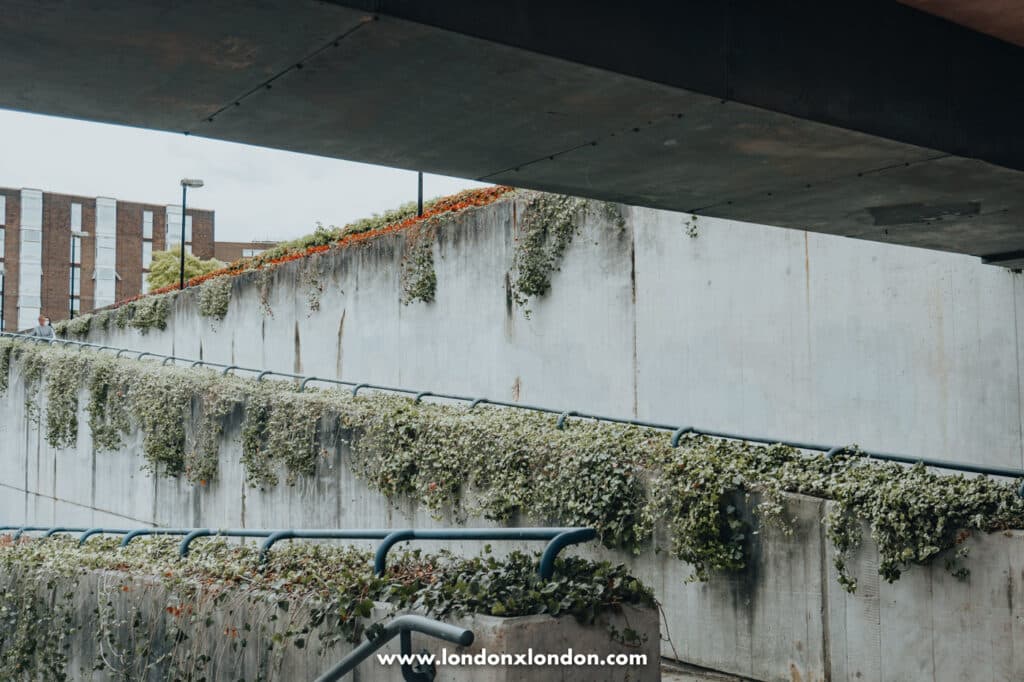
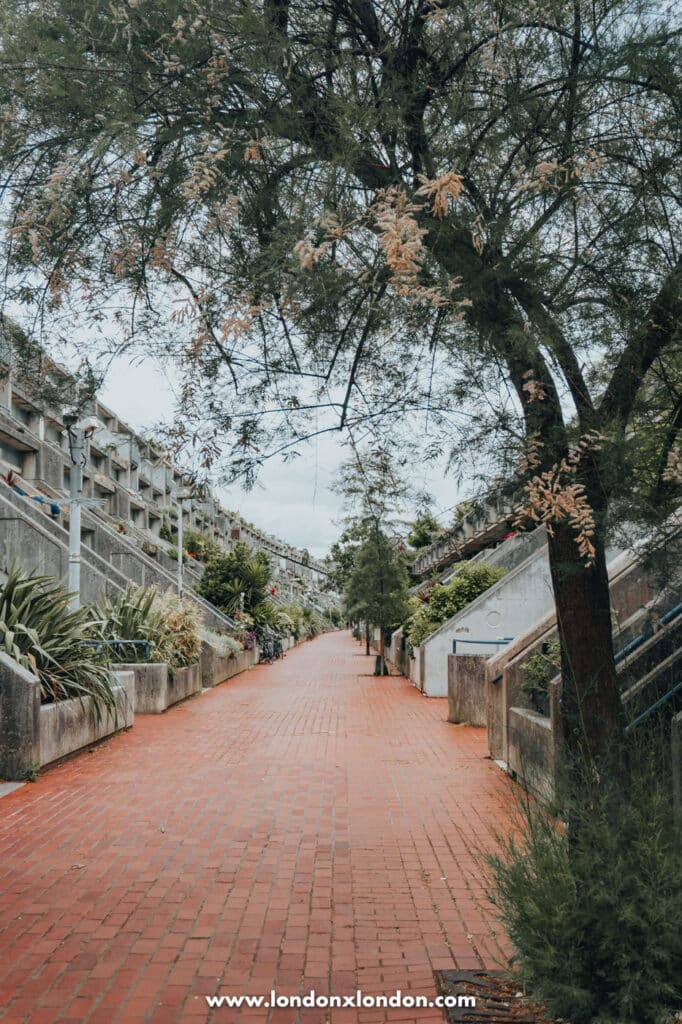
The Alexandra Estate is the pinnacle of people-focused design. Every one of its 520 flats has a private open space, with large rooms and plenty of attention to detail, but it’s only when you see the tessellated design as a whole, home today to well over 1,600 residents across 16 acres, that the ambition behind the estate becomes clear.
The first residents moved in in January 1978, and the project was deemed a success, though costs had ballooned from a budgeted £7.15 million to £20.9 million, leading to fierce criticism and an independent enquiry commissioned by the council, with Ken Livingstone chairing housing at the time. It’s still one of the most expensive social housing developments ever built in London.
Subsequent years saw the estate awarded Grade II* status in 1993, when it became England’s first post-war housing development to be listed, and Peter Brooke, then Heritage Secretary, described it as “one of the most distinguished groups of buildings in England since the Second World War.”
Brown himself campaigned for that listing, having lived in Camden’s Fleet Road estate, another of his designs, for years. He finally received the RIBA Royal Gold Medal in September 2017, the UK’s highest architectural honour, decades after Alexandra Road was completed. He died the following January, aged 88, just months after the recognition finally arrived, and less than a year after the Grenfell Tower fire renewed a national conversation about the kind of low-rise, high-density housing with real safety and dignity built in that Brown had spent his career arguing for. He’s buried at Highgate Cemetery.

The estate is currently partway through an ongoing refurbishment programme, including new roofs, kitchens, bathrooms and heating, so don’t be surprised to see some scaffolding depending on when you visit. At the heart of the estate is Alexandra Road Park, restored a few years ago with Heritage Lottery Fund support.
The London x London Take: What makes this estate worth the trip isn’t just the architecture, it’s standing somewhere that was genuinely designed around the people who’d live there, decades before that became a talking point rather than a given. Time your visit for a quiet weekday if you can; this is a lived-in, occupied estate, not a museum, and the residents’ own community group asks visitors to be respectful of that.
Alexandra & Ainsworth Estate: practical information and map
- Address: Rowley Way, London NW8 0SN
More Brutalist London guides
- Brutalist Architecture in London
- Visiting the Barbican Conservatory
- The Brunswick: Brutalism in Bloomsbury