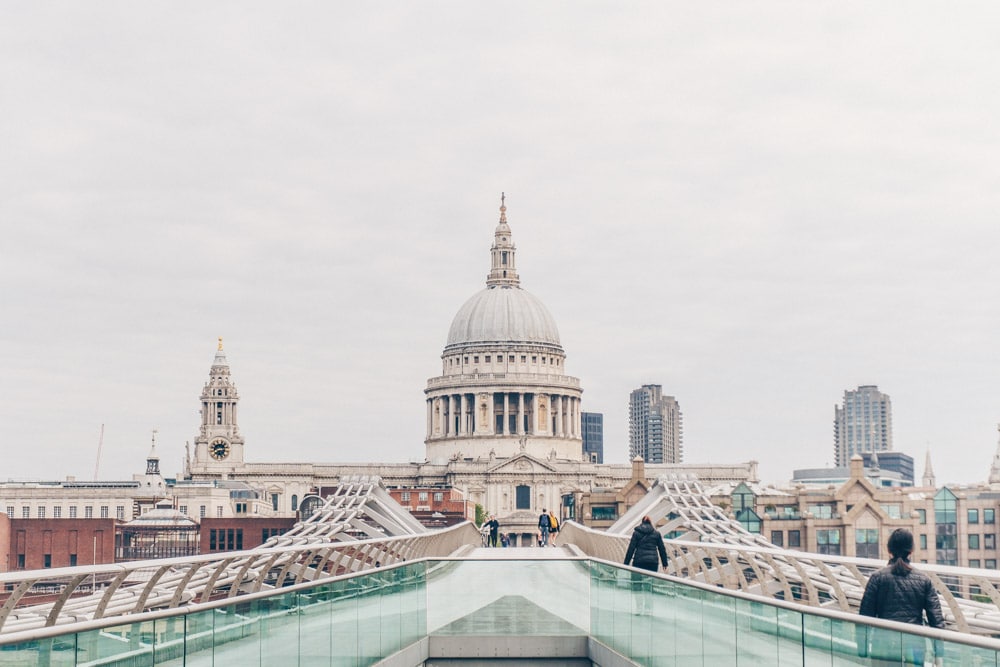
How much do you really know about the Millennium Bridge? Here’s everything worth knowing, complete with tips for visiting.
Thousands of Londoners use the Millennium Bridge to cross the Thames on foot every day, soaking up the skyline as they go. But there’s a lot more to this crossing than convenience. Here’s what’s worth knowing before your next walk across it.
The bridge’s starring role as the thing the Death Eaters tear apart makes it stop seven on our Harry Potter walking tour of London.
Interesting facts about the Millennium Bridge
It got off to a very bumpy start
So bumpy, in fact, that the bridge didn’t properly open until 2002.
The Queen initially opened the Millennium Bridge in June 2000, two months later than planned and £2 million over budget. Undeterred, Londoners headed out in their thousands to see it, an estimated 160,000 people visited in the first two days.
To the shock of the public and the designers alike, the bridge began to shake on day one. Builders closed it for ten minutes, reopened it, and then, two days later, the swaying got significantly worse and the whole thing shut again. Reports at the time suggested it “might be closed for many weeks.” It took two years. Over 90 dampeners were installed to fix the problem, and the bridge finally reopened for good in February 2002.
And that’s how it earned its nickname
Following that traumatic opening, locals nicknamed it the “wobbly bridge”, and the name stuck for good, even a quarter of a century on.
The technical explanation is genuinely interesting: springs in the suspension design caused a subtle, purposeful movement, which forced many visitors, often subconsciously, to change the way they walked. Those modified strides, taken together across thousands of people at once, amplified the wobble until it forced the two-year closure.
It links two of London’s most-visited landmarks
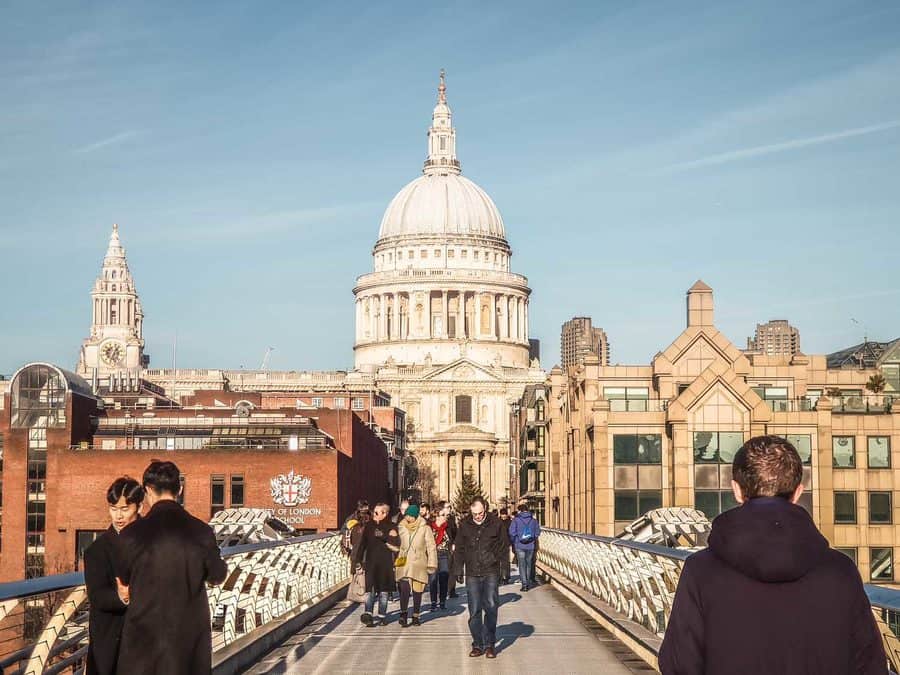
St Paul’s Cathedral and Tate Modern sit at either end, and combined with the sheer volume of offices, schools and workplaces in the area, it’s no surprise the bridge was built to withstand over 5,000 people crossing at once.
It was a genuine collaboration
The engineering team at Arup worked with architects Foster and Partners and the late sculptor Sir Anthony Caro. The trio entered a competition run by Southwark council, and their “blade of light” design won the judges over, that’s how the bridge we know today came to be built.
It’s completely pedestrianised
Tower Bridge and London Bridge are terrific sights, but navigating cars and buses can be a daunting task, especially with small children in tow. Chances to enjoy the skyline without vehicle fumes or car horns are rare in London, so take your walk across slowly.
The chewing gum trail that almost disappeared
This has always been one of our favourite quirky facts about the bridge, and the story’s got considerably more interesting since we last wrote about it.
Since 2011, artist Ben Wilson, better known as the “Chewing Gum Man”, has painted hundreds of tiny pictures onto discarded chewing gum along the bridge’s aluminium deck. In 2023, the whole trail nearly vanished: a scheduled three-week deep clean of the bridge was set to power-wash the surface and erase every single piece. A petition to save it gathered over 5,000 signatures, and the City Bridge Foundation agreed to work with Wilson to preserve a selection of the art before the clean went ahead. When the bridge reopened in November 2023, Wilson wrote that “many more of my pictures than I hoped… have survived”, around 100 pieces made it through, and he’s continued adding to the trail ever since.
Graffiti on the bridge is illegal, but Wilson insists he’s transforming litter that’s already there into something beautiful, and we’re inclined to agree. Look down as you cross and you’ll likely spot his work underfoot, look closely, the pictures are genuinely tiny.
Its size is properly impressive
Built from three separate sections, the bridge runs to well over 300 metres and is four metres wide, sized to handle the thousands of people who cross it daily. Construction cost more than £18 million, funded by the Millennium Commission and the London Bridge Trust.
The first new bridge in London in a century
It was the first new river crossing in the capital in over 100 years. A new crossing usually requires an Act of Parliament, but the team behind the Millennium Bridge avoided that by securing a permit from the Port of London Authority instead, considerably speeding up the process.
It uses a genuinely unusual suspension design
Unlike Tower Bridge further along the river, the Millennium Bridge’s designers deliberately avoided overhead suspension, which would have interrupted the panoramic views. Instead, they used lateral suspension to secure the structure while keeping the skyline clear.
It’s not the only one
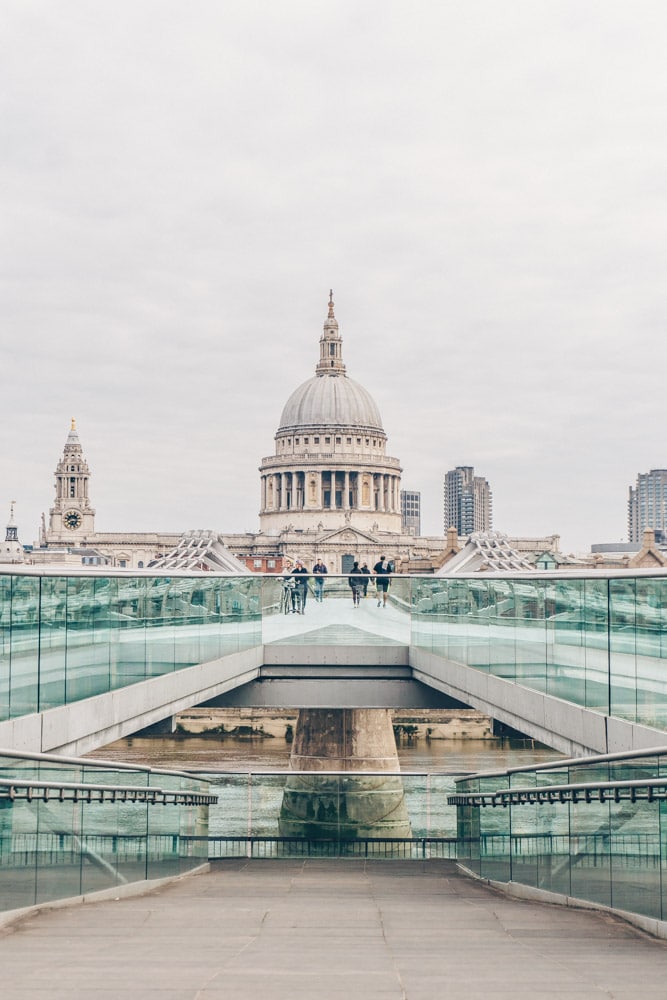
London wasn’t the only city marking the millennium with a bridge, six others share the same name in the UK alone, with several more across Europe and the US.
It’s only had to close once since reopening
Bad weather forced a brief, precautionary closure in 2007. Nobody was injured, and the bridge reopened shortly after. Beyond that one interlude, it’s been open 24 hours a day, seven days a week, since February 2002.
It’s made an appearance on screen more than once
The bridge has featured in Run, Fat Boy, Run, Guardians of the Galaxy, and Harry Potter and the Half-Blood Prince, where a group of Death Eaters destroy it. Don’t be alarmed if you spot visitors attempting a little Wingardium Leviosa on the spot.
Tips for visiting the Millennium Bridge
Bring a camera
Access the bridge from the South Bank, just next to the Globe Theatre, for the best photo opportunity of St Paul’s and the skyline behind it.
Visit early or late for the best views
Visiting a central London attraction at midday on a Saturday won’t get you the best views. Dragging the family out of bed at dawn isn’t easy, but uninterrupted views of St Paul’s on one side and the Globe and Tate Modern on the other are genuinely worth it.
There’s nearby parking
Baynard House Car Park is a three-minute walk away, handy if you’re driving, though traffic in the area can be intense, especially first thing in the morning or early evening, so build in extra time.
Give it an hour
That’s enough time to appreciate the bridge properly and take in the views without rushing. It also sits well within a wider day out, the London area has plenty of nearby museums and attractions worth combining it with.
Get there by tube
Blackfriars is the closest station, a three-minute walk away. St Paul’s station is about eight minutes on foot.
It’s genuinely accessible
Gentle ramps on either side mean the bridge is usable for anyone with limited mobility, not always a given elsewhere in London.
Make a day of it
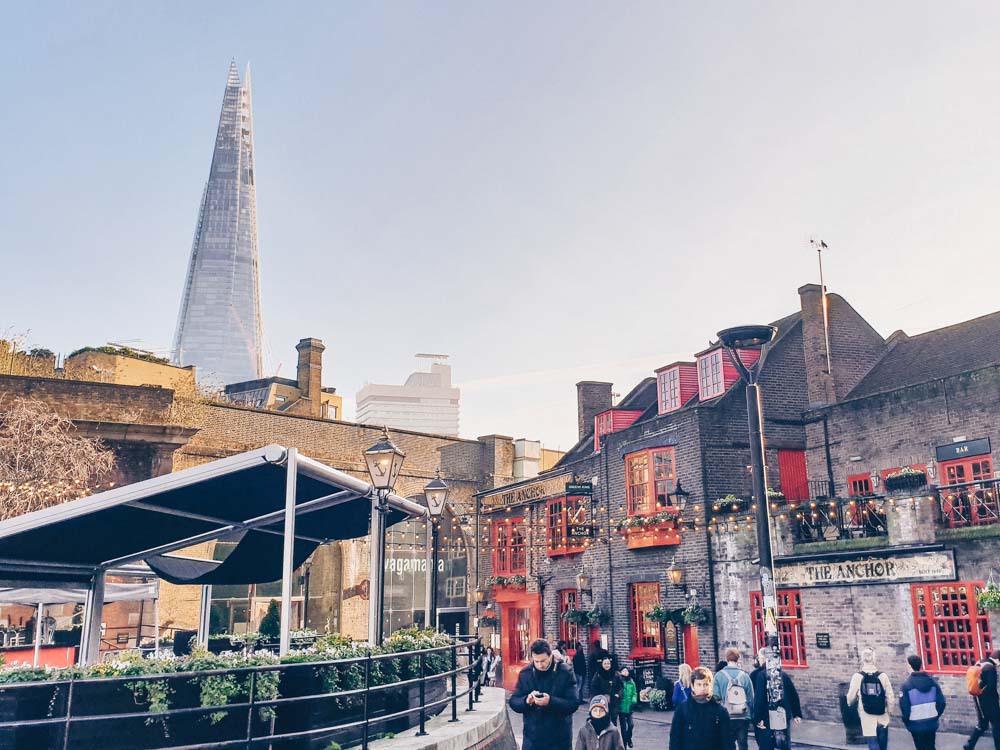
The South Bank has no shortage of places to eat and drink nearby. The Anchor is the most famous option, or try Lyaness for something a little more upmarket.
The London x London Take: the wobble is long gone and the bridge itself is a genuinely pleasant walk, but the real reason to slow down here is what’s underfoot. Wilson’s chewing gum trail nearly disappeared for good in 2023, and the fact that it’s still growing three years on, one tiny painted piece of litter at a time, is one of those small, stubborn bits of London character worth seeking out deliberately rather than walking straight past.
Need to know
- Where: Millennium Bridge, connecting St Paul’s Cathedral and Tate Modern, spanning the Thames
- Nearest station: Blackfriars (3-minute walk) or St Paul’s (8-minute walk)
- Price: Free, open 24/7
- Parking: Baynard House Car Park, 3-minute walk