
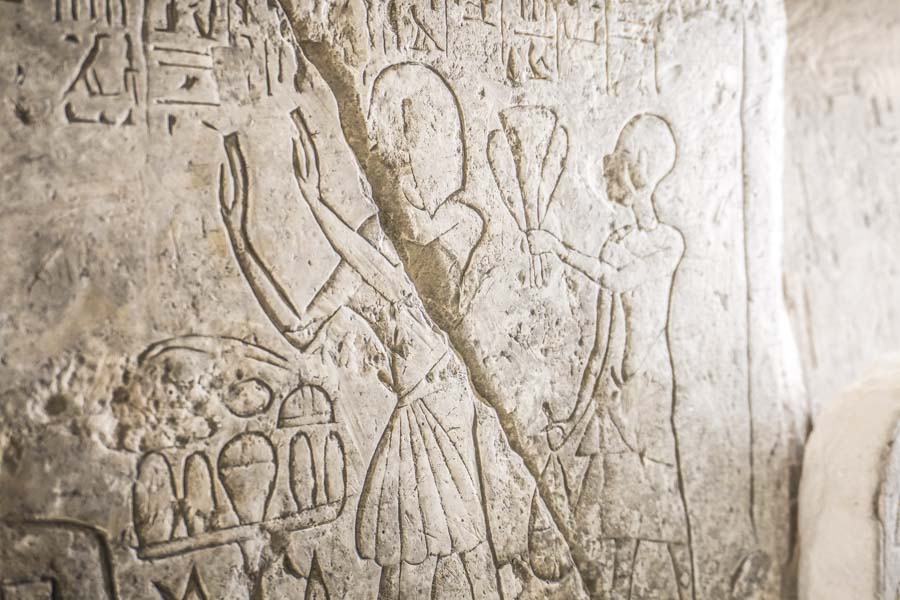
Forget the packed Egyptian collection at the nearby British Museum: the Petrie Museum of Egyptian and Sudanese Archaeology is London’s only museum dedicated solely to Egyptian and Sudanese archaeology, and one of the capital’s quirkier finds.
Here’s something that happens every day in Bloomsbury. Thousands of people walk past a set of iron gates on Malet Place, on their way to or from the British Museum, without the faintest idea that behind those gates, inside a former stable tucked into UCL’s campus, sits one of the greatest collections of Egyptian and Sudanese archaeology in the world.The Petrie Museum of Egyptian and Sudanese Archaeology has over 80,000 objects.
It is free to enter. It is almost never crowded. And it contains, among other things, the oldest piece of clothing in the world, a dress designed to rattle provocatively when its wearer moved, and a very large relief of a fertility god that caused the Victorians to reach for a covering label before the public could see it.
What is the Petrie Museum?
The Petrie Museum was named after Flinders Petrie, UCL’s first Professor of Egyptology and an ardent excavator. In fact, Petrie himself excavated a large proportion of the 80,000-plus objects that form the museum’s collection.
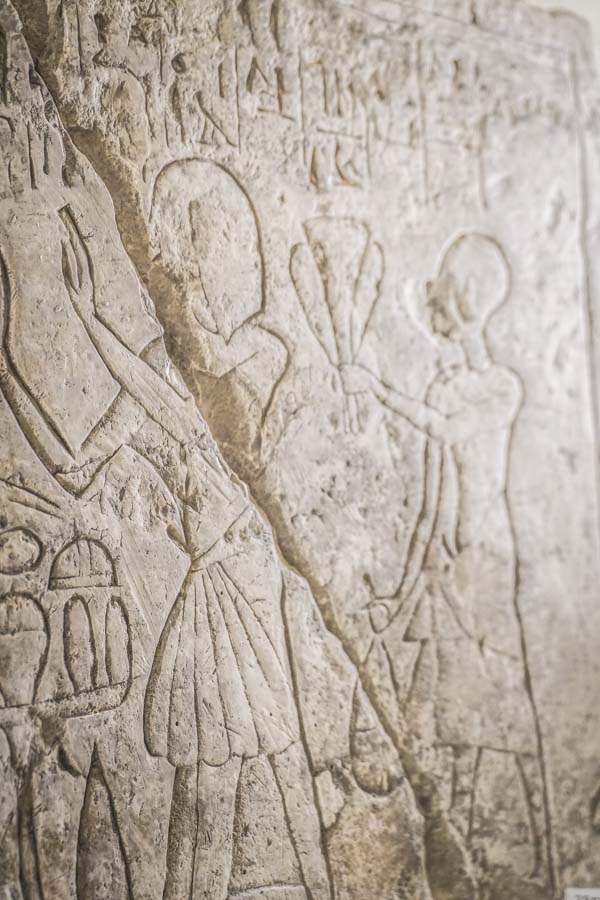
The museum charts the development of Egyptian and Sudanese culture from Palaeolithic times to the Islamic period.
The collection also has a starring role in Two Centuries Here, UCL’s campus-wide bicentenary exhibition running until July 2027, which draws on material from the Petrie Museum alongside objects from the Grant Museum of Zoology, another of UCL’s free, quietly brilliant collections just a few minutes’ walk away.
While there are many impressive exhibits, the museum’s greatest feat is bringing civilisations about which we know so many facts but have so little genuine knowledge to life. It does this through a boggling display of everyday objects: rat traps, hair decorations, tweezers, ancient underwear. The things people would have used in their day to day lives, alongside the big-ticket items you traditionally associate with archaeological finds.
Why Should I Visit?
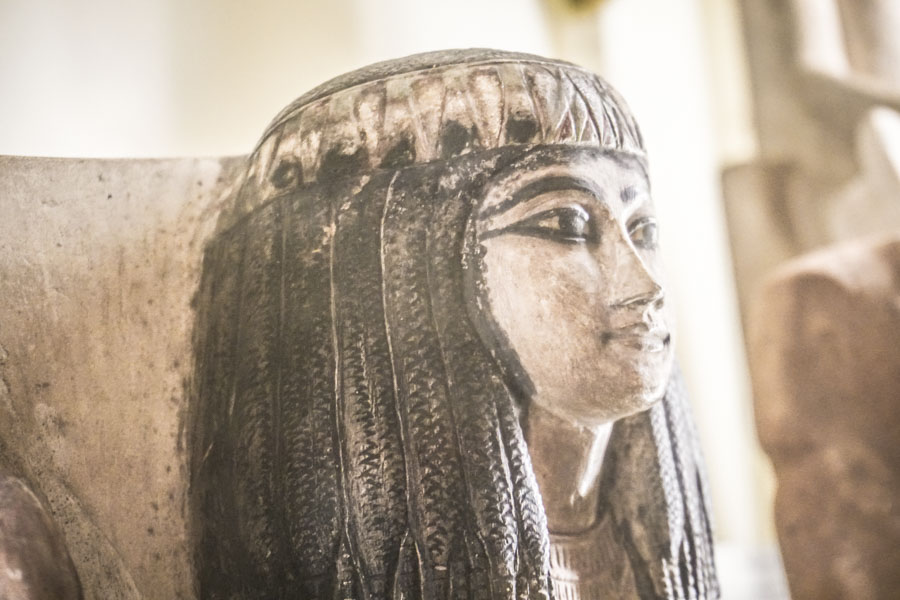
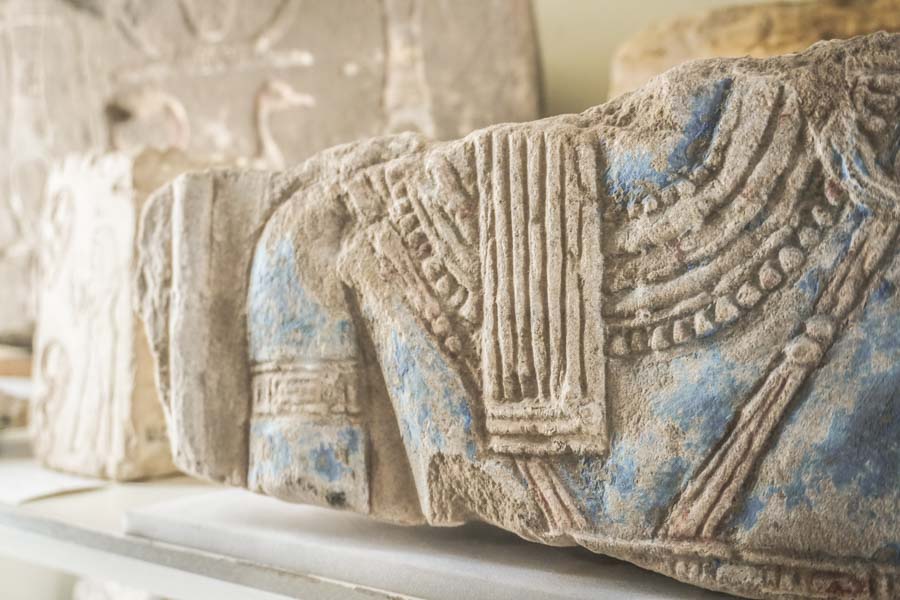
The Petrie Museum might be small, but it’s absolutely packed with ancient Egyptian and Sudanese artefacts. It’s hands down one of the best places in London to really take a good look at these civilisations.
There are two main rooms: one crammed with artefacts of all shapes and sizes, ranging from a pair of ancient tweezers to a rat trap, slabs of hieroglyphics to mummy coffins. On the face of it, the second room is less exciting, mainly dedicated to pottery. But even the pottery tells a story: Petrie was one of the first people to recognise the important role pottery could play in archaeological dating, hence why the collection is set out in chronological order.
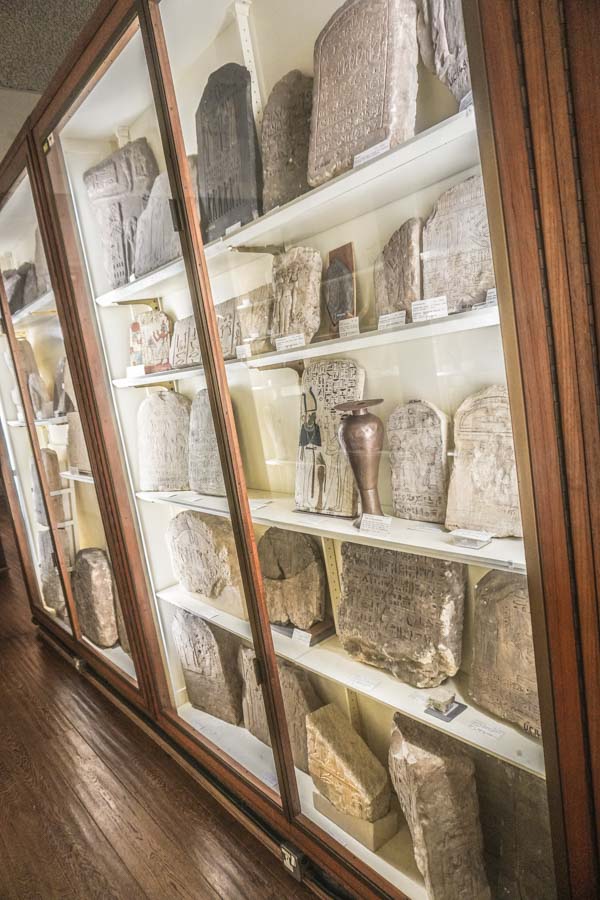
There are so many exhibits that the museum simply doesn’t have enough space to put everything on show, and they’ve even requisitioned one of the staircases to display part of the collection. It’s one of the more unique exhibition spaces in London for sure.
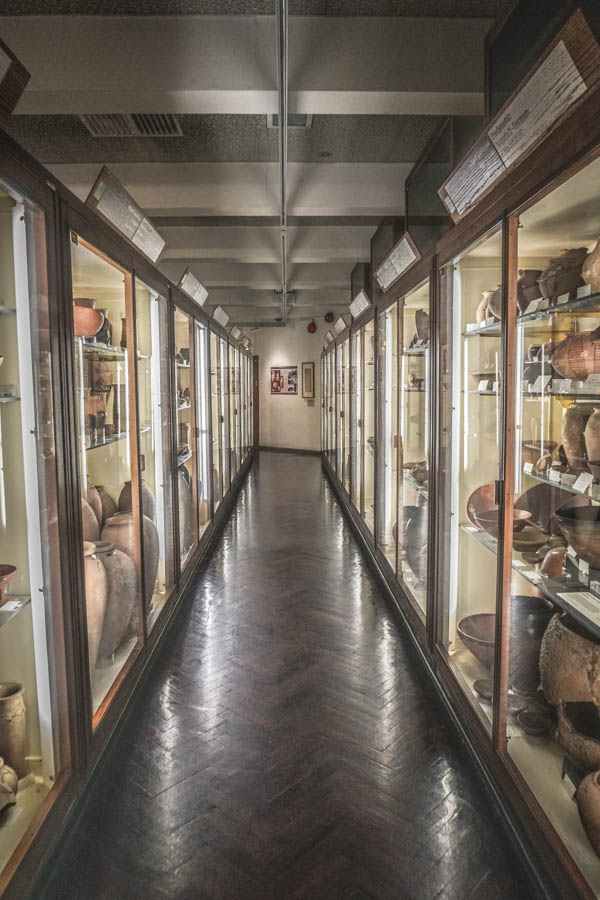
Until September 2026 there are two temporary exhibitions worth catching alongside the permanent collection: a display of contemporary Sudanese art exploring history, culture and nationhood, and Broken, Burnt, Buried, which explores what the practice of deliberately destroying everyday objects tells us about ordinary life in ancient Egypt. Both are free and included with your visit.
What Shouldn’t I Miss?
Pretty much everything! It’s a small museum – so you won’t need a whole day to explore. But there are a few things you should keep your eyes open for.
Min’s Penis
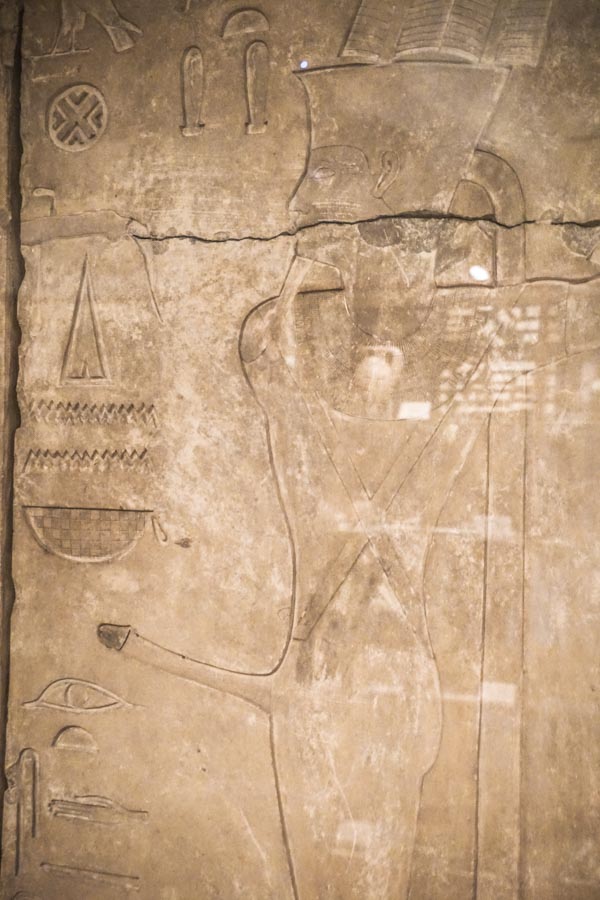
Stop giggling. We’re completely serious.
One of the museum’s best-known pieces is a large relief of the fertility god Min, who is predictably shown with a rather alarming-sized appendage. When the piece was first displayed, the relevant part was covered with a label so as not to offend the uptight Victorians.
Min’s also shown with a leaf of lettuce, which Egyptians believed helped with fertility because it secreted a milky juice when rubbed. Totes saucy.
Bead Net Dress
Another exhibit that would certainly raise a few eyebrows. Dating from around 2,400 BC and designed so that it rattled when it moved, it’s thought the wearer would have had it over a linen undergarment, but we can’t be sure.
Tarkhan Dress
The oldest piece of clothing in the world, more than 5,000 years old. A V-neck linen garment excavated from the Tarkhan cemetery south of Cairo in 1913, thought to have been worn to a funeral. It looks almost contemporary, which is the genuinely disorientating thing about it.
Shabtis
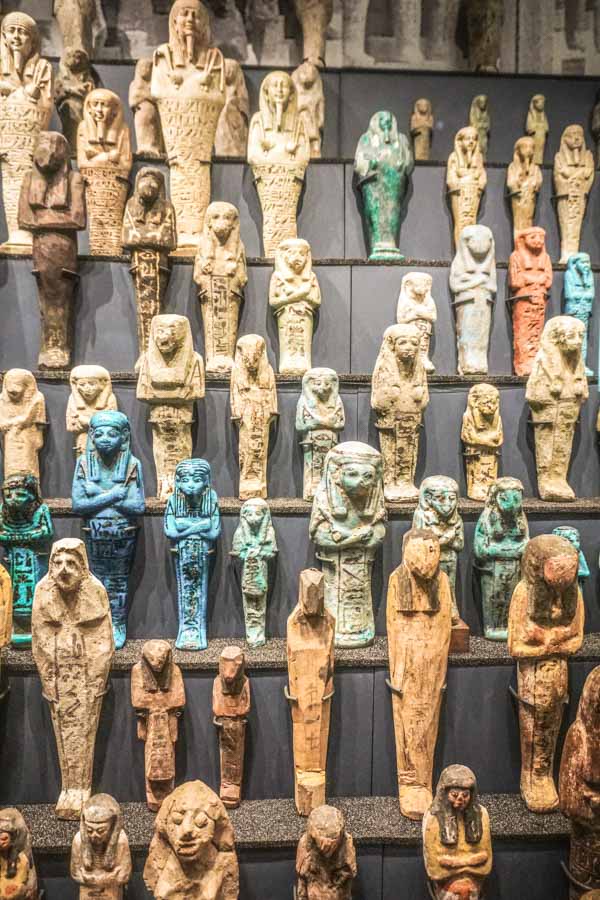
These figurines may look cute but they’re actually very practical objects. Egyptians believed they had to do manual labour in the afterlife but were pretty unimpressed with the idea of spending eternity polishing the silver. So they created these shabtis to be buried in the tomb with them. The idea was that the shabtis would perform the menial tasks while the deceased lived it up in paradise. Très savvy.
How Did This Egyptian Museum in London Come into Existence?
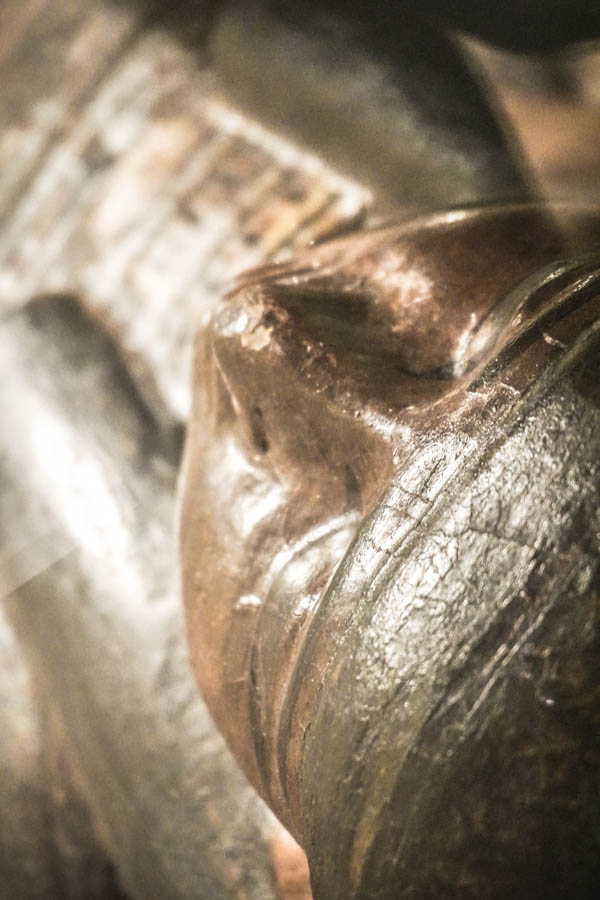
The museum was founded to provide a practical resource for archaeology students in the newly established department at UCL. Its first objects were provided by pioneering writer and Egyptologist Amelia Edwards, who also funded the Edwards Chair of Egyptology, a professorial chair that still exists today.
The collection was then expanded by the first Edwards Professor, none other than Flinders Petrie himself, who sold his collection of artefacts to the museum, making it one of the largest collections of Egyptian antiquities in the world.
It moved into its current premises, a former stable, in the early 1950s.
Is the Petrie Museum Ethical?
There’s a lot of talk these days about just how ethical London’s museums are. People are demanding that the Elgin Marbles be returned to Greece, and the Horniman Museum broke rank by committing to send its collection of Benin Bronzes back to Nigeria.
This discussion is happening because many of the objects in London’s museums were looted during colonial invasions or otherwise acquired by nefarious means. Is that the case for the Petrie Museum?
The short answer is no, but as with many of these things it’s not that simple. Most of the museum’s collection was donated by Flinders Petrie, who had acquired the items in accordance with Egyptian law at the time. The export laws around archaeological items have since changed, meaning what Petrie did by taking them to England would be illegal now, but wasn’t then.
Who was Flinders Petrie?
Flinders Petrie was a complex man. On the one hand he’s one of archaeology’s greatest minds; on the other, he held deeply unsavoury views about eugenics and the supposed superiority of his race, views that seeped into some of his theoretical work, which has long since been disregarded.
What hasn’t been disregarded are the fascinating and important discoveries he made, including the Merneptah Stele and multiple key ancient Egyptian sites. He was also the first person to correctly identify the Proto-Sinaitic script, considered the earliest evidence of alphabetical writing, and in a roundabout way the grandfather of the language you’re reading now.
One final detail that tells you everything about the man: when Petrie died in 1942, he donated his head to the Royal College of Surgeons. It was separated from his body in Jerusalem, where he died, and shipped to London in a jar. The head is apparently still there, though its exact whereabouts are somewhat disputed. Very on brand for an Egyptologist.
Visiting the Petrie Museum of Egyptian Archaeology: Practical Tips
- The Petrie Museum is free to visit and there’s no need to book ahead, though it’s worth checking the website before you go as opening hours can occasionally change at short notice.
- The museum is currently closed for research until 16 July 2026, when it reopens as normal.
- Researchers can book individual visits on Mondays when the museum is closed to the public. Book at least three months ahead as spots fill quickly.
- Opening hours: Tuesday to Saturday, 1pm to 5pm. Closed Sunday and Monday.
- Address: Petrie Museum of Egyptian and Sudanese Archaeology, Malet Place, London WC1E 6BT
- Nearest tube: Goodge Street (Northern line) or Euston Square (Metropolitan, Circle and Hammersmith & City lines), both around six minutes’ walk
I am delighted to learn about this museum for the first time
I definitely will be visiting soon.
Hi Barbara – I’d definitely encourage it, The Petrie Museum is such an interesting spot and full of so many hidden treasures. Enjoy your trip!