A Crookes tube that produced Britain’s first clinical X-ray, a rocket nose cone and a jar of eighteen preserved moles: UCL turns 200 this year, and it’s throwing open its collections to prove it.
Two Centuries Here: The UCL200 Exhibition runs across UCL’s Bloomsbury campus until 31 July 2027, marking two hundred years since the university’s deeds of settlement were signed on 11 February 1826. It’s free, spans the Octagon Gallery, the North and South Cloisters, the Japanese Garden and the Student Centre, and draws on UCL’s own museums, archives and academic departments to tell the story of a university that was radical from the outset, the first in England to admit students regardless of religion, and among the first to admit women on equal terms.
What’s actually on show
The headline exhibition at the Octagon Gallery in the Wilkins Building is arranged around four themes, UCL Origins, UCL Impact, UCL Community and UCL Futures, and includes genuinely significant objects: the Crookes tube connected to the UK’s first clinical X-ray, a rocket nose cone linked to the Mullard Space Science Laboratory, and Egyptian antiquities bequeathed by the Victorian writer and Egyptologist Amelia Edwards. A “Time Telephone” installation plays voices from UCL’s community stretching back to the 1940s, and a rolling programme of tours, talks, workshops and screenings runs throughout the exhibition’s run.
A few of the individual objects on show give a sense of the range on offer, from a small faience amulet of the goddess Taweret from the Petrie Museum’s Egyptian collection, to a mounted Eastern gorilla skeleton and a set of Ziegler studio wax models charting human embryo development, both from the Grant Museum.
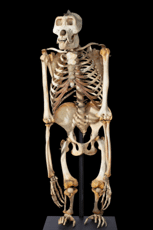
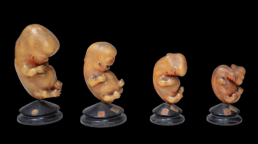
What makes it worth the detour, though, is that the bicentenary story doesn’t stop at the Octagon Gallery. It’s told partly through UCL’s own museums and collections, several of which are genuinely worth visiting in their own right, bicentenary or not.
The Grant Museum and the Petrie Museum, two of London’s strangest free museums
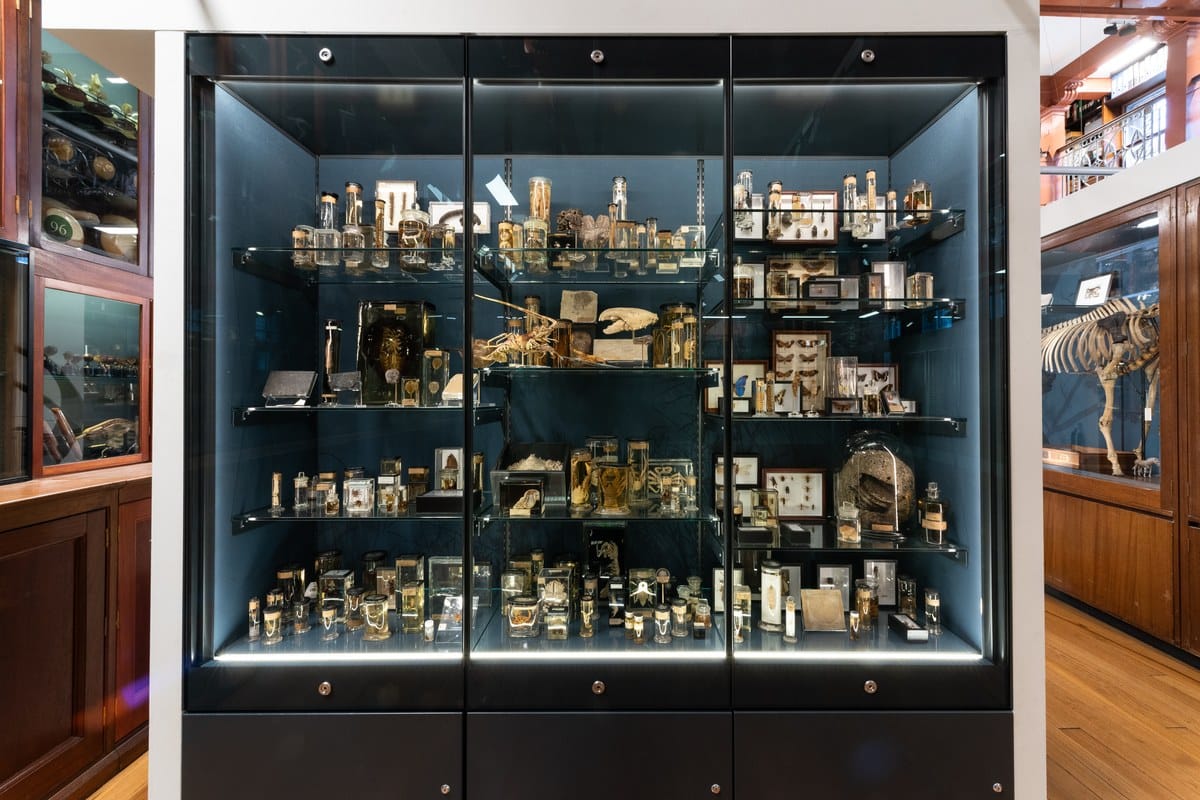
Two of the collections feeding into “Two Centuries Here” are among the best small museums in London, full stop. The Grant Museum of Zoology, tucked into the Rockefeller Building on University Street, packs around 68,000 specimens into a genuinely tiny space, a skeleton of the extinct quagga, a jar of eighteen preserved moles, and the Micrarium, a converted office lined floor to ceiling with more than 2,000 backlit microscope slides.
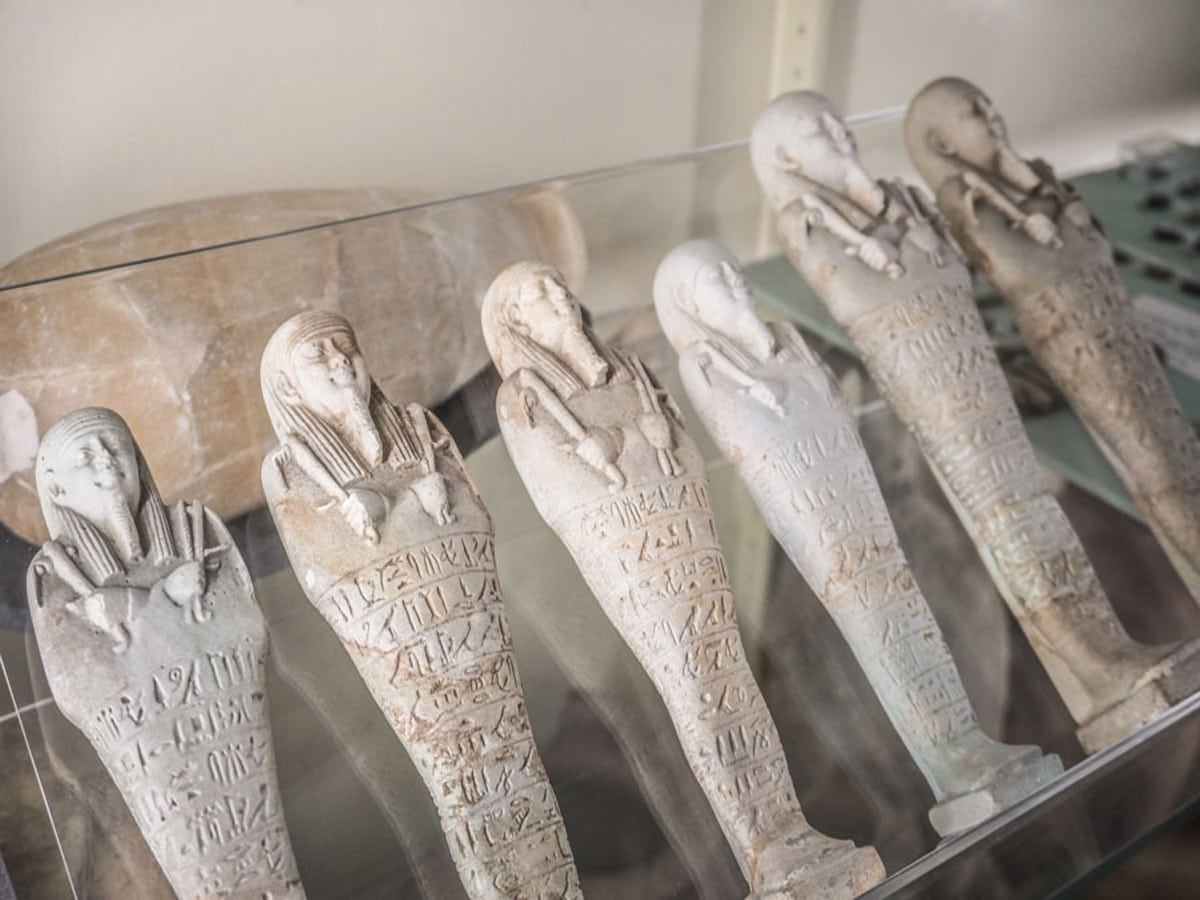
A short walk away, the Petrie Museum of Egyptian and Sudanese Archaeology holds one of the world’s great collections of Egyptian archaeology, more than 80,000 objects, including material from the Amelia Edwards bequest that now features in the bicentenary show itself. Both museums are free, open to the public year-round, and easy to combine with a visit to the main UCL200 exhibition on the same trip.
The London x London Take: most people who wander into the Octagon Gallery for the headline exhibition have no idea the Grant Museum and the Petrie Museum are a five-minute walk away, both free, both genuinely strange in the best way. Make a proper afternoon of it, the Octagon Gallery for the bicentenary story, then the Grant Museum’s mole jar and the Petrie’s Egyptian galleries to see where a lot of that 200-year story actually came from.
Need to know
- Where: Octagon Gallery, UCL Wilkins Building, Gower Street, London WC1E 6BT (exhibition also spans the Cloisters, Japanese Garden and Student Centre)
- When: Until 31 July 2027
- Price: Free, no booking required
- More info: UCL200 exhibition website