If this evening’s partial solar eclipse wasn’t enough sky-watching for one day, London gets a second act straight after, the Perseid meteor shower peaks overnight, and conditions this year are about as good as they get.
The Perseids have been streaking through the sky since mid-July, but tonight into tomorrow morning is when they properly perform. A new moon falls on the same day as the peak, meaning there’s no moonlight to wash out the fainter meteors, astronomers are calling 2026 one of the best Perseid years of the decade.
When to look up
The peak runs overnight tonight into tomorrow morning, Wednesday into Thursday, with the best window between midnight and around 4am. Under genuinely dark skies, rates can reach up to 100 meteors an hour, though from London, expect considerably fewer than that once light pollution takes its toll. The brightest fireballs will still cut through, so it’s worth the late night regardless.
You don’t need to wait until midnight to try your luck either, the Perseids’ radiant point sits above the UK horizon all night, so a few meteors are possible as soon as it gets properly dark.
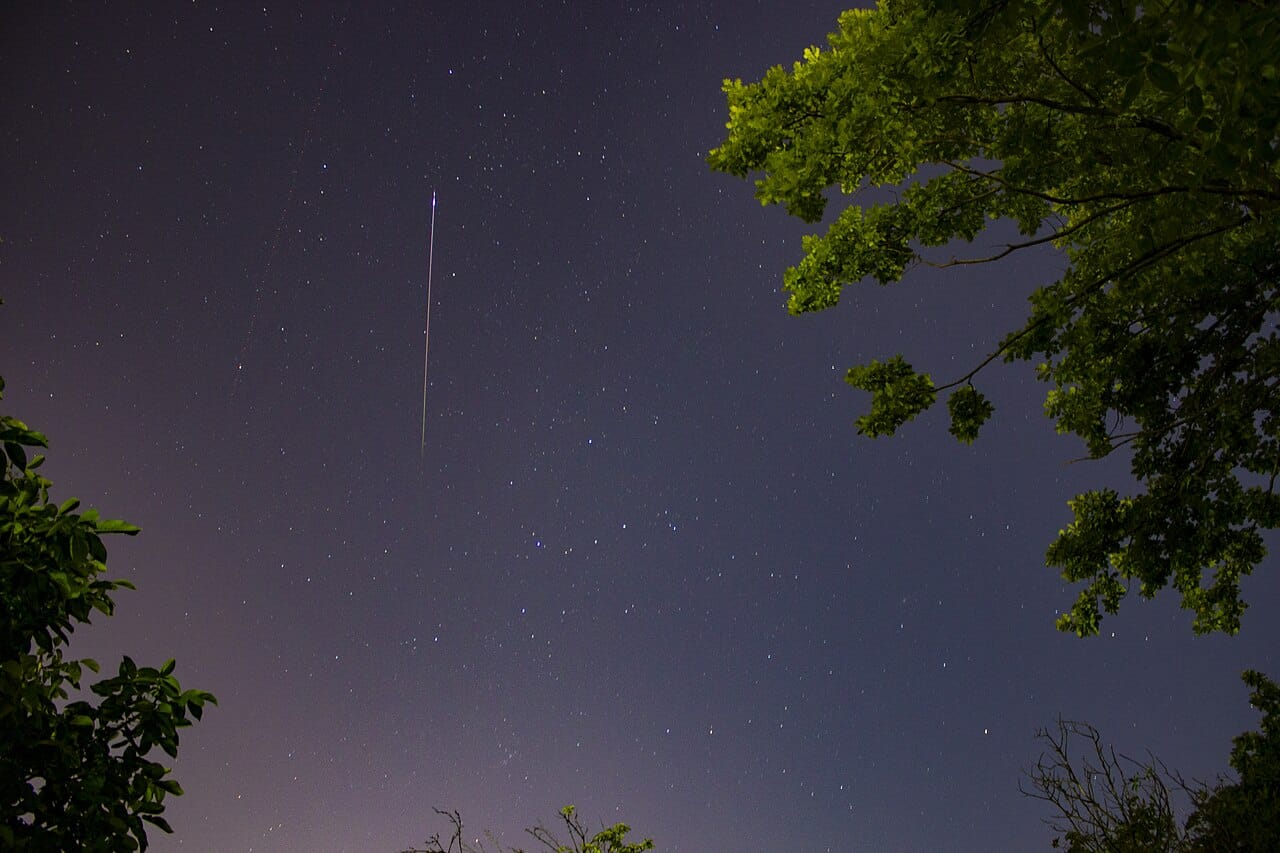
How to actually see them
No telescope, no binoculars, just your eyes. Optical equipment narrows how much sky you can see at once, which works against you here.
Find the darkest, most open spot you can, give your eyes 15 to 20 minutes to adjust, and look up at as much sky as possible rather than fixing on one point. The meteors radiate from the constellation Perseus, so facing roughly northeast helps, but shooting stars can appear anywhere overhead. A free app like Star Walk or SkyView will find Perseus for you if you’re not confident spotting constellations by eye.
Where to go in London
Most London parks lock their gates at dusk, which rules out plenty of obvious spots. Two genuine exceptions worth knowing about: Primrose Hill and Parliament Hill on Hampstead Heath both stay open overnight, and both offer proper elevation and a clear run of sky away from the densest light pollution, Parliament Hill in particular is a long-standing favourite for stargazers for exactly this reason.
If you’d rather stay closer to home, even a back garden or balcony with a reasonably open view of the sky is worth ten minutes of your time, you won’t catch as much, but the brighter fireballs don’t need a perfect setting to be seen.
The London x London Take: a new moon on peak night is genuinely rare timing, and London won’t get conditions this good again for a while. You don’t need to trek out of the city or buy any kit, just pick a park that stays open past dark, bring something warm to sit on, and give it half an hour before deciding nothing’s happening. Patience is most of the trick.
Need to know
- When: Peak overnight Wednesday 12 into Thursday 13 August, best viewing midnight to 4am
- Where: Primrose Hill or Parliament Hill (Hampstead Heath) for open, overnight-accessible spots with genuine elevation
- Price: Free, no equipment needed
- Next up: the Draconids, a smaller shower, peak on 9 October