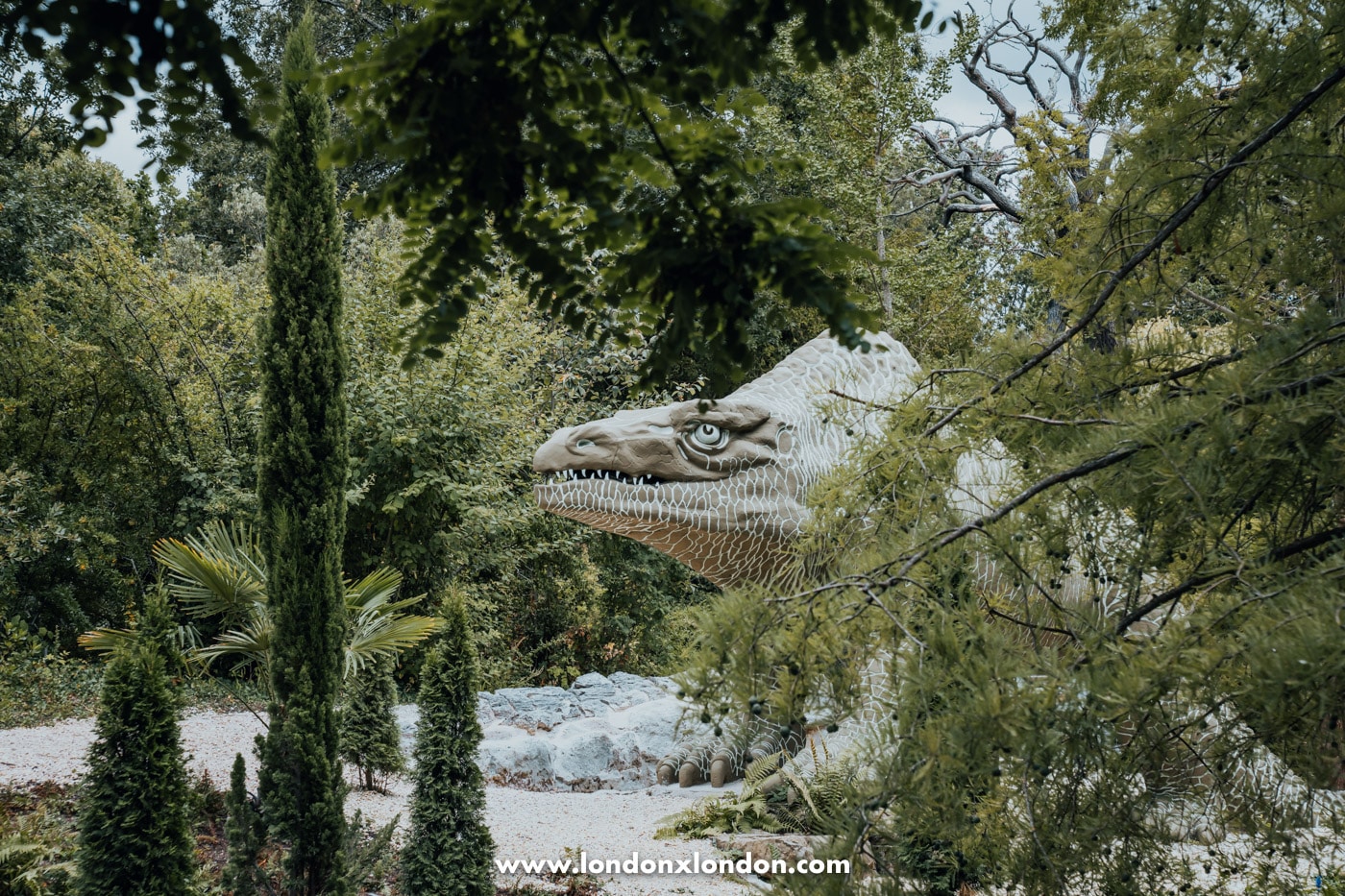
The history of the iguanodons at Crystal Palace Park, and the rapid discoveries that put them out of date almost immediately.
We’ve written before about our love of the Crystal Palace Park dinosaurs, recently restored after years on Historic England’s Heritage at Risk Register. They’re a wonderful part of the rich history of London.
Even the members of our team who didn’t grow up in the capital remember coming here as kids and marvelling at the bizarre beasts, a London dino experience only overshadowed by terrifying encounters with the animatronic T-Rex at the Natural History Museum.
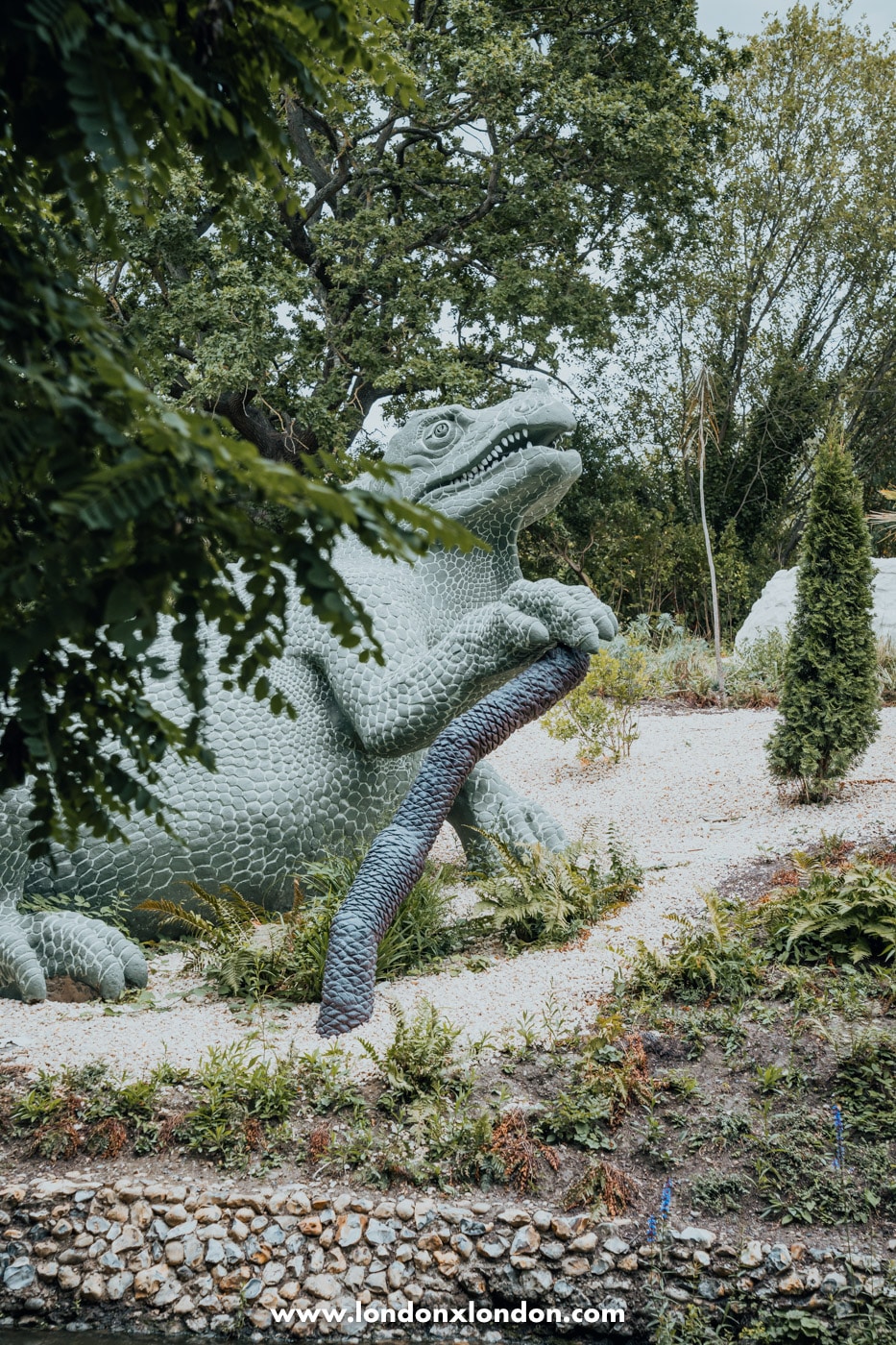
Of the many sculptures at Crystal Palace Park, two have a particularly curious history: the iguanodons. Why are they curious? Even as kids we could tell the designer got them almost entirely wrong.
Why visit
All of the park’s dinosaur sculptures are well worth a visit for their quirky charms, but these two are especially worth noting.
Bizarre-looking and utterly unlike anything we’d associate with the beast today, they look much more like something you’d find at the zoo than in Jurassic Park. The story behind them is also a great reminder of how quickly scientific facts can change, and how what we choose to preserve says as much about us as it does about them.
The history behind the mistake
The iguanodon sculptures arrived in Crystal Palace Park in the 1850s. For context, the word “dinosaur” had only been invented about 15 years earlier. The whole concept of a creature this old sat in stark contrast to the widely held belief that God created everything exactly as it stood.
The sculptures were meant as a metaphor for the ingenuity of Victorian society, a symbol of its scientific, enlightened thinking. The man who designed them, Benjamin Waterhouse Hawkins, was a model of that ethos too. But he’d live to see the science he championed prove him wrong.
Dino design
You probably can’t help but look at these sculptures and think that looks nothing like the animals you’ve seen on TV. You’d also be right in thinking they look an awful lot like the kind of lizards you can find on Earth today, if only a little bit larger.
That’s because when Hawkins was designing them, he was working largely from conjecture. He’d have known the bones belonged to a reptile, but the general shape would have been a genuine mystery to him.
To compound matters, the biggest reptiles Hawkins would have known about were low-slung creatures like crocodiles, komodo dragons, monitor lizards and, this is key, iguanas. The idea of a lizard that walked on two feet would have seemed like nonsense to him.
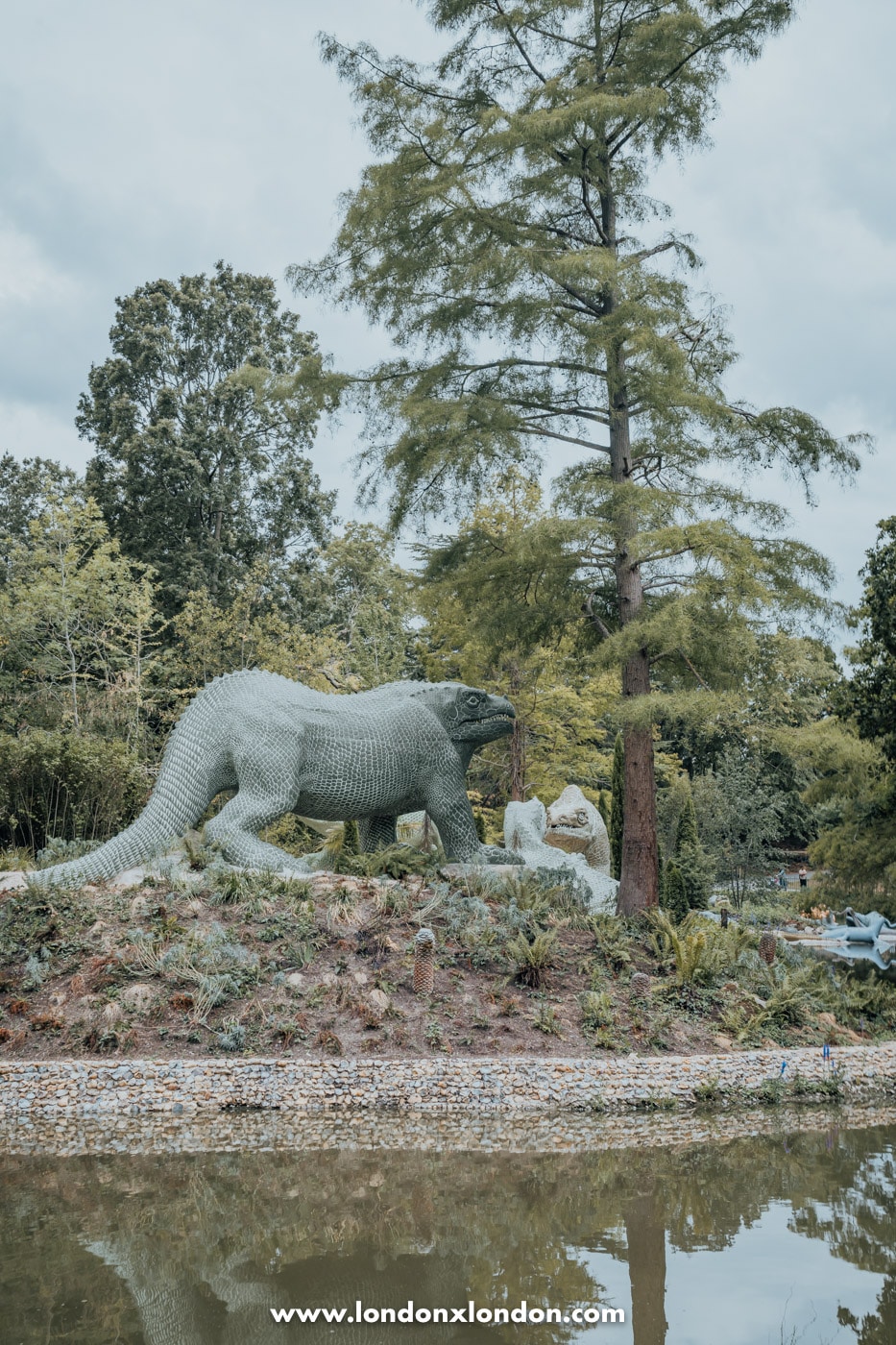
Then there’s the horn. Any dinosaur-obsessed kid these days can tell you an iguanodon’s horn belongs on its thumb. The pair here have it placed on their heads.
Dino discovery
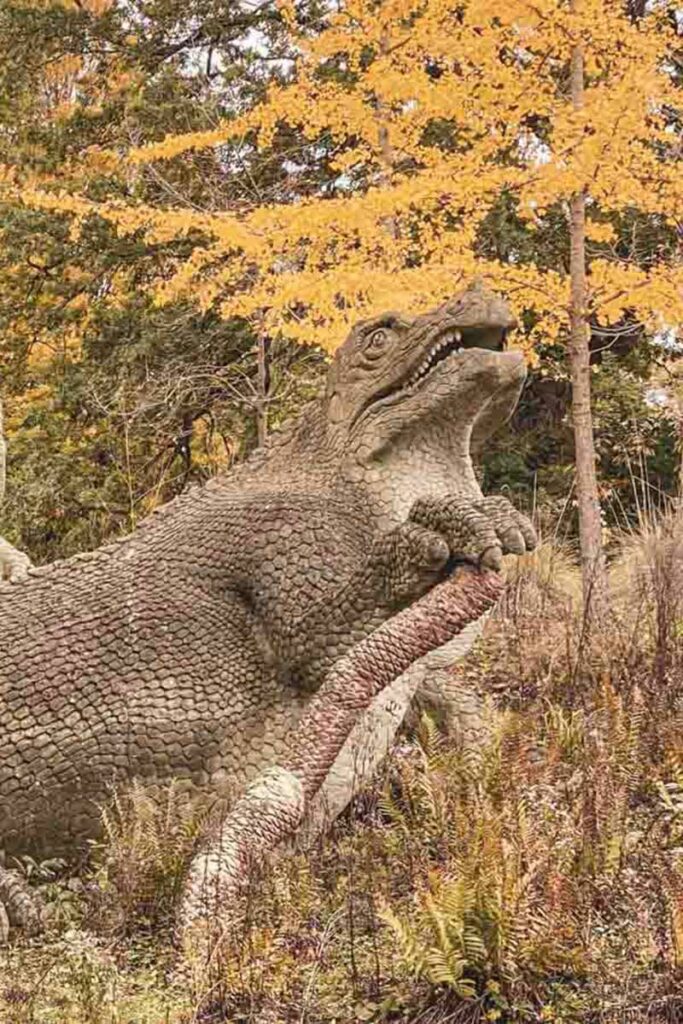
Within Hawkins’s lifetime, further iguanodon fossils were unearthed around the world, changing how we understand what these prehistoric reptiles actually looked like.
The first came just 20 years after Hawkins’s iguanodons were unveiled, in the 1870s, with a theory that they had a kangaroo-like posture, though this too was later proved wrong. Iguanodon would eventually be found to walk on all fours, though not quite in the way Hawkins had imagined either.
It wasn’t until 1878 that the iguanodon’s spike was agreed to belong on its thumb, not its nose. By that point, the dinosaurs at Crystal Palace Park were so treasured that nobody wanted to change them.
So what did Hawkins get right?
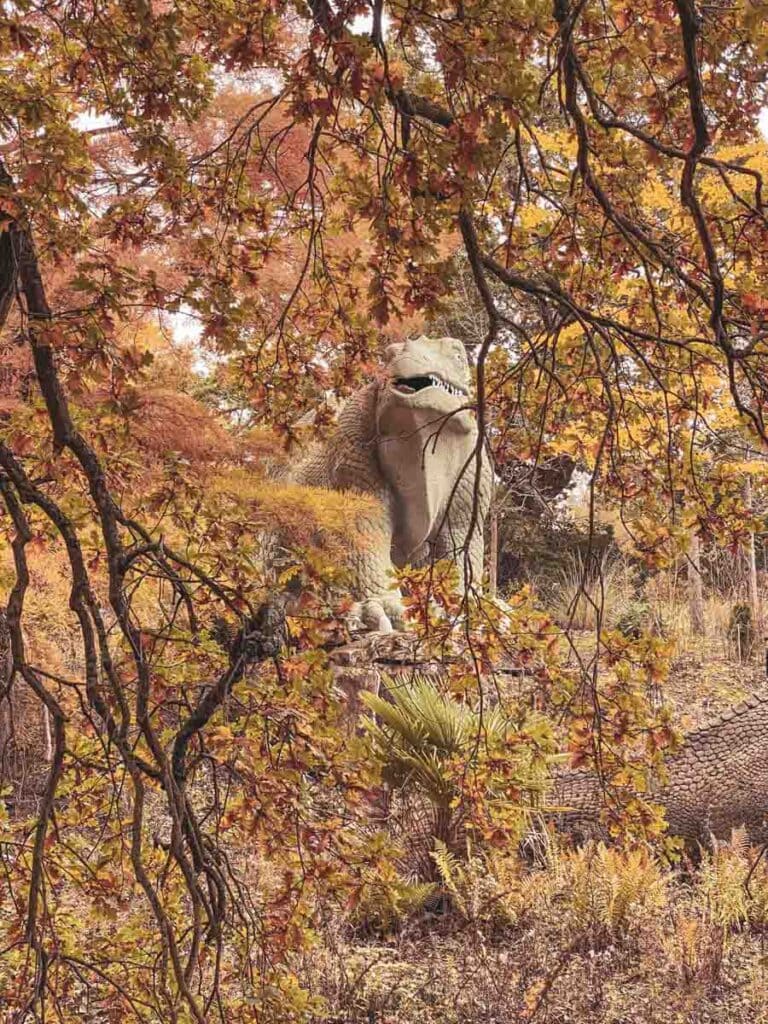
There’s one thing Hawkins got spot on about the iguanodon: its scaly skin. Though he wouldn’t have known it at the time, fossils have since been found of dinosaurs closely related to it showing reptilian skin patterns just like the ones on Hawkins’s sculptures.
These days, more and more scientists are speculating about dinosaurs having feathers, so who knows how long scaly skin will remain the commonly accepted truth.
The London x London Take: the genuinely interesting thing about the 2026 restoration is what it deliberately didn’t fix. The horn is still on the nose. The posture is still wrong. Historic paint analysis went into getting the original 1854 colours exactly right, but nobody touched the anatomy, because at this point the mistake is the history. Correcting Hawkins now would erase the very thing that makes these sculptures worth visiting in the first place.
Crystal Palace Park dinos: practical information
Address: Crystal Palace Park, Thicket Rd, London SE19 2GA
Opening times: Open from 7.30am on weekdays and 9.30am at weekends. Closing times change throughout the year, check current times here.
Tickets: The park is free to enter, and there’s no charge to see the dinosaurs.
Crystal Palace Park: map
Read more of London’s curious history
- The History of London’s Roman Amphitheatre and the Unlikely Story of How it was Discovered
- The Murky History of Lincoln’s Inn – One of London’s Oldest Surviving Institutions
- Kingswood House: The Landed Home that Went From Country Estate to Council Estate
- The History of The Knights Templar in London and What this Mysterious Military Order Left Behind