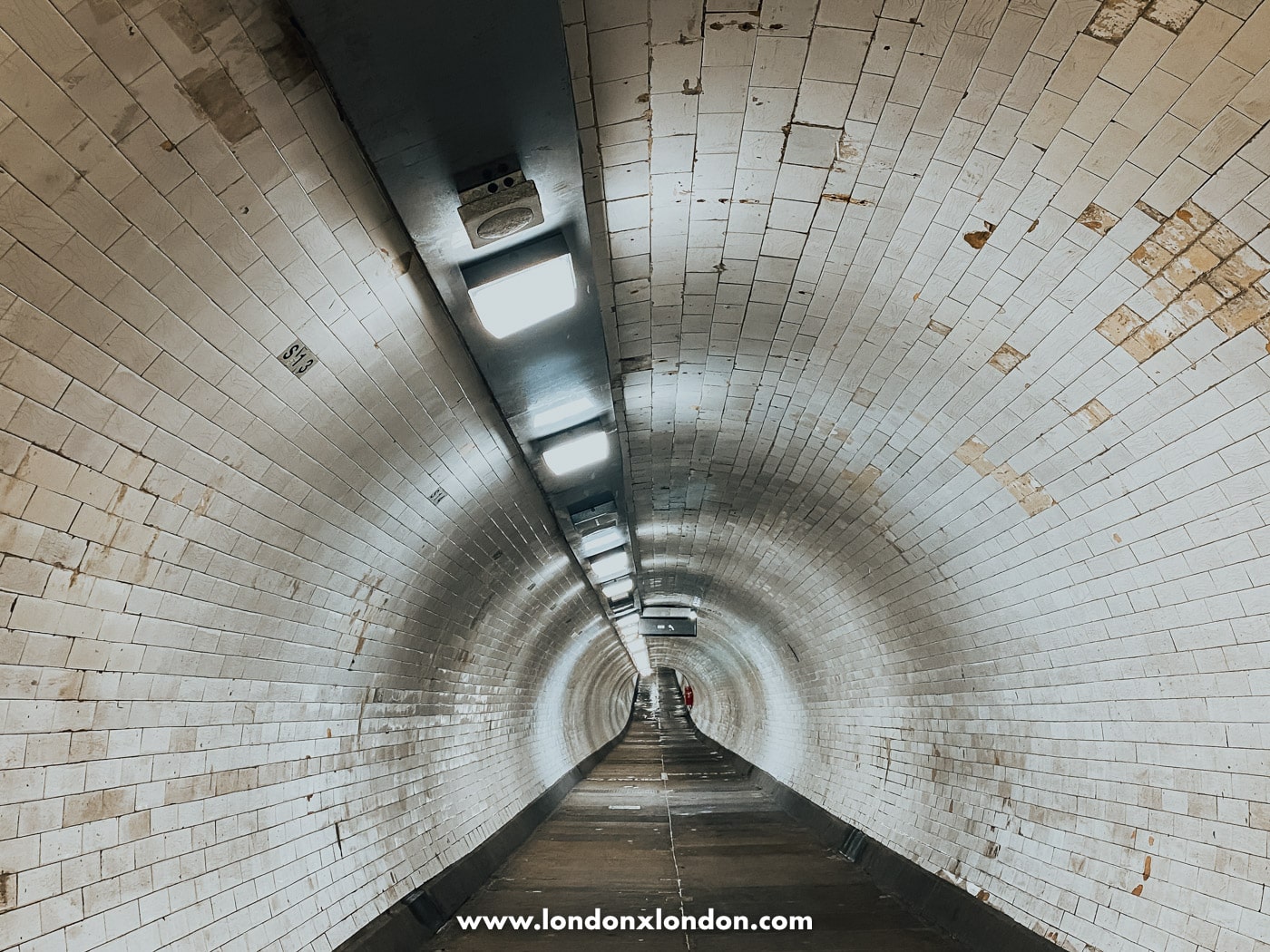
Most people walk across London Bridge or Tower Bridge without a second thought. Fewer know that underneath the Thames, a Victorian tunnel has been quietly connecting two sides of London since 1902. Welcome to the Greenwich Foot Tunnel.
Everyone knows about London’s bridges. Tower Bridge, London Bridge, even the controversial Millennium Bridge that had to close almost as soon as it opened because it wobbled. But ask someone about the Greenwich Foot Tunnel and you’ll usually get a blank look.
Which is a shame, because it’s one of the more extraordinary pieces of Victorian engineering in the city, and one of London’s better-kept secrets.
What is the Greenwich Foot Tunnel?
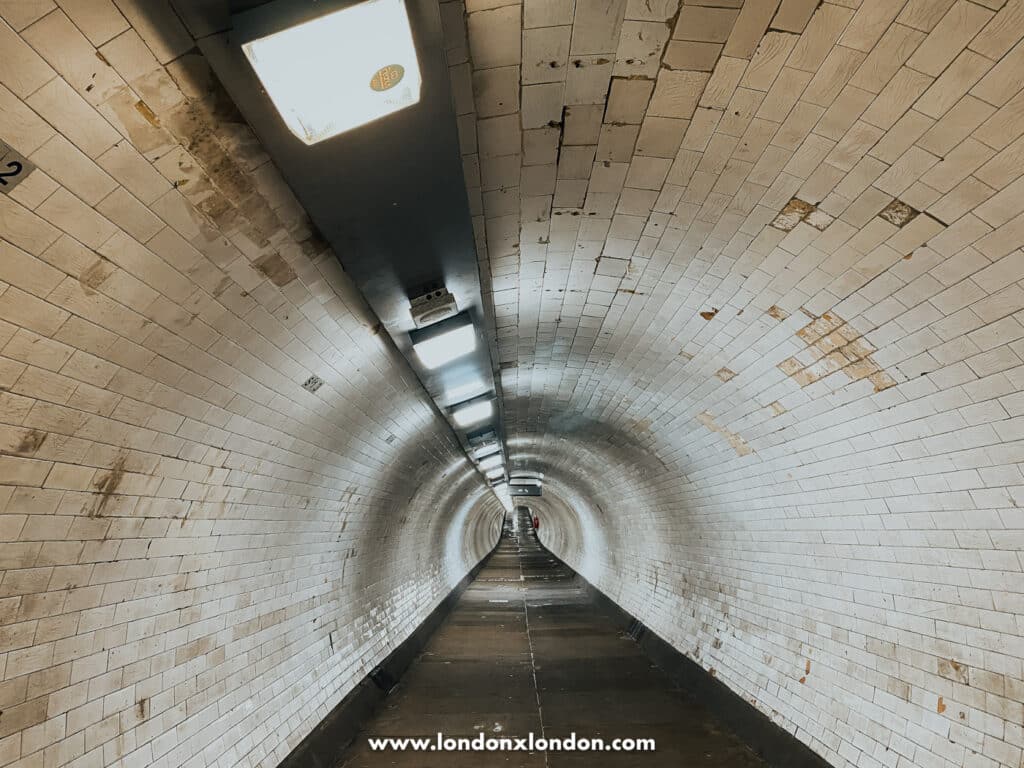
The Greenwich Foot Tunnel is a 370-metre pedestrian passage running dead straight under the bed of the Thames, connecting Cutty Sark Gardens in Greenwich to Island Gardens on the Isle of Dogs. Over 1.5 million people use it each year. It’s been doing this since 1902 and it’s completely free.
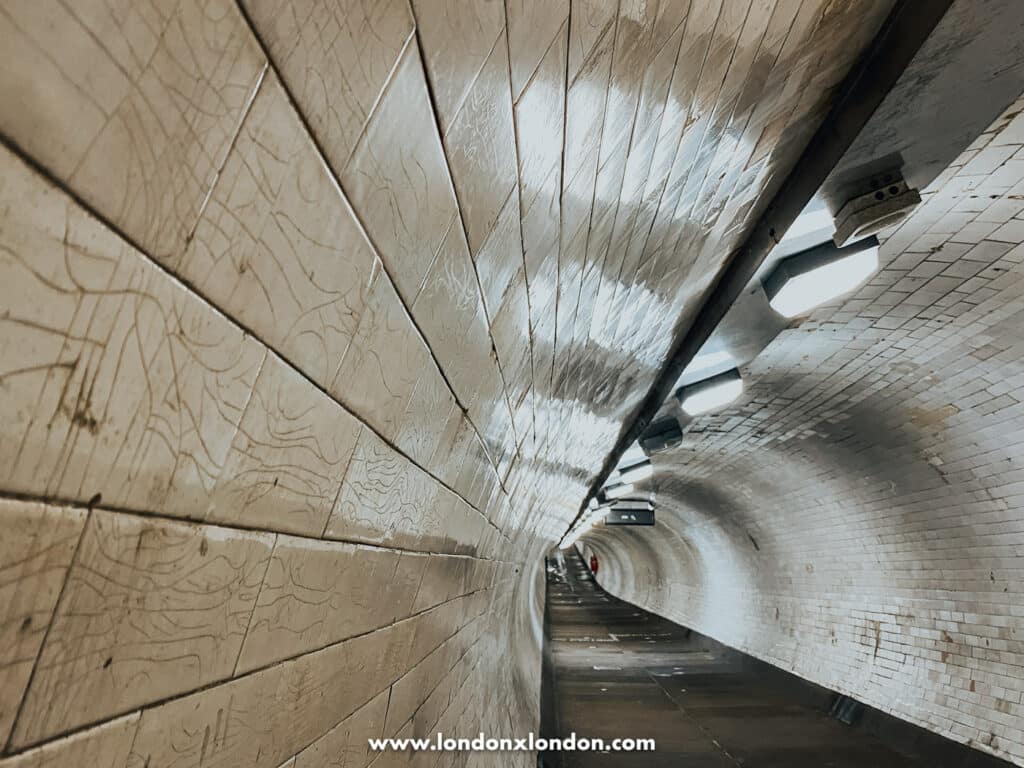
When it opened, it was one of the most impressive engineering achievements in London: burrowing 15 metres under the Thames with a precision that speaks to both the ambition and the stubbornness of late Victorian civil engineering. It only takes around five minutes to walk through, but the experience of being that far underground, in a dead-straight white-tiled tube with the Thames somewhere above you, is unlike anything else in the city.
The tunnel was originally lined with 200,000 white glazed tiles. Some have been replaced with reinforced steel and concrete following bomb damage sustained during the Second World War, and if you look closely as you walk through, you can spot where the tunnel’s width narrows slightly near the northern end: that’s the repair seam, a permanent mark left by the wartime blast.
Why was it built?
The tunnel was built because Will Crooks, a labour politician and member of the London County Council Bridges Committee, began campaigning for the dockworkers who lived on the south side of the river and had to cross the Thames every day to reach the shipyards and docks on the north bank. Before the tunnel existed, they depended on a ferry service, which was unreliable, expensive and in fog or rough weather, genuinely dangerous.
Crooks’ campaign eventually succeeded and the tunnel was commissioned, costing around £127,000 to build, roughly £15 million in today’s money. That figure included £30,000 paid in compensation to the London watermen whose ferry trade the tunnel would effectively end: an unusually generous piece of forward planning for the time.
The man behind the design was Sir Alexander Binnie, chief engineer for the London County Council, who also designed the first Blackwall Tunnel and Vauxhall Bridge, and collaborated with Sir Benjamin Baker on major parts of London’s drainage system. Binnie was something of a tunnel connoisseur, and the Greenwich Foot Tunnel is perhaps his most elegant work.
How was it built?
Workers used a tunnelling shield to dig through the riverbed, a device that looks something like an enormous steel drum pushed forward by hydraulic jacks, with workers digging by hand inside it. The excavation was done entirely by hand, with crews working day and night shifts, managing to dig approximately three metres each day. The tunnel took roughly four months to complete.
Workers also faced decompression sickness due to the pressurised conditions required to keep water out of the tunnel during construction. At one point the tunnel flooded temporarily, though quick action by engineers prevented lasting damage. It was not, by any measure, an easy build.
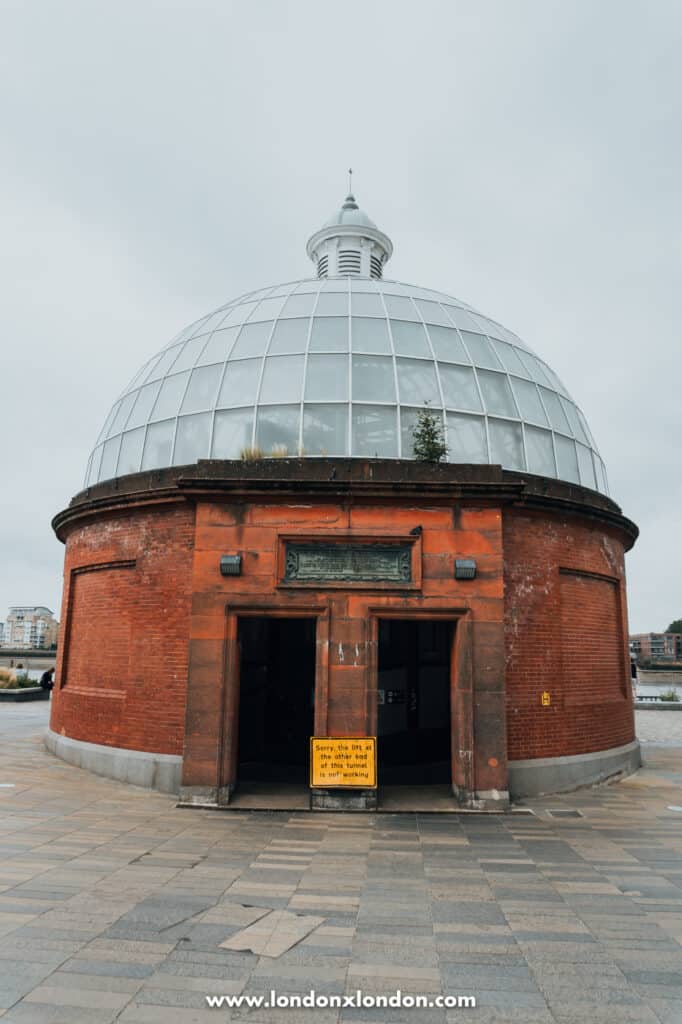
Originally, you could only access the tunnel via a winding staircase: the lifts were added in 1904, making it accessible to everyone including those wheeling goods. Both lifts are currently in service following a period of unreliability that prompted a significant campaign by local residents. A full tunnel regeneration is also now agreed between Greenwich and Tower Hamlets councils, which will include new dual-shaft lifts, improved lighting and heritage improvements. For anyone who has been using those stairs in recent years, this is welcome news.
Is it haunted?
The tunnel has a reputation for the paranormal, which is perhaps understandable given that it’s dark, echoey, slightly damp and sits 15 metres under a river. People have reported disembodied footsteps, sudden drops in temperature, flickering lights and an unsettling feeling of being watched.
The most famous ghost story involves a Victorian couple seen walking hand in hand through the tunnel, warmly dressed, unremarkable in every way except that they vanish completely when passed. One witness described being nearly blinded by a sharp flash of light before turning around to find the couple had simply ceased to exist. Whether you believe in this sort of thing or not, it’s exactly the kind of detail that makes the walk through rather more interesting.
The London x London Take: The Greenwich Foot Tunnel is one of those London experiences that rewards doing at least once, ideally at night when the acoustics get properly unsettling and you start wondering whether those footsteps behind you are yours. Walk through it on a foggy evening and you’ll understand immediately why the ghost stories exist. Walk through it on any morning at all and you’ll understand why Will Crooks fought so hard to build it. Both are good reasons to go.
Practical information
- The tunnel is open 24 hours a day, seven days a week and is completely free. If you have a bike, dismount before entering or face the entirely justified wrath of other pedestrians.
- The south side entrance is in Cutty Sark Gardens, right next to the ship: look for the red brick building with the green dome. The north side comes out at Island Gardens on the Isle of Dogs, next to Millwall Park. Both sides have lifts as well as stairs.